
Commercial & Industrial
Commercial Overhead Doors
Sectional, roll-up, rolling steel and high-speed doors for warehouses, plants, shops and service buildings — with the operators, springs and parts that run them. Supplied, installed and repaired across Toronto and the GTA since 1979, with 24/7 emergency call-out.
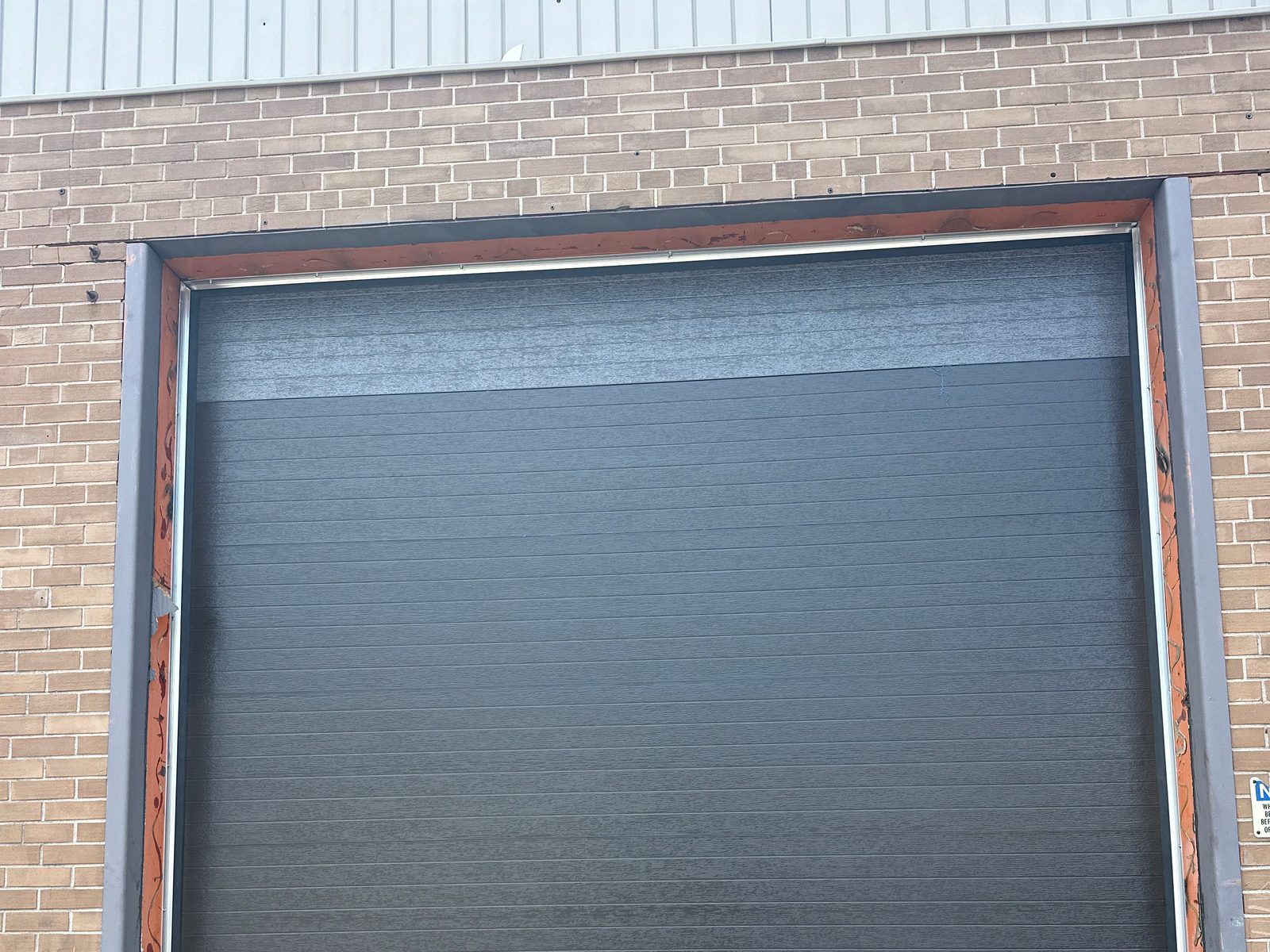
An overhead door is any door that opens upward and stores above the opening instead of swinging into the room. That single idea covers four quite different products, and most of the confusion in this category comes from treating them as interchangeable — they are not, and which one belongs in your opening is usually decided by the building rather than by preference.
Canuck Door Systems has supplied, installed and serviced overhead doors across the GTA since 1979, on everything from a single service bay to a distribution building with forty openings. We are not a dealer for one manufacturer's line, which means the recommendation follows the opening rather than a supply agreement — and we service what is already in your building whoever put it there.
Overhead doors we supply, install and service
The doors
Four families, chosen mostly by the headroom and side room your opening actually has.
Overhead doors on commercial buildings that are not warehouses — service bays, shops, fleet garages and fire halls.
Hinged panels running up a track and sitting flat under the ceiling — the best-insulating overhead door, where headroom allows.
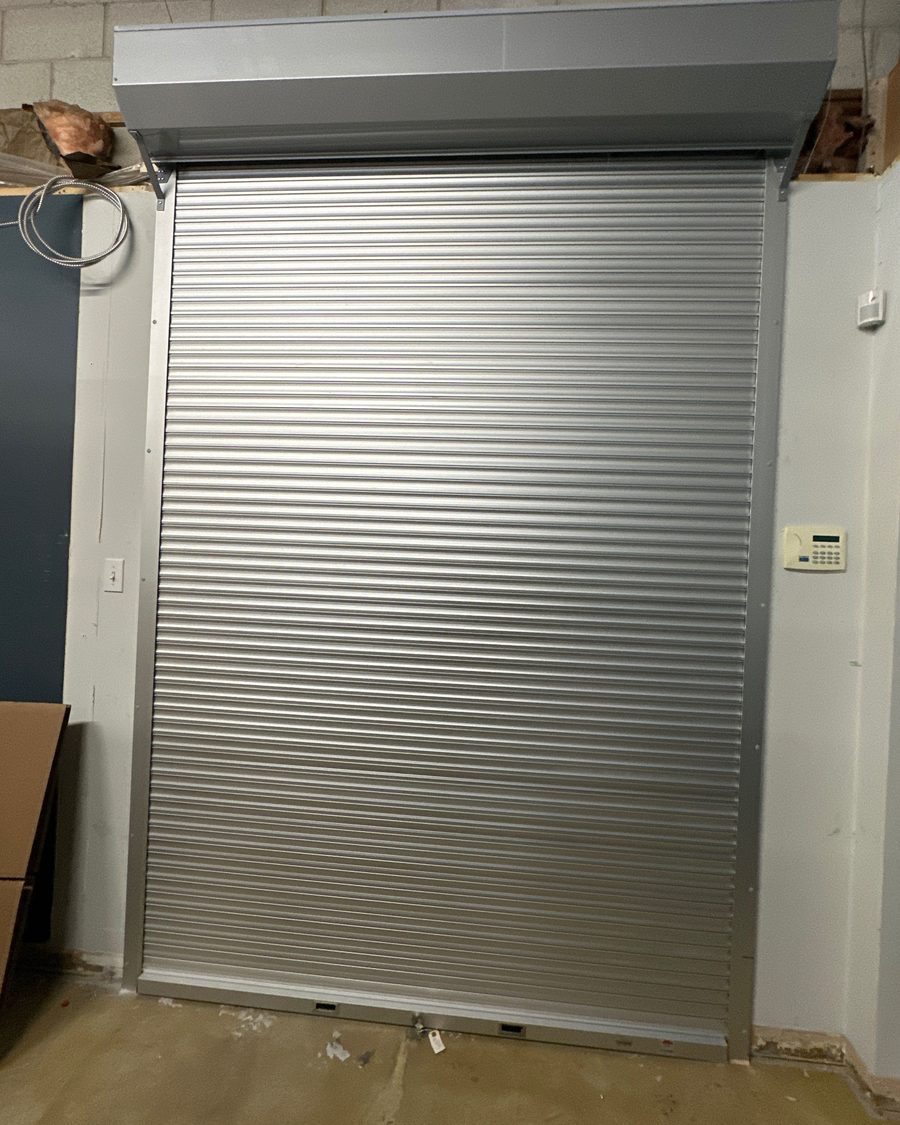
A curtain of slats coiling into a barrel above the opening: the door for openings with no headroom to give.
The heavy end of the coiling family — large spans, security duty, and the fire-rated curtains that drop on alarm.
High-Speed & Rolling Fabric Doors
Powered fabric and rubber doors that open in seconds, where cycle time and temperature separation matter more than R-value.
Operators, installation & service
What runs the door, what puts it in, and what keeps it cycling.
Commercial Door Operators & Motors
The motors that run the door — trolley, jackshaft and hoist operators, controls, and the safety devices that go with them.
New doors into new and existing openings, measured for headroom and side room before anything is ordered.
Springs, cables, rollers, tracks, sections and operators — every make, including ones nobody manufactures any more. 24/7.
The parts that actually wear. Springs are rated in cycles, not years, which is why identical doors fail on different schedules.
The four families
| Type | How it opens | Headroom needed | Insulates | Best for |
|---|---|---|---|---|
| Sectional | Hinged panels run up a vertical track and along a horizontal one | Substantial — the track has to go somewhere | Well, with a sandwich panel | Heated buildings, dock positions, anywhere thermal performance matters |
| Roll-up | A curtain of slats coils onto a barrel above the opening | Very little | Poorly to moderately | Tight openings, service buildings, storage |
| Rolling steel | Heavier interlocking steel slats onto a barrel | Very little | Poorly, unless insulated slats are specified | Security, industrial openings, large spans, fire-rated openings |
| High-speed | A powered fabric or rubber curtain, up and down in seconds | Varies by model | Some; the point is cycle time | High-traffic openings, temperature separation, cleanliness zones |
Three measurements decide most of this before anyone talks about brands: the opening size, the headroom above it, and the side room either side. A sectional door needs headroom for its track; a rolling door needs room for its barrel. Take those three numbers before you call anyone.
Insulated or not
An uninsulated door in a heated building is a hole in the envelope for as long as the building stands, and the difference in purchase price is recovered faster than most facility upgrades. The decision is not automatic, though — an unheated storage building genuinely does not need it, and paying for insulation there is waste.
- Heated space behind the door? Insulate. This includes buildings heated only to keep pipes from freezing.
- Dock positions? Insulate, and seal the perimeter properly — a well-insulated door in a badly sealed opening still leaks.
- Temperature-controlled? Insulated doors plus a high-speed door if the opening cycles often, because at high cycle counts the open time matters more than the R-value.
- Unheated storage or a covered yard? An uninsulated curtain is honest value.
Springs are the part that fails
More overhead-door service calls come from springs than from anything else, and it is worth understanding why: the spring stores the energy that lifts the door, it is rated in cycles rather than years, and it fails suddenly. A door cycling 200 times a day reaches its spring's rated life in a small fraction of the time a door cycling ten times a day takes, even though the two look identical.
That is why the first thing we ask about a busy opening is cycle count, and why high-cycle springs are usually the least expensive upgrade available on a door that runs all shift — see overhead door springs & parts.
Where each door belongs
Warehouse & distribution
Insulated sectionals at dock positions, with operators and safety packages, plus high-speed doors between climate zones.
Manufacturing
Rolling steel where structure eats the headroom, and high-speed doors where the cycle count would destroy anything slower.
Food & cold storage
Insulated doors, sealed perimeters, and high-speed doors to limit the time the opening is actually open.
Auto & service bays
Sectionals, often with vision panels, and jackshaft operators where a hoist would foul the ceiling.
Retail & restaurant service
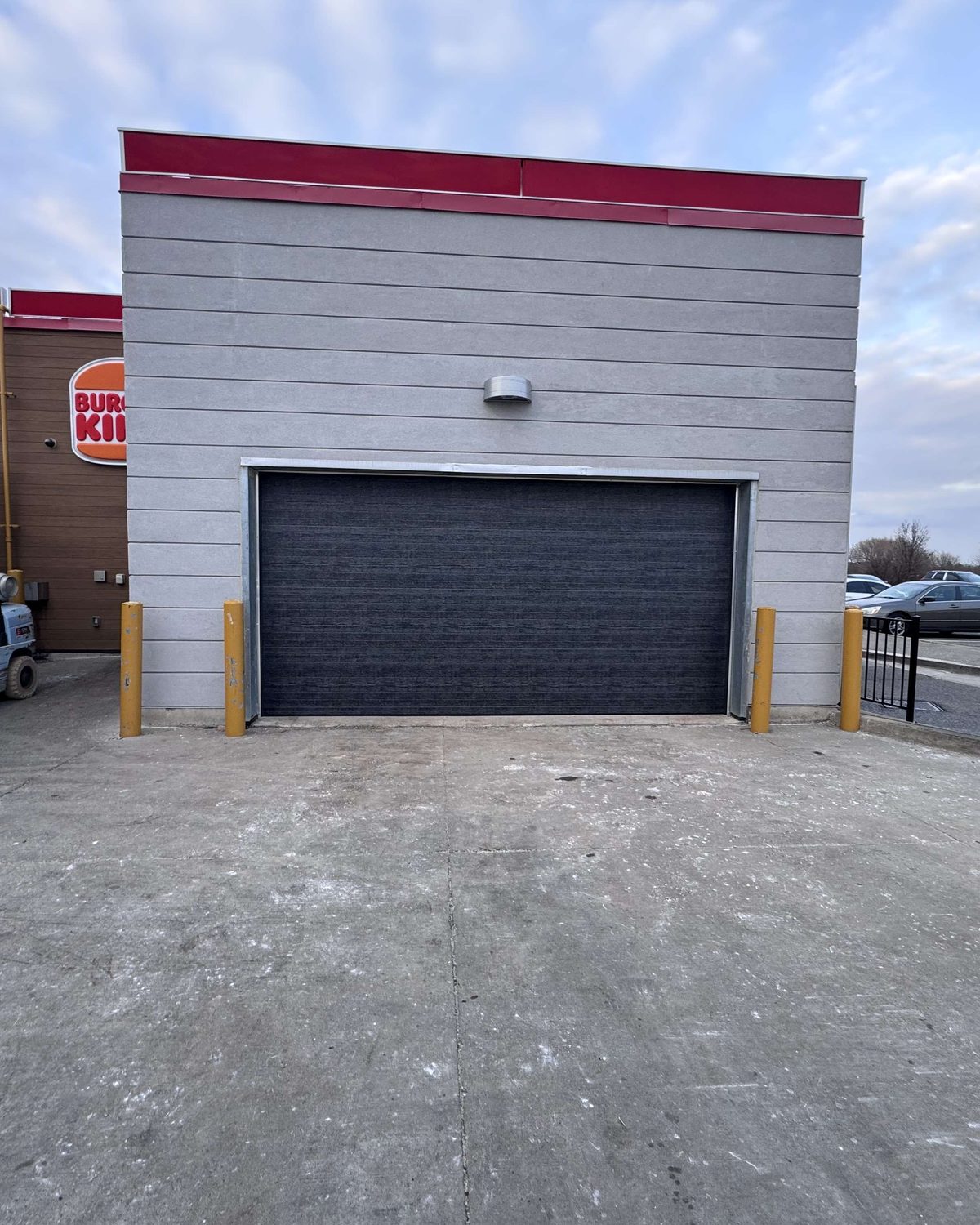
Small roll-up doors in a back wall — the Burger King opening at the top of this page is exactly this case.
Self-storage & yards
Uninsulated roll-up doors in volume, specified for economy and easy parts availability.
Parking garages
Large rolling grilles and doors, usually with operators, safety loops and access control.
Fire-rated openings
Rolling steel fire doors that drop on alarm, with the annual drop test NFPA 80 requires — see fire-rated doors.
How long a new door takes
- Measure — the opening, headroom, side room, and what the jambs and header are actually made of.
- Manufacture — 2–4 weeks once the measure and any shop drawings are approved.
- Install — 1–2 weeks to schedule; a like-for-like replacement is usually a day per opening.
- Repairs — a different world: cables, rollers and door hardware are on the trucks and normally fixed on the visit. A failed operator is replaced rather than rebuilt. Springs are wound to the door and take 1–2 days, so those are two visits.
Maintenance, and why it pays on doors more than anything else
An overhead door has more moving parts than anything else in the building envelope, and it uses them hundreds of times a day. Everything on it wears predictably, which means almost every failure is one an inspection would have caught.
- Springs and cables — the parts that fail hardest, checked for cycle wear and correct balance.
- Rollers, hinges and tracks — where binding starts, long before the door jams.
- Operator and controls — limits, safety devices, and the reversing behaviour that must never be bypassed.
- Seals and weatherstrip — the least expensive energy saving on the building.
- Balance — a door that is out of balance is destroying its own operator, quietly, every cycle.
Overhead door work across the GTA
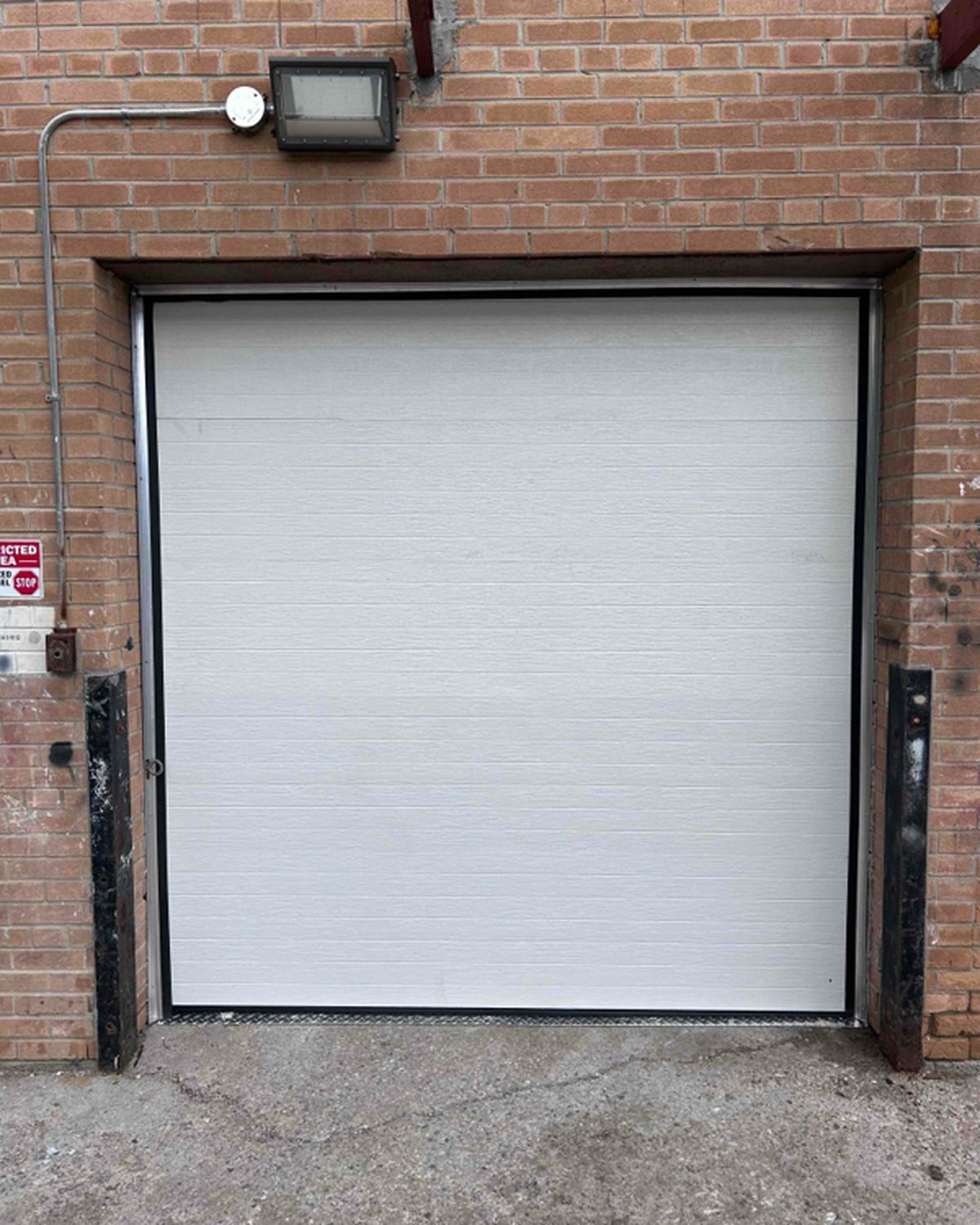
Documented overhead and rolling door jobs from our own project files.
Golden Gate Contracting Inc
Newlink Construction
Formtek Structures Inc
Stallion Construction Inc
Winmarm
Ultra-Form Manufacturing Co Ltd
Four decades of doors for names Ontario knows — Canada’s Wonderland, Tim Hortons, Canadian Tire, the LCBO, Metrolinx, Marriott & Hilton hotels, the University of Toronto — plus thousands of businesses across the GTA. Dependable people, quality products, since 1979.
Overhead door work across Toronto & the GTA
We install and service overhead doors right across the core GTA and out into the Southern Ontario belt, dispatched from our shop in Mississauga. Industrial buildings run on shifts, so this work is routinely scheduled at night and on weekends — and a door that will not close is a 24/7 call.
Core GTA
- Toronto
- Mississauga
- Brampton
- Vaughan
- Markham
- Scarborough
- North York
- Etobicoke
- Richmond Hill
- Oakville
- Burlington
- Milton
Southern Ontario belt
The industrial belt runs Milton–Brampton–Bolton and out along the 401. If you have doors in several buildings we quote and maintain them as one portfolio, which is less expensive per door and much easier to budget. See all service areas
What our customers say
Called Canuck doors for one of our warehouse doors that was malfunctioning , the technician that came was very knowledgeable and efficient, it took him to time to find the issue and fix it. 5 stars
We have a company. We had the garage door installed by Canuck. From beginning to end they did a great job. We love the doors, the functionality and how great it looks. The price was great as well. Thanks so much Tracey
Hats off to Canuck Doors for finding a quick solution to my dilemma of finding a 16 foot door in under 16 weeks for my new garage build. …
Read the full review
What a commercial overhead door costs — and what moves the number
There is no list price, because the range runs from a small roll-up in a shop wall to an insulated sectional with a jackshaft operator and a full safety package. What actually moves the number is short enough to list:
- Door type — roll-up, rolling steel, sectional, or high-speed
- Opening size, and the headroom and side room available for the track and barrel
- Insulation — an uninsulated curtain and an insulated sandwich panel are different products
- Wind load and the exposure of the elevation, which the Ontario Building Code drives
- Manual chain hoist against a powered operator, and which operator type the opening allows
- Vision panels, pass doors, and the hardware each one adds
- Safety package — photo eyes, reversing edges, and interlocks
- Cycle count, which decides spring rating and whether high-cycle springs pay for themselves
- Whether the existing opening, jambs and header are reused or rebuilt
We measure the opening, the headroom and the side room before anything is ordered. Almost every specification decision on this page is constrained by those three dimensions, which is why a door cannot honestly be quoted from a photograph.
Common questions about commercial overhead doors
What is a commercial overhead door?
Any door that opens upward and stores overhead rather than swinging on hinges. Four families cover almost all of them. A sectional door is made of hinged horizontal panels that run up a track and sit flat under the ceiling. A roll-up or rolling steel door has no panels at all: its steel slats lock together into one curtain, which rolls up onto a drum over the opening. A high-speed door is a powered fabric or rubber curtain that opens in seconds. The right one is decided mostly by how much headroom and side room the opening has, and by how many times a day it cycles.
How much does a commercial overhead door cost?
The honest answer is that the range is too wide for a "from" price to help anyone: a small uninsulated roll-up in a shop wall and a wind-rated insulated sectional with an operator and safety package are different orders of magnitude. What moves it most is type, size, insulation, wind rating and whether it is powered. We measure the opening and send a firm, itemised quote at no charge — and we will tell you when the less expensive door is genuinely the right one.
What are the most common problems with overhead doors?
Broken springs, first and by a distance — they are the part that stores all the energy and they are rated in cycles, so they fail on a schedule you can almost predict. After that: cables coming off the drum, rollers and hinges worn to the point that the door binds, tracks knocked out of alignment by an impact, operators and their limit switches drifting, and bottom sections damaged by whatever hit them. Most of these are inexpensive to fix early and expensive to fix after they take the door out of service.
How long does a commercial overhead door last?
The door itself often outlives everything on it. What wears out is the moving parts — springs, cables, rollers, hinges and the operator — and their life is measured in cycles rather than years. A door cycling ten times a day and one cycling two hundred times a day are on completely different schedules even though they look identical. This is why cycle count is the first question we ask, and why high-cycle springs are worth their extra cost on a busy opening.
Can you service doors you did not install?
Yes — that is most of our overhead work. Springs, cables, rollers, hinges, tracks, seals, operators and sections are all replaceable regardless of who supplied the door, including on brands no longer manufactured. On a very old door we will tell you honestly when parts are costing more than a replacement would, rather than keep selling repairs on something at the end of its life.
Sectional or rolling steel — which do we need?
Mostly the building decides. A sectional door needs headroom above the opening for the horizontal track, and it insulates well, which makes it the usual choice for heated buildings and dock positions. A rolling steel door needs very little headroom because it coils into a barrel, it is tough and it is secure, which makes it the answer where there is structure in the way or where the opening needs to resist attack. If you have headroom and want insulation, sectional. If you do not, rolling.
Do commercial overhead doors need safety devices?
Any powered door needs to be safe to be under, and that means entrapment protection — photo eyes across the opening, a reversing edge on the bottom bar, or both, plus controls positioned so the operator can see the door. Under Ontario's Occupational Health and Safety Act, equipment in a workplace has to be maintained and capable of its job; a powered door with defeated safety devices is neither. We test the safety devices on every service visit, and we will not leave a powered door in service with them bypassed.
How long does a new overhead door take?
Plan on roughly 2–4 weeks to manufacture once the measure and any shop drawings are approved, then 1–2 weeks to schedule the crew — so about 3–6 weeks in total. Doors are made to your opening, so there is no stock unit to pull off a shelf. Repairs are a different matter entirely: cables, rollers and door hardware are carried on the trucks and are usually a same-visit fix, and a failed operator is replaced rather than rebuilt. Springs are the one exception — every commercial spring is wound to its own door, which takes 1–2 days, so a spring replacement is two visits. Installing one door is usually a day on site, and a new building's full set of overhead doors is phased over several weeks with the general contractor.
Can you replace a door without closing the building?
Yes, and it is normal. Openings come out of service one at a time, and the work is scheduled around your shifts — commonly overnight or at a weekend. A like-for-like replacement into a sound opening is usually a day per door. What extends it is structural work on the jambs or header, which we identify at the measure rather than discovering on the day.
Specifying a door — or is one stuck open right now?
Send us the opening, the headroom and the side room and we’ll tell you which door fits and quote it. Spring gone, door off track, won’t close? Call — we dispatch 24/7.