
Commercial & Industrial
Commercial Garage Doors
The overhead door on a building that is not a warehouse — a service bay, a fleet garage, a fire hall, a body shop, a restaurant back wall. Supplied, installed and repaired across Toronto and the GTA since 1979. We fit house garage doors too, and they cost considerably less.
Request QuoteCall 800-522-6825
Specified by cycle count, not by size · residential doors too · 24/7 service
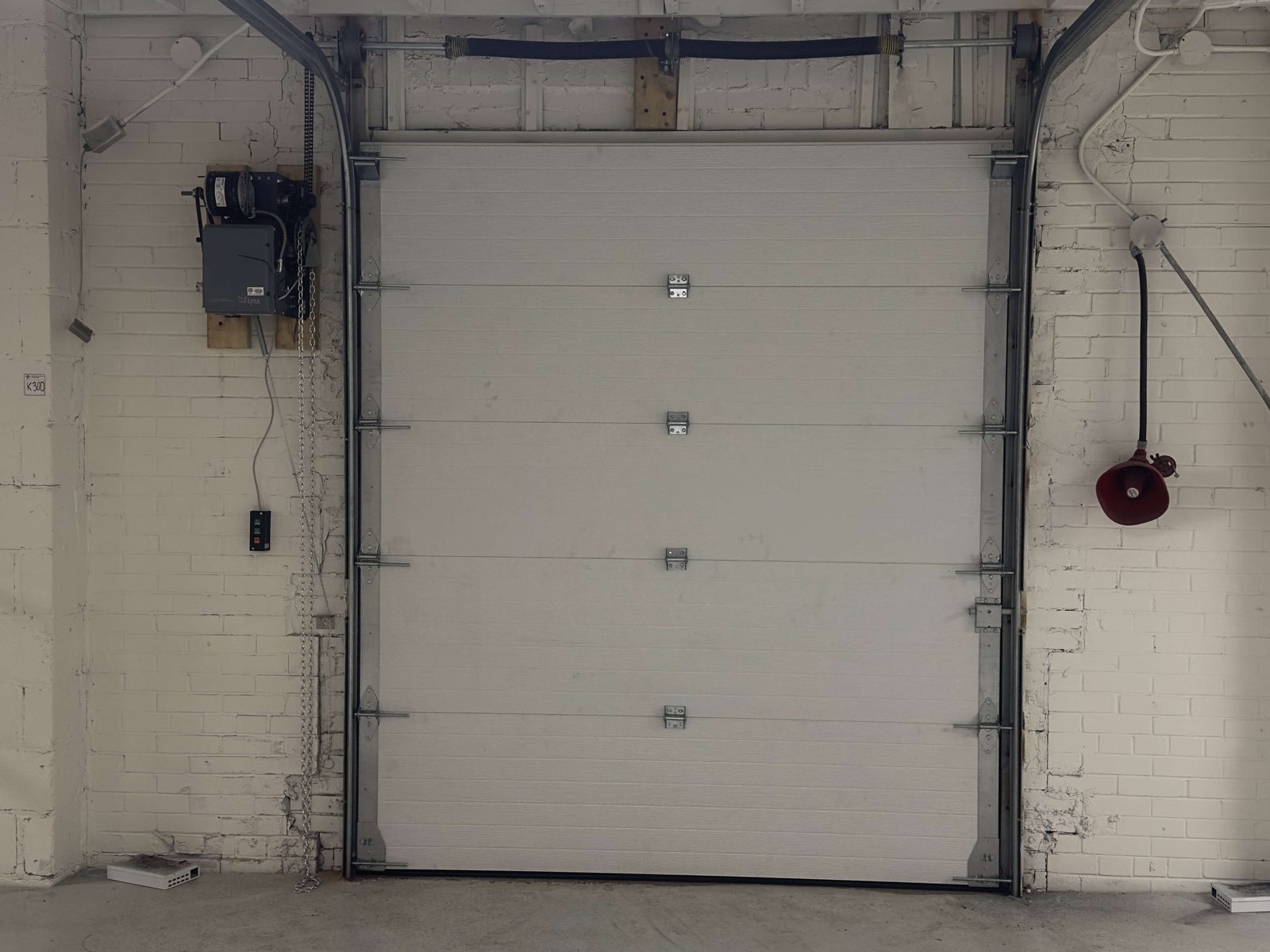
At a glance
| Types | Sectional (most) · roll-up where headroom is tight |
|---|---|
| Panels | Single-skin steel · insulated sandwich · aluminum-and-glass |
| Springs | Rated in cycles; high-cycle springs on anything used all day |
| Operation | Manual, chain hoist, or powered operator with entrapment protection |
| Lead time | 2–4 weeks manufacture, 1–2 weeks to schedule installation |
| Service | All makes — commercial, industrial and residential |
"Commercial garage door" is what people call the overhead door on a building that is not a warehouse: the service bay at a dealership, the fleet garage, the fire hall, the body shop, the restaurant's back wall. Physically it is usually a sectional door — the same product family as a dock door, specified differently.
The difference that matters is not size. It is cycles. A residential door opens perhaps four times a day; a busy service bay opens forty or a hundred. The springs, hardware, rollers and track that suit one are wrong for the other, and because the two doors look nearly identical from the outside, this is the single most common way a commercial opening gets under-specified.
Commercial against residential
| Residential | Commercial | |
|---|---|---|
| Designed for | A few cycles a day | Continuous business use |
| Springs | Standard cycle rating | Rated to the actual cycle count; high-cycle where it earns it |
| Hardware & track | Light gauge | Heavier gauge, sized for the load and the frequency |
| Rollers & hinges | Basic | Commercial grade, serviceable and replaceable |
| Operator | Domestic opener | Commercial operator with proper entrapment protection |
| Service expectations | On failure | Scheduled by cycles, with 24/7 cover when a business depends on it |
The most useful thing you can put in an enquiry is not the door size — it is roughly how many times a day the opening is used. That number changes the specification more than anything else, and almost no quote request includes it.
Where these doors go
Dealership service bays
High cycle counts, brand colours, and often vision panels so the shop reads as open from the drive.
Body & repair shops
The hardest-worked doors in this list. High-cycle springs are not an upgrade here, they are the specification.
Fleet & municipal garages
Multiple identical openings, quoted per door across the building and maintained on one schedule.
Fire halls
Tall, wide, fast and utterly reliable — the one opening on this page where a failure has consequences beyond downtime.
Restaurants & retail
A small door in a back wall for deliveries and waste, where security matters more than insulation.
Car washes
Constant cycling in a permanently wet environment, which is hard on finishes, hardware and operators alike.
Showrooms & patios
Full-vision aluminum-and-glass doors, specified for light and for opening the room up rather than for the envelope.
Storage & utility
Unheated buildings where a single-skin panel is genuinely the right answer, not a compromise.
How long it takes
- Measure — opening, headroom, side room, and how often the door is actually used.
- Manufacture — 2–4 weeks; custom finishes are decided here, not later.
- Install — 1–2 weeks to schedule, then usually a day per opening.
- Repairs — cables, rollers and door hardware are carried, so most faults are fixed on the visit. A failed operator is replaced rather than rebuilt. Springs are wound to the door and take 1–2 days, which makes those two visits.
Buying advice we would give a friend
- Give the cycle count. It is worth more than any other specification decision on the door.
- Insulate if there is heat behind it — including buildings heated only to keep equipment safe.
- Do not compare against a residential quote. They are different products that photograph the same.
- Ask what spring rating is in the price. If the answer is vague, that is the answer.
- Decide colour before manufacture. Retrofitting a finish means painting a door that was not meant to be painted.
- Protect the opening. Bollards cost less than the door, and most impact damage is repeat business for somebody.
Overhead door work across the GTA
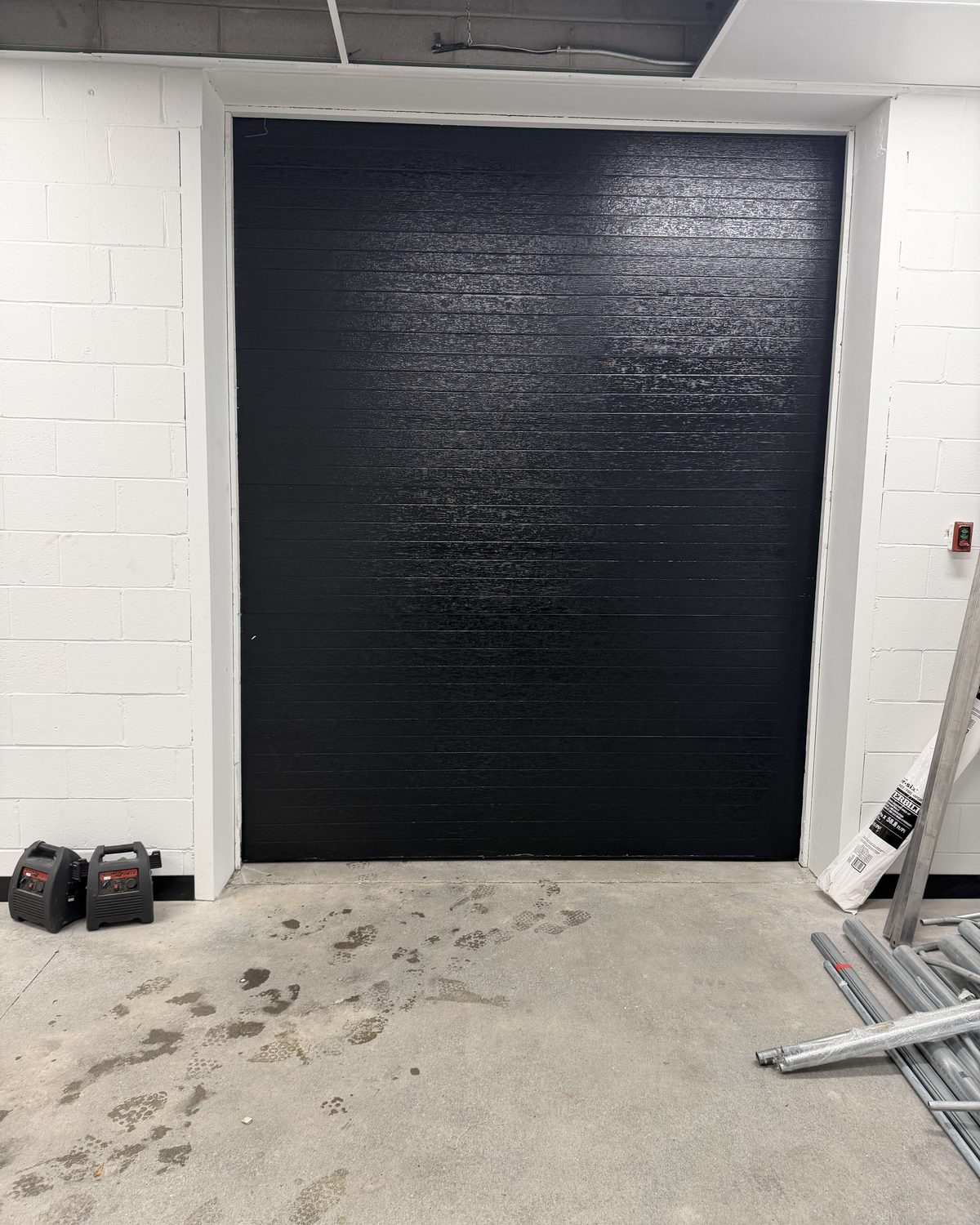
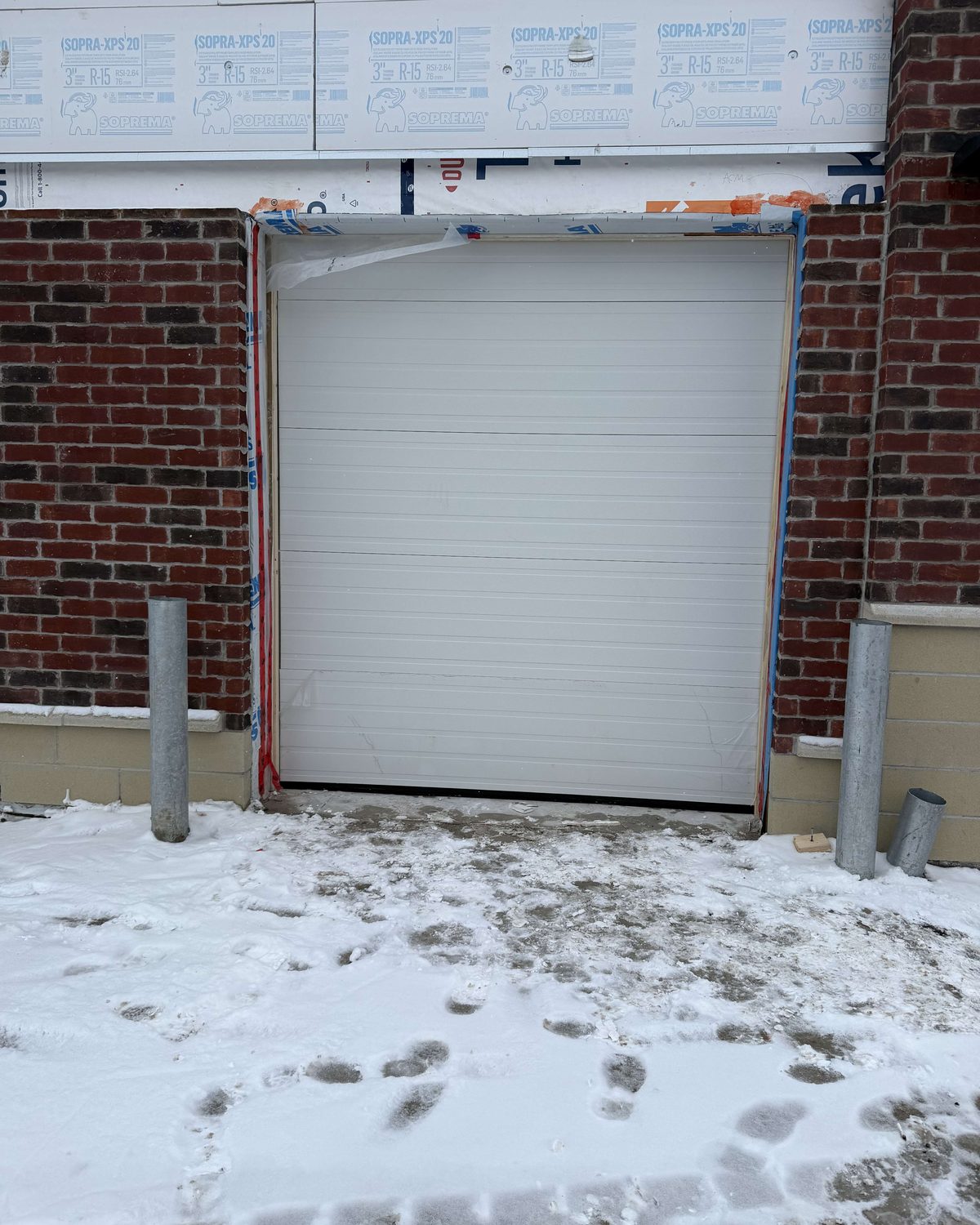
Documented overhead and rolling door jobs from our own project files.
Golden Gate Contracting Inc
Newlink Construction
Formtek Structures Inc
Stallion Construction Inc
Winmarm
Ultra-Form Manufacturing Co Ltd
Four decades of doors for names Ontario knows — Canada’s Wonderland, Tim Hortons, Canadian Tire, the LCBO, Metrolinx, Marriott & Hilton hotels, the University of Toronto — plus thousands of businesses across the GTA. Dependable people, quality products, since 1979.
What our customers say
Called Canuck doors for one of our warehouse doors that was malfunctioning , the technician that came was very knowledgeable and efficient, it took him to time to find the issue and fix it. 5 stars
We have a company. We had the garage door installed by Canuck. From beginning to end they did a great job. We love the doors, the functionality and how great it looks. The price was great as well. Thanks so much Tracey
Hats off to Canuck Doors for finding a quick solution to my dilemma of finding a 16 foot door in under 16 weeks for my new garage build. …
Read the full review
Commercial garage doors across Toronto & the GTA
We supply, install and service commercial garage doors throughout the core GTA and out along the Southern Ontario belt, from our shop in Mississauga. Work is scheduled around your opening hours — one bay out at a time.
Core GTA
- Toronto
- Mississauga
- Brampton
- Vaughan
- Markham
- Scarborough
- North York
- Etobicoke
- Richmond Hill
- Oakville
- Burlington
- Milton
Southern Ontario belt
Dealer groups, fleet operators and franchise chains rarely have one location. We quote and maintain doors across a portfolio on one specification, so every site gets the same door and the same parts. See all service areas
What a commercial garage door costs
The gap between a residential door and a commercial one is mostly in parts you cannot see — springs, hardware grade and track. What moves the number:
- Opening size, and the headroom and side room available
- Panel construction — single-skin steel, insulated sandwich, or aluminum-and-glass
- Cycle count, which sets the spring rating and the hardware grade
- Vision panels, and whether a pass door is built into the leaf
- Wind load and exposure on an exterior elevation
- Manual operation, chain hoist, or a powered operator with its safety package
- Finish, and whether a brand colour has to be matched
- Condition of the existing opening, jambs and header
Do not price a commercial door against a residential quote. They can look identical and be built to different standards — the difference is in spring cycles, hardware gauge and track, and it is exactly the difference that decides whether the door is still working in five years.
Common questions
What is the difference between a commercial and a residential garage door?
Mostly the parts you cannot see. A commercial door is built for cycles: the springs are rated for far more openings, the hardware is a heavier gauge, the track is stronger, and the rollers and hinges are sized for continuous use. Panels are frequently thicker and the finishes tougher. Two doors can look almost identical in a photograph and be five years apart in service life when a business uses them — which is exactly why a commercial door quoted against a residential price looks expensive until the third spring failure.
Do you install residential garage doors?
Our overhead work is commercial and industrial: service bays, fleet garages, fire halls, shops, restaurants, warehouses and plants. That focus is the reason the specification advice on this page is worth anything — the crews, the parts stock and the after-hours rates are all built around commercial openings. If you have a house with a garage door, we can do it too — and it costs much less than a commercial garage door.
How much does a commercial garage door cost?
The range is wide enough that a single figure would mislead: a small single-skin door in an unheated shop and a large insulated door with vision panels, a powered operator and a safety package are different orders of number. What moves it most is size, panel construction, spring rating and whether it is powered. We measure and send a firm itemised quote at no charge — and we will tell you when the less expensive specification is genuinely the right one for how the door is used.
How many cycles will our door do?
Count openings, not days. A car dealership service bay might cycle a door forty times a day; a fire hall a handful; a busy body shop a hundred or more. A standard spring is commonly rated around 10,000 cycles, so at forty a day that is well under a year, and at a handful a day it is many years. This is the single most useful number you can give us, and almost no quote request includes it.
Should a commercial garage door be insulated?
If the space behind it is heated at all, yes — including buildings heated only to protect equipment or pipework. An insulated sandwich panel is the best thermal performance available in an overhead door, and it also makes the door quieter and stiffer, which matters on a wide opening. On a genuinely unheated shop or covered yard, a single-skin panel is honest value.
Can we have windows in it?
Yes, and on a sectional door it is straightforward — a row of vision panels in one section is often all the daylight an opening needs. A full aluminum-and-glass door is the other end of that scale, used on showrooms, restaurants that open onto a patio, and service bays where visibility into the shop is part of the point. Glazed doors insulate less well, so the trade-off is light against envelope.
Our door was replaced two years ago and the spring has gone again. Why?
Almost certainly the spring was rated for the door rather than for the usage. Spring life is measured in cycles, and a door used a hundred times a day burns through a standard spring in months regardless of how good the door is. The fix is a high-cycle spring, matched to the door's weight and drum — more expensive to buy and dramatically less expensive to own on a busy opening. It is also worth checking whether the door is out of balance, because that shortens everything.
How long does a commercial garage door take?
Plan on 2–4 weeks to manufacture once the opening is measured, then 1–2 weeks to schedule the crew — roughly 3–6 weeks in total, because the door is made to your opening. A like-for-like replacement into a sound opening is typically a day, with the bay back in use the same day. Repairs are different: cables, rollers and door hardware are carried on the trucks, and a failed operator is replaced rather than rebuilt. Springs are the exception — each one is wound to its own door, which takes 1–2 days, so a spring replacement is two visits.
Can you match the door to our brand colours?
Usually, yes — factory finishes cover a wide range and custom colours are available on most commercial panels, which matters for dealerships, franchises and anywhere the door faces the street. Say so at the quote stage rather than afterwards: a custom finish is a manufacturing decision, and retrofitting it means painting a door that was never meant to be painted.
Replacing a commercial garage door?
Send us the opening size, the headroom, and roughly how many times a day it is used. Cycle count changes the specification more than anything else, and it is the number most quotes never ask for.