
Residential · supplied, fitted and replaced
Garage Door Openers
LiftMaster and Chamberlain openers, fitted to the door you already have — belt, chain and jackshaft, with the remotes, keypads and safety sensors that come with them. We supply and install openers across Toronto and the GTA, and when one has failed we replace it rather than rebuild it. Most replacements are done in a single visit.
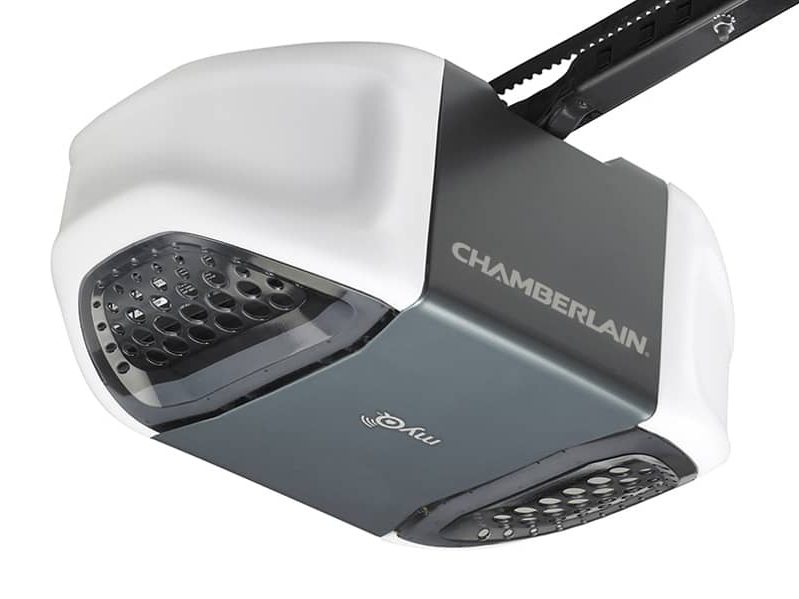
An opener does not lift a garage door. The springs above the opening carry the weight — well over 100 kg on a double — and the opener only supplies the push that starts it and the control that stops it. Almost everything worth knowing about choosing one follows from that sentence, including why an underpowered opener fails, why a badly sprung door kills a good opener, and why "the opener is broken" is wrong about a third of the time.
We supply and install LiftMaster and Chamberlain, the two lines from the same manufacturer, in all three drive types. Canuck Door Systems has been a door contractor since 1979 and most of our work is commercial — the overhead doors and operators on warehouses and plants across the GTA — so the person fitting an opener to your garage does the same job on doors that cycle a hundred times a day.
Openers, accessories and what happens when one fails
The two lines we fit
Same manufacturer, two badges, sold through different channels. Mechanically they are close relatives — the differences that matter are the drive, the horsepower and the warranty.
LiftMaster belt, chain and jackshaft openers — the line we fit most, and the one whose parts are on the trucks.
Chamberlain openers and accessories, mechanically the same family as LiftMaster and sold through different channels.
Remotes, keypads and controls
The parts people replace on their own, and the pairing that catches them out.
Remotes, wall consoles, keypads and myQ — the parts people replace on their own, and the pairing that catches them out.
When the opener has failed
We replace openers rather than rebuild them. This is the arithmetic behind that, and what it costs instead.
The opener rather than the door. We replace failed openers rather than rebuild them, and this is the arithmetic behind that.
Belt, chain or jackshaft
Three ways to move the same door. The choice is usually decided by what is above the garage and what is above the door.
| Drive | How it works | Choose it when | Live with |
|---|---|---|---|
| Chain | A steel chain pulls a trolley along a rail on the ceiling | The garage is detached, or nothing sleeps above it, and cost matters | The noise — it is the loudest of the three, and you hear it through a floor |
| Belt | A reinforced rubber belt does the same job as the chain | There is a bedroom or living space over the garage, or the garage is inside the house | A higher price for what is otherwise the same machine |
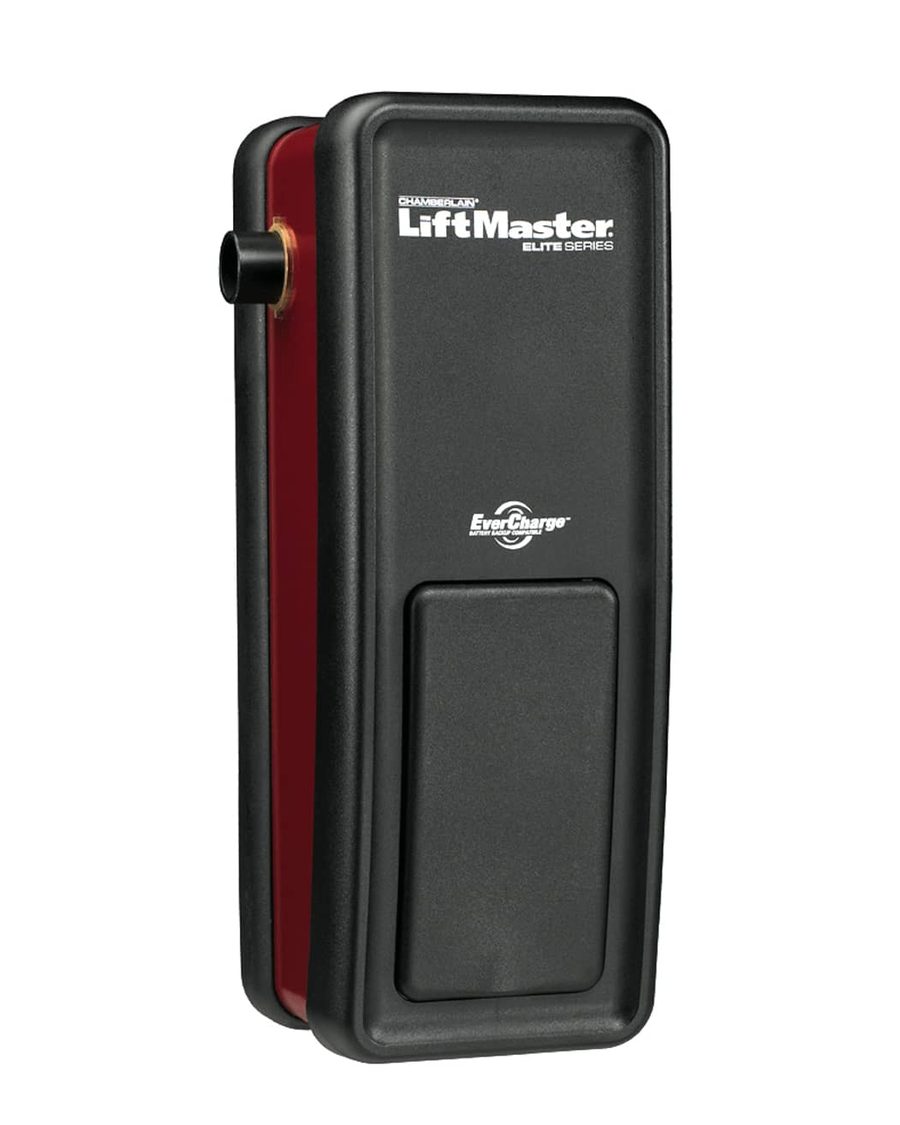
| Jackshaft | A motor mounted on the wall beside the door turns the torsion shaft directly | There is no headroom for a rail, the ceiling has to stay clear, or the door is tall | Needs a properly sprung door and solid mounting; costs the most |
| Screw drive | A threaded steel rod turns to move the trolley | Rarely specified new now | Fewer parts, but noisy and unforgiving of temperature swings |
Headroom is what rules out a rail, and people usually discover it on installation day. If the gap between the top of the door and the ceiling is under about 30 cm, or a duct, light or storage platform crosses that space, a jackshaft is not the expensive option — it is the only one. Measure it before you shop.
What horsepower your door needs
Rated in horsepower, decided by weight, and getting it wrong is a slow failure rather than an obvious one.
- 1/2 HP — a standard single door, or a light uninsulated double. Adequate rather than generous.
- 3/4 HP — a double door, an insulated door, or any door used many times a day. This is the sensible default in Ontario, where most doors are insulated.
- 1 HP and up — heavy wood and wood-look doors, oversized doors, and doors on the family's main entrance.
- Jackshaft units are rated by torque rather than by rail pull, and are specified against the door's weight and height in the same way.
An underpowered opener does not refuse to lift the door. It lifts it under strain for a year or two, and then strips a gear or cooks a board — which is why we go up when the choice is close.
The safety devices, and why they are not optional
Every opener sold in Canada since the early 1990s has to reverse when something is under the door. Two systems do it, and both are worth understanding because between them they explain most "my door will not close" calls.
- Photo eyes. A beam across the opening about 150 mm off the floor. Break it and the door will not close. A knocked bracket, a dirty lens or a spider's web across one of them stops the door as effectively as a child would — which is the point.
- Force and travel settings. The opener learns how far the door travels and how much resistance is normal. Meet more than that and it treats it as an obstruction and reverses.
- The manual release. The red cord on the trolley disconnects the door from the opener so it can be lifted by hand. Pull it with the door closed wherever you can — if a spring has broken, releasing a part-open door lets it fall.
Never defeat a photo eye or hold the wall button down to force a door past a reversal. The door is telling you something is wrong, and on an attached garage the thing it is protecting is usually a person.
Smart openers and myQ
Both lines we fit are made by the Chamberlain Group, and both use myQ — the app that opens and closes the door from a phone, tells you when it was last opened, and sends an alert if it has been left up. Built-in Wi-Fi is standard on most current models rather than an add-on.
Two honest caveats. Some myQ integrations with other platforms have moved behind a subscription over the years, and what is included has changed more than once — so buy the opener for the machine, not for a third-party integration that may be behind a paywall next year. And a door that can be opened from a phone is a door on your network: use a unique password and turn on two-factor, exactly as you would for a lock.
Fitting one: what happens and how long it takes
- Check the door first. Balance, springs, cables, rollers and the top section. This is not upselling — an opener bolted to an unbalanced door is a warranty claim waiting to happen, and it takes ten minutes to rule out.
- Out with the old. The existing head, rail and brackets come down and go away with us.
- Rail, head and bracket. Mounted to the header and the ceiling structure, squared to the door.
- Wiring and controls. Power, wall console, and the photo eyes set at the correct height either side of the opening.
- Travel and force set, safety reversal tested. The door is run against an obstruction and has to reverse. If it does not, the job is not finished.
- Remotes and keypad paired, and the keypad code set to something you choose.
Normally one visit, one to two hours. A straight like-for-like swap is at the short end. A first-time installation into a garage with no existing wiring, or a conversion from a trolley opener to a jackshaft, is at the long end and occasionally needs an electrician for the outlet. If a new door is going in as well, that is the different answer: a door is made to your opening, so allow 4–6 weeks to produce it and 1–2 weeks to schedule the install, with the opener fitted on the same visit as the door.
When it is not the opener
Roughly a third of calls that come in as "the opener is broken" are the door. The distinction is worth knowing before you spend anything, because the two have very different prices.
| What you're seeing | Usually | Where it goes |
|---|---|---|
| Loud bang, then nothing lifts | A broken torsion spring — the door, not the opener | Springs & cables |
| Motor runs, door does not move | Trolley released, or the drive has failed inside the opener | Re-latch the trolley first; if the motor still runs free, the opener is finished |
| Door lifts a foot and stops | The door has lost its counterbalance and the opener is protecting itself | Garage door repair |
| Door reverses just before it shuts | A photo eye is dirty, knocked or blocked | Wipe both lenses and check the brackets — a homeowner job |
| Works from the wall button, not the remote | Flat remote battery, or a receiver that has failed | Remotes & keypads |
| Screeching or grinding every cycle | Dry rollers, loose hinges, a door out of balance | Garage door repair — and it is wearing the opener |
| Nothing at all, no lights, no click | Power, the outlet, or a dead board | If there is power at the outlet, the opener is replaced |
If the answer is a new opener, the reasoning and the numbers are on opener repair or replacement.
The same crews maintain doors and operators for names Ontario knows — Canada’s Wonderland, Tim Hortons, Canadian Tire, the LCBO, Metrolinx, Marriott & Hilton hotels, the University of Toronto — plus warehouses, dealerships, schools and several thousand houses across the GTA. Dependable people, quality products, since 1979.
Opener installation across Toronto & the GTA
Openers are fitted and replaced right across the core GTA and out into the Southern Ontario belt, from our shop at 1645 Bonhill Road in Mississauga. The LiftMaster line we fit most is stocked there, which is why a replacement is usually the same visit rather than an order and a return.
Core GTA
- Toronto
- Mississauga
- Brampton
- Vaughan
- Markham
- Scarborough
- North York
- Etobicoke
- Richmond Hill
- Oakville
- Burlington
- Milton
Southern Ontario belt
An opener job travels well: it is an hour or two on site and the unit is on the truck. Distance changes the attendance cost rather than whether it is sensible, and we quote that on the phone before anyone sets off. See all service areas
What our customers say
Best garage service in the city!!! Called Friday. Got a new garage opener Monday! Thanks!!!
After having Canuck Door Systems replace the springs in our garage door opening system earlier this year, we continued to have problems with the operation of the door. After an attempt to fix this did not last, Stan ascertained that we needed a new motor, which Sergei installed. …
Read the full review
Great service! Technicians came on time. They were very friendly, explained all the options and installation took less than an hour. The new opener works great so far! I would definitely recommend this company.
What a garage door opener costs installed
One number covers the unit, the fitting and the old one going away. What moves it:
- Drive type — a chain drive is the value option, a belt drive costs more and is markedly quieter, a jackshaft costs most and is the only answer where there is no headroom
- Horsepower, which is set by the door's weight — a double insulated door is not a single
- Whether the existing rail, brackets and wiring can be reused or the whole assembly is being replaced
- Headroom, and whether a low-headroom or side-mount conversion is involved
- How many remotes, keypads and wall consoles go with it
- Whether the door itself is sound — an opener fitted to a door that is out of balance will fail early, so a spring check comes first
- The hour, if it is an after-hours call rather than a booked installation
We quote the installed price, not the box price, and we say on the phone what the attendance costs before a truck leaves. Where the door is the real problem rather than the opener, we will tell you that instead of selling you a motor that will die the same way the last one did.
Common questions about garage door openers
How much does it cost to install a garage door opener in Canada?
The unit and the labour together, and the drive type moves it most: a chain drive is the least expensive way to get a door moving, a belt drive costs more and is the one people pick when the garage is under a bedroom, and a jackshaft costs most because it is a different machine. On top of that sits the horsepower the door's weight demands, how many remotes and keypads you want, and whether the rail and brackets can be reused. We quote the installed number with the old unit removed, so there is no second line at the end.
Can you install a new garage door opener yourself?
Mechanically, plenty of people do — the rail, the head and the wiring are within reach of a competent DIYer with a helper and a day. Two things catch people out. The first is that an opener is sized and set to the door: the wrong horsepower or wrongly set travel and force will run for months and then destroy something. The second is more important — the opener does not lift the door, the springs do, and if the door is not properly balanced first, a new opener is being asked to do work it was never rated for. If you fit one yourself, check the balance before you connect it: a correctly sprung door stays where you leave it at waist height.
Should I get a 1/2 HP or 3/4 HP opener?
It follows the door, not the garage. Half a horsepower moves a standard single door and a light double; three quarters is the sensible choice for a double door, an insulated door, a wood or wood-look door, or any door that gets used many times a day. The failure mode of an underpowered opener is not that the door will not move — it is that it moves under strain for a couple of years and then strips a gear. When it is close, we go up rather than down, because the price difference between the two is much smaller than a second call-out.
Belt, chain or jackshaft — which should I choose?
Chain if the garage is detached or nobody sleeps above it, and the budget matters. Belt if there is a bedroom over the garage or the garage is part of the house, because the difference in noise is not subtle. Jackshaft if there is no headroom for a rail, if you want the ceiling clear, or if the door is tall — it mounts on the wall beside the shaft and turns the shaft directly. A jackshaft costs more and needs a properly sprung door and solid mounting, but on the right garage it is the tidiest installation there is.
Do you repair garage door openers?
No. When an opener has failed we replace it, and that is a deliberate position rather than a limitation. A logic board, a gear kit or a motor on a residential opener costs a large fraction of a new unit, it goes into a machine whose remaining parts are the same age, and nothing about the rest of it is any newer afterwards. A new opener is warrantied as a whole and is usually fitted the same visit. Where the fault is the door — a broken spring, a cable off its drum, rollers or track — that is a repair, we do it, and it is on our garage door repair page.
How long does a garage door opener last?
Ten to fifteen years is the usual span, and like springs it is really cycles rather than years — a garage used as the family's front door wears an opener several times faster than one opened at weekends. What shortens it most reliably is a door that is out of balance: every cycle the opener is lifting weight the springs should be carrying, and the gears pay for it. An opener that has failed early is usually telling you about the door.
Will a new opener work with my existing garage door?
Almost always, and it does not matter who made the door. An opener attaches to the top section and the header, not to any brand-specific fitting, so a modern LiftMaster or Chamberlain goes onto a door of any age that is structurally sound and correctly sprung. The things that genuinely decide it are headroom, the door's weight, and whether the top section is solid enough to take the bracket — all of which we check before quoting rather than after.
Can I keep my old remotes?
Usually not, and that is a security feature rather than an inconvenience. Modern openers use rolling codes that change with every press, and the receiver only pairs with remotes from a compatible generation. New remotes and a keypad come with the opener, and we pair them and set the keypad code before we leave. Where you have several vehicles with built-in buttons, tell us on the day and we will pair those too.
Do you install openers on doors you did not supply?
Yes, and that is most opener work. The door being someone else's makes no difference to fitting an opener to it. What we do check first is the balance and the hardware, because bolting a new motor onto a tired door is how a new opener becomes an early failure — if the springs are at the end of their cycles, we would rather say so and quote both than fit one and see you again.
Opener failed, or fitting one for the first time?
Tell us the door — single or double, insulated or not, and how much headroom is above it. That is enough to quote the right opener, and most replacements are fitted the same visit.