
Residential · security, storm and blackout
Residential Rolling Shutters
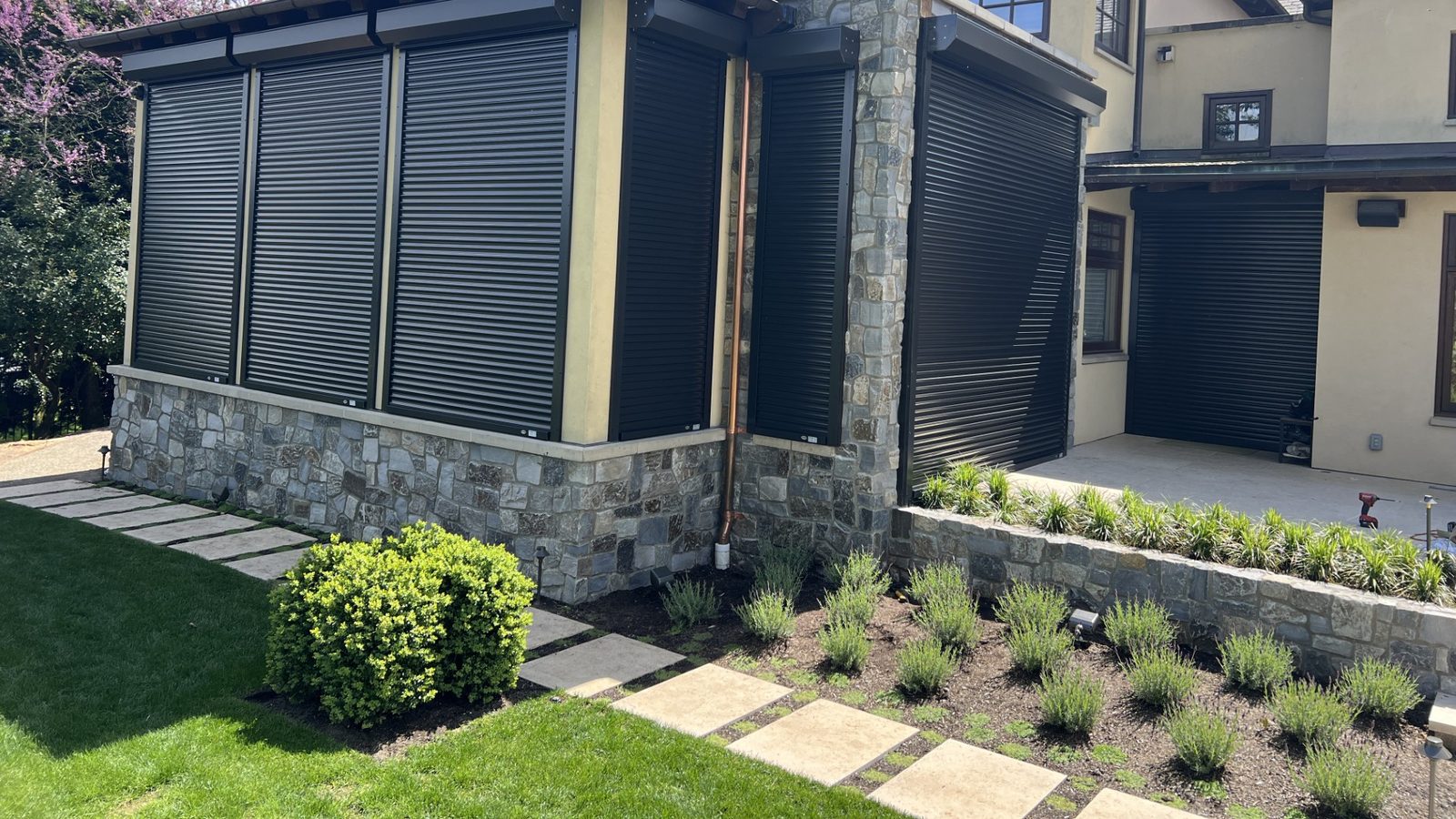
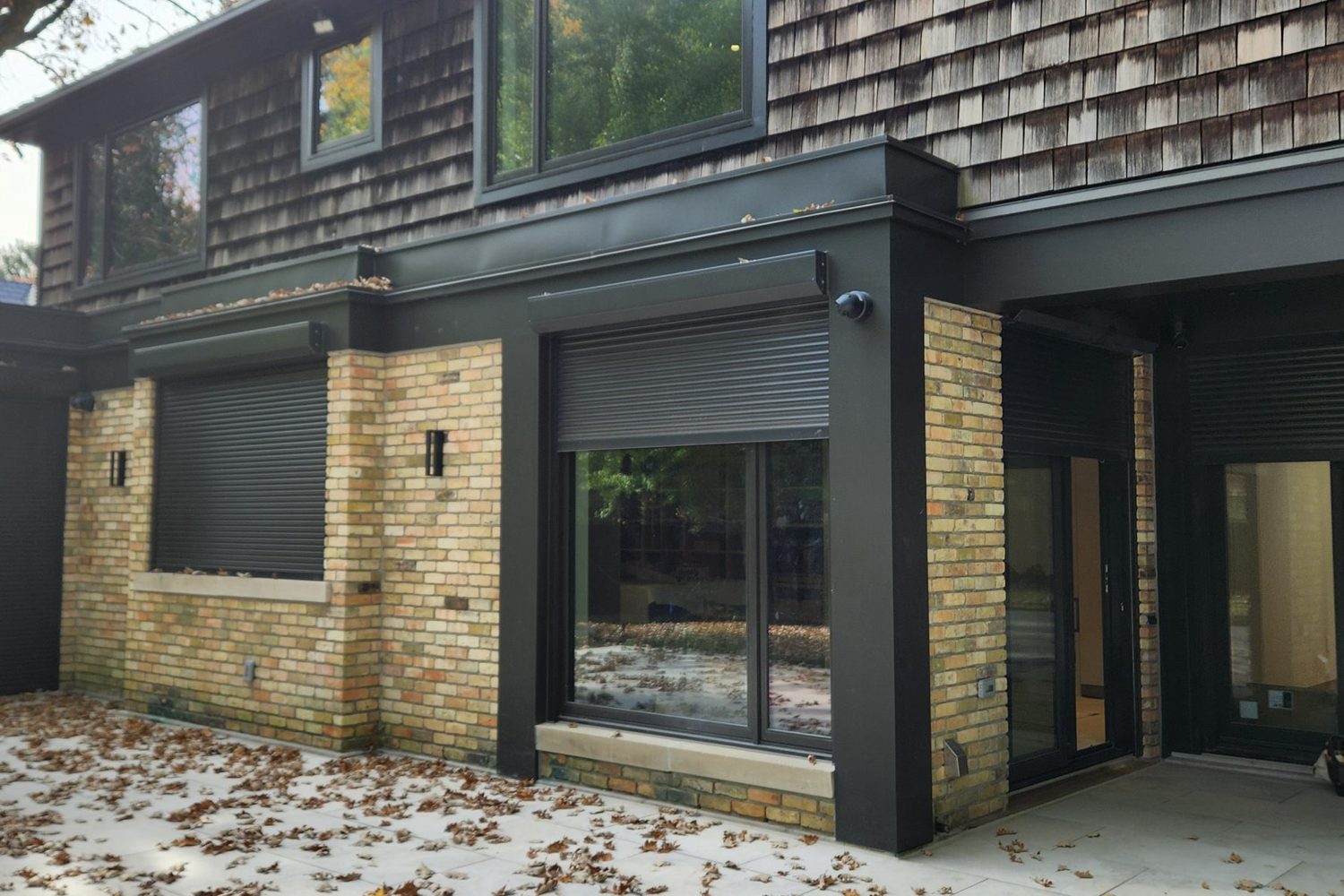
Aluminum rolling shutters over the windows and doors of a house — closed, a solid slat curtain nobody can see through or get through quickly; open, a slim box above the opening. Fitted for security, for a cottage left through the winter, for a bedroom that has to go dark, and for the heat a west-facing window puts into a room. Manual or motorised, made to the opening.
Request a QuoteCall 800-522-6825
Made to your opening · manual, crank or motorised · the same shutters we fit on storefronts
At a glance
| What it is | Interlocking aluminum slats running in guides either side of the opening, coiling into a head box above it |
|---|---|
| Fitted over | Windows, patio and sliding doors, entrance doors, and openings on garden buildings and cottages |
| Operation | Manual strap or crank, or motorised — wired, or battery with a solar panel where there is no power at the opening |
| Mounting | Surface-mounted box, or built in and rendered over during a renovation |
| What it does | Security and forced-entry delay, full blackout, wind and storm protection, and a real reduction in solar heat gain |
| Turnaround | Measured, then made to the opening — allow a few weeks for manufacture and a day to install most houses |
| Also called | Roller shutters, roll-down shutters, security shutters, roll-up shutters and rolling security shutters — all the same product |
A rolling shutter is a curtain of interlocking aluminum slats that runs in a guide down each side of the opening and coils into a box above it. Closed, it is a solid barrier over the glass. Open, it is a slim box along the head and two narrow rails you stop noticing within a week.
We fit them on houses across the GTA, and we have been fitting the same product on storefronts, pharmacies and industrial openings since 1979 — which is the practical reason to have us do it. The mechanism on a house is the mechanism on a shopfront, scaled down.
The four reasons people actually buy them
They get sold as one product and bought for four quite different jobs. Which one you are buying decides the slat, the operation and the price, so it is worth being clear before anyone quotes.
Security on a specific opening
A ground-floor window at the side of the house, a basement window behind a hedge, patio doors onto a dark garden. A closed shutter removes both the view in and the quick way through. This is the reason most people call.
A property left empty
A cottage through the winter, or a house empty for a month. Shutters down means nothing to see and nothing easily reached — and unlike boarding up, it takes a minute and looks deliberate.
Blackout
The only thing that genuinely darkens a bedroom, because it blocks the light outside the glass. Shift workers, nurseries and anyone who has given up on blinds in June.
Solar heat
Stopping the sun before it reaches the glass is far more effective than any interior blind. On a west-facing room in July it is the difference between usable and abandoned.
Storm and wind
Real protection for glass against debris in a bad blow, which matters more on exposed lakefront and cottage properties than in a sheltered subdivision.
Noise
Not the reason to buy, but a genuine side effect — a closed slat curtain takes a useful edge off road noise.
An opening that cannot take a door
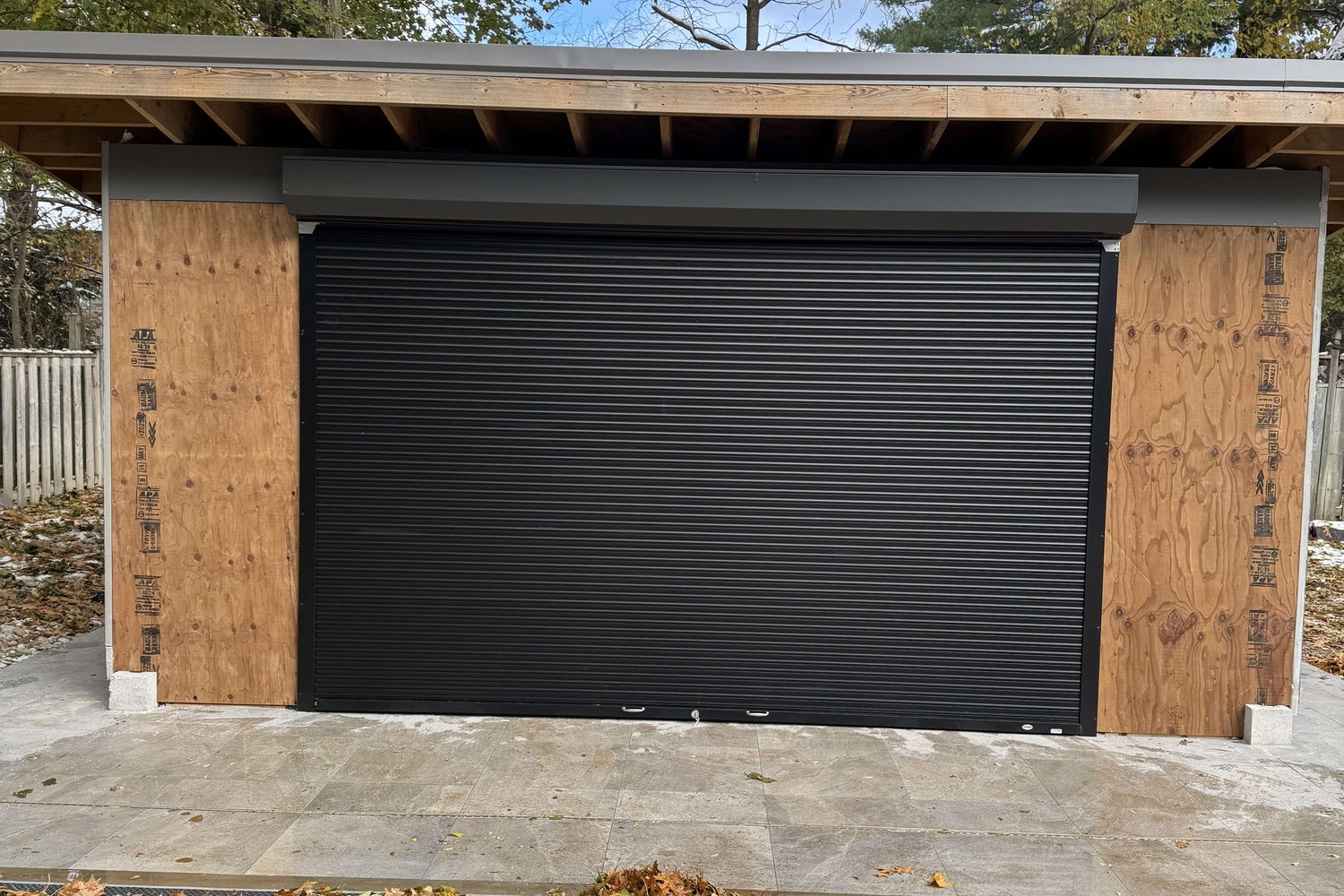
A garden building, a pool house, a servery hatch, an open carport bay. A shutter closes an opening that has nothing else to close it.
What your insurer may count
Some insurers recognise physical security measures. Worth a call to yours before you buy, rather than after.
The disadvantages, before the advantages
Everyone selling shutters lists the benefits. These are the four things that make people regret them, and all four are avoidable by deciding correctly rather than by buying a different brand.
- The box has to go somewhere. The curtain coils into a housing above the opening. On a retrofit that box is on the outside wall and it is visible. Built-in boxes disappear into the wall, but that is a renovation decision, not an afterthought.
- Closed, a house with shutters looks closed. On the right elevation it reads as modern and deliberate. On a traditional frontage it can read as a shop after hours. Look at the house honestly.
- They cost more than blinds and more than film, because each one is made to its opening rather than cut from stock.
- They are mechanical. Guides collect grit, straps wear, motors and batteries eventually fail. A shutter used weekly lasts decades; a shutter left down for two years sticks.
The single most common regret is fitting shutters to every window because it was less expensive per unit. Shutters earn their money on the openings with a reason — the vulnerable one, the bright one, the hot one. On the rest, they are an expensive way to make a house look shut.
Slats, boxes and how it is actually built
| Part | What it is | What to know |
|---|---|---|
| Slat curtain | Interlocking aluminum slats, usually foam-filled | The standard insulated slat suits most houses; a heavier extruded slat is specified where security is the primary job |
| Guides | Aluminum channels down each side | They hold the curtain against being levered out — the guides are as much of the security as the slats |
| Head box | The housing the curtain coils into | Surface-mounted on a retrofit, built into the wall on new work or a renovation |
| End locks / bottom bar | The reinforced bottom slat and its locks | This is what stops the curtain being pushed up from outside |
| Operation | Strap, crank, or a tubular motor inside the roller | Motors can be wired, or battery with a solar panel where there is no power |
| Controls | Wall switch, remote, timer, sun or wind sensor | Timers are what make an empty property look occupied |
| Ventilation slots | Small perforations in the slat | Let a little light and air through at partial close; solid slats give total blackout |
Manual or motorised
Manual — a webbing strap through the wall, or a crank handle — is less expensive and has almost nothing to fail. It is the right answer for one or two shutters you operate now and then.
Motorise them when there are several, when the opening is awkward to reach, or when you want them on a timer while the house is empty. A tubular motor lives inside the roller, so nothing changes visually. Where there is no power at the opening — a cottage, a garden building, a window on the far side of the house — a battery motor with a small solar panel avoids cutting a channel for a cable.
Our honest rule of thumb: more than about three shutters, motorise them. Manual shutters that are awkward to operate stop being operated, and a shutter that is never used is money spent on a box above a window.
Rolling shutter or rolling grille?
Both coil into a box above the opening, and they do opposite jobs.
- A shutter is a solid curtain. It blocks the view, the light and the weather. That is what a house wants almost every time.
- A grille is an open lattice you can see through. It secures an opening while leaving a display visible, which suits a shopfront and very rarely suits a home.
If you want security without feeling boarded in during the day, the usual answer is not a grille — it is a shutter you leave up during the day and close at night, or a slat with ventilation slots.
What happens when you order one
- We measure the opening. Every shutter is made to its own, so this comes before any firm price.
- We agree the specification — slat, colour, box type and whether it is surface-mounted or built in, operation and controls.
- It is manufactured to those dimensions. Allow a few weeks; this is a made-to-order product, not stock.
- Installation. Guides fixed each side, box mounted and the curtain hung, then set and tested. Most houses are a day; a single opening is a morning.
- Motorised shutters are set and paired — travel limits, remotes, and any timer or sensor — before we leave.
If you are replacing windows or doing exterior work anyway, say so early. Building the box into the wall while the wall is open is dramatically less expensive and looks better than any retrofit box, and it is the one decision that cannot be revisited later.
Living with them
Very little, and skipping it is what shortens a shutter's life.
- Run every shutter now and then, including the ones you never use. It is the seized-through-disuse ones we get called to.
- Keep the guides clear. Grit and leaf litter in the bottom of a guide is the commonest cause of a curtain jamming or coming out of its channel.
- Wash the curtain when you do the windows. Plain water and a soft brush; no solvents on a powder-coated finish.
- Know the manual override on a motorised shutter before you need it in a power cut, not during one.
We service shutters we did not install, including makes no longer sold — guides, slats, end locks, straps, crank gears and motors are all replaceable.
Four decades of shutters for names Ontario knows — Canada’s Wonderland, Tim Hortons, Canadian Tire, the LCBO, Metrolinx, Marriott & Hilton hotels, the University of Toronto — plus warehouses, pharmacies, schools and homes across the GTA. Dependable people, quality products, since 1979.
What our customers say
Best garage service in the city!!! Called Friday. Got a new garage opener Monday! Thanks!!!
Great service! Technicians came on time. They were very friendly, explained all the options and installation took less than an hour. The new opener works great so far! I would definitely recommend this company.
Had the garage door spring break over the weekend and called first thing Monday morning, technician was there 25 min later. Fantastic tech, personable and knowledgeable. Hour or so later 2 springs changed and ready to go. …
Read the full review
Rolling shutter installation across Toronto & the GTA
Shutters are measured, made and fitted across the core GTA and out into the Southern Ontario belt, from our shop at 1645 Bonhill Road in Mississauga. Each one is built to its opening, so this is a measure-then-install job rather than something off a shelf.
Core GTA
- Toronto
- Mississauga
- Brampton
- Vaughan
- Markham
- Scarborough
- North York
- Etobicoke
- Richmond Hill
- Oakville
- Burlington
- Milton
Southern Ontario belt
Cottage and second-property work travels further than the belt list suggests — a shutter installation is a planned visit rather than a call-out, so distance changes the schedule rather than whether we come. Ask. See all service areas
What residential rolling shutters cost
Priced per opening, because each shutter is made to its own. The honest drivers, in roughly the order they move the number:
- The size of the opening — a patio door is several times the curtain area of a basement window, and area is the biggest single factor
- How many openings. The first shutter carries the setup; the tenth on the same house does not
- Manual strap or crank versus motorised, and whether the motor is wired or battery and solar
- Slat type — a standard insulated slat, or a heavier extruded slat where security is the point rather than shade
- Surface-mounted box or a built-in one recessed into the wall, which is much tidier and much easier during a renovation than after it
- Whether the wall can take the fixings as it is, or needs reinforcement
- Controls — a wall switch, remotes, timers, sun sensors, or integration with what you already run at home
We measure before we quote, because a shutter is made to the opening and a number given over the phone would be a guess. What we will tell you on the phone is the range for the size and type you are describing, and whether the job is better done as part of work you already have planned.
Common questions
What are the disadvantages of roller shutters?
Four, and any installer who lists none is selling rather than advising. The box. The curtain has to coil into something above the opening, and unless it is built into the wall during a renovation, that box is visible from outside. The look. Closed, a shutter reads as closed — some houses carry it, some streets do not, and on a heritage frontage it can be wrong. The cost. They are made to each opening, so they are substantially more than blinds and more than most window film. They are one more thing to maintain: guides collect grit, motors and batteries eventually fail, and a shutter left unused for two years is a shutter that will stick. None of those is a reason not to fit them — they are the reasons to fit them in the right places rather than on every window.
Are roller shutters worth it?
It depends entirely on which of the four jobs you are buying. For security on a repeatedly targeted opening — a ground-floor window at the side of a house, a cottage left empty all winter — they are the most effective thing you can put over glass, and less expensive than being broken into twice. For blackout, they are the only product that gets a bedroom genuinely dark, including in June at 5am. For heat, stopping the sun outside the glass is far more effective than any blind inside it. For general appearance, they are the wrong purchase. Be honest about which one you want and the answer is usually clear.
How much do rolling shutters cost per window?
Per opening, and area drives it — a basement window and a patio door are not the same product at different prices, they are very different amounts of curtain, guide and motor. Beyond size, the choices that move the number are manual versus motorised, standard insulated slat versus a heavier extruded one, and surface-mounted versus built-in box. Doing several openings at once brings the per-opening figure down because the setup and the visit are shared. We measure before quoting; anyone giving you a firm per-window price sight-unseen is quoting something generic.
What are rolling shutters called?
All the same product: roller shutters, roll-down shutters, roll-up shutters, rolling shutters, security shutters, and in Europe usually "rolling shutters" or rolladen. The distinction that does matter is shutter versus grille: a shutter is a solid curtain that blocks the view and the weather; a grille is an open lattice you can see through, which suits a shopfront that wants to display at night but is rarely what a house wants.
Do rolling shutters actually stop a break-in?
They stop the opportunistic ones outright and they slow the determined ones down a great deal, which is what security is. A closed shutter removes the two things a quick break-in relies on: seeing what is inside, and getting through the glass in seconds. Getting past an aluminum curtain locked into guides on both sides takes noise, time and tools. It is not a vault door, and we would not claim it is — but on a ground-floor window that has been done once already, it is the change that stops it happening again.
Will they keep a bedroom dark?
Completely, which is why they are common in Europe and why people who have lived with them miss them. A closed shutter blocks the light outside the glass, so there is no glow around the edge of a blind and no 5am summer sunrise. The same slats cut a good deal of outside noise. If you want light control rather than blackout, most slats are made with small ventilation slots that let a little light and air through when the curtain is lowered but not fully closed.
Manual or motorised?
Manual — a strap or a crank — is less expensive, has nothing to fail, and is perfectly sensible on one or two openings you operate occasionally. Motorised earns its money the moment there are several shutters, the opening is awkward to reach, or you want them on a timer while the house is empty. Where there is no power at the opening, a battery motor with a small solar panel avoids running a cable. Our honest advice: if you are fitting more than about three, motorise them, because the ones that are awkward to operate are the ones that stop being used.
Can they be fitted to a house that is already built?
Yes — most residential shutters are retrofits, and they surface-mount with the box above the opening and the guides down each side. What changes with an existing house is that the box is visible rather than buried in the wall. If you are renovating or replacing windows anyway, that is the moment to build the box in: it costs less to do then than at any other point, and the finished result is a shutter that looks like part of the house.
Do rolling shutters help with heat and cold?
With heat, markedly — the shutter stops the sun outside the glass, which no interior blind can do, and on a west-facing room in July that is the difference between usable and not. With cold, modestly: a closed shutter adds a still air gap in front of the window, which helps, but it is not insulation and it is not a reason on its own. If a room is cold, the window is usually the thing to fix.
Do you service shutters you did not install?
Yes. Guides, slats, end locks, straps, crank gears, motors and controls are replaceable across most makes, and the commonest faults — a curtain out of its guide, a snapped strap, a motor that has lost its limits — are a single visit. Where a shutter is genuinely obsolete and slats can no longer be matched, we will say so rather than sell you a repair that leaves you with a shutter you still cannot use.
Shutters for a house, a cottage or one difficult window?
Tell us what the openings are and what the shutter is for — keeping people out, keeping light out, or keeping heat out. Those are three different specifications, and the answer changes the slat before it changes the price.