
Commercial & Industrial
Preventative Door & Dock Maintenance Plans
A scheduled interval on every door and dock position in the building, so the wear is found in daylight instead of at 2am. One attendance covers every opening on site, and you get a written deficiency list with prices rather than a surprise. Toronto and the GTA, since 1979.
Ask About a PlanCall 800-522-6825
Every opening on one visit · written deficiency list, priced · intervals set by cycles, not the calendar
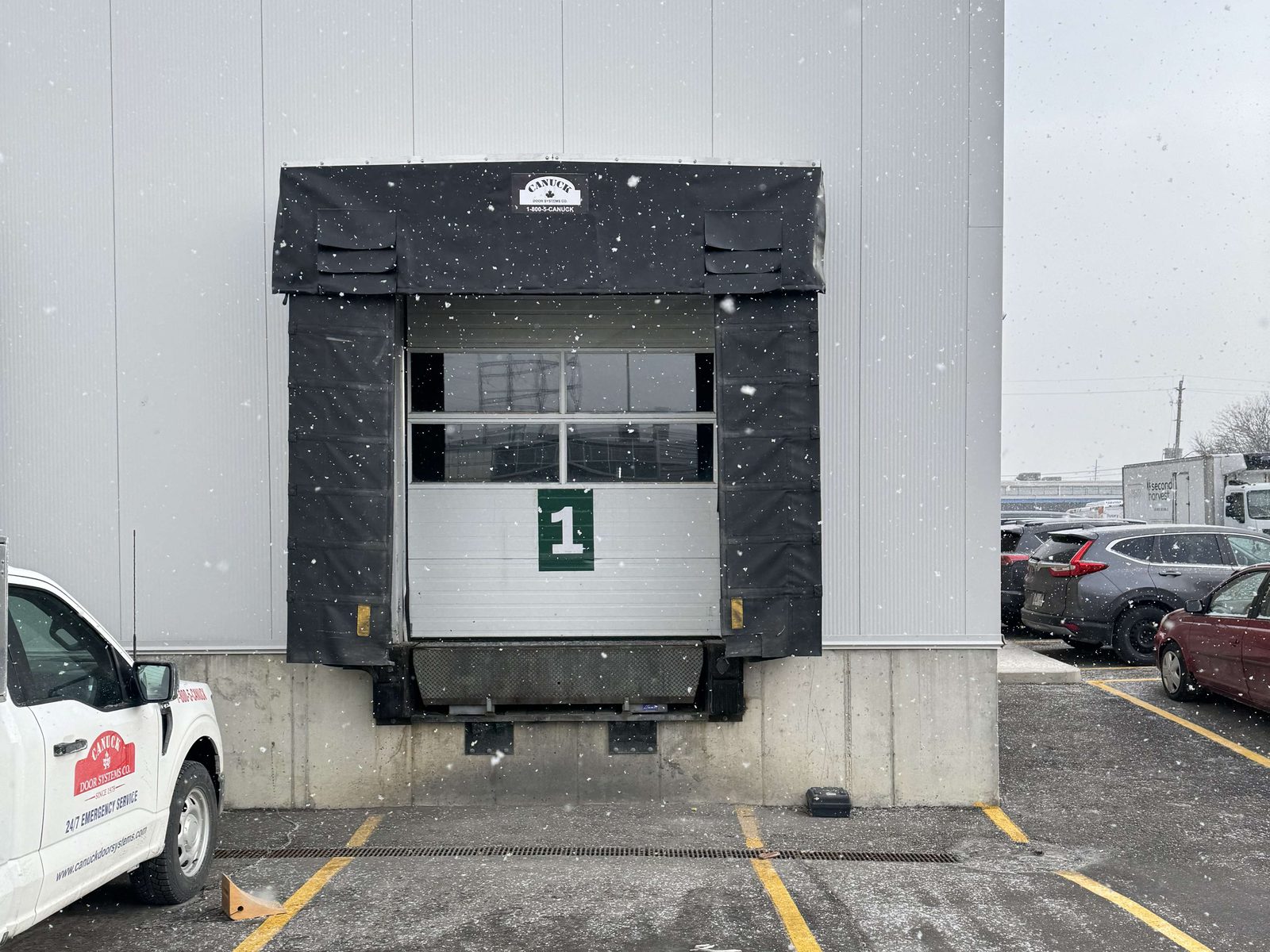
A preventative maintenance plan puts every door, dock position and powered entrance in your building on a scheduled interval, so that worn hardware is found and replaced on a booked visit rather than discovered when the building will not lock. One attendance covers every opening on site; you get a written record per door and a priced deficiency list. We maintain doors we did not install, of any make, across Toronto and the GTA.
The case for it is arithmetic, not enthusiasm. Attendance is the fixed cost of any door work, so thirty openings inspected on one visit cost a fraction of thirty separate call-outs — and the call-outs that maintenance prevents are the expensive kind, at night, at a weekend rate, with production stopped.
What a plan covers, and how often
Intervals follow cycles, not the calendar — the single most useful thing to know about door maintenance. Two identical doors, bought on the same day, will reach the end of their wear life years apart if one runs ten times a day and the other two hundred. The frequencies below are the starting point a survey adjusts.
| Asset | Typical interval | What the visit covers | What failure costs you |
|---|---|---|---|
| Personnel & stairwell doors | Annually | Hinges, closer speeds and force, latching, strike, seals, threshold, frame condition | The building will not lock; on a rated door, a code deficiency |
| High-traffic entrance doors | Twice a year | Closers and pivots, thresholds, weatherstripping, locks, glass and fittings | Public entrance out of use in trading hours |
| Fire-rated openings | Annually, as an inspection | Label, clearances, latching, self-closing, no field modifications, hardware | A failed inspection, and a compartment that will not hold |
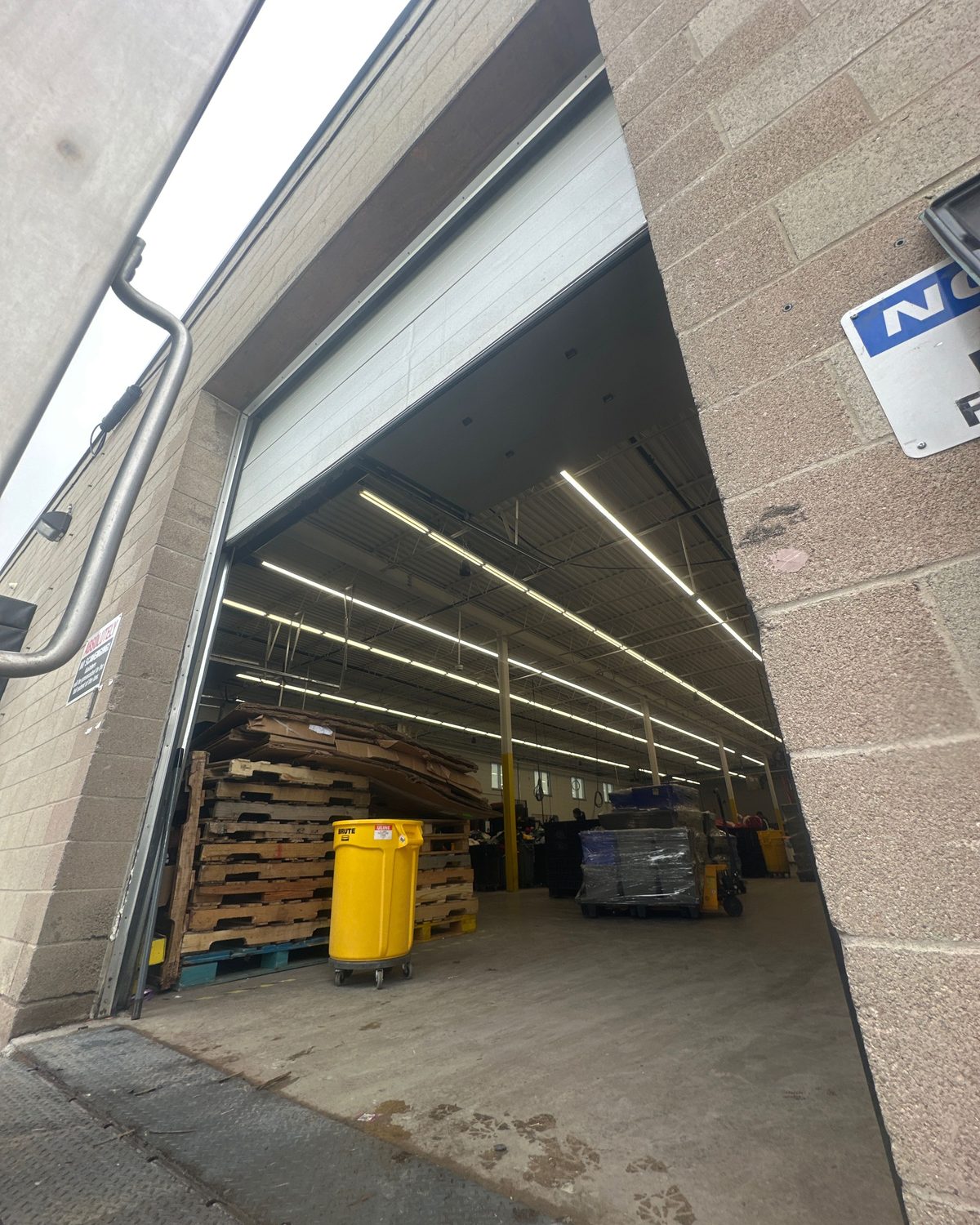
| Sectional & roll-up doors | Twice a year, quarterly if busy | Springs, cables, rollers, hinges, tracks, seals, balance test, operator limits and safety devices | A door down, a bay closed, and often an operator taken with it |
| Rolling steel & high-speed doors | Quarterly | Curtain, guides, barrel, bottom bar, brakes, controls, photo eyes and edges | Production or cold-chain interruption |
| Dock levelers & equipment | Twice a year, quarterly on busy docks | Cylinder or spring, lip and keepers, hold-downs, pit clean, bumpers, seals and shelters | A dead bay and a queue of trucks |
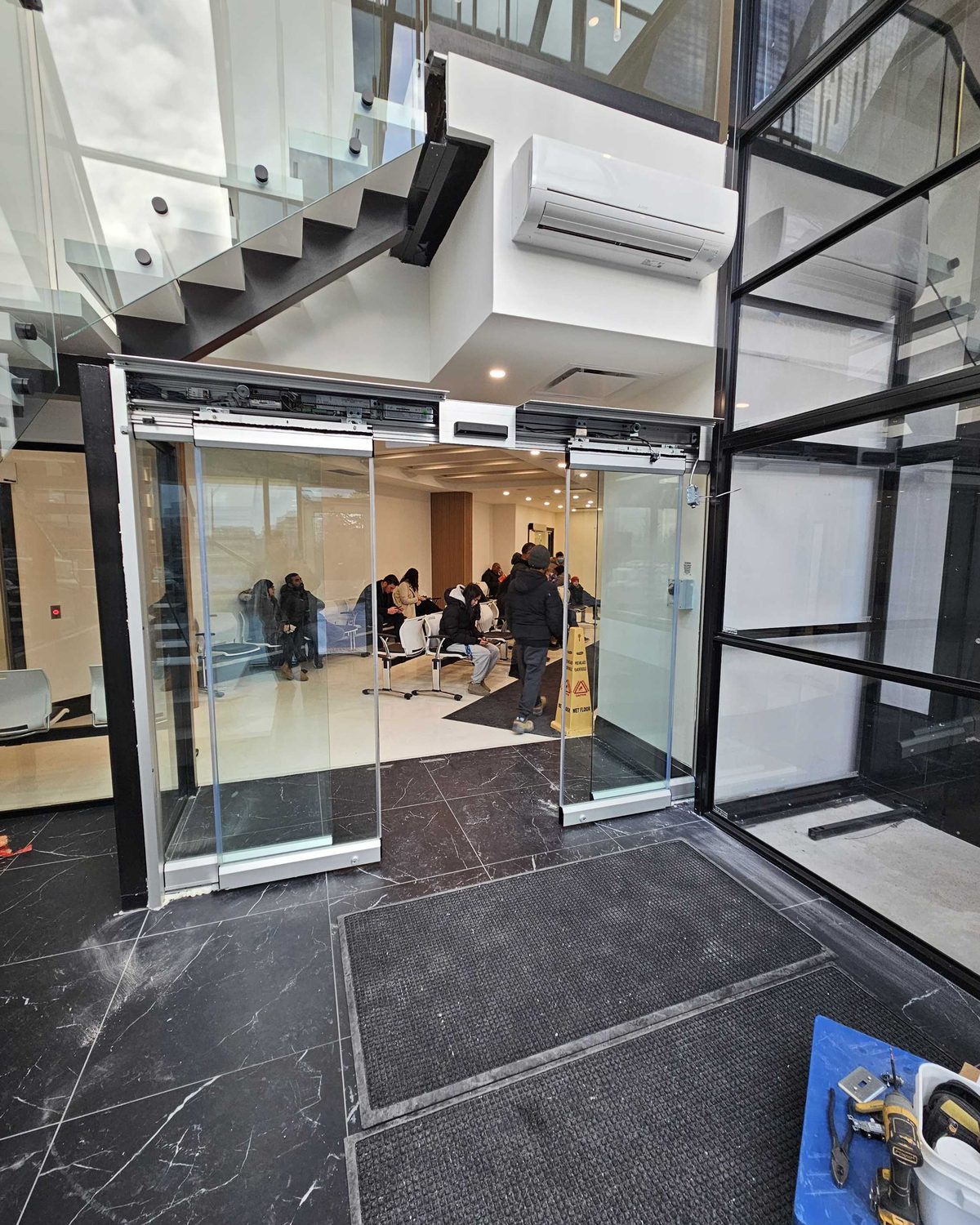
| Automatic entrances | Annually as an inspection, plus service by use | Sensors, coverage, carriers, belts, break-out, force and speed, signage | A safety fault, and an entrance taken out of service |
| Security shutters & grilles | Twice a year | Curtain, guides, locks, barrel, motor, controls, manual override | The premises cannot be closed at night |
What actually happens on a visit
- The asset register comes out. Every opening on the site is numbered and recorded — type, location, make where known, and its history with us. A plan without a register is just repeated call-outs with a discount.
- Each opening is inspected and adjusted. Closers set, fixings tightened, hardware lubricated correctly, seals checked, balance tested on counterbalanced doors, safety devices tested on powered ones.
- Small wear is replaced there and then, from the truck — the consumables that cause most failures cost little and are dealt with on the visit rather than quoted.
- Anything larger is written up as a deficiency, with a price and a consequence: life-safety first, then what will strand you, then what can wait.
- You get the report. Per opening, in a format that goes into a work order or a capital budget without another phone call.
Half the value of the register is not this year's repairs — it is next year's budget. Once every opening's condition and interval are recorded, door spend stops being an unpredictable line and becomes a forecast: which doors get parts this year, which get replaced next, and which are fine for a decade.
The five things that break, and how early they show
Doors respond to inspection better than almost anything else in a building, because their wear is mechanical, gradual and visible.
- Springs and counterbalance. A spring is rated in cycles, not years — a standard commercial torsion spring is commonly rated around 10,000 of them, one cycle being one open and one close. So a door used ten times a day reaches that in roughly three years; a door used a hundred times a day in about four months. Cycle counts make failure predictable enough to schedule. See springs & parts.
- Closers. They leak before they die, and a leaking closer is visible at head height from the corridor. A door that no longer latches on its own is the second sign, and on a fire door it is a deficiency, not an annoyance.
- Hinges and fixings. Screws pull out of frame reinforcement long before the leaf drags. Caught early it is hardware; caught late it is a frame.
- Seals, sweeps and thresholds. The least expensive items on any door and the ones whose failure lets water into the bottom of a steel leaf — which is how a $200 seal becomes a $2,000 door.
- Safety devices on powered doors. Photo eyes, edges and sensors fail quietly, and nothing tells you until the door closes on something. They are tested on every visit because nothing else tests them.
Compliance is part of the schedule, not a separate crisis
Two recurring obligations sit on the same doors a maintenance plan already visits, and both are less expensive folded into that attendance than bought as one-off visits.
| Fire-rated openings | Automatic entrances | |
|---|---|---|
| What it is | An annual inspection of every rated door assembly, documented | An annual safety inspection of every powered entrance, documented |
| Why | The fire code requires rated assemblies to be maintained and inspected | Powered doors are inspected to the industry safety standard the manufacturers publish |
| Typical findings | Missing labels, painted-over labels, field-cut leaves, blocked or wedged doors, doors that will not latch, wrong hardware fitted later | Sensor coverage drifted, break-out force out of spec, missing or faded signage, worn carriers |
| What we hand over | Inspection record per opening, with deficiencies priced | Inspection record per entrance, with deficiencies priced |
| Where it goes | Fire door inspection | Automatic door service |
Under Ontario's occupational health and safety legislation the equipment in a workplace has to be maintained and kept capable of doing its job, and on a powered door that includes its safety devices. A documented interval is how you demonstrate it.
Who these plans are for
Multi-door sites where a failure has consequences. What they have in common is not size — it is that somebody in the building is accountable for openings they did not choose and cannot personally watch.
If you run two doors and an office, a plan is not worth buying and we will say so. Call us when something breaks; that is the honest advice.
The kind of site a plan is written for
Eight businesses that reliably need one, and the reason each does. None of them is on the list because of floor area — they are here because of what a closed door costs them by the hour.
Warehouses & distribution centres
Dock doors and levelers cycling all day. One dead bay is a queue of trailers, and the failures arrive together because the same reversing trailer causes them.
Food & beverage plants
Washdown, cold-storage and high-speed doors, where a failed seal is a temperature excursion and an audit finding rather than an inconvenience.
Retail chains & franchises
Storefronts, automatic entrances and security shutters across many sites. One specification and one schedule across the portfolio, so the twentieth store is not a surprise.
Schools, colleges & campuses
Fire doors and exits that get inspected, gym partitions that get forced, and a summer window that is the only time a crew can work uninterrupted.
Hospitals & clinics
Automatic entrances that never stop, fire separations that have to hold, and openings that cannot simply be taken out of service while a part is ordered.
Hotels & conference centres
Guest-facing entrances and operable walls moved daily by whoever is on shift — the two things most likely to be judged and most likely to be mishandled.
Auto dealers & service centres
Showroom entrances that are the brand, and service-bay overhead doors that cycle far more than anyone counts.
Property managers & industrial parks
Multi-tenant portfolios where one person is accountable for openings they did not choose, across buildings they cannot personally watch.
Four decades of doors and docks for names Ontario knows — Canada’s Wonderland, Tim Hortons, Canadian Tire, the LCBO, Metrolinx, Marriott & Hilton hotels, the University of Toronto — plus thousands of businesses, warehouses, schools and hospitals across the GTA. Dependable people, quality products, since 1979.
Start with the survey
The first step is a walk of the site. We list every opening, record its type and condition, flag anything that is already a problem, and propose an interval per asset class rather than one blanket frequency. You get the register, the proposed schedule and a price. There is no charge for the walk and no obligation attached to it — and if the honest recommendation after seeing the site is "fix these four things and call us when something breaks", that is what the report will say.
What our customers say
Called Canuk door systems to come repair a door within our commercial unit. They responded quickly and the turn around time was very quick. Very pleased with the services provided
Had some doors on our clinic unit repaired. Responded and quotes very quickly. Pricing was fair. Quick turn around time was greatly appreciated.
It was a pleasure dealing with Canuck door systems. Moji was excellent to deal with. He responded extremely fast and a technician was here within 2 hours and did an excellent job on our commercial doot repair. I highly recommend them.
Maintenance visits across Toronto & the GTA
Planned visits are run out of our shop at 1645 Bonhill Road in Mississauga and scheduled in advance, so they can be booked around shifts, trading hours and shutdowns rather than squeezed between emergencies.
Core GTA
- Toronto
- Mississauga
- Brampton
- Vaughan
- Markham
- Scarborough
- North York
- Etobicoke
- Richmond Hill
- Oakville
- Burlington
- Milton
Southern Ontario belt
Planned work is exactly where distance stops mattering. A booked visit to a site in Guelph or Barrie is one scheduled trip covering every opening on that site — which is why multi-site portfolios out in the belt are usually less expensive to maintain than to keep rescuing. See all service areas
What a maintenance plan costs
Plans are priced per site and per visit, not per door in isolation, because attendance is the fixed cost and the doors are the variable. What sets it:
- How many openings, and of how many types — a survey comes first, and it is free
- The visit frequency, which follows cycles rather than the calendar
- What is on site — personnel doors are quick, docks and powered doors are not
- Whether compliance inspections are folded in (fire doors, automatic entrances)
- Consumables included in the visit versus quoted as deficiencies
- Number of sites, if it is a portfolio — one contract, one schedule, one report format
The comparison that matters is not plan versus nothing. It is the plan against the after-hours call-outs it prevents: a single emergency attendance at a weekend rate, on one door, is a meaningful share of a year's planned visits covering every opening in the building.
Common questions
How often should commercial doors be serviced?
By cycles, not by the calendar. A door opening ten times a day and one opening two hundred times a day wear at completely different rates, and calling both "annual" gets one of them wrong. As a practical frame: a lightly used personnel or stairwell door once a year, a normal warehouse or retail door twice, and a high-cycle dock, production or entrance door quarterly. Powered doors and dock equipment sit at the frequent end because they have more to go wrong and a bigger consequence when it does.
How often should commercial roller doors be serviced?
Quarterly on a dock or production opening, twice a year on a normal warehouse door, annually on a rarely used one — and the deciding number is the cycle count, not the age. A rolling door's curtain, guides, barrel, springs, bottom bar and operator all wear as the door runs, and the two failures that strand people (a spring at the end of its cycle life and a cable off the drum) are both visible on inspection before they happen.
What maintenance does a commercial garage door actually need?
On a sectional or roll-up door: springs and cables checked for wear and correct balance; rollers, hinges and bearings inspected and lubricated; track alignment and fixings checked; the bottom seal and perimeter weather seals examined; the operator's limits, force settings and safety devices tested; and the door balance checked by disconnecting the operator and lifting it by hand. The balance test is the one most often skipped and the one that predicts operator failure — an unbalanced door quietly does its motor's job to death.
How do you lubricate a commercial roll-up door?
Sparingly, and not with the wrong thing. Hinges, roller stems, bearings and the spring coils take a light machine oil or a purpose-made garage-door lubricant. Two mistakes are common: heavy grease, which collects grit and becomes an abrasive, and spraying the track — the track is a running surface, not a bearing, and lubricating it makes the rollers slide rather than roll. Nylon rollers should not be oiled at all. On a commercial door the lubrication is the least valuable part of the visit; the inspection around it is the point.
What is the maintenance on a commercial door closer?
Closers are adjusted, not really serviced. On a visit we check the closing and latching speeds, the backcheck, the arm geometry and the fixings, and look for oil at the body — a leaking closer is at the end of its life and no adjustment brings it back. Closing force also has to be right for the door: too weak and a fire door will not latch, too strong and an accessible entrance is unusable. On rated openings the closer is part of the labelled assembly, so it is replaced like for like rather than with whatever fits.
How long does a commercial door last?
A hollow metal door in a dry interior opening can outlast the building's fit-out; the same door on an exterior loading elevation may rust at the bottom in a decade. What almost never lasts as long as the leaf is the moving hardware — hinges, closers, exit devices, seals, springs, rollers and operators are the wearing parts and are meant to be renewed on condition. That is the actual argument for maintenance: it does not extend the leaf, it stops worn hardware from destroying it.
Do you have to have installed the doors?
No. Most of the openings under our plans were installed by someone else, often decades ago, and a survey does not care who supplied them. We hold parts for the makes common in Ontario buildings and can adapt hardware for doors whose manufacturer no longer exists.
What do we get after each visit?
A written record per opening: what was inspected, what was adjusted or replaced on the visit, and a deficiency list of anything that needs parts or more time — each item priced, so it can go into a budget or a work order without a second phone call. Deficiencies are ranked by consequence rather than by cost: life-safety items first, then anything that will strand you, then wear that can wait for the next visit.
Does maintenance cover the annual fire door inspection?
It can, and it is usually the sensible way to buy it, but they are different jobs. The fire-code inspection of rated openings is a specified annual procedure with its own documentation, and it is a compliance obligation rather than a maintenance choice. Folding it into the same attendance saves a separate visit, and the same is true of the annual safety inspection on automatic entrances — both are covered in the compliance section above.
Is a maintenance plan actually less expensive?
On any site with more than a handful of doors, yes — and the reason is arithmetic rather than sales. Attendance is a fixed cost, so one planned visit that covers thirty openings costs a fraction of thirty call-outs. Add the after-hours premium that emergencies attract, the downtime while a dock or entrance is out, and the collateral damage worn parts do to the parts around them, and a plan wins on any site where doors matter. On a two-door office it honestly does not, and we will tell you that.
Want to know what your doors actually need?
Ask for a survey. We walk the site, list every opening and its condition, and come back with a proposed interval and a price. There is no obligation and no charge for the walk.