
Commercial & Industrial · Ontario Fire Code
Fire Door Inspection & Certification
The annual fire door inspection NFPA 80 calls for, on top of the monthly checks the Ontario Fire Code requires — every fire-rated assembly checked against the standard, written up door by door, with the deficiencies separated into what we can repair and what has to be replaced. Then we fix them, because we are the door contractor as well as the inspector.
Book an InspectionCall 800-522-6825
Annual inspections to NFPA 80 · since 1979 · report, repair and re-check from one contractor
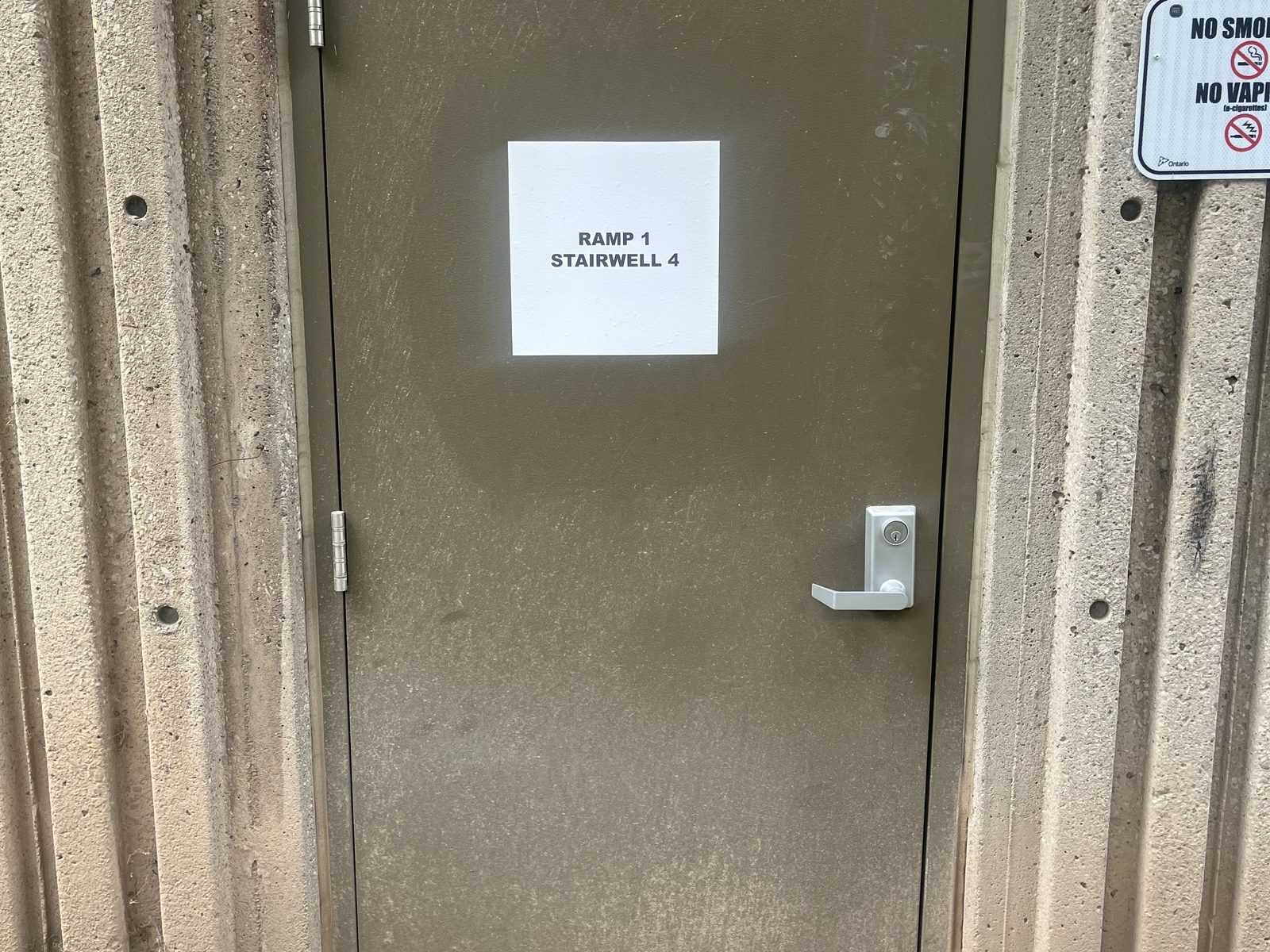
Every fire door assembly in an Ontario building has to be inspected and tested once a year, documented, and put right where it fails. That requirement catches a lot of owners by surprise, and it catches even more of them without a record — the doors are inspected when someone from the fire department asks for the paperwork and there is none.
Canuck Door Systems does the inspection and the repairs. That combination matters: an inspection report from someone who cannot fix anything leaves you holding a list, and a repair quote from someone who never inspected the doors is guesswork. We survey the openings, write them up against NFPA 80, correct what can be corrected within the listing, and tell you plainly which doors have been modified past the point of certification.
What the annual inspection covers
| Checked | What we are looking for | Common finding |
|---|---|---|
| Labels | A legible label on both door and frame | Painted over, removed, or never there |
| Clearances | Gaps at head, jambs and sill within the listing | Floor redone, sill gap now too large |
| Closing | Closes from any position, unaided | Closer removed because the door slammed |
| Latching | Latch throws fully, every time | Frame moved; latch misses the strike |
| Hold-opens | Only alarm-released devices | Wedge, hook, or an extinguisher on the floor |
| Hinges | Listed type, correct count, tight fasteners | Missing screws, wrong hinges after a rehang |
| Glazing | Fire-rated glazing, within the listed area | Ordinary glass in a fire-rated lite |
| Seals & gasketing | Present, continuous, undamaged | Torn out or painted solid |
| Modifications | No field-cut holes or additions | Hole cut for a card reader — replacement door |
| Rolling assemblies | Drop test under the assembly's own power | Never tested; curtain painted to the guides |
Where the doors are
Most buildings have more fire-rated openings than the owner expects, and they are rarely all in one place.
Exit stairs
Every level, every stair — the largest single group in most buildings.
Service & mechanical rooms
Electrical, mechanical, sprinkler and elevator machine rooms.
Garbage & storage rooms
The chute rooms and storage rooms in every residential building.
Parking levels
Doors between the garage and the occupied building above.
Corridor separations
Cross-corridor doors, often on magnetic hold-opens.
Suite & tenant entries
Fire-rated suite doors in hotels, condos and multi-tenant offices.
Kitchens & production
The separation between a cooking or process area and everything else.
Rolling shutters & curtains
Counters, mall fronts and wide openings — inspected by drop test.
How an inspection runs
- We survey the openings. Where no schedule exists, the first visit establishes what is actually there and where — that list is worth having in its own right.
- We inspect each assembly against NFPA 80: labels, clearances, closing, latching, hardware, glazing, seals and modifications.
- We drop-test rolling assemblies and reset them, because a visual check proves nothing about a shutter.
- We correct what we can on the visit — adjustments, fasteners, latch and closer alignment, removing hold-open devices that should not be there.
- We report door by door, with photographs of every deficiency, formatted to hand to an inspector.
- We quote the rest separately — repairs within the listing, and the doors that need replacing — so the report is a record rather than a sales pitch.
The list of openings is the part with the longest life. Most buildings we inspect have never had one, and every subsequent year — ours or anyone else's — is faster and less expensive because it exists.
Repair, or replace?
The honest answer is different door by door, and it comes down to whether the listing survived.
- Repairable within the listing — closers, latches, hinges, strikes, gasketing, clearances, frame straightening and re-anchoring, and hold-open devices tied properly to the alarm.
- Replacement — leaves with field-cut holes, doors trimmed past the listing's allowance, unlabelled doors in fire-rated openings, and assemblies damaged past repair.
- Neither, yet — findings that are maintenance rather than code: sticking hardware, dirty guides, doors that need adjusting. We note them separately so nobody is spending capital on housekeeping.
Fire-rated assemblies we supply and install are on metal & steel fire-rated doors and wood fire-rated doors; ongoing servicing is part of our preventative maintenance plans.
Institutional and multi-residential buildings from our files
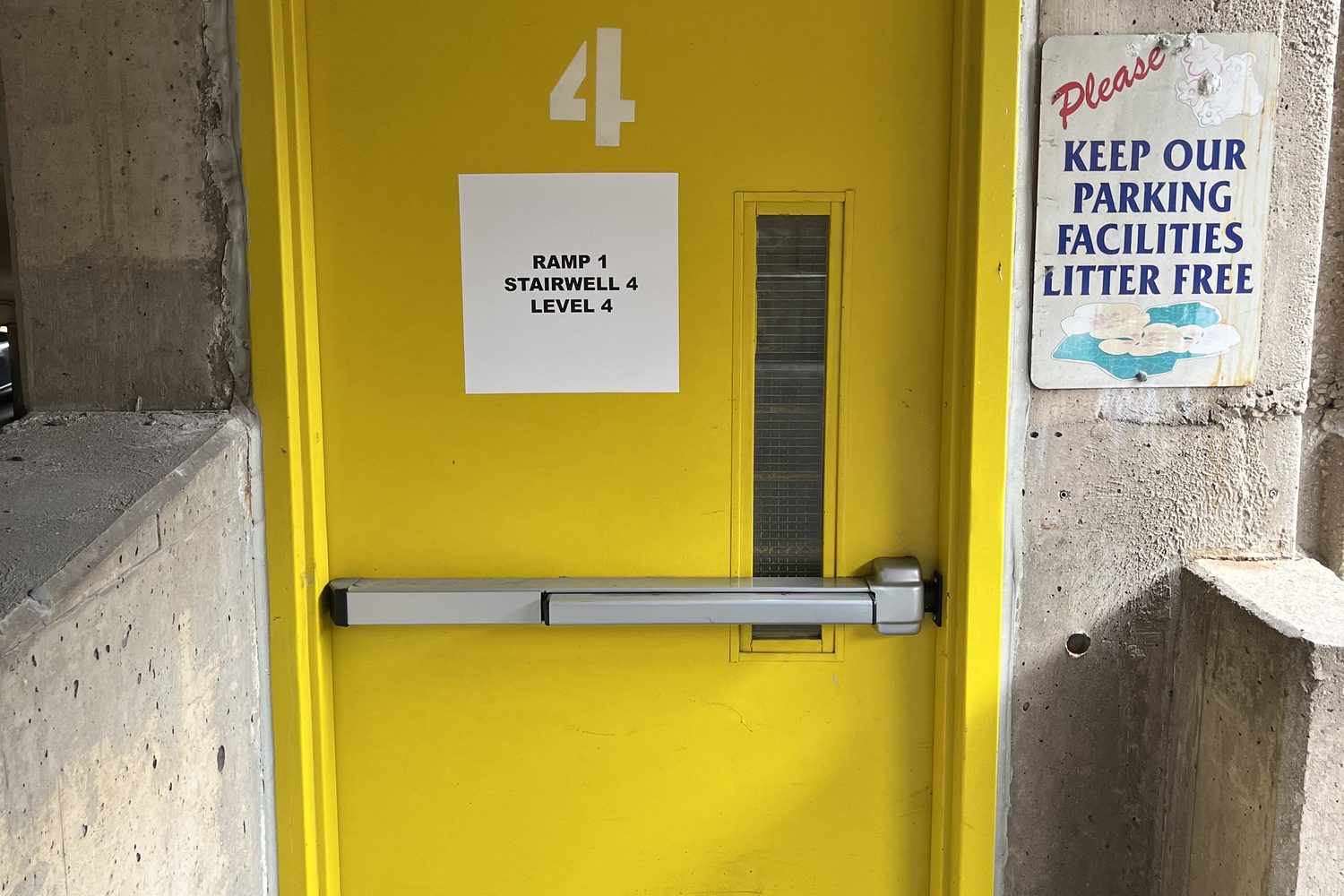
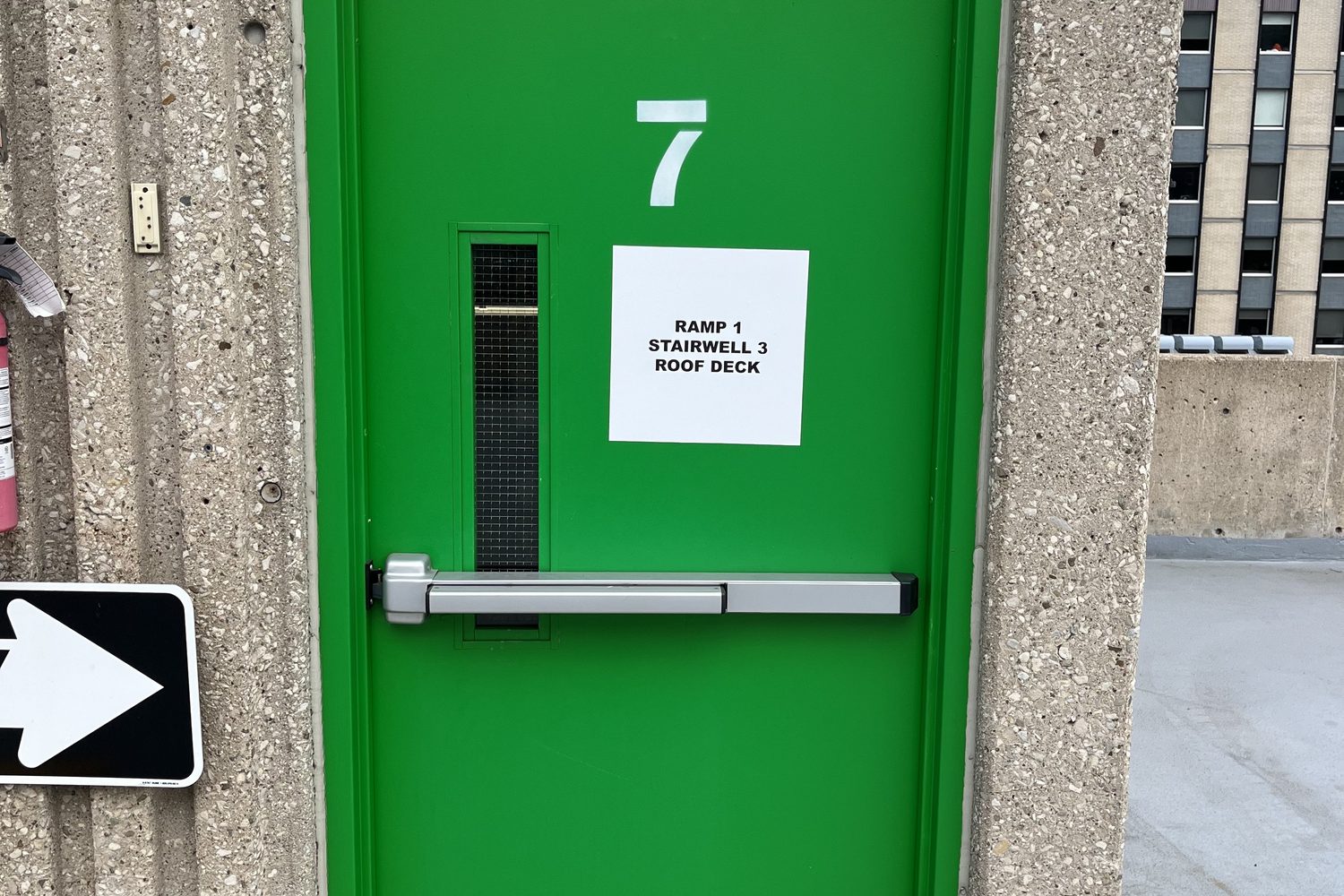
Recent work from our own records, listed as client and date — documented as dated job folders in the company photo library rather than as written project briefs.
- St. Joseph's Healthcare Hamilton (with Complete Concrete)October 2024
- MTCC 1338 — King West Village NorthJune 2024
- YCC 351 c/o Orion ManagementJanuary 2026
- WCC10 c/o King Condo ManagementDecember 2025
- Roedean Co-opJune 2025
- Pablo Neruda Non-Profit HousingJuly 2025
Four decades of doors for names Ontario knows — Canada’s Wonderland, Tim Hortons, Canadian Tire, the LCBO, Metrolinx, Marriott & Hilton hotels, the University of Toronto — plus thousands of businesses across the GTA. Dependable people, quality products, since 1979.
What our customers say
Canuck can costumed-make Fire rated doors I can't find elsewhere in GTA or in Ontario, or even in Canada. The staff is knowledgeable, products are perfect, installers are excellent. Thank you Canuck.. :)
It was a pleasure dealing with Canuck door systems. Moji was excellent to deal with. He responded extremely fast and a technician was here within 2 hours and did an excellent job on our commercial doot repair. I highly recommend them.
Called Canuck doors for one of our warehouse doors that was malfunctioning , the technician that came was very knowledgeable and efficient, it took him to time to find the issue and fix it. 5 stars
Fire door inspections across Toronto & the GTA
We inspect fire-rated assemblies right across the core GTA and out into the Southern Ontario belt, working from our shop in Mississauga — single buildings, and portfolios where the same report format has to cover twenty of them.
Core GTA
- Toronto
- Mississauga
- Brampton
- Vaughan
- Markham
- Scarborough
- North York
- Etobicoke
- Richmond Hill
- Oakville
- Burlington
- Milton
Southern Ontario belt
Not on the list? Inspections travel well — a portfolio anywhere from Niagara to Barrie is worth the trip. Call and ask. See all service areas
What an inspection costs
Inspections are priced per opening, and the per-door number falls quickly with volume — most of the cost is getting to the building and setting up. What moves it:
- How many fire-rated openings the building has, and whether anyone has counted them
- Whether a door schedule or previous report exists, or the survey starts from scratch
- Building type — a condo tower's stairs are quicker than a hospital's departments
- Access — occupied suites, secure areas and tenant space that needs escorting
- Rolling assemblies, which need a drop test rather than a visual check
- Whether repairs are done on the same visit or quoted separately
- Reporting format, including per-building reports for a portfolio
- Re-inspection after remediation, where a deficiency list has to be closed out
We quote the inspection and the repairs separately, so the report is not a sales document. Plenty of deficiencies are adjustments we correct on the spot.
Common questions
How often do fire doors need to be inspected in Ontario?
Monthly, and properly once a year. The Ontario Fire Code requires doors in fire separations to be inspected monthly and kept in working order, with any deficiency corrected. NFPA 80, the fire door standard, adds a full inspection and operational test of every assembly at least once a year, documented and kept for the fire inspector — it sets out the checks and what counts as a failure. Buildings with a fire safety plan usually have the requirement written into it as well.
Who is allowed to inspect a fire door?
Someone with demonstrated knowledge and understanding of the assemblies being inspected — that is the wording the standard uses, and it is a competency requirement rather than a single licence. In practice, inspections are done by door contractors and by inspectors holding a recognised fire door inspection certification. What matters to a building owner is that the inspector knows what a listing requires and can tell you which findings are code deficiencies and which are maintenance.
What gets checked on a fire door inspection?
Labels on the door and frame and whether they are legible, clearances at the head, jambs and sill, whether the door closes from any position and latches positively, the closer and any hold-open device, hinges and fasteners, glazing and lite kits, gasketing and seals, the condition of the leaf and frame, and any field modification such as a drilled hole or an added kick plate. Rolling assemblies get a drop test rather than a visual check.
What are the most common failures?
Doors held open with wedges, hooks or extinguishers; closers removed or disconnected; latches that do not throw because the frame has moved; missing or painted-over labels; gaps outside the permitted clearances; and holes cut in a labelled leaf for a new lock or card reader. The pattern is consistent — most failures come from someone adapting the door to daily life rather than from the door wearing out.
We got a deficiency list from the fire department. Can you help?
Yes, and it is a good part of this work. Send us the list. We separate it into items that can be corrected within the listing — closers, latches, hinges, clearances, gasketing, frame repairs — and the doors where a field modification means the assembly cannot be certified again and has to be replaced. Then we quote the work, do it, and re-check the openings so the file can be closed out.
Do fire shutters need inspecting too?
Yes, and by drop test. A rolling fire shutter or fire curtain is a fire door assembly, so the annual requirement applies — but a visual inspection proves nothing about a rolling assembly. It has to be released and allowed to close under its own power, then inspected and reset. It is the check most often skipped, and the one that finds curtains painted to their guides.
What documentation do we get?
A written report, door by door: location, rating where a label is present, the checks performed, the deficiencies found and photographs of them, with a clear summary of what was corrected on the visit and what remains. It is formatted to be handed to a fire inspector or dropped into a building's fire safety plan, and for portfolios we keep the format identical across buildings so year-on-year comparison is possible.
How long does an inspection take?
A single visit for most buildings — a condo tower's stairs and service rooms typically take a few hours, a hospital or a school with hundreds of openings takes a day or more and is often phased by department. Booking is usually within a week or two, and simple deficiencies are corrected on the same visit where we can. Doors that need to be ordered follow the usual 4–6 weeks to produce and 1–2 weeks to schedule and install.
Due for your annual inspection?
Tell us the building and roughly how many fire-rated openings it has, and we'll quote the inspection — and the deficiency work separately, so you can see both.