
Guides & FAQ · Fire-rated doors
Fire Door Labels, Ratings & Codes: Questions Answered
A fire door rating label is the certificate riveted to the door itself: a metal or heat-proof tag on the hinge edge, with a second one on the frame, naming the certification body, the rating in minutes or hours and the test standard. No legible label, no proof of rating. Below are the questions building owners, contractors and inspectors ask us most, answered briefly.
Every answer below comes from the same sources as the rest of our fire-rated pages: the Ontario Building Code, the Ontario Fire Code, NFPA 80 and the listings of the doors we install. Where an answer needs more room, it links to the guide or service page that covers it in full.
Four decades of doors for names Ontario knows — Canada’s Wonderland, Tim Hortons, Canadian Tire, the LCBO, Metrolinx, Marriott & Hilton hotels, the University of Toronto — plus thousands of businesses across the GTA. Dependable people, quality products, since 1979.
Fire door labels and tags
The label is the only proof a door is fire-rated. Most of what an inspector checks starts here.
What is a fire door rating label?
A permanent label, applied at the factory under the certification body's supervision, stating that the door or frame was made to a design tested for a set time. It is usually an embossed metal plate or a heat-resistant foil or plastic tag, riveted or bonded on so it survives a fire. The label is the certification: without it, a door built exactly like a fire door is still just a door.
What information is on a fire door label?
The manufacturer's name, the mark of the certification body (such as ULC, UL or Intertek's Warnock Hersey), the fire-protection rating, the fire test standard, and a serial or file number that traces it back to the listing. A door with a temperature-rise core also shows its limit, such as a 250°C rise at 30 minutes. Some labels add an S for smoke control, covered below.
Where is the label on a fire door and frame?
On a steel door, on the hinge edge between the top and middle hinges, or on the top channel. On a wood door, usually the hinge edge or the top edge. The frame carries its own label on the hinge jamb, between the same two hinges; on some steel frames it is embossed into the metal rather than attached. Both have to be there, because the door and the frame are certified separately.
Does every fire door need a label?
Yes. A door in a fire separation has to be a certified assembly, and the label is how anyone can tell. An inspector who cannot find a legible label on the door and on the frame will record the opening as deficient, however solid the door looks. That makes the label the first thing we check on every inspection.
What is fire door tagging?
The term gets used for two different things. The rating label is the certificate fixed to the door by its manufacturer. Tags and signs such as "Fire door, keep closed", level numbers and inspection tags are notices added by the building. Only the first proves anything. Signs are allowed on a fire door within limits: NFPA 80 caps combustible signage at 5% of the door face, fixed with adhesive or no more than four small screws.
Can you paint over a fire door label?
No. A painted-over label counts as illegible, and an illegible label counts as missing. The door itself can be painted, but the label, the gasketing and the intumescent seals have to be masked first. Labels buried under several coats of paint are one of the most common inspection findings in older buildings.
What happens if a fire door label is missing or painted over?
The opening can no longer show its rating, so it fails until the rating is proved another way. There are two routes. A field label, where an inspector from the certification body examines the door on site, confirms it matches a listed design and labels it. Or a replacement door or frame, when the door cannot be verified or has been altered. Field labelling is usually the less expensive route when the door is original and undamaged.
Can you buy replacement fire door labels?
Not ones that certify anything. Nobody, including the manufacturer, may attach a rating label in the field unless the certification body's representative has inspected the product first. Intertek and UL both run field-labelling services for doors and frames that have lost their labels, and the authority having jurisdiction still has the final say. A label bought online and stuck on a door is a false certification.
What do A, B and C mean on older fire door labels?
They are NFPA 80's old opening classes, which described where a door went rather than how long it lasted. Class A was for firewalls (usually 3-hour doors), Class B for stair and shaft enclosures (1 or 1.5 hours), and Class C for corridor and room separations of 1 hour or less (20 or 45 minutes). D and E covered exterior openings. Current labels state the time instead. The class letters survive on older doors and in some specifications.
What does "S" or "FD60s" mean on a fire door?
Both mean smoke control. On a North American label, an S shows the assembly also passed the UL 1784 air-leakage test, which limits smoke leaking past it to 3 cubic feet per minute per square foot of opening. FD30s and FD60s are British markings: a 30- or 60-minute fire door with smoke seals. You will see them on imported products, but in Ontario the label on the door has to be a Canadian-accepted listing.
What a fire door is and how it works
The rating belongs to a tested assembly, not to a slab of steel or wood. Most misunderstandings start there.
What is a fire door?
A door assembly (leaf, frame, hinges, latch, closer and any glass) tested together and certified to hold back fire for a set time. It sits in a fire separation, a wall or floor built to stop fire spreading from one part of a building to another, and it is what keeps that separation intact where people need to pass through it.
How does a fire door work?
It only works closed and latched. The closer returns it and the latch holds it shut against the pressure of a fire. The core and frame resist heat and flame for the rated time, and seals around the edge, often intumescent strips that swell when heated, close the gaps. Wedge it open and none of that happens. That is why the codes care as much about the closer and the latch as about the door.
What fire ratings do doors come in?
20, 45 and 90 minutes, and 1, 2 and 3 hours. The rating a door needs is set by the wall it sits in: in Ontario a 1-hour wall takes a 45-minute door, a 2-hour wall a 1.5-hour door, and a 4-hour firewall a 3-hour door.
What is the difference between a fire door and a steel door?
The certification. Plenty of steel doors are not fire-rated, and plenty of fire doors are wood. A steel door becomes a fire door only when it is built to a listed design, hung in a listed frame with listed hardware, and labelled. The practical test is the same as always: look for the label on the hinge edge.
Can a wood door be fire-rated?
Yes, up to 90 minutes. Wood fire doors have a mineral core under the veneer and are made at 20, 45, 60 and 90 minutes, which covers suite, classroom, office and most corridor doors. Openings rated at 2 or 3 hours, such as shafts, service rooms and firewalls, are steel.
Ontario codes and standards
Three documents do the work: the Ontario Building Code for new construction, the Ontario Fire Code for buildings in use, and NFPA 80 for how the door is installed and kept.
What are the requirements for a fire-rated door in Ontario?
Under the Ontario Building Code, a door in a fire separation must have the fire-protection rating the separation calls for, tested to CAN/ULC-S104, and must be installed to NFPA 80. With limited exceptions it also needs a self-closing device and a positive latch. Any hold-open device must release on the fire alarm. Once the building is occupied, the Ontario Fire Code requires those doors to be kept closed, unobstructed and in repair.
Where are fire doors required in a commercial building?
Wherever a door passes through a fire separation. Typical examples are exit stairs, corridors in many occupancies, electrical, mechanical and elevator machine rooms, garbage and storage rooms, the doors between a parking garage and the building above, suite doors in hotels and residential buildings, and firewalls. The architect's code review sets the separations. Every door in one of them needs a rated assembly.
Does NFPA 80 apply in Canada?
Yes, in Ontario, because the Building Code adopts it. NFPA 80 is an American standard, but the Ontario Building Code requires fire doors in fire separations to be installed to it, and inspectors use it as the reference for the annual inspection and for what may be done to a labelled door afterwards. The fire test that sets the rating is the Canadian one, CAN/ULC-S104.
Does the door from my garage into the house need to be fire-rated?
In a house, generally no. Ontario's Building Code treats a garage that serves only that house as part of the dwelling, so no fire separation or fire-rated door is required. The door must be tight-fitting and weatherstripped to keep exhaust gases out, must have a self-closing device, and cannot open into a bedroom. Townhouses and multi-unit buildings are different: a shared garage is separated, and its doors are rated.
Do hospitals and long-term care homes have extra fire door rules?
The same codes apply, but these buildings have far more fire separations, and most corridor doors are held open on alarm-released magnetic devices so beds and wheelchairs can pass. That puts the emphasis on the release, the closing and the latching working every time, and on records. Care occupancies are inspected closely, and their fire safety plans usually set out door checks in detail.
Inspection, maintenance and repair
A fire door is rated on the day it is installed. Keeping that rating is an ongoing job for the building.
How often do fire doors have to be inspected in Ontario?
Monthly, under the Ontario Fire Code, which requires doors in fire separations to be checked and kept in working order. Once a year, an NFPA 80 inspection and operational test of every assembly is required as well: labels, clearances, closing, latching, hardware, glazing and seals, written up and kept for the fire inspector.
Who is allowed to inspect a fire door?
NFPA 80 asks for someone with demonstrated knowledge of the assemblies being inspected. It is a competency requirement, not a single licence. In practice that means door contractors and inspectors who hold a recognised fire door inspection certification. Ask whether the inspector can also tell you which findings can be repaired within the listing. That is the part that decides your budget.
Can a fire door be held open?
Only on a device that lets it go. A wedge, hook or kick-down stop is a violation. A magnetic hold-open or an electrified closer tied into the fire alarm is legal, because it releases the door when the alarm sounds. If people keep propping a door open, the answer is usually one of those devices, which costs less than the deficiency it prevents.
Can a damaged fire door be repaired?
Often, if the repair stays within the listing. Closers, latches, hinges, strikes, seals, clearances and frame anchoring can all be put right with listed parts. What cannot be repaired is an unauthorised modification: a hole cut for a new lock or card reader, a lite added on site, or a leaf trimmed to clear new flooring. Those openings need a new labelled door.
Why won't my fire door close or latch properly?
Usually one of four things: a closer that needs adjusting or has failed, a frame that has moved so the latch misses the strike, a hinge with loose or missing screws, or something rubbing, such as new flooring or a warped seal. A door that does not close and latch on its own from any open position fails inspection, but most of these causes are adjustments we correct on the spot.
Hardware, frames and glass
Every part of the opening counts toward the rating, so every part has to be listed for it.
Does a fire door need a special frame?
Yes. The frame is certified and labelled separately, and it has to carry a rating at least equal to the door's. For higher ratings that is a steel frame, anchored to the wall as its listing requires. Hanging a labelled door in an unlabelled frame leaves the opening unrated.
What hardware can go on a fire door?
Only hardware listed for fire doors. That means hinges of the listed type and number, a closer, and a latch that throws positively. Exit devices must be fire-rated ("fire exit hardware"), which is why they have no dogging to hold the latch retracted. Locks, kick plates, door viewers and card readers can be added only if they are listed and fitted within the door's labelled preparations, not drilled in afterwards.
Can a fire door have glass in it?
Yes, if the glass and its frame kit are listed for that door and within the area its listing allows. The Ontario Building Code also caps glazing at about 100 square inches (0.0645 m²) in stair and firewall doors with a temperature-rise limit, and allows none in a 3-hour firewall door. Traditional wired glass has largely given way to fire-rated ceramic glass that also meets impact requirements.
What size are fire doors?
The same sizes as other commercial doors: most single leaves are 36 by 84 inches (about 915 by 2135 mm), 1¾ inches (45 mm) thick, with pairs and larger sizes made to order. Each listing has maximum sizes, though, and a door cannot be cut down on site beyond what its listing allows. Measure the opening before ordering, and never trim a labelled leaf to fit.
Fire shutters and fire curtains
For openings too wide for a swinging door: counters, atria, mall fronts and industrial openings.
What is a fire shutter?
A rolling steel curtain above an opening in a fire-rated wall. It stays rolled up day to day and drops to close the opening when fire is detected. It lets a building keep wide openings, such as service counters, mall fronts and shipping openings, without breaking the fire separation. Like a door, it is a labelled assembly: curtain, guides, barrel and release together.
What is the difference between a fire shutter and a fire curtain?
The material. A fire shutter is interlocking steel slats. A fire curtain is a flexible fire-resistant fabric on a roller, much lighter, so it suits very large or irregular openings where the weight and headroom of steel do not work. Both are listed assemblies, both need an annual drop test, and neither should be confused with a security shutter.
Do fire shutters need power to close?
No, and they must not depend on it. A fire shutter closes by gravity, at a speed controlled by a governor, once its release lets go. The release is either a fusible link that melts in the heat or a device tied to the fire alarm. A motor can run it for daily use, but the power going out cannot be what stops it closing in a fire.
Cost and lead times
Typical Canadian-dollar ranges from our own quotes. The number for your opening comes from your photos or drawings, or a site visit when needed.
How much does a fire-rated door cost?
For a commercial fire-rated entry assembly, a replacement typically runs $1,200 to $3,000 or more installed, and $1,500 to $3,500 or more per opening when the frame comes out too. The rating, the size, glass, hardware and whether the frame stays are what move the price. A common repair, such as a closer, latch, hinges or seals, typically runs $250 to $750.
How much does a fire door inspection cost?
Inspections are priced per opening, and the per-door cost falls quickly with volume, because most of the cost is getting to the building and setting up. What moves it is the number of openings, whether a door schedule exists, access to occupied areas, and rolling assemblies that need a drop test. We quote the inspection and any repairs separately.
How long does it take to get a fire-rated door?
A labelled steel door and frame typically takes 4–6 weeks to produce once the shop drawings are approved, then 1–2 weeks to schedule and install. A custom wood fire door with specific hardware can take 8–12 weeks to produce. Inspections and most repairs are scheduled in days.
In-depth guides
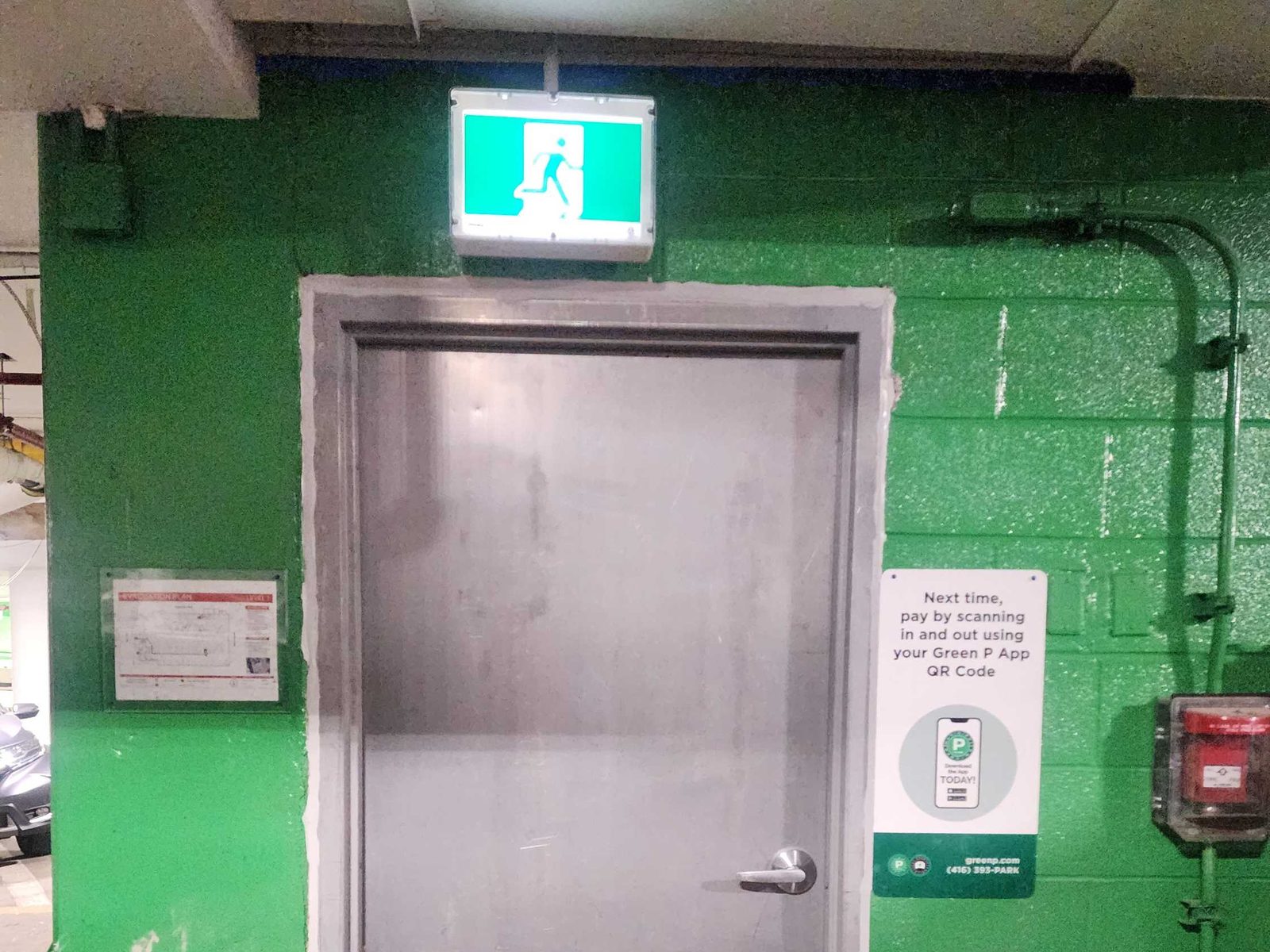
Fire Door Ratings Explained: 20, 45, 60, 90 and 180 Minutes in Ontario
What 20, 45, 60, 90 and 180-minute fire doors mean, how Ontario's Building Code sets the rating a wall needs, how to read the label, and how much glass a fire door can take.
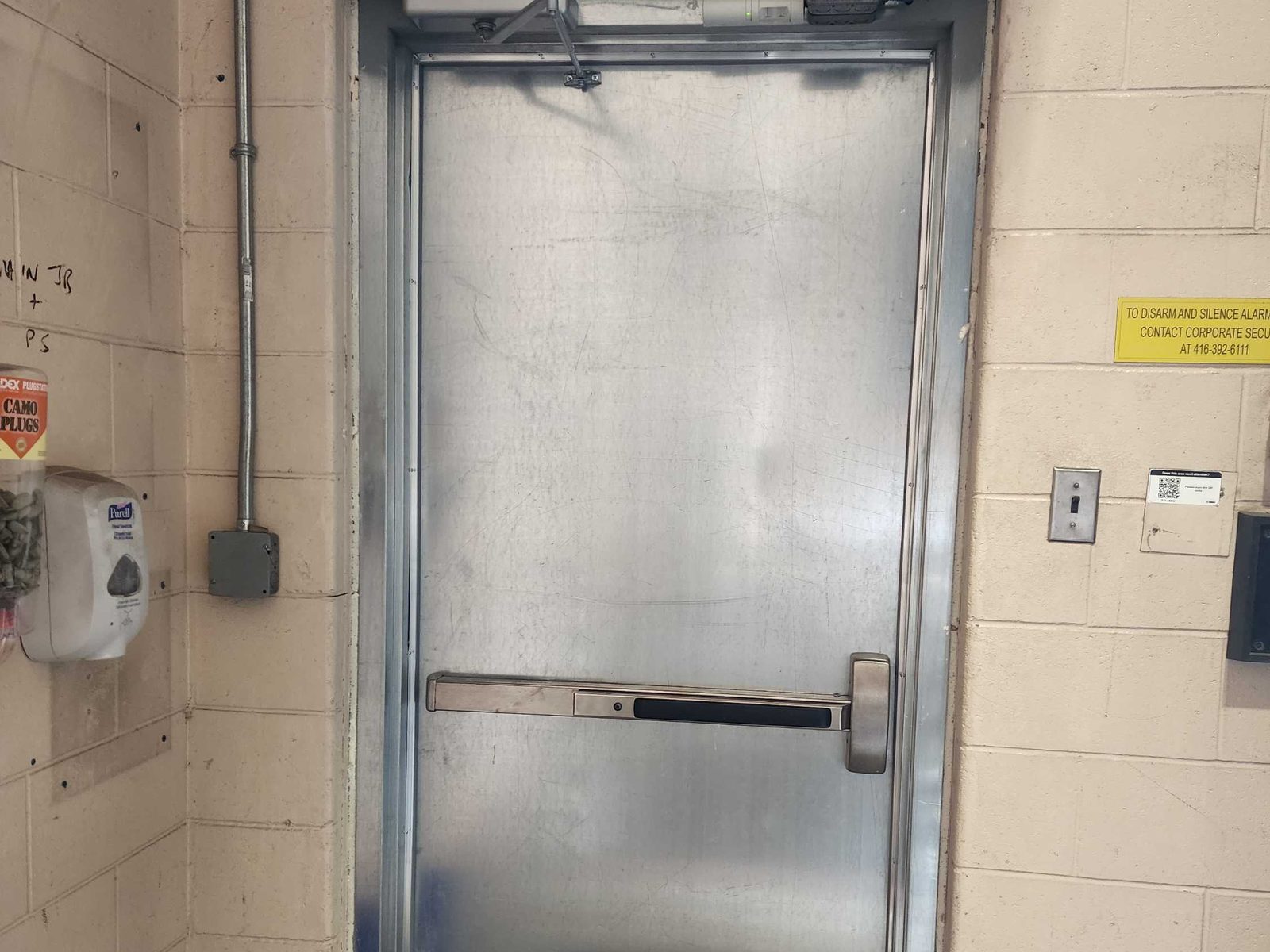
How to Maintain, Adjust and Paint a Hollow Metal Door
The checklist for keeping steel doors and frames working — hinges, closers, latching, seals — plus how to adjust a binding door and how to repaint one properly.
Get doors checked, labelled or replaced
Labels missing, or a deficiency list to close out?
Send us the inspection report or a photo of the door edge. We will tell you which doors can be field-labelled or repaired, which need replacing, and what it costs.