
Commercial & Industrial · Code-driven
Fire Shutters & Fire Curtains
Rolling fire shutters, counter shutters and fabric fire curtains for the openings a swinging door cannot cover — service counters, atrium and mall fronts, corridors and wide industrial openings. Supplied, installed, drop-tested and reset across Toronto and the GTA.
Request QuoteCall 800-522-6825
Labelled rolling assemblies · since 1979 · drop-testing and reset after activation
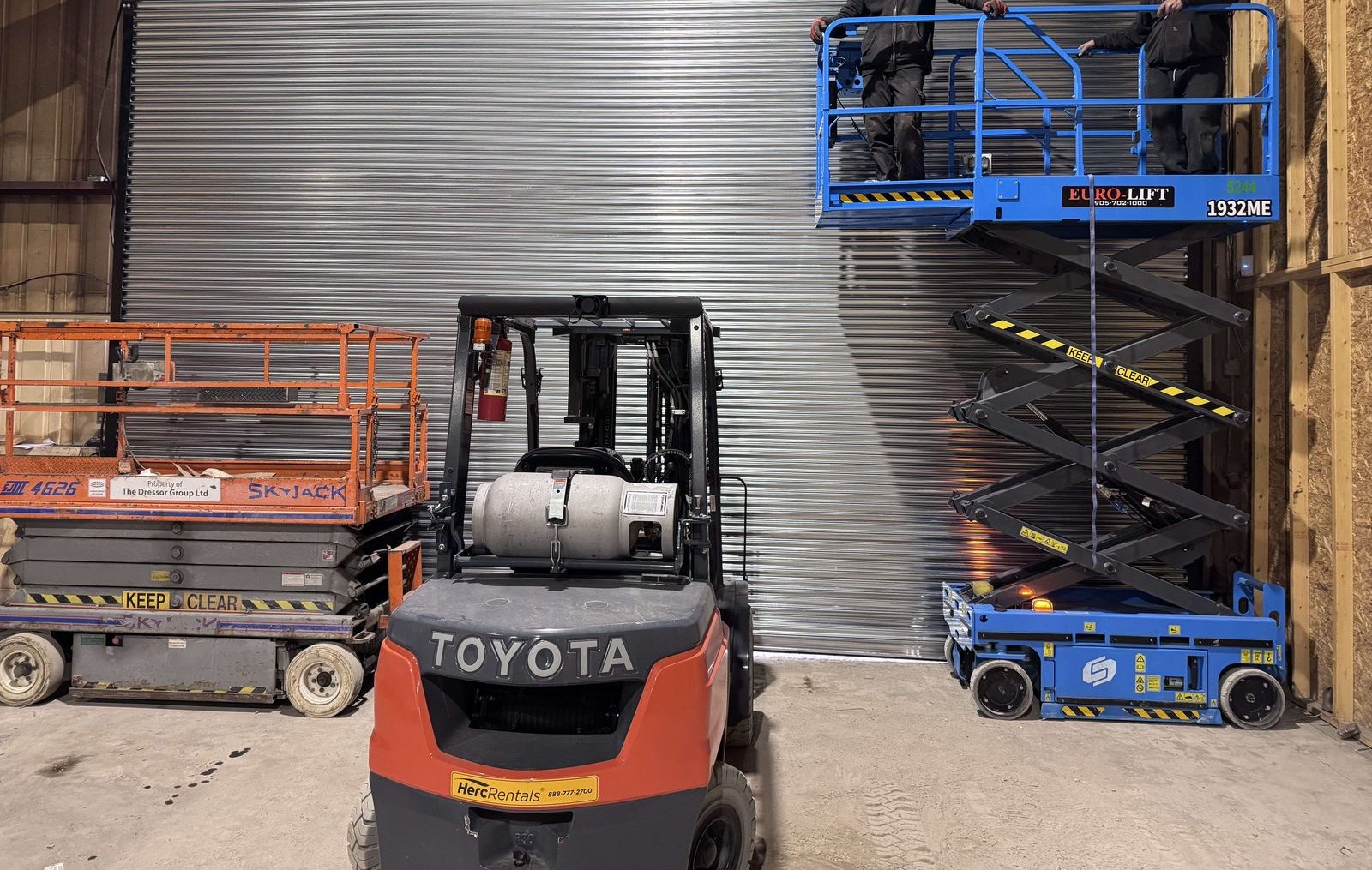
Some openings are simply too wide for a door. A service counter, a mall or atrium front, a wide corridor, a shipping opening in a fire-rated wall — a swinging fire door cannot cover any of them, and closing them permanently is not an option because the building uses them every day. A rolling fire shutter or a fire curtain solves that: it lives out of the way above the opening and closes it only when it has to.
Canuck Door Systems installs, tests and resets these assemblies across the GTA. We also install their unrated cousins — security shutters, counter shutters and rolling steel doors — which is why we are usually the ones who can tell you whether the shutter in your building is actually a fire assembly or just a shutter that looks like one.
Steel shutter or fabric curtain?
| Rolling fire shutter | Fire curtain | |
|---|---|---|
| Curtain | Interlocking steel slats on a barrel | Fire-resistant fabric on a roller |
| Suits | Counters, corridors, shipping and industrial openings | Atria, escalator wells, mall fronts, very large spans |
| Headroom needed | More — the coil is bulky | Less; the roller is slim and easily concealed |
| Everyday use | Often motorised, used as a working shutter | Usually invisible until it is needed |
| Also gives you | Security when locked, if listed for it | Very little security — it is a fire barrier, not a barrier to entry |
Where they go
Service & serving counters
Cafeterias, pharmacies and receptions where the counter passes through a fire-rated wall.
Mall & atrium fronts
Wide retail openings onto a fire-rated common area, closed only on alarm.
Corridor separations
Cross-corridor openings too wide for a pair of doors.
Shipping & receiving
Industrial openings between a warehouse and a fire-rated production or office area.
Escalator & stair openings
Floor openings a curtain can close where nothing else fits.
Kitchens & serveries
Pass-throughs between a cooking area and a dining or corridor space.
Parking & service tunnels
Wide vehicle and service openings in a fire-rated separation.
Plant & process openings
Conveyor and equipment openings that pierce a fire separation.
The part owners actually deal with: testing and reset
A rolling fire assembly spends years doing nothing, which is exactly why it needs testing.
- Annual drop test — the assembly is released and allowed to close under its own power, then inspected and reset. It is the only way to know it will work.
- What the test finds — curtains painted to the guides, slats seized, governors stiff, fusible links replaced with wire, guides obstructed by racking or displays, and motors that lift a curtain that would never descend on its own.
- Reset after an activation — link replaced or closing device rearmed, curtain and guides checked, assembly raised and re-tested.
- Documentation — a written record for the fire inspector, which is the part building owners are asked for and rarely have.
A shutter that has been painted to its guides is not a fire shutter. It is the single most common finding on a first drop test in a building that has never had one done.
Doors and shutters are inspected under the same annual requirement — see fire door inspection & certification for what a full inspection covers.
Rolling shutter and steel door work from our files
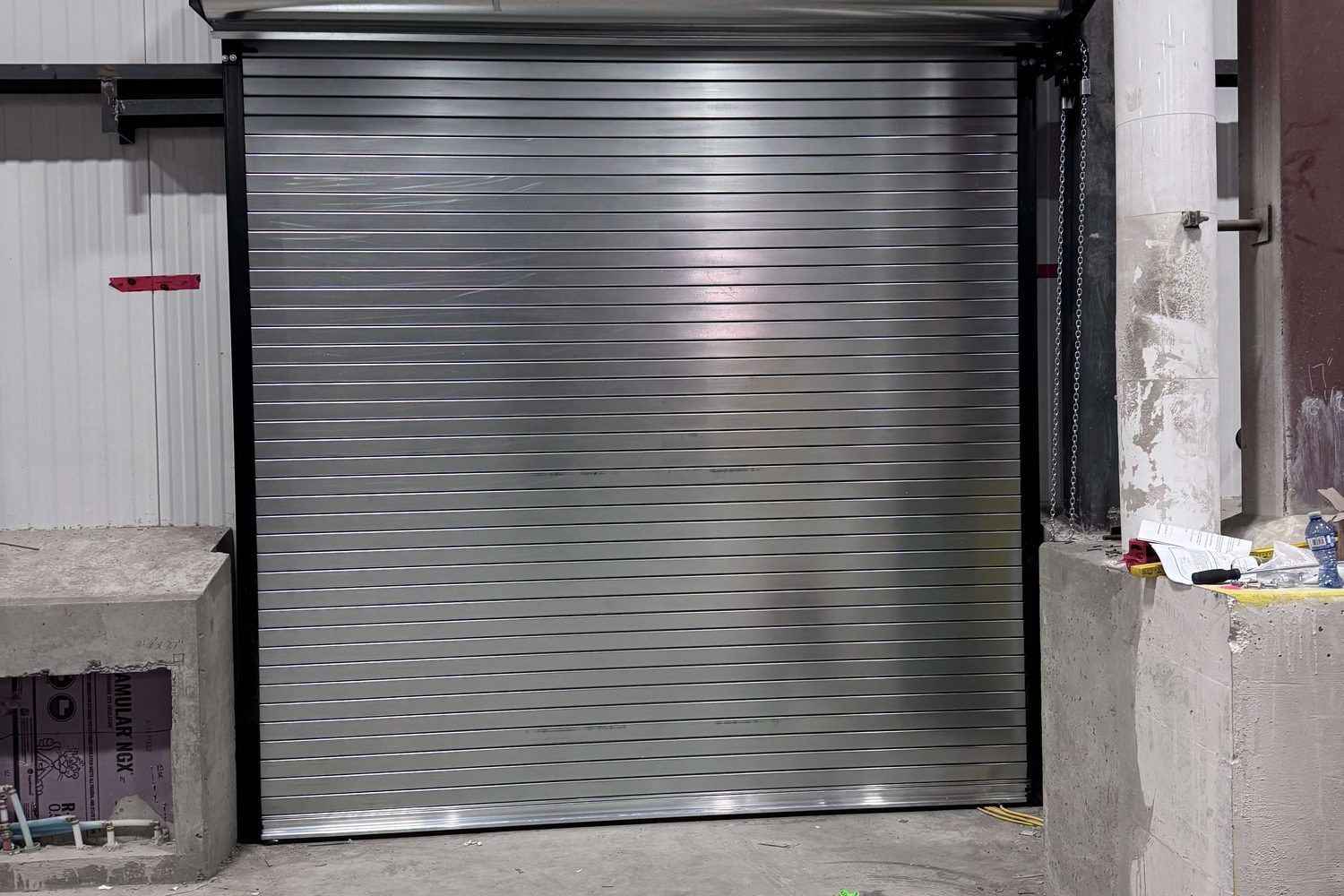
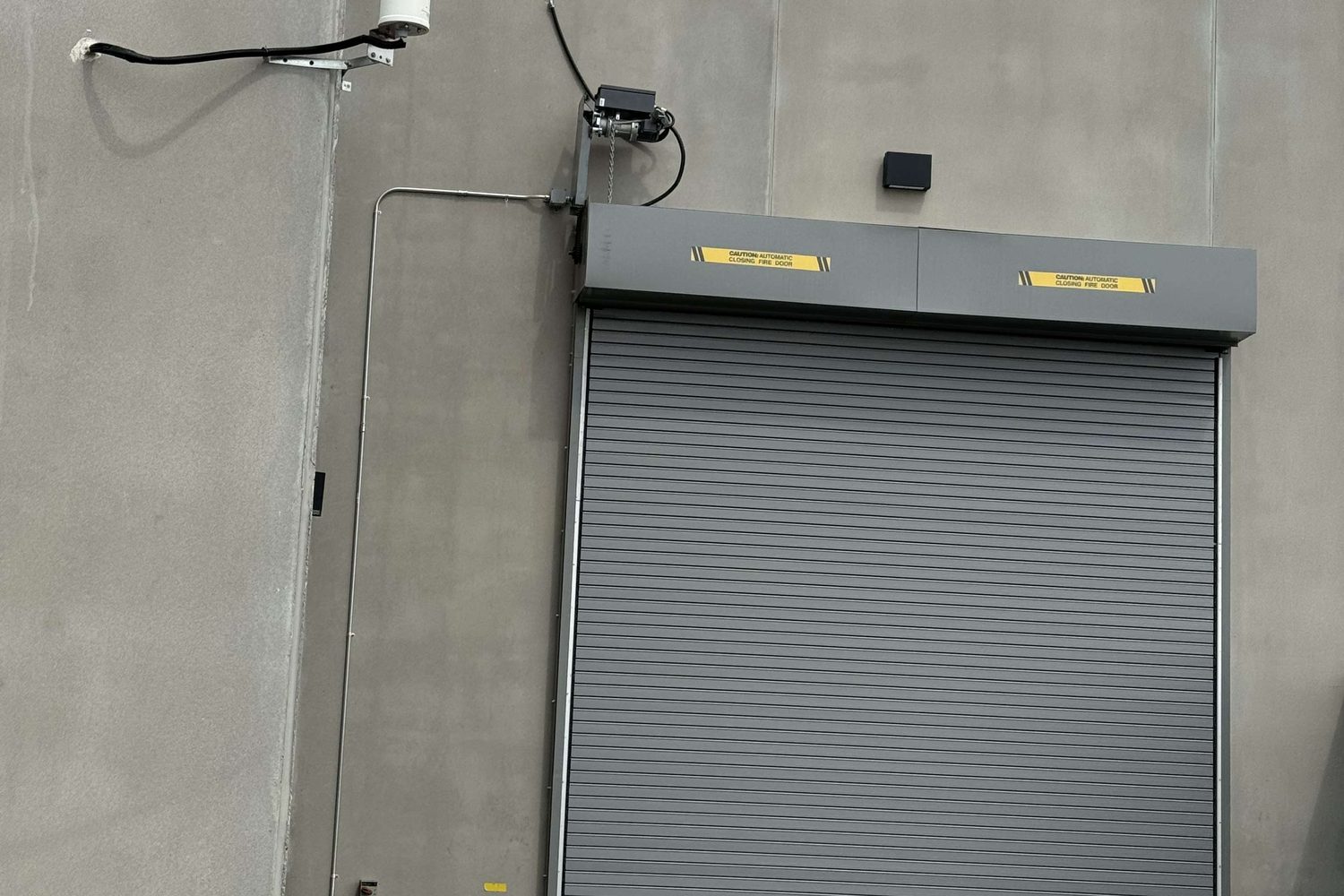
Recent rolling-assembly jobs from our own records, listed as client and date — documented as dated job folders in the company photo library rather than as written project briefs.
- ARJ Airparts Inc.July 2025
- Allyant Design, Engineering and ConstructionApril 2025
- Sxy AXISMarch 2025
- United Spray BoothSeptember 2024
- Kings Restoration GroupOctober 2025
- Megatronics Canada Inc.February 2026
Four decades of shutters and doors for names Ontario knows — Canada’s Wonderland, Tim Hortons, Canadian Tire, the LCBO, Metrolinx, Marriott & Hilton hotels, the University of Toronto — plus thousands of businesses across the GTA. Dependable people, quality products, since 1979.
What our customers say
Canuck can costumed-make Fire rated doors I can't find elsewhere in GTA or in Ontario, or even in Canada. The staff is knowledgeable, products are perfect, installers are excellent. Thank you Canuck.. :)
Great company! I had a broken industrial door and Canuck responded quickly to fix the problem! I was very impressed and now they will be doing more work for our company. Jay, the Sales Guru is amazing! He is friendly, knowledgeable, and well informed about all doors. Thanks Canuck Doors!
As a small Landlord in the East end of Toronto I respond to my Tenants professionally in a timely cost effective way. This occurred over the Xmas holidays with a broken commercial door hinge. …
Read the full review
Fire shutter service across Toronto & the GTA
We install, test and reset rolling fire assemblies across the core GTA from our shop in Mississauga, and out into the belt. A shutter that has dropped is blocking an opening someone needs today, so those calls are treated as urgent.
Core GTA
- Toronto
- Mississauga
- Brampton
- Vaughan
- Markham
- Scarborough
- North York
- Etobicoke
- Richmond Hill
- Oakville
- Burlington
- Milton
Southern Ontario belt
Not on the list? Shutter work travels — testing a portfolio of buildings is worth the trip anywhere from Niagara to Barrie. Call and ask. See all service areas
What a fire shutter costs
A rolling fire assembly is priced by the opening it has to cover and by how it is released and reset. What moves the number:
- Width and height of the opening — the curtain and the barrel scale with both
- Rating required, and whether the opening needs a shutter or a fabric curtain
- Release method — fusible link, or an alarm-initiated automatic closing device
- Motorised or manual operation for everyday use, where the opening is also used daily
- Governor and reset requirements, including a controlled-descent device
- Guides and headroom — what the structure will actually accept above the opening
- Finish — galvanised, powder-coated, or stainless for washdown areas
- Testing and documentation, including annual drop tests on existing assemblies
A fire shutter is not a security shutter with a label. The curtain, guides, brackets and release are a listed assembly, and mixing components is what turns a certified opening into an uncertified one.
Common questions
What is a fire shutter?
A rolling steel curtain that sits above an opening in a fire-rated wall and drops to close it when a fire is detected. Day to day it rolls up out of the way, which is the point: it protects openings far too wide for a swinging fire door — service counters, mall and atrium fronts, wide corridors and industrial openings — without getting in the way of how the space is used. The whole assembly is listed and labelled, curtain, guides, brackets and release together.
What is the difference between a fire shutter and a fire curtain?
What the curtain is made of. A fire shutter is interlocking steel slats, rolling on a barrel like an ordinary rolling steel door. A fire curtain is a flexible fire-resistant fabric on a roller, much lighter and much less obtrusive, and it can cover very large or irregular openings — atria, escalator wells and mall fronts — where the weight and headroom of a steel curtain do not work. Both are listed assemblies; the choice is set by the opening and by what the structure above it will carry.
How does a fire shutter know to close?
Either a fusible link or the fire alarm. The traditional release is a fusible link in the curtain's mechanism that melts at a set temperature and lets the curtain descend under gravity, its speed controlled by a governor. The modern arrangement is an automatic closing device tied to the alarm system, which drops the curtain when the alarm sounds and can also be interfaced with smoke detection. Many assemblies have both.
How often does a fire shutter have to be tested?
Annually, and by drop test. NFPA 80 requires fire door assemblies — rolling shutters and curtains included — to be inspected and tested at least once a year, on top of the monthly checks the Ontario Fire Code requires; for a rolling assembly the annual test means releasing it and letting it close under its own power to confirm it actually will. The test is documented, and the assembly is reset afterwards. It is the one test people skip, and it is the one that finds shutters painted, obstructed or seized in their guides.
Our shutter dropped and won't go back up. What now?
That is a service call, not a repair project, in most cases. After an activation the release has to be reset — a fusible link replaced, or the automatic closing device rearmed — and the assembly checked for damage before it is raised. What it must not be is forced back up or tied open, which is both a code violation and a good way to damage the curtain. We attend these as urgent calls because the opening is usually blocking a working part of the building.
Can a fire shutter be used as a security shutter?
Only if it is listed for both, and many are not. A fire shutter's job is to close on alarm; a security shutter's job is to be locked shut against entry. Assemblies exist that do both, and where an opening genuinely needs both functions that is what should be specified — but hanging a lock on a fire shutter, or expecting a security shutter to hold a fire, is how buildings end up with an opening that fails at whichever job it is asked to do first.
Do you install motorised fire shutters?
Yes. Where the opening is used daily — a service counter, a servery, a shipping opening — the shutter is motorised for ordinary use and still drops on release for fire. The motor is not what closes it in a fire: the assembly has to descend under gravity with the power off, which is why the governor and the release are the parts that get tested.
How long does a fire shutter take to install?
Typically 4–6 weeks to produce the assembly once the shop drawings are approved, then 1–2 weeks to schedule the job and install it, depending on the size of the project. Shop drawings matter more here than on a swinging door: the headroom, the side room for the guides and the structural support above the opening all have to be confirmed before anything is made. Installing one shutter is usually a day on site, plus the drop test before it is handed over.
A wide opening in a fire-rated wall — or a shutter that has dropped?
Send us the opening size and what the wall is rated for and we'll quote the assembly. Dropped after an alarm? Call — resetting is a service call, not a project.