
Commercial & Industrial
Rolling Counter Shutters
The shutter that closes a service counter rather than a doorway — over a servery, a pharmacy dispensary, a parts desk or a concession window. Made to the opening, in steel, aluminum or stainless, and fitted so it seals to the counter it lands on. Across Toronto and the GTA since 1979.
Request QuoteCall 800-522-6825
Made to your opening · fire-rated versions available · we service other makes
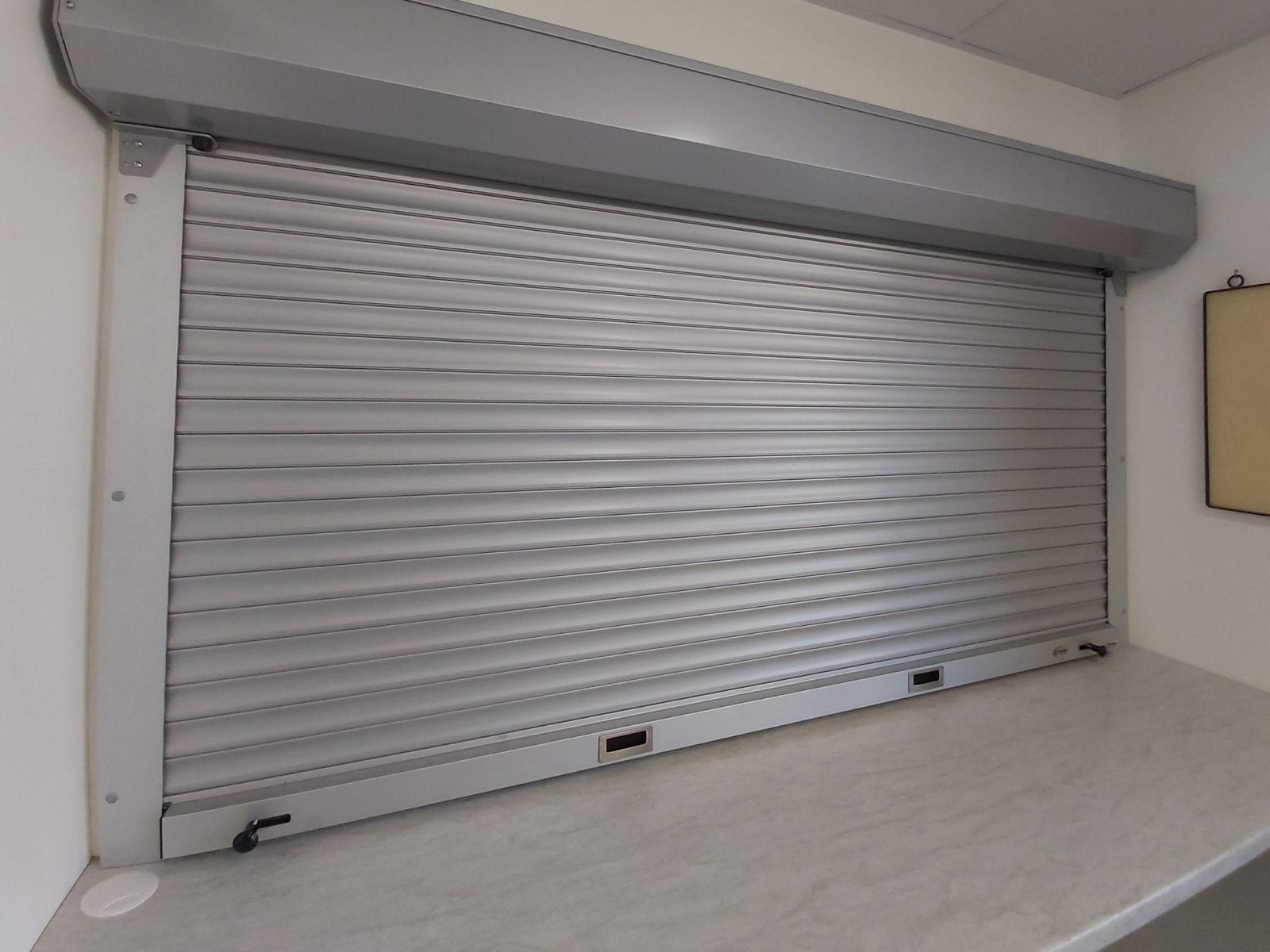
A counter shutter is the answer to a specific problem: you need to secure the room behind a service opening, and there is no door to lock. A servery, a pharmacy dispensary, a parts desk, a concession window, a coat check — in each case the opening is waist height, a few feet wide, and open to a room that stays busy after the counter closes.
The shutter coils above the opening exactly as a full-height one does. What is different is where it lands: on a counter rather than a floor, which is the detail that decides whether it works for fifteen years or gets forced open in its first month.
Four decades of doors and closures for names Ontario knows — Canada’s Wonderland, Tim Hortons, Canadian Tire, the LCBO, Metrolinx, Marriott & Hilton hotels, the University of Toronto — plus thousands of businesses across the GTA. Dependable people, quality products, since 1979.
Shutter or grille over a counter
| Counter shutter | Counter grille | |
|---|---|---|
| Curtain | Interlocking slats, solid or perforated | Links or rods with gaps between them |
| See through it | No (perforated slats give some light and air) | Yes |
| Best for | Kitchens, dispensaries, cash areas, anything that should be out of sight | Displays, reception desks, menu boards, rooms that should still look open |
| Keeps in | Light, smell, dust, some sound | Nothing — it is a barrier, not a seal |
| Cleaning | Wipe-down; stainless on a food counter | More surfaces to clean, which matters in food service |
| Cost | Lower for the same opening | Slightly higher |
Systems we supply: Pentagon Security Shutters for the slat counter shutter, MobilFlex for the counter grille, and equivalents. Which of the two an opening gets is a question about what has to stay visible, not about budget — the price difference between them is the smallest number in the quote.
Specification — the parts that matter
| Mounting | Face-mounted to the wall around the opening, or fitted between the jambs for a flush look |
|---|---|
| Headroom | Space above the opening for the coil and brackets. The first thing we measure and the usual constraint |
| Curtain | Solid slat, perforated slat, or grille — in galvanized steel, aluminum or stainless |
| Finish | Mill, anodized or powder-coated. Customer-facing counters usually get a colour |
| Operation | Push-up with spring balance, hand crank, or tube motor with manual override |
| Bottom bar | Where the lock lives, and where the shutter meets the counter — the detail worth getting right |
| Locking | Centre lock or slide bolts, keyed alike or into the building's key system |
| Sill | The counter surface itself, or an applied sill where the counter is uneven or damaged |
| Rated openings | A fire counter shutter is a separate, labelled product — see fire shutters |
Counters are rarely level. Where the surface has settled, been re-topped or was never flat, we fit an applied sill so the bottom bar lands on a straight line — otherwise the shutter is forced closed against the high spot, and that is what pulls a curtain out of its guides.
Where counter shutters go
School & college cafeterias
Serveries that close while the building stays open — the single most common counter shutter we fit.
Arenas & community centres
Concession stands and canteens that open for events and shut completely between them.
Pharmacies
Dispensary counters where the stock behind is the reason the shutter exists at all.
Hospital & clinic dispensaries
Medication and supply windows, usually stainless and usually keyed into the building's system.
Parts & trade counters
Auto, industrial and building-supply counters where the warehouse behind stays open after the desk closes.
Hotels & conference centres
Bars, coat checks and banquet serveries that operate only when there is an event on.
Restaurants & takeout windows
Patio bars, walk-up windows and pass-throughs that shut down between services.
Reception & ticket windows
Front desks, box offices and cash windows, where a grille often reads better than a solid curtain.
Measuring, lead time and installation
- Measure the opening — width, height, and the headroom above it. Also what the wall above is made of, because the barrel brackets have to land on something structural.
- Decide the curtain and the finish — solid, perforated or grille; steel, aluminum or stainless; and whether the room it faces is customer-facing.
- Manufacture — 4–6 weeks once the measure and finish are approved. These are made to the opening.
- Install — 1–2 weeks to schedule, usually a few hours on site, and normally before opening or after close.
- Service — guides cleaned, spring balance checked, bottom bar and lock adjusted. A shutter that has become heavy to lift is telling you the barrel needs attention before something breaks.
What "security" actually buys you
A counter shutter has "security" in the family name and it does not make the room behind it burglar-proof. What it does is remove the opening as an easy route: a closed counter is no longer a waist-height hole into a kitchen, a dispensary or a cash area, and getting through one is a conspicuous job with tools rather than a reach over a counter.
Most counter shutters we fit are inside a building that has its own protection around it — a mall concourse under 24-hour surveillance, a school or hospital with staff and cameras, a restaurant that locks its own front door. In that setting the shutter is a useful added layer and the building is doing the rest.
Where a counter shutter closes an opening that faces outside — a takeout hatch, a walk-up window, a concession onto the street — treat it like any other outward-facing closure. It buys time until police arrive, and it belongs alongside 24-hour camera surveillance and a monitored alarm rather than standing in for them.
Shutter work across the GTA
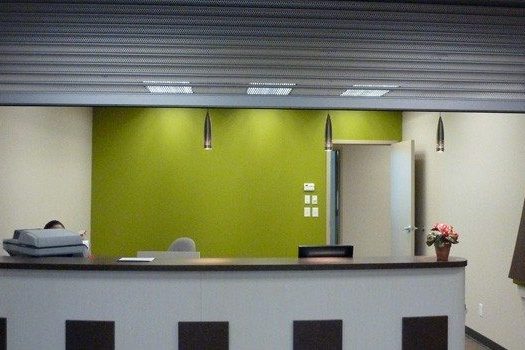
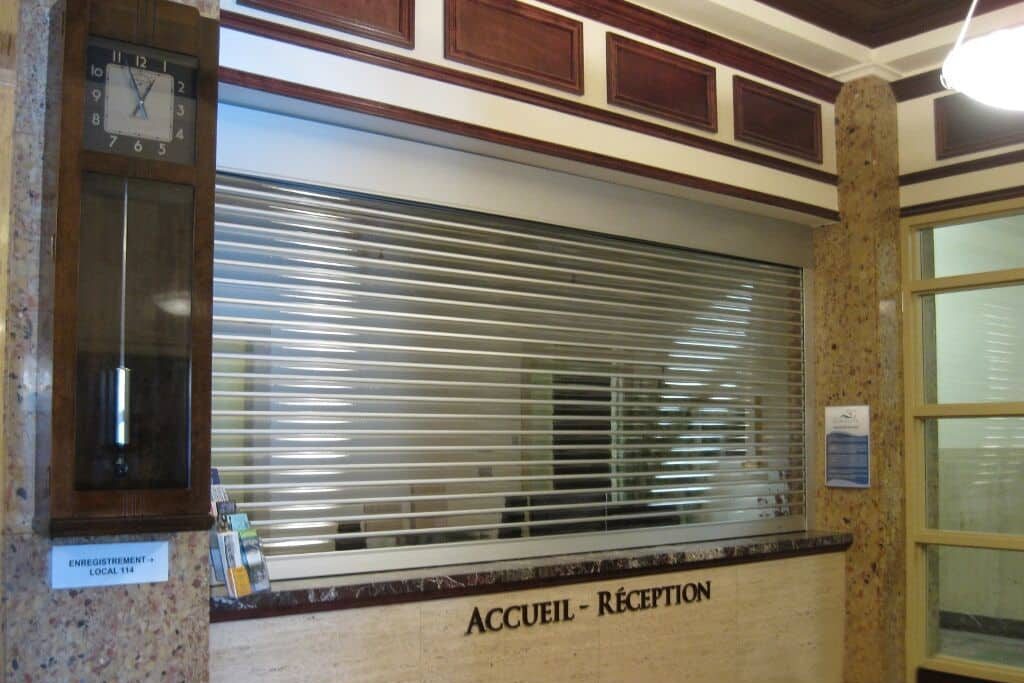
Documented shutter and grille jobs from our own project files — real clients, real openings.
Granite Shore Homes Inc
Kings Restoration Group
ARJ Airparts Inc
Allyant Design
Formtek Structures Inc
Golden Gate Contracting Inc
What our customers say
I called Canuck Door systems regarding my security gate at our retail store, I cannot recommend them enough. Quick turn around, extremely fair pricing compared to competitors. Fixed the problem, called to make sure it was done to my expectations. This is the company to use.
I Needed to replace the entire glass systems around my commercial building and got recommended by a friend to this place. They have walked me through the entire process from beginning to end. They did great Job in managing to keep me updated, finishing the job on time and did more than asked. …
Read the full review
It was a pleasure dealing with Canuck door systems. Moji was excellent to deal with. He responded extremely fast and a technician was here within 2 hours and did an excellent job on our commercial doot repair. I highly recommend them.
Counter shutter work across Toronto & the GTA
We measure, supply and install counter shutters right across the core GTA and out into the Southern Ontario belt, from our shop in Mississauga. Serveries and dispensaries are worked around opening hours, which usually means early mornings or after close.
Core GTA
- Toronto
- Mississauga
- Brampton
- Vaughan
- Markham
- Scarborough
- North York
- Etobicoke
- Richmond Hill
- Oakville
- Burlington
- Milton
Southern Ontario belt
A single counter shutter is a short visit and a long drive, so we are honest about that. Where it earns the trip is a building with several — a school with a cafeteria and a canteen, an arena with three concessions — measured and installed in one mobilisation. See all service areas
What a counter shutter costs
These are among the least expensive shutters we make, because the openings are small. What moves the number:
- Opening width and height, and the headroom above it for the coil
- Curtain — solid slat, perforated slat, or an open counter grille
- Material and finish — galvanized steel, aluminum, or stainless for a food counter
- Manual push-up against a crank or a tube motor
- Face-mounted or fitted between the jambs, which changes the guides and the trim
- Sill and lock detail — how the bottom bar meets the counter, and how it locks there
- Whether the opening is in a fire-rated wall, which makes it a labelled fire shutter instead
- Finish quality where the shutter is in a customer-facing room rather than a back office
- Access — a shutter over an existing counter in a finished room is more careful work
The one detail worth spending money on is where the bottom bar lands. A counter is rarely dead level, and a shutter that does not sit down cleanly on it will be forced, which is how the curtain comes out of its guides.
Common questions
What is a counter shutter?
A rolling shutter sized for a service opening rather than a doorway. It coils above the opening exactly like a full-height shutter, but the curtain comes down onto a counter or sill instead of the floor, so the opening it closes is typically waist height and a few feet wide. Serveries, pharmacy dispensaries, parts counters, ticket windows, concession stands and coat checks all use them, and the point is the same in each: secure the room behind the counter without putting a door in the wall.
What is the difference between a counter shutter and a counter grille?
Only the curtain. A counter shutter uses interlocking slats and closes the opening completely; a counter grille uses links or rods you can see through. The shutter is the choice where you want the room behind it out of sight or need to keep light, smell and dust in the kitchen. The grille is the choice where a display, a menu board or simply the impression of an open room should still be visible after hours. Both roll into the same kind of coil and lock the same way.
How is a counter shutter operated?
Most are push-up: the curtain is light enough to lift by hand, balanced by a spring in the barrel, and locked in the bottom bar. Wider or heavier curtains take a crank or a tube motor, and motors also make sense where the shutter is opened many times a day by whoever is on shift. A powered counter shutter should have a manual override, because a servery that cannot open during a power failure stops service.
Can a counter shutter be fire rated?
Yes, and if the opening is in a fire-rated wall it must be. A fire counter shutter is a different, labelled product: it closes automatically on alarm, is built to a tested assembly, and has to be drop-tested periodically to prove it still works. A standard security shutter in a rated wall does not meet the code no matter how solid it is. The rated versions live with our fire shutters, alongside the drop-testing they require.
What is it made of?
Galvanized steel is the default and the strongest. Aluminum is lighter, corrosion-resistant and easy to finish in a colour, which suits customer-facing counters. Stainless steel is the choice on food serveries and anywhere subject to washdown or cleaning chemicals — it costs more and it is the only one that survives that environment long term. All three come in solid or perforated slats, or as a grille.
Does the counter need to be reinforced?
Usually not — the shutter's weight is carried by the barrel above the opening, not by the counter, which only takes the bottom bar resting on it. What does matter is what is above: the structure has to carry the barrel and brackets, and there has to be headroom for the coil. On a millwork bulkhead or a stud wall we check that before ordering, because adding a steel angle afterwards is far more disruptive than specifying it at the start.
How long does it take to get one?
Typically 4–6 weeks to produce once the opening is measured and the finish confirmed, then 1–2 weeks to schedule and install — about 5–8 weeks in total, depending on the size of the project. Every counter shutter is made to its opening, so there is no stock size to pull off a shelf. The installation itself is usually a few hours, and it is normally done before opening or after close so service is not interrupted.
Can you repair one that came from another supplier?
Nearly always. Slats, guides, bottom bars, locks, springs and motors on shutters are largely matched rather than brand-locked, which is not true of automatic doors — so an unbranded counter shutter that has been in a school cafeteria for twenty years is usually still serviceable. Where the curtain itself is beyond repair, replacing it into existing guides and structure is much less expensive than starting from scratch.
Counter to close off?
Send the width and height of the opening and a photo showing what is above it and what the shutter would land on. That is enough to specify and quote it.