
Commercial & Industrial
Loading Dock Equipment
The whole dock position as one system — leveler, seal or shelter, bumpers and the door above them. Supplied, installed, serviced and repaired across Toronto and the GTA since 1979, with 24/7 emergency call-out when a bay goes down mid shift.
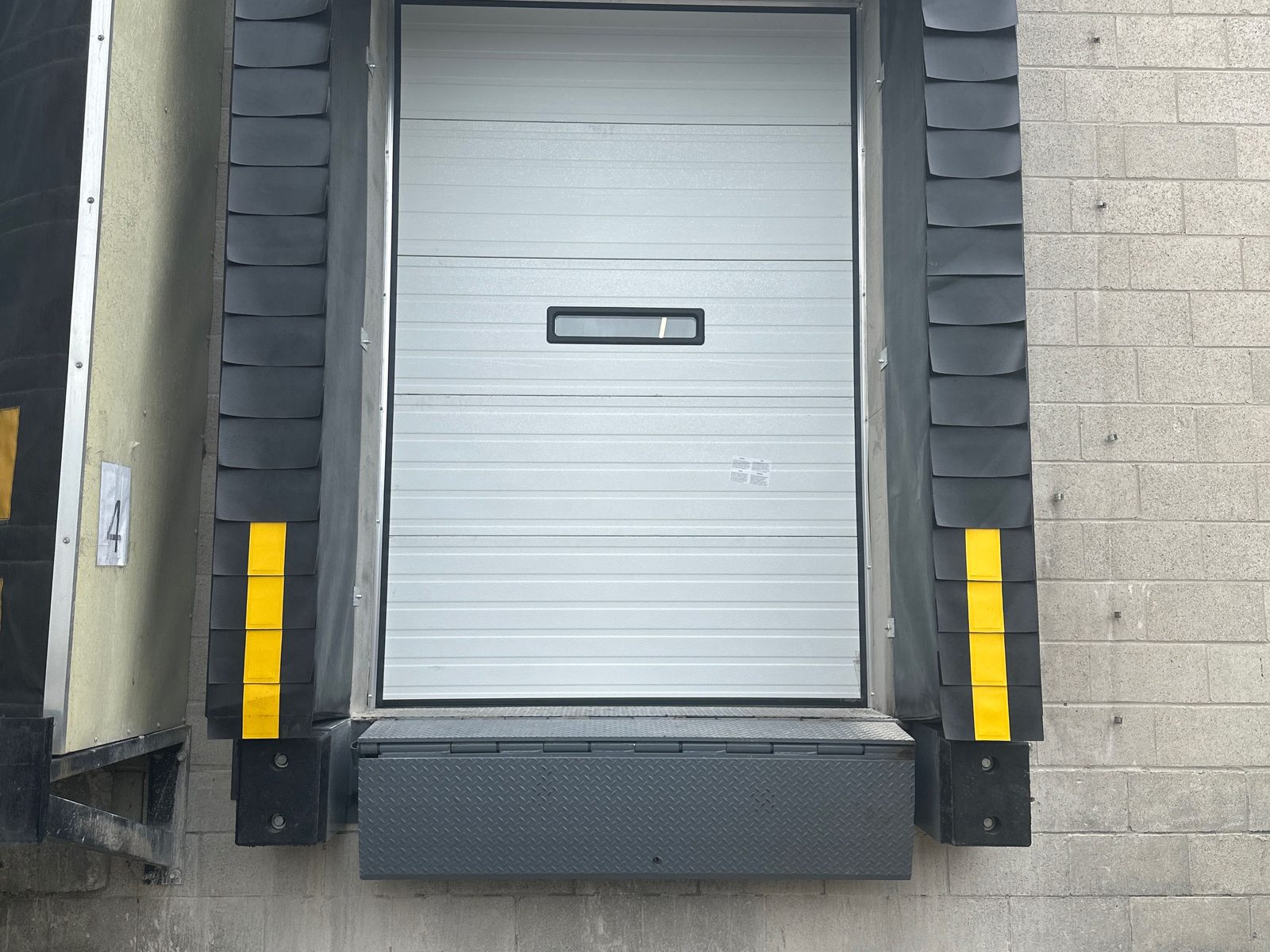
A loading dock is not one product, it is a position: a leveler to bridge the trailer, a seal or shelter to close the gap around it, bumpers to stop the trailer before it reaches the building, and a door to shut the opening when the bay is empty. They are bought together because they constrain each other — the bumper projection decides how far the trailer stops from the wall, which decides whether the seal compresses correctly, which decides whether the leveler lip lands where it should.
Canuck Door Systems has supplied, installed and serviced dock equipment across the GTA since 1979. We came to docks from the door side rather than the materials-handling side, which is the useful difference: the crew that changes your leveler can also fix the sectional door above it, and the same 24/7 line covers both.
Dock equipment we supply, install and service
Equipment
The three pieces that make up a dock position, supplied new or replaced in an existing opening.
The bridge between your dock floor and a trailer bed that is never the same height twice — edge-of-dock, mechanical, hydraulic and air.
Closing the gap around a parked trailer, so the bay is not heating the parking lot for the whole shift.
The least expensive thing on the dock and the one whose failure wrecks the seal, the leveler lip and the door behind it.
Installation & repair
New positions, retrofits into existing pits, and the service that keeps a running dock running.
Loading Dock Repair & Installation
A dead bay is a queue of trucks. Levelers, seals, shelters, bumpers and dock doors repaired — all makes, 24/7.
What a dock position is made of
Four parts, quoted as one job. Buyers usually arrive asking about one of them — a leveler that will not raise, a shredded seal — and the reason a dock quote looks different from a parts price is that the four have to agree with each other.
- Leveler — bridges the gap and the height difference between the dock floor and the trailer bed. Edge-of-dock, mechanical pit, hydraulic pit or air-powered.
- Seal or shelter — closes the gap around the trailer so you are not conditioning the parking lot, and keeps weather off the goods crossing the threshold.
- Bumpers — absorb the impact of a reversing trailer and hold it far enough off the face that the seal, the leveler lip and the door survive.
- The door — normally an insulated sectional, and the part that most often fails first because it moves more than everything else combined.
Levelers: four types, and how to pick
The leveler is the expensive decision and the one most often made on price alone. What should actually decide it is the range of trailer heights you serve and how many cycles a day the bay does.
| Type | How it works | Best for | Watch-outs |
|---|---|---|---|
| Edge-of-dock | Bolts to the dock face; a short lip folds out onto the trailer | Consistent trailer heights, light to moderate traffic | Small working range — roughly ±5″ of dock height; not for large height differences |
| Mechanical pit | Spring-loaded, released by a pull chain, walked down by the operator | General warehousing on a budget | Springs weaken and need periodic adjustment; the pull chain is a manual-handling complaint waiting to happen |
| Hydraulic pit | Powered by a hydraulic pack, push-button operation | Multi-shift docks, high cycle counts, mixed fleets | Costs more up front; needs power to the pit; least expensive to own over a decade |
| Air-powered | An inflating bag raises the deck | Docks where hydraulic fluid is unwelcome, e.g. food handling | Fewer service parts than hydraulic; bag replacement is the main wear item |
The single most useful question to ask before quoting a leveler is not "how big" but "what is the lowest and highest trailer bed you have to service?" Working range is what makes a dock usable, and it is the specification most often left out of an enquiry.
Seal or shelter
Both close the gap between the trailer and the building. They do it differently, and the right choice follows from your trailer mix rather than from price.
| Dock seal | Dock shelter | |
|---|---|---|
| How it closes | Trailer compresses foam pads on head and sides | Fabric curtains drape around the trailer |
| Best trailer mix | Uniform — a fleet of similar highway trailers | Varied — cube vans through 53-foot reefers |
| Seal quality | Tighter | Looser, but far more tolerant |
| Trailer rear doors | Can obstruct the last few inches of opening | Fully accessible |
| Wear pattern | Foam compresses and tears at the corners | Curtain fabric abrades; sections replace individually |
Bumpers are the least expensive part and the one that matters most
A dock bumper costs less than almost anything else on this page, and its failure is what destroys the expensive items. Once a trailer can reach the building face, it damages the seal first, then the leveler lip, then the door track, then the concrete — in that order, and each step costs more than the last.
The rule worth remembering is about projection, not thickness: the bumper has to stand proud of everything you are protecting, including the compressed depth of a seal. Replace bumpers when they are worn to about half, when fixings become visible, or when a laminated bumper begins to separate.
Safety, and who owns it
The building operator owns the fixed equipment and its condition. In Ontario that responsibility sits under the Occupational Health and Safety Act and O. Reg. 851, Industrial Establishments, which require equipment to be maintained and to be capable of the work it is used for. The failure modes at a dock are well known and largely preventable:
- Trailer creep — repeated forklift entry walks an unrestrained trailer away from the dock, opening a gap at the leveler lip.
- Early departure — a driver pulls away while a forklift is still on the trailer. A restraint plus a light-communication system is the standard answer; chocks alone rely on someone remembering.
- Worn bumpers — the trailer reaches the building, and the damage propagates through everything behind it.
- Levelers left unsupported — a mechanical leveler parked out of position, or a lip that has not fallen properly onto the trailer.
- Housekeeping at the edge — ice, water and debris at the threshold, which is the one place where a fall is a fall from height.
Maintenance is less expensive than the alternative
Dock equipment fails gradually and then suddenly. A leveler spring weakens for months before the deck stops raising; a seal tears at one corner long before it is shredded. A scheduled visit that catches those costs a fraction of the emergency call plus the lost bay, and for a distribution operation the lost bay is usually the larger number.
- Inspect — bumper wear, leveler cycle and hold, lip operation, seal and curtain condition, door balance and hardware.
- Adjust — spring tension, lip extension, door tracking and limits.
- Replace what is at the end of its life — before it takes something more expensive with it.
- Report — what was done, what is close to needing attention, and what we recommend budgeting for.
Preventative plans across a portfolio of buildings are quoted per position rather than per site, so the twentieth dock is priced the same way as the first.
What a dock enquiry should tell us
Four numbers turn a vague enquiry into a firm quote, and they are all things you can measure with a tape:
- Dock height — floor of the dock to the ground the trailer stands on.
- The trailer range — the lowest and highest bed you actually service.
- The opening — width and height of the door opening, and whether there is an existing pit.
- Traffic — pallet jacks, counterbalance forklifts, and roughly how many trailers a day.
Dock work across the GTA
Documented dock jobs from our own project files. This is a smaller portfolio than our door work — dock equipment tends to get photographed when it is being replaced rather than when it is running.
Black & McDonald Limited
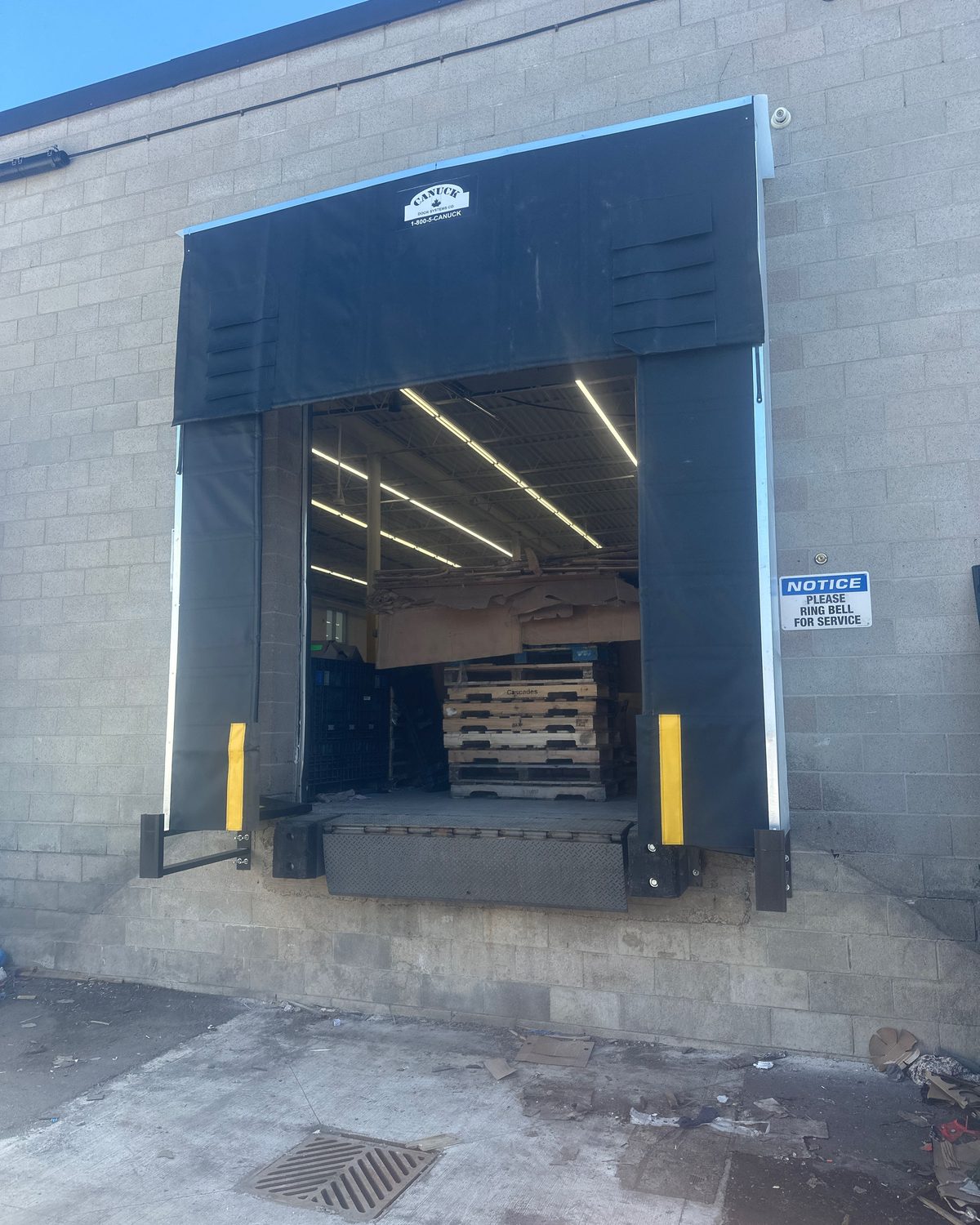
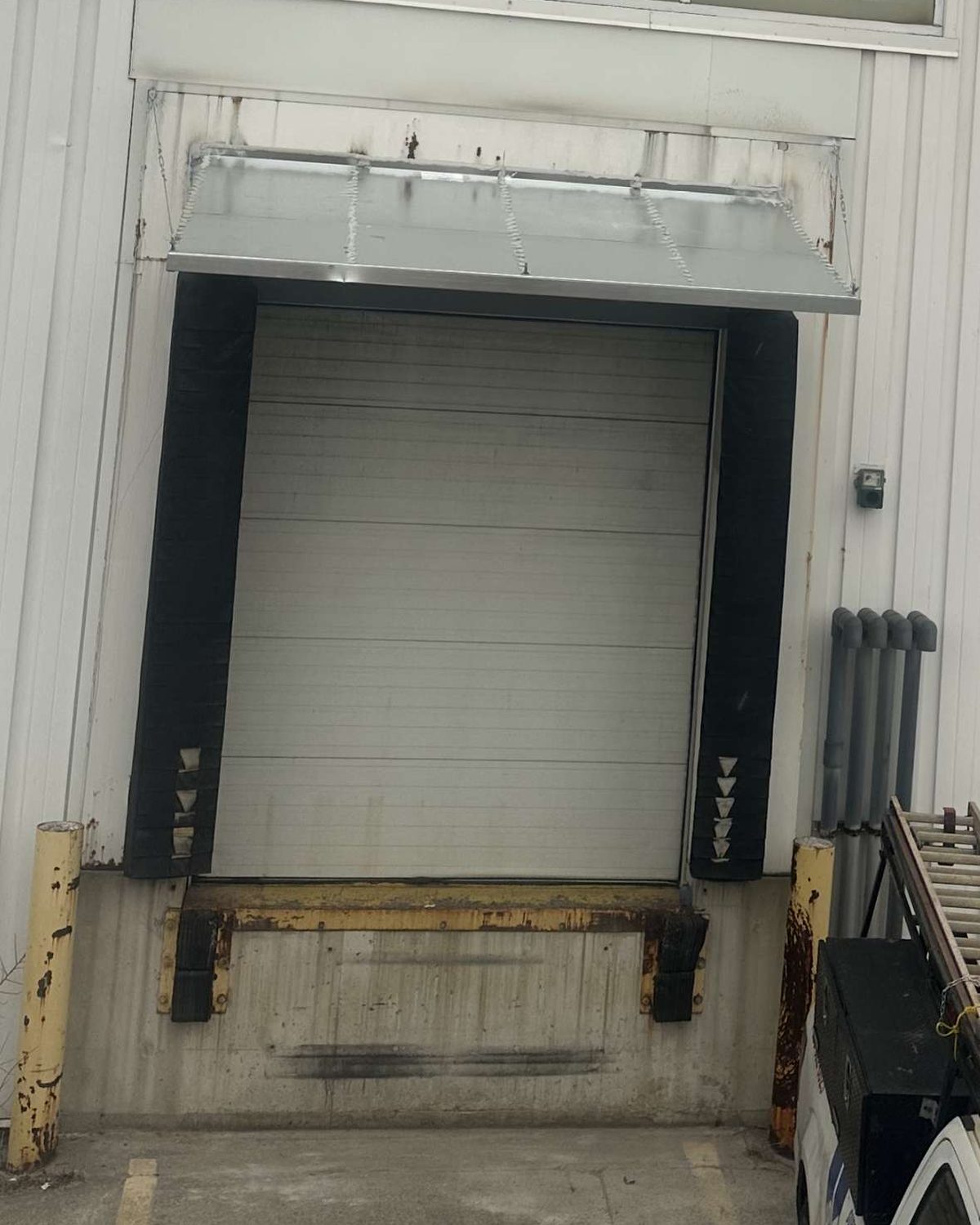
Dock seal, head canopy and leveler service on an existing dock position.
Synerex Construction Group Inc
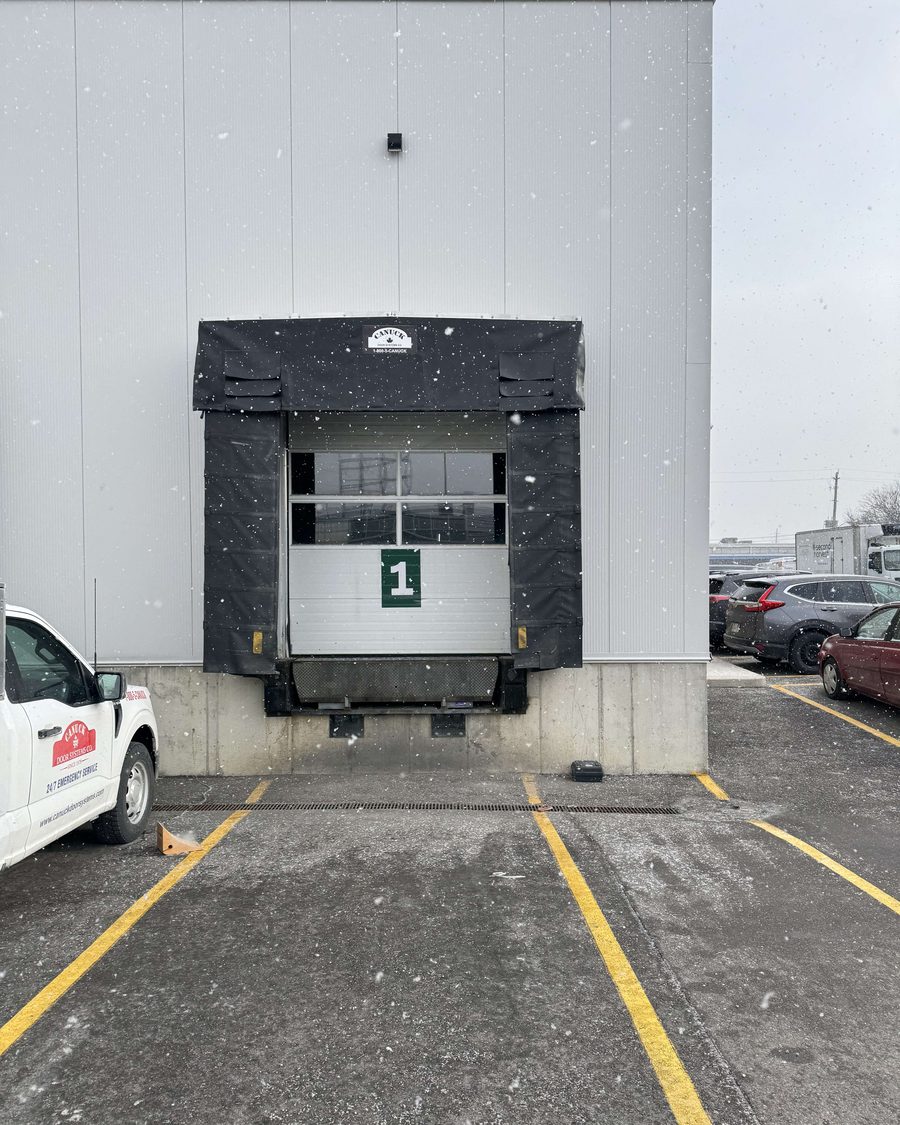
Dock shelter, bumpers and edge-of-dock leveler installed at a distribution bay, with the sectional door above it.
Four decades of doors and docks for names Ontario knows — Canada’s Wonderland, Tim Hortons, Canadian Tire, the LCBO, Metrolinx, Marriott & Hilton hotels, the University of Toronto — plus thousands of businesses across the GTA. Dependable people, quality products, since 1979.
Dock work across Toronto & the GTA
We install and service dock equipment right across the core GTA and out into the Southern Ontario belt, dispatched from our shop in Mississauga. Distribution runs on shift patterns rather than office hours, so dock work is routinely scheduled at night and on weekends — and a dead bay is a 24/7 call.
Core GTA
- Toronto
- Mississauga
- Brampton
- Vaughan
- Markham
- Scarborough
- North York
- Etobicoke
- Richmond Hill
- Oakville
- Burlington
- Milton
Southern Ontario belt
Warehousing does not respect municipal boundaries — Milton, Bolton, Brampton and the 401 corridor are where most of it sits. If you run several buildings, we quote and maintain them as one portfolio. See all service areas
What our customers say
We had the service a week ago and everything continues to work well on our dock ramp. Very professional front office and they even followed up with a call to see if we were happy. As a service company ourselves I am impressed so far and hope the great experience continues.
Excellent service from Fred. Was kept posted by email on arrival of parts. We have had many years of service fixing our dock plates and door replacements.
It was a pleasure dealing with Canuck door systems. Moji was excellent to deal with. He responded extremely fast and a technician was here within 2 hours and did an excellent job on our commercial doot repair. I highly recommend them.
What dock equipment costs — and what moves the number
A dock position is four purchases that are usually made as one, and the spread between a bumper swap and a rebuilt pit is enormous. What actually moves the number is short enough to list, and once we have measured the pit and the opening the quote is firm and itemised:
- Which pieces are in scope — bumpers only, or leveler, seal, door and bumpers together
- Leveler type — edge-of-dock, mechanical pit, hydraulic pit, or air-powered
- Capacity, and whether the traffic is pallet jacks or loaded counterbalance forklifts
- Whether an existing pit is reused, rebuilt, or formed new in the concrete
- Seal against shelter — and whether your trailer mix is uniform or varied
- Electrical supply and controls, including interlocks with the door
- Shift patterns: dock work in a running distribution centre usually means night or weekend labour, and one bay out of service at a time
We measure the pit, the dock height and the opening before anything is ordered. Dock equipment is sized to your building and your trailers, so the measure is where the accuracy has to be — a leveler ordered off a drawing that no longer matches the concrete is the most expensive mistake on this page.
Common questions about loading dock equipment
What equipment does a loading dock need?
Four things, and they are normally specified together because each one constrains the others. A dock leveler bridges the gap and the height difference between the dock floor and the trailer bed. A dock seal or shelter closes the gap around the trailer so the building is not heating the parking lot. Dock bumpers absorb the impact of a reversing trailer and hold it far enough off the wall to protect everything else. And the dock door itself — usually an insulated sectional — closes the opening when no trailer is there. Add controls, lights and a vehicle restraint and you have a complete position.
How much does a loading dock leveler cost?
It depends far more on type than on size. An edge-of-dock leveler is the least expensive by a wide margin and suits a fleet of consistent trailer heights. A mechanical pit leveler costs more and handles a wider range. A hydraulic pit leveler costs more again and is what a busy multi-shift dock should have, because there is no spring or pull chain to fail. If the pit has to be formed or rebuilt in concrete, the construction work can exceed the price of the leveler. We quote the equipment and the concrete separately so you can see which is which.
What is the difference between a dock seal and a dock shelter?
A seal is compressible foam pads that the trailer presses against, which gives the tighter seal but only works well when your trailers are close to one size. A shelter is a framed curtain assembly with a head curtain and side curtains that drape around the trailer, which tolerates a much wider range of trailer heights and widths and does not obstruct the rear doors of the trailer. If your inbound mix is anything from a cube van to a 53-foot reefer, a shelter is usually the right answer despite the slightly looser seal.
How often should dock bumpers be replaced?
When they are worn to roughly half their original thickness, or when any steel fixing is visible or the laminations have started to separate. Bumpers are the least expensive item on the dock and the one whose failure costs the most, because once a trailer reaches the wall it damages the seal, the leveler lip, the door track and eventually the concrete face. Bumper condition is the first thing our technicians look at on a maintenance visit — worn bumpers are the most common thing we find, and the easiest to put right.
What is the standard loading dock height?
48 inches is the usual Ontario benchmark for a dock serving standard highway trailers, with real docks commonly falling somewhere between 44 and 52 inches. It is worth knowing that trailer bed heights vary more than dock heights do — a loaded trailer sits lower than an empty one, and refrigerated trailers, drop-decks and cube vans are all different again. The leveler exists to absorb that variation, and its working range is what decides whether your dock can service the fleet that actually arrives.
Can you replace a dock leveler without closing the warehouse?
Yes, and it is how most of this work is done. Bays come out of service one at a time so the rest of the dock keeps running, and the changeover is scheduled around your shift pattern — frequently overnight or at a weekend. A like-for-like leveler swap into a sound existing pit is normally a one-day operation per position. If the pit needs rebuilding, the concrete cure time is what sets the schedule, and we will tell you that number before you commit rather than after the bay is open.
How long does dock equipment take to arrive?
Plan on roughly 4–6 weeks for levelers, seals and shelters to be manufactured once the measure is approved, then 1–2 weeks to schedule the installation — so about 5–8 weeks in total. Bumpers are usually much quicker; common sizes are stocked. Emergency repairs do not wait for any of that: we carry the parts that fail most often, and where a part has to come we will get the bay working safely or take it out of service properly in the meantime. Fitting a leveler, seal or shelter at one position usually takes a day on site; a new building's full dock package runs over several weeks.
Who is responsible for dock safety — us or the carrier?
The building operator owns the fixed equipment and the condition it is kept in. In Ontario that sits under the Occupational Health and Safety Act and the Industrial Establishments regulation, which require equipment to be maintained and to be capable of doing the job it is used for. Trailer creep, unrestrained trailers and levelers left in an unsafe position cause the injuries that follow. Practically: keep bumpers within wear limits, keep the leveler serviced, and use a restraint or wheel chocks with a communication system so a driver cannot pull away under a forklift.
Do you service equipment you did not install?
Yes — most of our dock service work is on equipment somebody else supplied, including makes no longer manufactured. levelers, seals, shelters and bumpers are largely rebuildable: springs, lip assemblies, hydraulic packs, foam pads and curtain sections are all replaceable in place. We will tell you honestly when a unit is past economic repair, which on a leveler usually means the frame or the pit rather than the mechanism.
Planning dock work — or is a bay down right now?
Send us the building and we’ll measure the positions and quote them. leveler stuck, seal shredded, door off its track? Call and we dispatch 24/7.