
Commercial & Industrial
Dock Bumpers & Fenders
The least expensive item on a loading dock and the one whose failure costs the most. Laminated, moulded and steel-faced bumpers supplied and fitted across Toronto and the GTA — measured for projection, not just thickness, so the seal, the leveler and the door behind them survive.
Request QuoteCall 800-522-6825
Common sizes stocked · fitted on a service visit · checked on every maintenance call
At a glance
| Types | Laminated rubber · moulded rubber · steel-faced |
|---|---|
| Common sizes | 4″ × 10″ × 13″ · 4″ × 12″ × 14″ · 6″ thick for heavy traffic |
| Replace when | Worn to about half thickness, fixings visible, or laminations separating |
| Mounting | Bolted to concrete, welded to steel angle, or bracket-mounted |
| Availability | Common sizes stocked; fitted on a service visit |
A dock bumper is the least expensive thing on a loading dock and the only one whose job is to be destroyed. It sits between a reversing trailer and everything expensive behind it — the seal, the leveler lip, the door track, the concrete face — and every impact it absorbs is one those components do not take.
The failure sequence is always the same, and it is why worn bumpers are the first thing our technicians look at. Once a trailer can reach the building face, it damages the seal first. Then the leveler lip, which is struck from below every time a trailer backs in. Then the door bottom section and track. Then the concrete. Each step costs more than the one before it, and all of them were preventable by a component that costs less than an hour of the dock's downtime.
Three constructions
| Type | How it is made | Best for | Watch-outs |
|---|---|---|---|
| Laminated rubber | Stacked pads cut from tire carcass on a steel rod between angle plates | Most Ontario docks; the default | Pads can fan or separate late in life; least tolerant of angled impact |
| Moulded rubber | A single moulded piece | Heavy or angled impact, higher cycle counts | Costs more; usually outlasts laminated by a wide margin |
| Steel-faced | Rubber with a steel wear plate, sometimes on rollers | Very high-cycle docks; trailers that ride up and down the face | Highest cost; the steel face transfers noise and needs its mounting checked |
Projection is the specification that matters
Thickness is what gets quoted; projection is what protects the dock. The bumper has to stand proud of everything behind it — and critically, proud of the compressed depth of a dock seal, not its relaxed depth. A seal that is 10 inches thick uncompressed may compress to 4, and a bumper sized against the wrong figure lets the trailer reach the seal frame every time.
If you have had a seal replaced and it failed again quickly, measure the bumper projection before ordering another seal. In our experience that is the cause more often than the seal itself.
When bumpers get replaced — the cases we see
Routine wear
Found on a maintenance visit, worn past half thickness. Changed on the same call, before anything behind them is affected.
After a seal failure
A new seal keeps tearing. The bumpers are usually the reason, and replacing them is a condition of the seal lasting.
Fixings exposed
Bolt heads or the mounting angle are being struck by trailers — metal on metal, and the point at which damage accelerates.
Sheared off
One bumper gone, usually from angled approaches. Often needs concrete repair behind it as well as a new bumper.
Concrete failure
The dock face has spalled and anchors will not hold. The honest fix is the wall, not the bumper.
Fleet upgrade
Heavier or more frequent trailers than the dock was built for — a move from laminated to moulded or steel-faced.
New dock position
Specified with the leveler, seal and door so projection is right from day one rather than corrected later.
Portfolio catch-up
A property manager standardising bumpers across several buildings on one schedule and one specification.
How long a bumper change takes
Bumpers are the quickest item on the dock to put right, and the least disruptive. Manufacture is rarely the constraint — common sizes are stocked.
- Stocked sizes — fitted on a scheduled service visit, one position at a time, with the bay back in use the same day.
- Non-standard sizes or steel-faced — ordered in, typically a short lead time rather than the 4–6 weeks a leveler or seal takes.
- With concrete repair — the repair and its cure time set the schedule, which is why we quote the two separately.
Bumpers are checked on every preventative-maintenance visit as a matter of course — see loading dock repair & installation for what those visits cover.
Dock work across the GTA
Documented dock jobs from our own project files.
Black & McDonald Limited
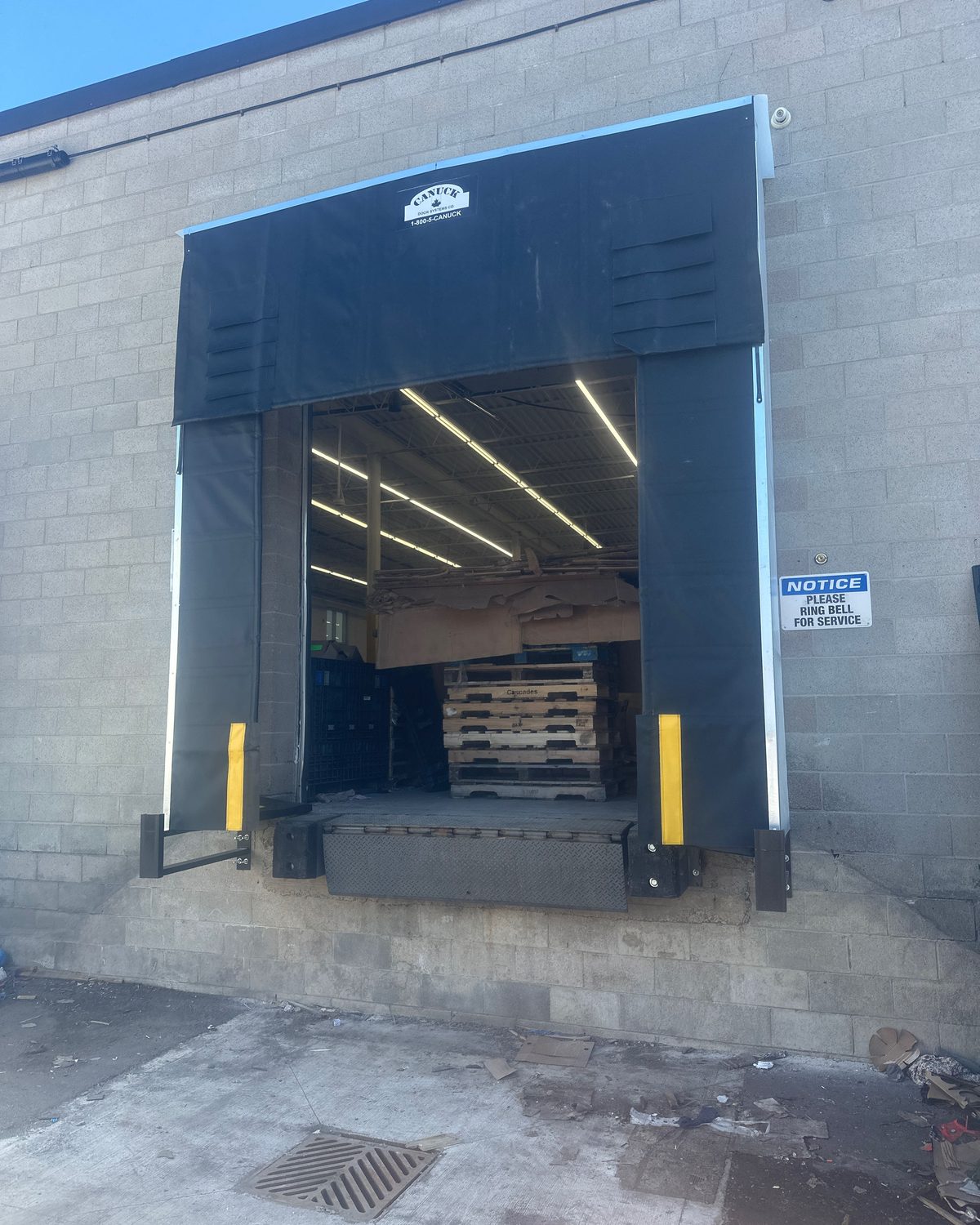
Dock seal, head canopy and leveler service on an existing dock position.
Synerex Construction Group Inc
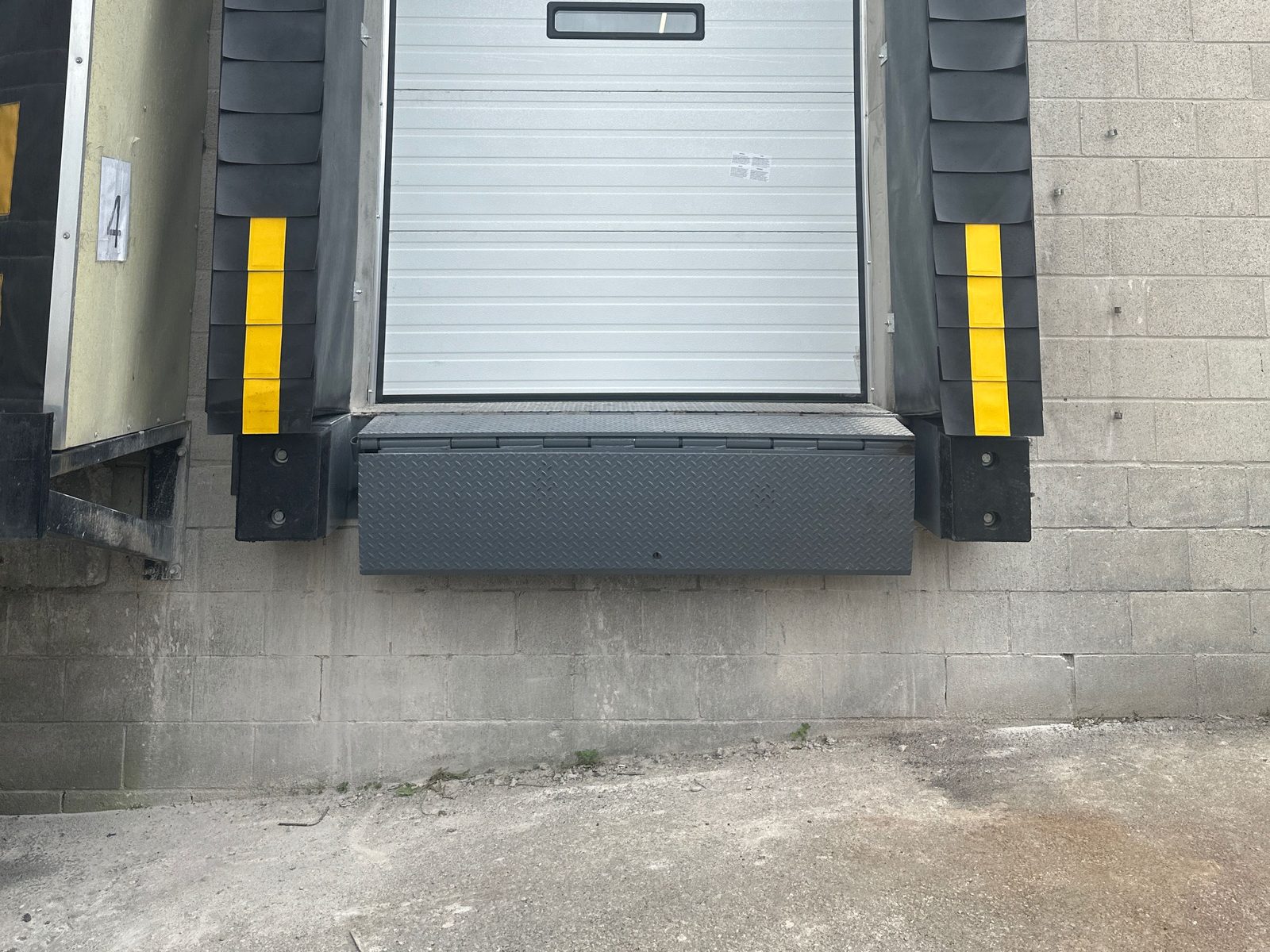
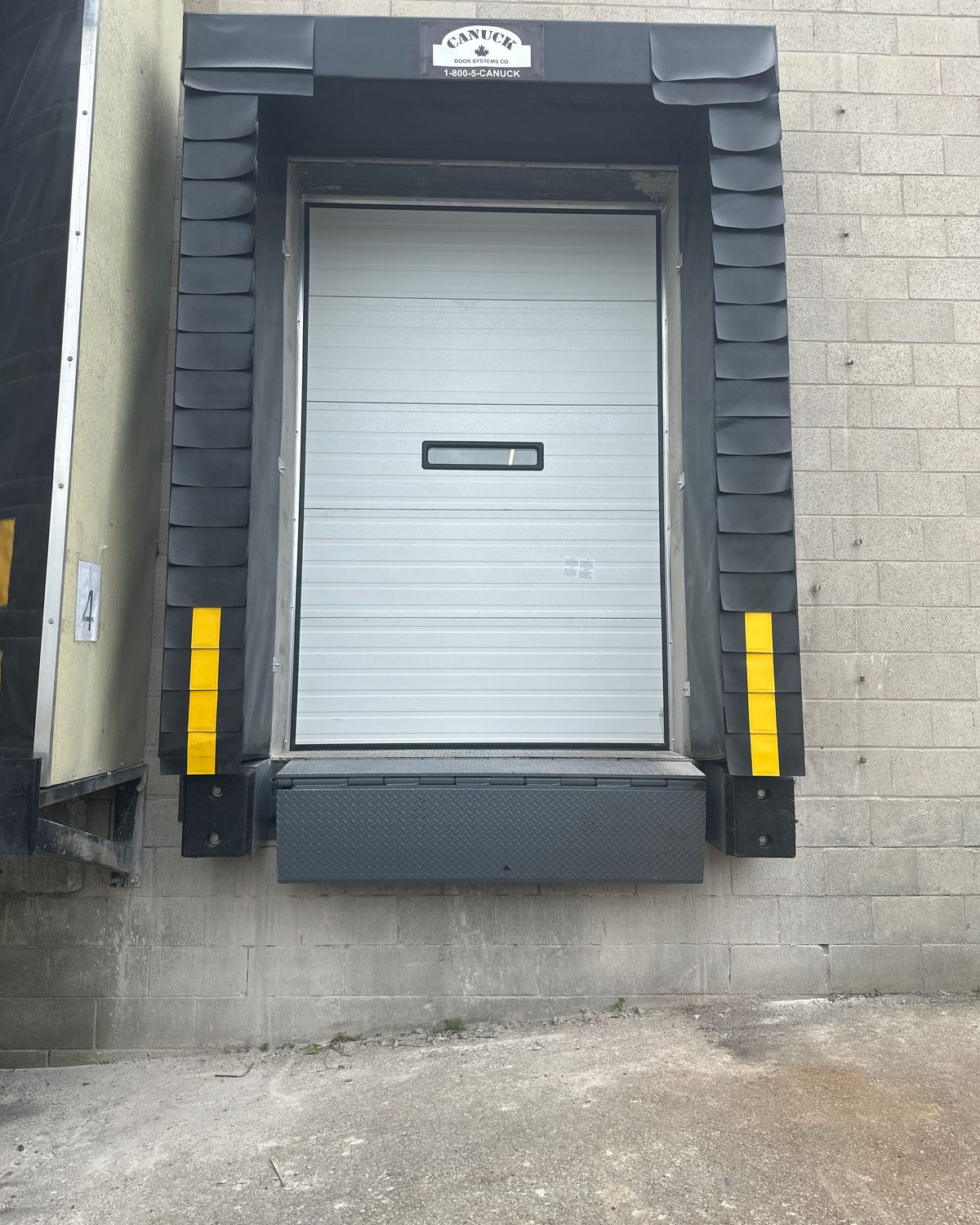
Bumpers, dock shelter and edge-of-dock leveler installed at a distribution bay, with the sectional door above it.
Four decades of doors and docks for names Ontario knows — Canada’s Wonderland, Tim Hortons, Canadian Tire, the LCBO, Metrolinx, Marriott & Hilton hotels, the University of Toronto — plus thousands of businesses across the GTA. Dependable people, quality products, since 1979.
What our customers say
Excellent service from Fred. Was kept posted by email on arrival of parts. We have had many years of service fixing our dock plates and door replacements.
We had the service a week ago and everything continues to work well on our dock ramp. Very professional front office and they even followed up with a call to see if we were happy. As a service company ourselves I am impressed so far and hope the great experience continues.
Called Canuck doors for one of our warehouse doors that was malfunctioning , the technician that came was very knowledgeable and efficient, it took him to time to find the issue and fix it. 5 stars
Dock bumper replacement across Toronto & the GTA
Bumpers are usually replaced on a scheduled service visit rather than as a job of their own, right across the core GTA and out along the Southern Ontario distribution belt. Common sizes are stocked, so a same-visit swap is normal.
Core GTA
- Toronto
- Mississauga
- Brampton
- Vaughan
- Markham
- Scarborough
- North York
- Etobicoke
- Richmond Hill
- Oakville
- Burlington
- Milton
Southern Ontario belt
If you run several buildings, bumpers are the item most worth putting on one schedule — they wear at similar rates and they are quick to change once a crew is on site. See all service areas
What dock bumpers cost
Bumpers are the least expensive purchase on the dock, and the variables are few. What moves the number:
- Construction — laminated rubber, moulded rubber, or steel-faced
- Size and required projection, which follows from the seal or shelter in front of them
- Whether the mounting is bolted to concrete, welded to a steel angle, or on a steel bracket
- Condition of the concrete face behind them, which is often the real problem
- Number of positions, since crew time is the larger share on a small order
- Whether they are fitted on a scheduled visit or as a separate call-out
Bumpers are almost always less expensive to replace early than late. The cost of a set is a small fraction of a leveler lip, a seal, or a door bottom section — all of which are what a worn bumper eventually damages.
Common questions
What do loading dock bumpers do?
They absorb the impact of a reversing trailer and, just as importantly, they hold the trailer at a fixed distance from the building. That standoff is what protects everything else on the dock: the seal or shelter in front of the wall, the leveler lip, the door track and bottom section, and the concrete face itself. A bumper is a sacrificial component — it is meant to wear out, and replacing it is far less expensive than replacing what it protects.
How do I know when dock bumpers need replacing?
Four signs, any one of which is enough. The bumper is worn to roughly half its original thickness. Any steel — bolt heads, washers, the mounting angle — has become visible or is being struck. A laminated bumper's pads have begun to separate or fan out. Or the trailer is now touching something it should not: fresh damage to the seal, the leveler lip, or scrape marks on the wall are all evidence the bumpers have stopped doing their job.
What is the difference between laminated and moulded dock bumpers?
A laminated bumper is built from stacked pads cut from rubber tire carcass, threaded onto a steel rod between angle plates. It is inexpensive, easy to replace and the most common type on Ontario docks. A moulded bumper is a single piece of moulded rubber, more uniform and generally longer-lived under heavy or angled impact but costlier. A steel-faced bumper adds a steel plate, sometimes on rollers, for very high-cycle docks or where trailers ride up and down the face as they are loaded.
How much should a dock bumper project from the wall?
Far enough that the trailer stops before it reaches anything behind it — which means the bumper must stand proud of the compressed depth of your dock seal, not its relaxed depth. Four inches of projection is a common minimum on a plain dock face, and more is needed where a seal or shelter is fitted or where the dock face is set back. This is the single most common error we find: correctly sized bumpers that do not project far enough, because the seal in front of them was never accounted for.
Can bumpers be replaced without taking the dock out of service?
Effectively, yes. A bumper change is a short job per position — the bay is unavailable for that time and its neighbours keep running. The work is normally scheduled around your shift pattern and often done on the same visit as leveler or door maintenance. What can extend it is what we find behind the bumper: spalled concrete or a corroded mounting angle needs repair before a new bumper can be fixed properly.
The bumpers keep getting torn off. Why?
Usually one of three things. The dock face concrete has degraded, so the anchors no longer hold — the bumper is fine, the wall is not. The bumpers are undersized for the traffic and are being overwhelmed rather than compressed. Or trailers are arriving at an angle, which loads one bumper alone and can shear it off; that is normally a driveway geometry or guidance problem, and painted guide lines or a bumper with more projection at the approach side is the fix.
Do you supply bumpers for docks you did not build?
Yes — most bumper work is on existing docks of all ages and makes. Bumpers are largely generic, so what matters is measuring the existing mounting, the projection required in front of your seal, and the state of the concrete behind. We will tell you if the honest fix is concrete repair rather than a new bumper, because a bumper bolted into failing concrete will not stay on.
How long do dock bumpers last?
There is no useful figure in years, because life is set by cycles and by how squarely trailers arrive, not by time. A quiet bay taking a van a week may go a decade; a high-volume grocery dock may need bumpers every couple of years. This is why bumper condition is checked on every maintenance visit rather than replaced on a calendar — inspection is what tells you, and it takes seconds.
Bumpers worn, missing or torn off?
Tell us how many positions and we’ll bring the right sizes. If the concrete face behind them has taken damage too, we’ll quote that in the same visit.