
Guides & FAQ · Loading docks
Loading Dock Height, Dimensions & Equipment: Questions Answered
The standard loading dock height is 48 inches (about 1.2 m) above the truck apron, and most real docks fall between 44 and 52 inches. A dock leveler takes up the difference between that floor and whatever trailer backs in. Below are the questions warehouse operators, facility managers and contractors ask us most about dock sizes, levelers, seals, bumpers and safety, answered briefly.
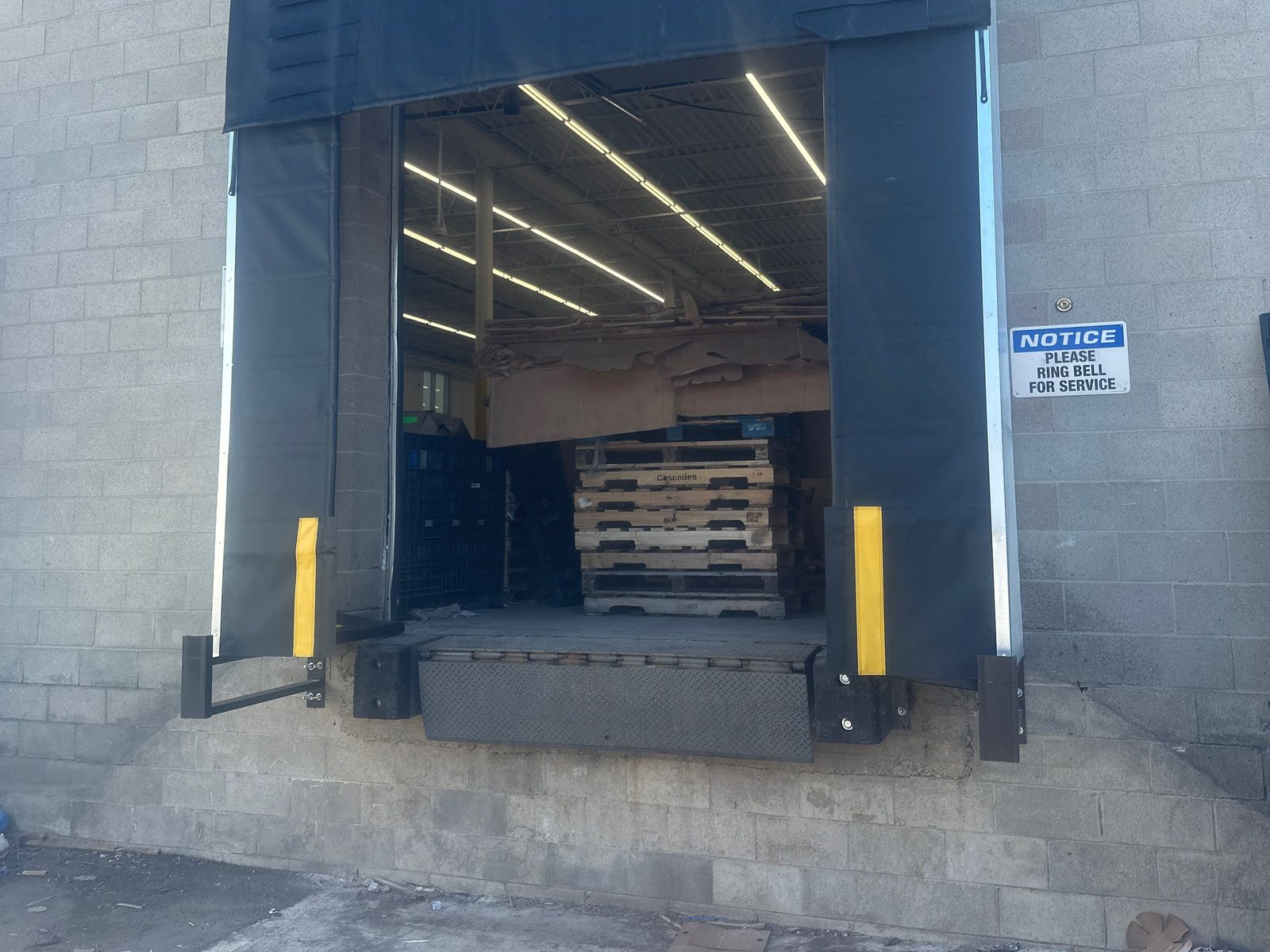
The dimensions below come from dock equipment makers' planning guides and from the docks we measure across the GTA; the equipment answers match what we tell customers on our loading dock pages. Where an answer needs more room, it links to the page that covers it in full.
Four decades of doors and docks for names Ontario knows — Canada’s Wonderland, Tim Hortons, Canadian Tire, the LCBO, Metrolinx, Marriott & Hilton hotels, the University of Toronto — plus thousands of businesses across the GTA. Dependable people, quality products, since 1979.
Loading dock height
One number everybody quotes, and the reasons real docks and real trailers rarely match it exactly.
What is the standard loading dock height?
48 inches (about 1.22 m) from the apron to the dock floor is the benchmark for docks serving highway trailers, and it is what most dock equipment makers design around. In practice, Ontario docks run from about 44 to 52 inches, because buildings were built to different trailers and different eras. The exact number matters less than the range of trailer beds your leveler has to reach from it.
What is the typical dock height for a 53-foot trailer?
A 53-foot dry van's floor usually sits somewhere around 48 to 52 inches off the ground empty, which is why a 48-inch dock suits it. Loaded, the suspension settles and the bed drops by a few inches; a refrigerated trailer typically sits higher than a dry van; and air-ride suspension moves again as a forklift drives on. A standard dock meets that spread with a leveler, not with a different dock height.
Can a box truck or cube van use a standard-height dock?
Often, but not always. Straight trucks and cube vans have lower, more varied beds than highway trailers, and the smaller the truck the further below a 48-inch dock it sits. A pit leveler with a generous below-dock range handles most box trucks. A small cube van may simply be too low to load safely at the dock, which is why many buildings keep one position with a longer leveler or a grade-level drive-in door for local deliveries.
What happens if our dock is too high or too low for the trucks we get?
The leveler ends up working at the steep end of its range on every load. Forklifts ground out or bottom on the lip, pallet jacks struggle up the grade, and the lip may not rest squarely on the trailer floor. The fixes, in rising order of cost, are a leveler with more range, a longer platform for a gentler slope, or a change to the dock itself. We measure the trailers you actually receive before recommending any of them.
Is a loading dock the same as a loading bay?
Near enough, in everyday use. Strictly, the dock is the raised platform at trailer-bed height, and a bay or dock position is one door opening in it, with its own leveler, seal or shelter and bumpers. A building has one dock and several bays. Both words are used across Canada, and "shipping door" and "dock door" mean the door in that opening.
Dock door sizes and layout
The figures below come from dock equipment makers' planning guides. They are starting points for a design, not a code requirement.
What size is a standard loading dock door?
9 feet wide by 9 feet high (about 2.74 × 2.74 m) for standard trailers, and 9 wide by 10 high (2.74 × 3.05 m) to take the full range up to high-cube trailers. The 9-foot width gives a forklift clear access to the full width of an 8′6″ trailer. Older buildings often have 8-foot-wide doors, which work but restrict what can be loaded from the trailer's outer edges.
Types of overhead doors, with a dock and drive-in size table
How far apart should loading dock doors be?
Planning guides put dock positions 12 to 14 feet apart, centre to centre. Twelve feet is the practical minimum for trailers to back in side by side; 14 gives drivers room to manoeuvre, space for a seal or shelter on each opening and a margin for angled arrivals. Closer spacing saves wall length but costs apron space and makes damage to neighbouring seals and bumpers more likely.
How much space does a truck need in front of a loading dock?
The apron, the paved area a tractor-trailer uses to swing in and back up, is usually planned at about twice the length of the longest vehicle. A 65-foot tractor and trailer needs something like 130 to 135 feet of clear apron in front of the dock, and wider spacing between positions reduces that. A concrete landing strip where the trailer's landing gear rests is worth having, because gear sinks into hot asphalt.
What is the maximum slope for a loading dock approach?
Planning guides aim for a near-level approach of 1–2% where they can, and treat 8 to 10% as the upper limit for a depressed dock with a sloping driveway. A steeper decline tips the top of the trailer toward the building, where it strikes the wall, the door header or the shelter, and a trailer on a slope sits at a different bed height from one on the flat. Every percent of decline also calls for about an inch more bumper projection.
What are the different types of loading docks?
The flush dock, where the dock face lines up with the building wall and the leveler sits inside the door, is the most common in Ontario. An enclosed dock brings the whole trailer inside, which suits cold storage and secure loads. An open or platform dock sits outside the wall and needs a canopy. A sawtooth dock angles the positions to save apron space. And a drive-in door at grade takes vehicles with no dock at all.
Dock levelers and dock plates
The piece of equipment that turns a fixed dock height into one that fits every trailer.
What does a dock leveler do?
It bridges the gap between the dock floor and the trailer bed, both the gap in front and the difference in height. Its hinged deck tilts up or down to meet the trailer, and a lip extends onto the trailer floor so a forklift or pallet jack can drive straight across. It keeps that bridge in place as the trailer settles under the load.
What are the different types of dock levelers?
Four in common use. Edge-of-dock levelers bolt to the dock face, need no pit and cover only a few inches above and below the dock. Mechanical pit levelers are raised by springs and walked down by the operator. Hydraulic pit levelers raise and lower on a pump and cylinder at the push of a button. Air-powered levelers lift the deck on an inflatable bag. Pit levelers of every kind cover a far wider trailer range than edge-of-dock units.
Do dock levelers need power?
Mechanical and edge-of-dock levelers do not: springs, a pull chain or a lever do the work, which makes them independent of the building's electrics. Hydraulic and air-powered levelers need a power supply and a control panel, usually beside the door, and are often interlocked with the dock door or a vehicle restraint. On a busy multi-shift dock, powered units are usually worth it for the lower operator effort and fewer spring adjustments.
What size dock leveler do I need?
Common platforms are 6 or 7 feet wide and 8 or 10 feet long. Width follows the trailers: a 7-foot deck gives more room to reach the edges of a full-width trailer. Length follows the height difference: a longer deck makes a gentler slope over the same rise, which matters for low-clearance equipment such as electric pallet jacks. Capacity is set by your heaviest loaded forklift, never by the weight of a pallet.
What is the difference between a dock plate and a dock leveler?
A dock plate (or dock board) is a portable aluminum or steel ramp that is set down by hand for each load and lifted away afterwards. A dock leveler is fixed equipment, built into the dock or bolted to its face. Plates suit a dock that sees an occasional truck and hand pallet trucks. Anything with regular forklift traffic should have a leveler, because plates have limited capacity and must be placed correctly every time.
Why won't my dock leveler go up?
It depends on the type. A hydraulic leveler that will not rise usually has a power, breaker or control fault, a tripped emergency stop, low fluid from a leak, or a failed motor. A mechanical leveler that no longer rises fully has weak or broken springs, or a release chain or hold-down that is not letting go. On an air leveler, look at the blower and the bag. Any of them can also be jammed by a bent or seized lip.
Seals, shelters and bumpers
The parts that close the gap around the trailer and stop it reaching the wall. Each one depends on the others being sized correctly.
Do we need a dock seal or a dock shelter?
It depends on your trailers. A seal is compressible foam pads the trailer presses into; it closes tightest but suits a fleet of similar trailers. A shelter is a frame with fabric curtains that drape around the trailer; it seals less tightly but takes anything from a cube van to a high-cube reefer and leaves the trailer's rear doors clear. Mixed inbound traffic usually means a shelter.
How do you measure for a dock seal or shelter?
Four measurements: the width and height of the door opening, how far the dock face is set back from the wall, how far the bumpers project, and the range of trailer heights and widths you receive. The mounting surface above and beside the opening matters too, because a shelter frame has to be anchored into something solid. A seal sized without allowing for bumper projection gets crushed within weeks.
Where should dock bumpers go?
Usually one each side of the leveler, at dock level, where the rear frame of the trailer meets them squarely. They have to stand proud of everything behind them, including the compressed depth of a dock seal, not its relaxed thickness. Docks with a sloping approach or a mix of trailer heights sometimes add bumpers higher up or choose taller ones, so a trailer arriving high or tilted still meets rubber rather than the wall.
Can I make my own dock bumpers?
It is possible, and old tires or timber are what people usually try, but it is poor economy. A bought laminated rubber bumper is one of the least expensive items on a dock, comes with the steel angles and anchor pattern it needs, and absorbs the impact predictably. A homemade bumper that tears off or compresses too far lets the next trailer reach the seal frame, the leveler lip and the door track, which cost far more.
Dock safety and regulations
Most dock injuries come from a trailer moving, a person or forklift going over the edge, or equipment that has not been maintained.
Do OSHA loading dock standards apply in Ontario?
No. OSHA is the U.S. federal regulator, and its dock rules are often quoted because they are easy to find online. In Ontario the governing law is the Occupational Health and Safety Act and its Industrial Establishments regulation (Reg. 851), which require equipment to be maintained and fit for its use. OSHA guidance can still be a useful reference, but it is not what an Ontario inspector enforces.
What is trailer creep?
The gradual movement of a parked trailer away from the dock as forklifts drive on and off it. Every entry and braking stop nudges the trailer forward, until the gap opens beyond the leveler lip and a forklift can drop through it. A trailer pulling away early does the same thing all at once. Wheel chocks or a vehicle restraint, with a clear signal between the driver and the dock crew, are what prevent both.
Do loading docks need guardrails or fall protection?
An open dock edge is a fall hazard of roughly 1.2 m, and Ontario's Reg. 851 sets out guardrail requirements for raised surfaces a worker can fall from. How that applies to an active loading position is worth confirming with your health and safety adviser. In practice, docks control it by keeping the door closed when no trailer is there, marking the edge, and using levelers whose lip and toe guards cover the gaps.
How do you make a loading dock safer?
Most of it is maintenance and routine. Keep bumpers within their wear limits so trailers stop where they should, keep the leveler serviced so the lip seats and the deck holds, and keep door safety devices working. Secure every trailer with chocks or a restraint before loading starts, keep the dock door closed when a position is empty, and keep the dock floor and apron clear of ice and debris.
Cost, service and lead times
What moves the price, how often equipment needs attention, and how long new equipment takes.
How much does a dock leveler cost?
The type matters far more than the size. Edge-of-dock is the least expensive, mechanical pit levelers cost more, and hydraulic pit levelers cost more again. What often decides the total is the concrete: if a pit has to be formed or rebuilt, that construction can cost more than the leveler. We quote the equipment and any concrete work as separate lines, after measuring the pit and the trailers.
How much does it cost to add a loading dock to a building?
It is a construction project first: cutting the wall, pouring or excavating the dock and pit, the apron and drainage, and a building permit. That part is general contractor work and sets most of the cost. The equipment, meaning the dock door, leveler, seal or shelter and bumpers, is a smaller share. We work with contractors on the equipment side and can give them the pit and opening dimensions the equipment needs.
How often should dock equipment be serviced?
A technician should service the levelers, seals, bumpers and dock doors twice a year on an ordinary dock and quarterly on a busy multi-shift one. Staff should check bumpers, seals and the leveler's operation more often, and test the door's safety devices monthly. Most leveler failures show warning signs for weeks before a bay goes down, which is what planned maintenance is there to catch.
How long does a dock leveler last?
There is no honest single figure, because life depends on traffic and care rather than years. The frame and pit usually outlast the working parts by a long way: springs, hydraulic packs, lips and hinges wear out and are replaced in place. A leveler reaches the end of its life when the frame or the concrete under it fails, and that is the point where replacing beats repairing.
How long does new dock equipment take?
Levelers, seals and shelters are made to your opening: allow 4–6 weeks to manufacture once the measure is approved, then 1–2 weeks to schedule the installation. A like-for-like leveler swap into a sound pit usually takes a single day per position, so one bay is out at a time. Stock bumpers and most repairs are much quicker.
In-depth guides
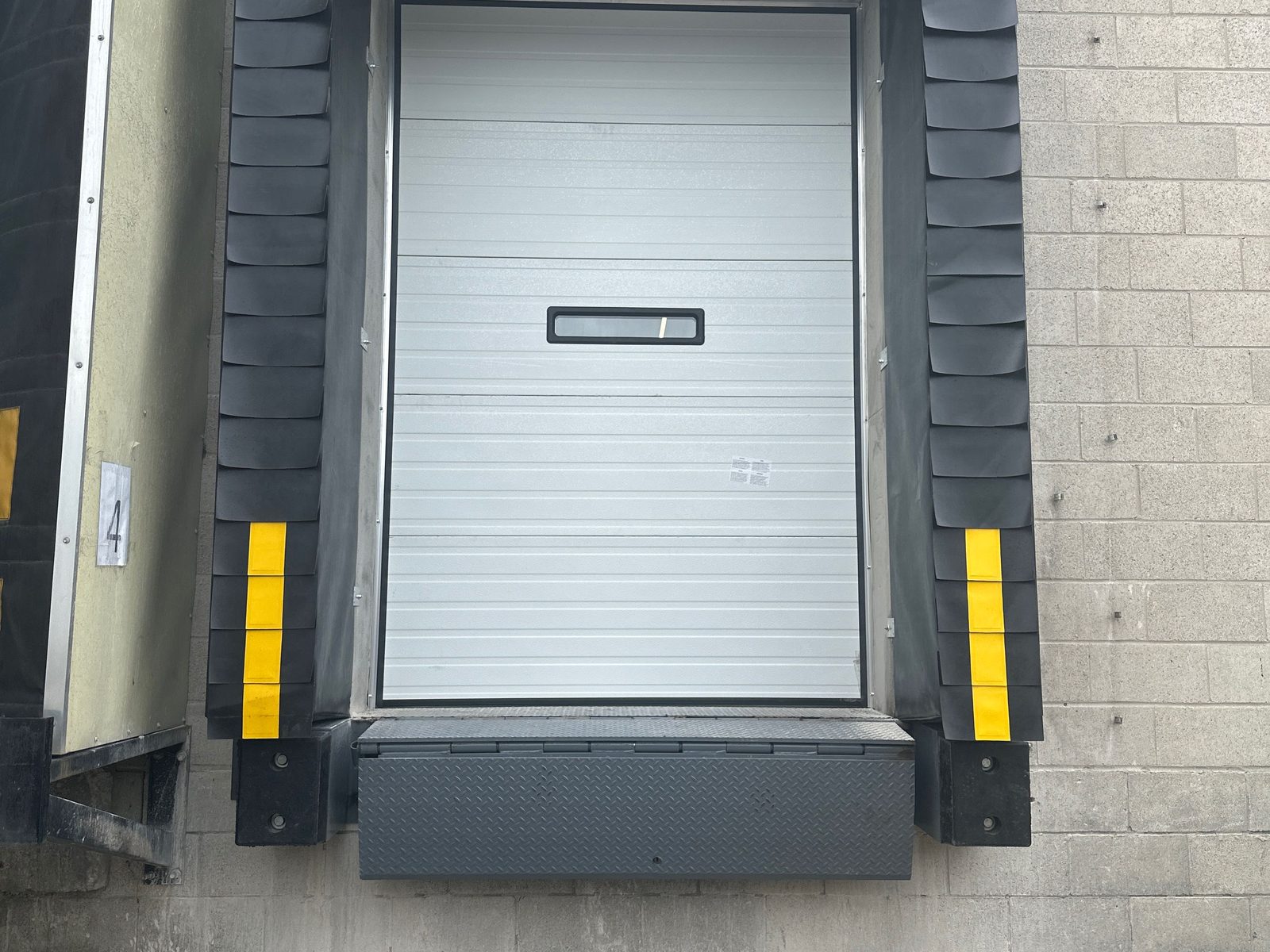
Loading Dock Maintenance Checklist: Daily, Monthly and Planned Checks
A practical dock checklist — leveler, seals and shelters, bumpers, door and restraint — with who checks what and how often, plus standard dock heights and door sizes.
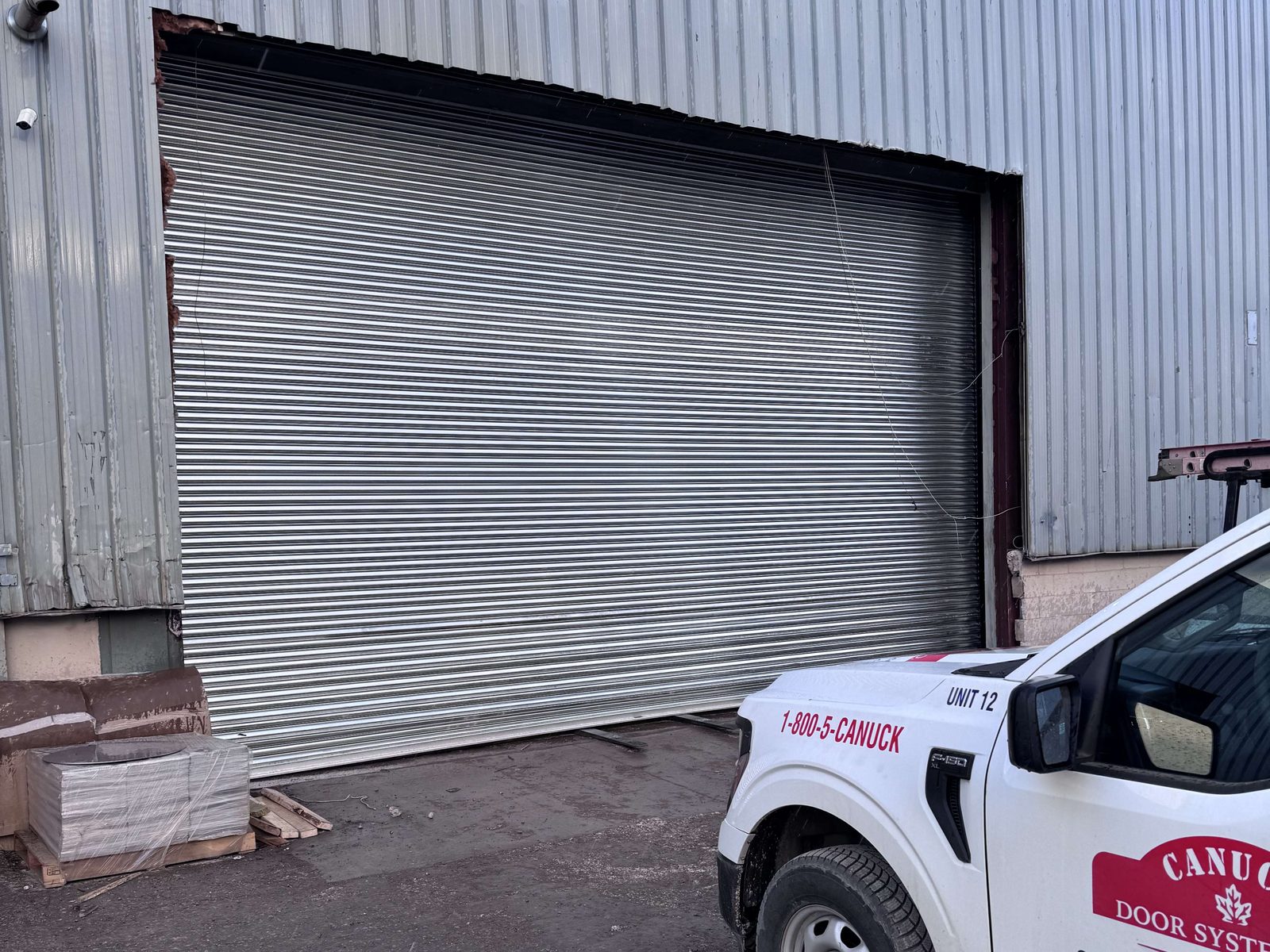
Types of Overhead Doors, and the Standard Sizes They Come In
Sectional, roll-up, rolling steel and high-speed doors compared, plus the standard residential, dock and drive-in door sizes, in feet and metres.
Get a dock position fitted out or repaired
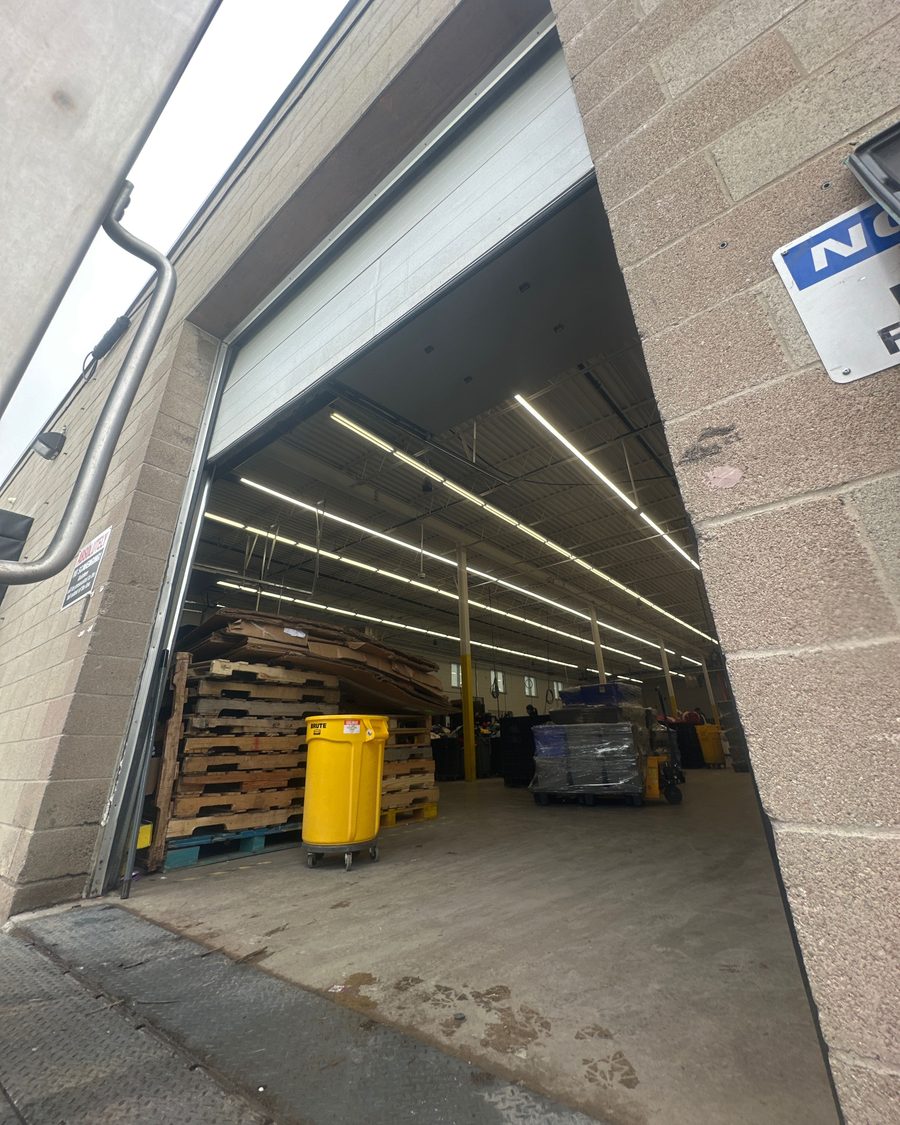
Planning a dock, or is a bay down right now?
Send us the dock height, the door size and the trailers you receive, and we will quote the right equipment. If a leveler, seal or door has failed mid-shift, call and we dispatch 24/7.