
Checklist
Loading Dock Maintenance Checklist: Daily, Monthly and Planned Checks
A loading dock maintenance checklist covers five things: the dock leveler, the seals or shelter, the bumpers, the dock door and the vehicle-securing equipment. Staff check the leveler, chocks or restraint and dock edges daily; the door's safety devices monthly; and a technician services the equipment twice a year, quarterly on busy docks.
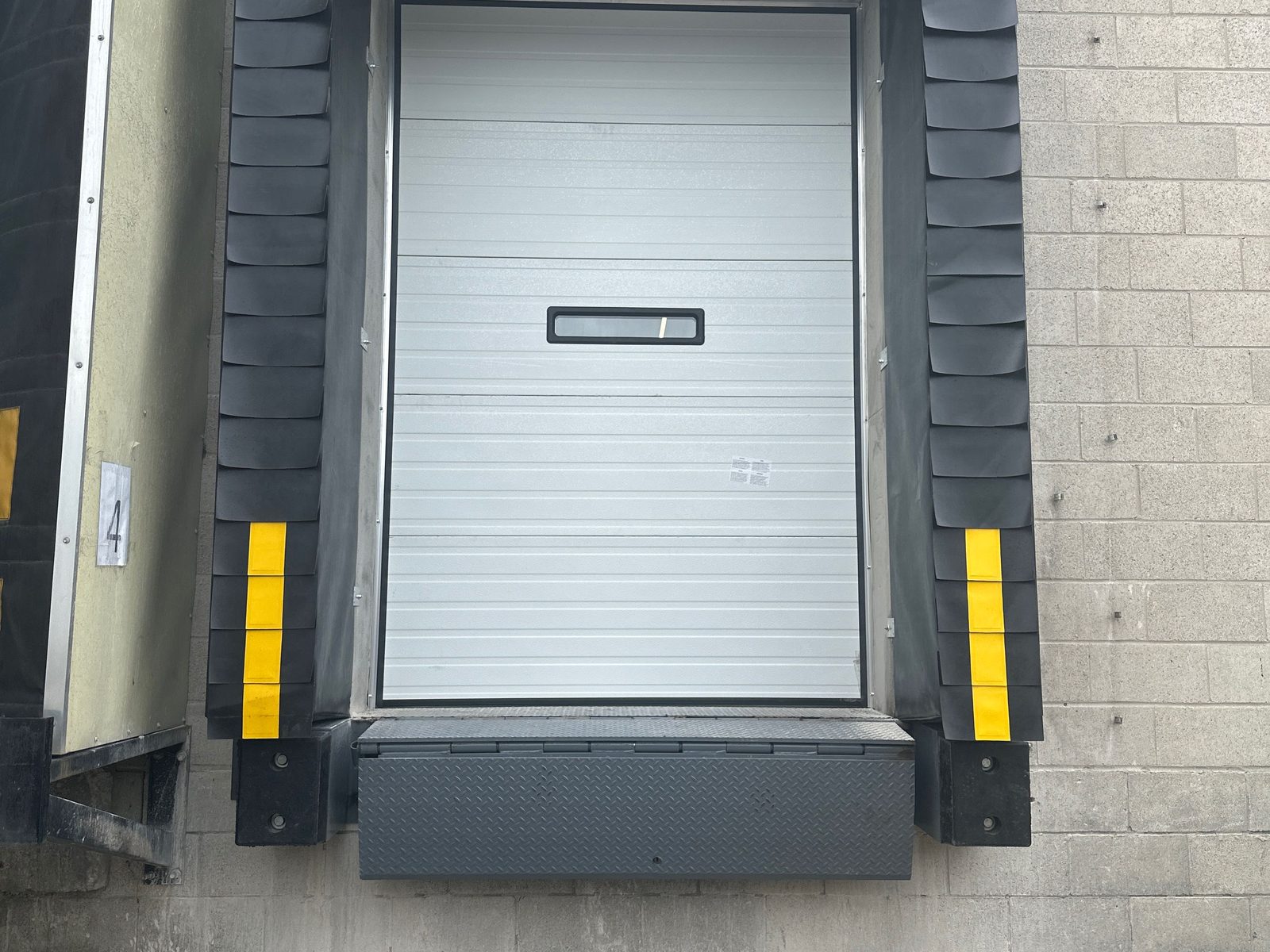
A loading dock is several machines sharing one opening: a leveler, a seal or shelter, bumpers, a door and, on many docks, a vehicle restraint. Each wears at its own rate and fails in its own way, and a dock that fails stops trucks. A checklist that says who looks at what, and how often, is the least expensive protection a warehouse has.
This is the checklist we would give a facility manager, built from what we see on service visits across the GTA.
Four decades of doors and loading docks for names Ontario knows — Canada’s Wonderland, Tim Hortons, Canadian Tire, the LCBO, Metrolinx, Marriott & Hilton hotels, the University of Toronto — plus thousands of businesses across the GTA. Dependable people, quality products, since 1979.
What should be on a loading dock maintenance checklist?
Five pieces of equipment and one set of housekeeping habits: the dock leveler, the dock seals or shelter, the bumpers, the dock door, and the vehicle-securing equipment (wheel chocks or a restraint), plus a clean, dry, well-lit and clearly marked dock. Some checks belong to the staff who use the dock every day; the rest belong to a technician on a schedule.
| Equipment | What to check | Who | How often |
|---|---|---|---|
| Dock leveler | Lip extends and rests fully on the trailer bed; no cracks, bent lip or broken hinge pins; no oil leaking; pit clear of debris, ice and pallets | Staff | Every day it is used |
| Dock leveler | Hydraulic cylinder, hoses and fluid, or springs; lip hinge and keepers; hold-downs; controls; lubrication; full cycle test | Technician | Twice a year; quarterly on busy docks |
| Seals and shelter | Tears, crushed or worn pads, gaps at the head and sides, damaged head curtain | Staff, then technician | Monthly look; on each service visit |
| Bumpers | Worn, split or missing bumpers; loose anchors; fresh damage on the wall or leveler behind them | Staff, then technician | Monthly look; on each service visit |
| Dock door | Springs, cables, rollers and tracks; bottom seal; photo eyes or edge reversing correctly | Staff test; technician service | Safety test monthly; service twice a year or quarterly |
| Chocks or restraint | Chocks present and used; restraint engages; inside and outside lights work | Staff | Every trailer |
| Housekeeping | Dock edges clearly marked; floor clean, dry and free of oil; approach clear of ice and water; lighting working | Staff | Every shift |
The intervals are the starting point we use on preventative maintenance plans; a survey adjusts them per position, because two identical levelers wear years apart if one sees ten trailers a day and the other two hundred.
What daily dock checks should staff do?
The daily checks are about the trailer and the leveler: the trailer secured before anyone drives on, the leveler resting properly, and nothing in the way. They take a minute and prevent the accidents that matter most at a dock.
The Canadian Centre for Occupational Health and Safety's guidance for loading and unloading sets out the essentials (CCOHS, forklift trucks – loading and unloading):
- Docks and dock plates in good working condition, clear of obstructions and not oily or wet.
- Dock edges clearly marked.
- The dock plate or leveler properly positioned, levelled and secured, and able to carry the load and the forklift, with its load capacity clearly marked.
- The trailer's wheels chocked and its brakes engaged, and a trailer restraint engaged where the dock has one.
In Ontario, the legal duties sit in the Occupational Health and Safety Act and, for factories and warehouses, the Industrial Establishments regulation (Ontario Regulation 851, Industrial Establishments). US articles that cite OSHA are describing a different jurisdiction.
What does dock leveler maintenance involve?
A dock leveler needs a daily look from staff and a scheduled service from a technician. On the service visit the leveler is cleaned out, lubricated, adjusted and cycled, and the parts that fail — the lip and its hinge, the hydraulic cylinder or springs, the hold-downs and the controls — are inspected before they strand a bay.
Signs that a leveler needs attention before its next visit: a lip that does not fully extend or drops short of the trailer bed, a platform that will not stay level, oil on the pit floor, noise or hesitation in the cycle, and a lip or hinge showing fresh damage. A leveler with any of those should be taken out of use, not worked around. Details of the types we supply and service: dock levelers & dock plates.
How do you check dock seals and shelters?
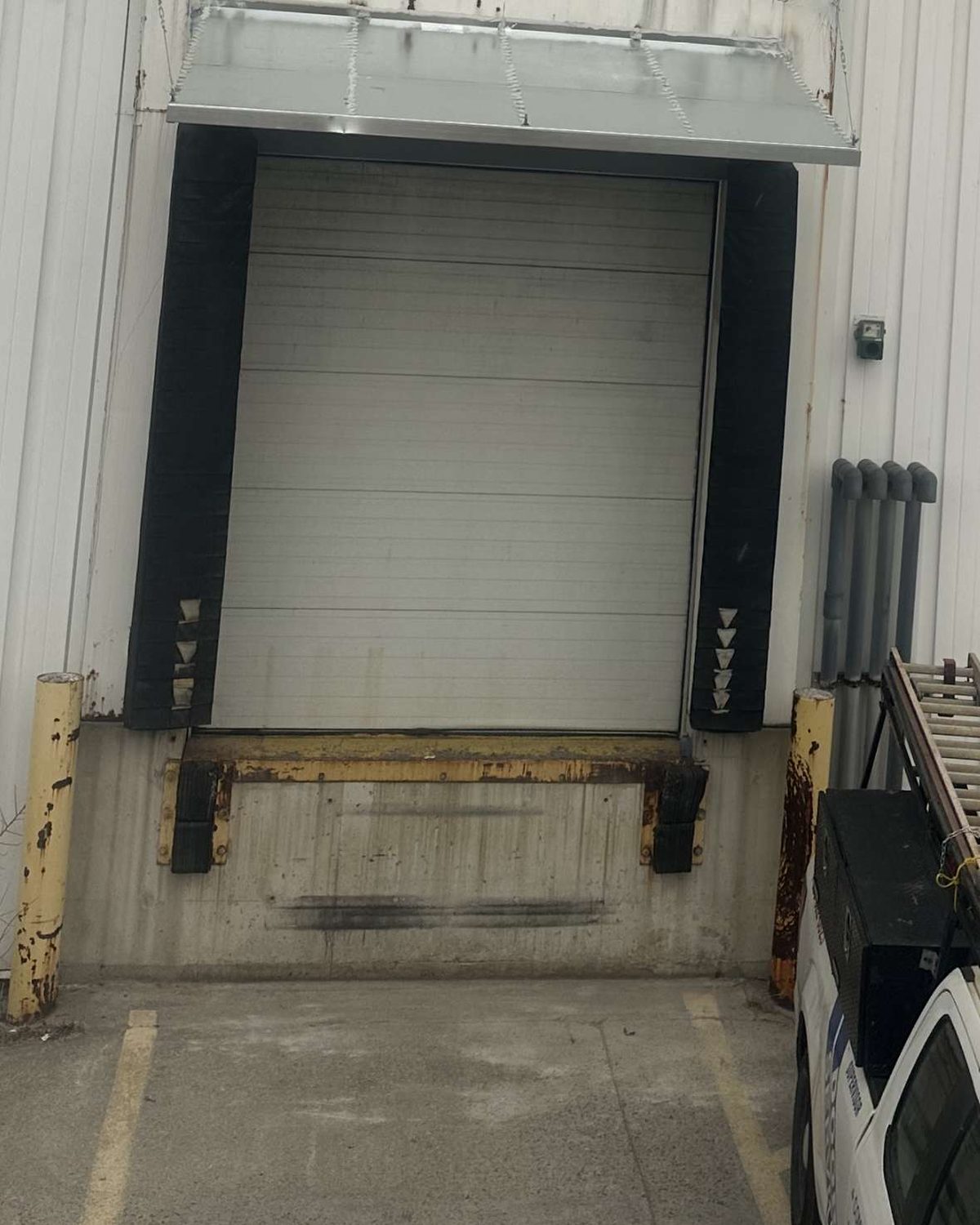
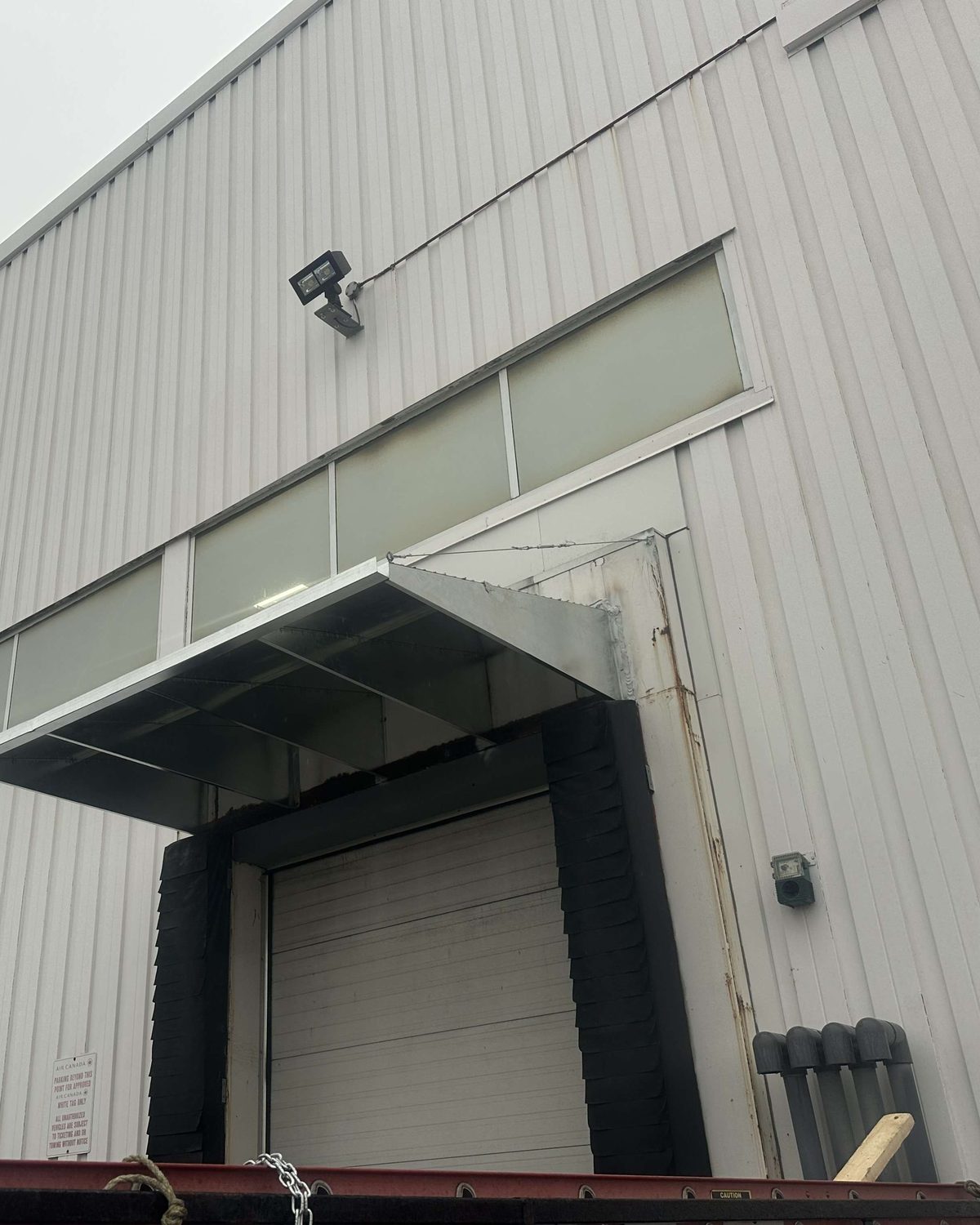
Look for tears, flattened or crushed pads, and daylight around a trailer when it is docked. A seal or shelter that no longer closes against the trailer lets heat out and weather in, which in an Ontario winter is a cost every hour the door is open. Check them before the cold arrives, not after.
Seals compress against the back of the trailer; shelters surround it with side and head curtains. Both are damaged by trailers backing in off-centre, and both are less expensive to repair early — a torn pad replaced, a head curtain re-hung — than after the tear has spread. See dock seals & shelters.
When do dock bumpers need replacing?
Replace bumpers when they are worn down, split, missing, or when the wall, leveler lip or door behind them shows fresh damage. A worn bumper stops protecting the building long before it disappears, and the trailer then strikes things that cost far more to repair. Bumpers are a consumable, and they are usually swapped on a scheduled visit. See dock bumpers & fenders.
What about the dock door?
The dock door is usually a sectional overhead door, and it wears like any busy overhead door: springs by cycle count, then cables, rollers and the bottom seal. The staff check is the monthly safety test — start the door closing and break the photo-eye beam; it should reverse.
Springs, cables and operator limits are technician work. On a commercial door a broken spring is always two visits, because each spring is wound to its own door and that takes 1–2 days; a failed operator is replaced rather than rebuilt. If a dock door will not close, our guide to
a commercial overhead door not closingcovers the usual causes.
What is the standard loading dock height?
The most common dock height is 48 to 52 inches (about 1,220 to 1,320 mm), according to dock equipment maker Blue Giant, while trailer beds range from 30 to 62 inches. The leveler makes up the difference, so the dock height, the trailers you receive and the leveler length have to be chosen together.
| Item | Published guidance | Source |
|---|---|---|
| Most common dock height | 48–52 in (1,219–1,321 mm) | Blue Giant |
| Trailer bed heights | 30–62 in (762–1,575 mm) | Blue Giant |
| Standard leveler lengths | 6, 8, 10 and 12 ft | Blue Giant |
| Maximum slope, electric forklifts | 10% | Blue Giant |
| Maximum slope, gas or diesel forklifts | 15% | Blue Giant |
| Dock door width | 9 ft, to serve 8'6" wide trailers | Nova Technology |
| Dock door height | 9 ft for most uses; 10 ft for the full range incl. high-cube | Nova Technology |
Sources: Blue Giant, dock height planning and Nova Technology, designing the loading dock. The slope figures are why a leveler that is too short for the height difference becomes a maintenance problem: forklifts climbing a steep plate strike the lip and hinge harder, and the leveler wears faster.
Maintenance software, or even a shared spreadsheet, is worth having for one reason: a record per dock position of what was found, what was replaced and when. It turns "the leveler at door 4 keeps failing" into evidence for a repair-or-replace decision.
When should dock equipment be repaired or replaced?
Repair while the structure is sound — a lip, a hinge, a cylinder, a seal pad or a bumper. Replace when the platform or frame itself is cracked or distorted, parts are no longer available, or the same leveler keeps failing between visits. Train the people who run the dock on what normal looks like, so a problem is reported the day it appears.
For repair, installation or a new dock position, see loading dock equipment and loading dock repair & installation. New dock equipment is built to order: typically 4–6 weeks to produce once shop drawings are approved, then 1–2 weeks to schedule and install.
Common questions
How often should a dock leveler be serviced?
As a starting point, twice a year on an ordinary dock and quarterly on a busy one, then adjusted to how hard the dock actually works — cycles, not the calendar, decide wear. Staff should still look at the leveler every day it is used, for damage, leaks and debris in the pit.
What should be on a loading dock maintenance checklist?
The dock leveler (lip, hinges, hydraulics or springs, pit), the dock seals or shelter, the bumpers, the dock door and its safety devices, and the vehicle-securing equipment — wheel chocks or a vehicle restraint and its lights. Add housekeeping: dock edges marked, the floor clean and dry, and the approach clear of ice and water.
What are the OSHA requirements for loading docks?
OSHA is the United States regulator and does not apply in Ontario. Here, workplace safety rules come from the Occupational Health and Safety Act and, for factories and warehouses, the Industrial Establishments regulation, Regulation 851. The Canadian Centre for Occupational Health and Safety publishes practical dock guidance: dock plates positioned, secured and marked with their capacity, dock edges marked, wheels chocked and a trailer restraint used where there is one.
What is the standard loading dock height?
The most common dock height is 48 to 52 inches, about 1,220 to 1,320 mm, according to dock equipment maker Blue Giant. Trailer beds range from about 30 to 62 inches, so a dock leveler bridges the difference, and its length is chosen to keep the slope manageable for the forklifts in use.
How do you maintain a loading dock in winter?
Keep the approach graded and cleared so water, snow and ice do not collect at the dock face, keep the leveler pit free of ice and packed snow, and check the seals and shelter for tears and gaps before the cold arrives — a torn seal leaks heat all winter. Check the door's bottom seal too, which can freeze to the sill and tear when the door is run.
Pricing a job like this?
Want a second pair of eyes on your docks?
Tell us how many dock positions you have and how busy they are. We will walk the docks, list what needs attention and propose an interval per position, not one blanket frequency.