Troubleshooting
Commercial Overhead Door Not Closing? The Usual Causes, in Order
A commercial overhead door that will not close is most often stopped by its safety devices — a blocked, dirty or misaligned photo eye, or a sensing edge — then by drifted limits, ice or debris at the sill, a cable or spring fault, or a failed operator. Check the photo eyes first; leave springs and cables to a technician.
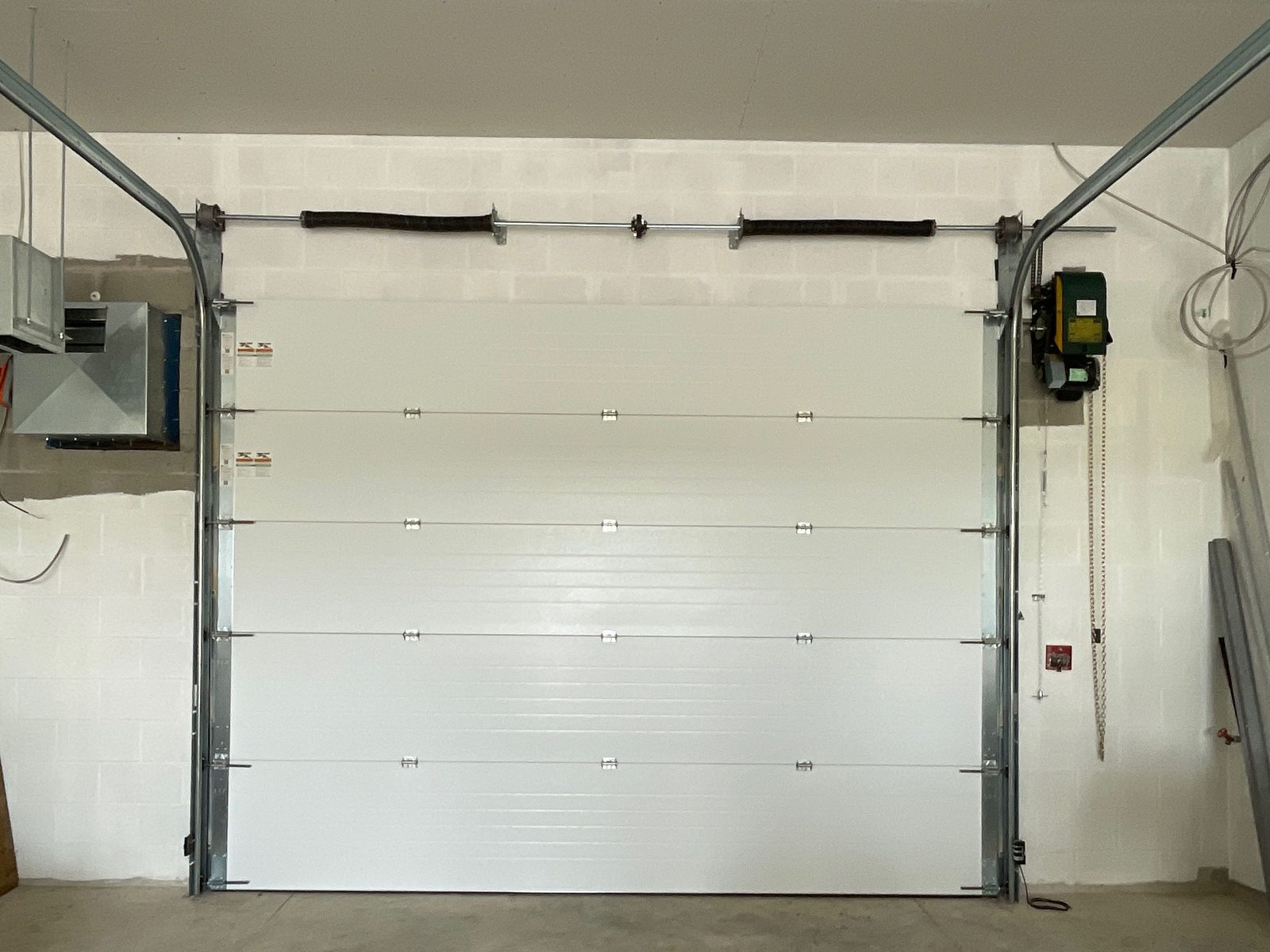
A door that will not close is a worse problem than a door that will not open. Trucks can wait; a building that cannot be secured at the end of a shift cannot. The good news is that the most common causes are the simplest, and some can be checked safely by whoever is on site before anyone is called.
This guide covers sectional and rolling commercial doors with an operator, in the order the faults usually turn up.
Four decades of overhead doors for names Ontario knows — Canada’s Wonderland, Tim Hortons, Canadian Tire, the LCBO, Metrolinx, Marriott & Hilton hotels, the University of Toronto — plus thousands of businesses across the GTA. Dependable people, quality products, since 1979.
Why is a commercial overhead door not closing?
Most of the time it is the safety system doing its job. A powered commercial door will not close if its photo eyes are blocked, dirty, misaligned or unpowered, or if its sensing edge is faulted. After that the usual causes are drifted limits, ice or debris at the sill, a cable or spring fault, a curtain or panel out of its track, and a failed operator.
| What the door does | Usual cause | Safe to check yourself | Needs a technician |
|---|---|---|---|
| Will not start down at all | Photo eyes blocked, dirty or out of line; no power | Clear the beam, wipe the lenses, check the indicator lights and power | Eyes that will not align, wiring faults |
| Starts down, then reverses | Beam broken, sensing edge triggered, door binding | Look for anything in the opening or on the sill | Binding tracks, edge replacement, force settings |
| Stops short of the floor | Limits drifted; ice or debris under the door | Clear the sill of ice, snow or debris | Resetting limits and testing the reversal |
| Closes crooked or hangs on one side | Cable off its drum or broken; one spring of a pair broken | Nothing — stop using the door | Cable, drum and spring work |
| Drops fast or bangs down | Broken spring, loss of counterbalance | Nothing — keep people clear | Spring replacement, door rebalanced |
| Operator hums, door does not move | Disconnect pulled, or the drive has failed | Whether the manual disconnect is engaged | A failed operator is replaced |
| Rolling curtain jams part-way | Slats out of the guides, damaged bottom bar | Nothing — do not force it | Curtain and guide repair |
Are the photo eyes stopping the door?
Photo eyes are the first thing to check, and the only fault most staff can safely fix. Clear anything from the beam, wipe both lenses, and look at the indicator lights on each eye: most show whether they are powered and whether they can see each other. A forklift that has clipped a bracket will knock an eye out of line and stop the door.
Commercial door operators are covered by UL 325, the binational US–Canadian safety standard for door operators (UL, ANSI/CAN/UL 325). According to the door industry body DASMA, an operator made since August 2010 must either close only under constant pressure on the button, or use a monitored entrapment device — a sensing edge, photo eyes or a light curtain. Photo eyes used for that job must sit with the beam no higher than six inches above the floor (DASMA TDS-382, photoelectric sensors on commercial door operators).
Two things follow. Because the eyes are monitored, an operator will not close normally when they fail, so a door that "suddenly will not close" often has a fault in the eyes rather than the door. And eyes moved up the wall to protect trucks, rather than people, are wrong — extra eyes can be added for vehicles, but never in place of the low ones.
Never bridge, bypass or tape over photo eyes to get a door closed. If the door has to be secured tonight and the eyes will not clear, call us. Depending on the operator, a door can sometimes be brought down under constant pressure on the close button while someone watches it the whole way — check the operator's instructions, and keep everyone out of the opening.
DASMA also sets out a monthly test the building can run itself: start the door closing and put a solid object through the beam — the door should reverse; then, with the door fully open, block the beam and confirm the door will not start to close.
Why does the door stop short or go back up?
A door that stops short of the floor usually has limits that have drifted, or something under it — and in an Ontario winter that is very often ice or packed snow on the sill. A door that closes and then reverses has sensed an obstruction: the beam, the sensing edge, or extra force from a door that is binding in its track.
Clearing the sill is safe. Resetting limits and force is not a reset button — it is setup work, and the safety reversal has to be tested afterwards before the door goes back into service. Turning the force up to make a binding door close is how operators and doors get damaged, and it hides the real fault. See overhead door repair for what that visit involves.
Is it a broken spring or cable?
If the door closes crooked, hangs on one side, drops much faster than normal, or a loud bang was heard, suspect a spring or cable. Stop using the door and keep people clear of it. Springs hold the energy that counterbalances the whole door; a door without that balance is heavy, unpredictable and dangerous to force.
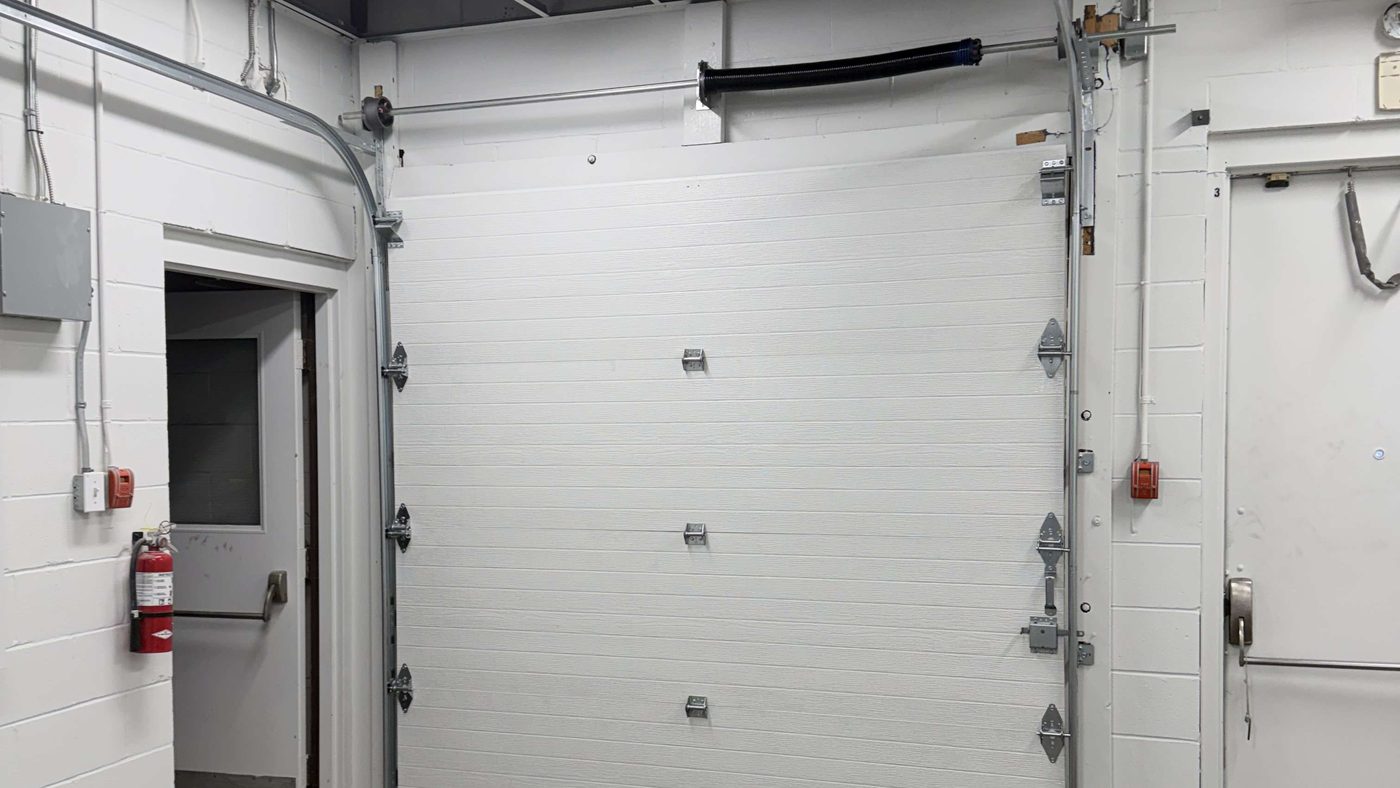
On a sectional door the torsion springs sit on the shaft above the opening, with a cable and drum at each end. On a rolling door the springs are inside the barrel, and their tension is set at a tension wheel. None of this is DIY work.
What a spring repair involves. Every commercial spring is wound to its own door, and winding takes 1–2 days, so a commercial spring replacement is always two visits: the first makes the opening safe and secure, the second fits the new spring and rebalances the door. Cables, rollers and door hardware are carried on our trucks and are usually fixed on the first visit. More on how springs wear, and why a busy door needs high-cycle springs: overhead door springs & parts.
What if the operator is the problem?
If the operator hums or runs but the door does not move, check first whether the manual disconnect has been pulled — re-engaging it is routine. If the operator is dead with power present, or the drive inside it has failed, the operator is replaced, not repaired. We set limits and force, test the safety reversal and re-engage disconnects on every visit, but we do not rebuild failed overhead door operators; a new one is the reliable fix.
A door that is badly out of balance also destroys its operator, so a failed operator on a door with a weak spring is two jobs, not one. What we fit, and how it is sized to the door: commercial door operators & motors.
When is a door that will not close an emergency?
When the building cannot be secured, when the door is hanging off its track or has lost a spring or cable, or when the opening is a fire separation. In those cases stop using the door, keep people clear and call. Our line is answered 24/7.
On an emergency call the first job is to make the opening safe and secure; the permanent repair follows, and for a spring that means the second visit once it is wound. When you call, have ready: the address and which door, the door type, what it is doing, and whether the building can be locked. See 24/7 emergency commercial door repair.
What does a commercial overhead door repair cost?
A common commercial overhead door repair typically runs $300 to $900; a replacement door $3,500 to $7,200 or more. A spring repair takes two visits, because the spring is wound to that door, and a failed operator is replaced rather than repaired, so it is priced as a new unit.
| Commercial overhead door | Typical cost (CAD) |
|---|---|
| Common repair | $300 – $900 |
| Replacement door | $3,500 – $7,200+ |
These are typical ranges in Canadian dollars, not a quote: the number for your opening comes from your photos or drawings, or a site visit when needed. Replacement doors are made to the opening: plan on roughly 2–4 weeks to manufacture, then 1–2 weeks to schedule and install.
How do you stop it happening again?
Most of the faults above wear in slowly: springs by cycle count, cables and rollers by use, photo eyes and edges by knocks, and seals by weather. A door inspected on a schedule has its springs, cables, rollers, limits and safety devices checked before any of them strands the door open. A door that keeps failing usually has a reason — springs never rated for its cycle count, something that keeps hitting it, or a door out of balance. See preventative door & dock maintenance.
Common questions
Why is my commercial overhead door not closing?
The most common reason is the safety system: a photo eye that is blocked, dirty, knocked out of line or not powered, or a sensing edge that is damaged. After that come operator limits that have drifted, ice or debris under the door, a cable off its drum or a broken spring, a curtain or panel out of its track, and finally a failed operator.
Why does my overhead door go down and then back up?
A door that starts to close and reverses has been told something is in the way. Usually the photo-eye beam was broken or the eyes are out of line; sometimes the sensing edge on the bottom has been triggered, or the door is binding and the operator is reading the extra force as an obstruction. Ice or snow at the sill in winter produces the same reversal.
How do you reset a commercial overhead door?
If the operator runs but the door does not move, the manual disconnect has usually been pulled and needs re-engaging. If nothing happens at all, check the power and the control station. If the door stops short, the limits need resetting and the safety reversal testing afterwards — that is setup work for a technician, not a reset button.
How do you adjust the tension on a commercial roll-up door?
Do not. The springs in a rolling door's barrel hold the energy that lifts the whole curtain, and tension is adjusted at the tension wheel while that energy is loaded. Too little tension and the door is heavy and drops; too much and it will not stay down. It is a technician's job with the right tools.
Can you repair a commercial door operator that has failed?
We do not rebuild failed overhead door operators; a failed operator is replaced. Setting its limits and force, testing the safety reversal and re-engaging a disconnect are all part of a normal visit, but when the drive or the logic board inside has gone, a replacement is the reliable fix.
Pricing a job like this?
Door still will not close?
Call us with the address, which door, what it is doing and whether the building can be secured. Our line is answered 24/7, and an open door that leaves a building exposed is treated as an emergency.