
Commercial & Industrial · 24 hours a day, every day
Overhead Door Repair (24/7)
A door that will not close is a building that will not lock. We repair sectional, roll-up, rolling steel and high-speed doors — springs, cables, rollers, tracks and sections — on every make, including ones nobody manufactures any more. Across Toronto and the GTA since 1979.
Call 800-522-6825 — 24/7Request a Quote
Dispatched 24/7 from Mississauga · cables and hardware on the trucks · all makes
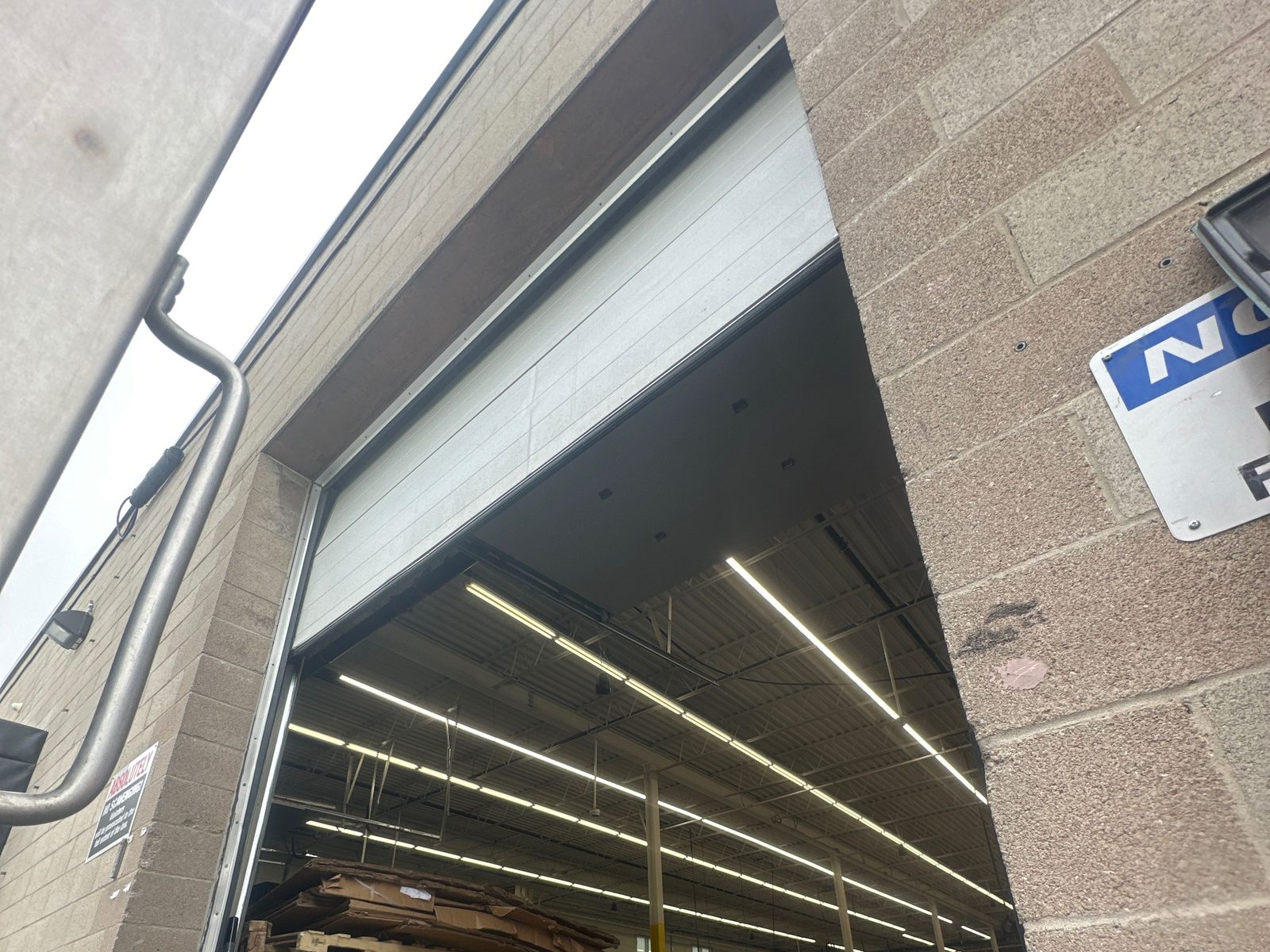
When a commercial overhead door stops working, the cost is rarely the repair. It is the trucks that cannot be loaded, the bay that cannot be used, and — if the door will not close — a building that cannot be locked and left. That is why this is a dispatch business before it is a parts business, and why our line is answered at 3am.
Canuck Door Systems has repaired overhead doors across the GTA since 1979, on every common make and plenty whose manufacturers are long gone. Cables, rollers and door hardware are carried on the trucks, which is why most call-outs are fixed on the first visit rather than scheduled for a second. Springs are the exception: every commercial spring is wound to its own door, which takes 1–2 days, so a spring replacement runs to a second visit.
Call, don't fill in a form
If a door is down, the phone is the fast route. Four things let us send the right technician with the right parts:
- The address and which door — plus after-hours access and who holds the keys.
- The door type — sectional panels, a roll-up or rolling steel curtain, or a high-speed fabric door.
- What it is doing — will not open, will not close, stuck part-way, off its track, or the motor runs but the door does not move.
- Whether the building can be secured. A door stuck open is a security problem as well as an operational one, and it changes the priority.
What we repair
| Symptom | Usual cause | What the repair involves |
|---|---|---|
| Door will not lift; a loud bang was heard | Broken torsion spring — the most common failure of all | Spring replacement, matched to door weight; both springs where there is a pair |
| Door is crooked or jammed in the track | Cable off the drum or snapped | Cable and drum work, re-levelling the door, checking the spring behind it |
| Door binds and screeches | Worn rollers, hinges or dry bearings | Roller and hinge replacement; the least expensive visit on this list |
| Off track after an impact | Something hit it — usually a forklift or a trailer | Track straightening or replacement, section repair, and often bollards afterwards |
| Bottom section damaged | Impact, or corrosion where salt collects | Section replacement, which is possible on a sectional and harder on a curtain |
| Operator runs, door does not move | A released manual disconnect, or the drive inside the operator has failed | Re-engage the disconnect first; where the drive itself has gone, the operator is replaced rather than rebuilt |
| Door stops short or runs on | The operator's limits have drifted | Limits reset and a safety-device test before it goes back into service — setting a door up, not repairing the operator |
| Powered door does not reverse on an obstruction | Photo eyes misaligned, dirty, or bypassed | Realignment or replacement — and we will not leave it in service bypassed |
If the same door keeps failing, the useful question is not "which part now" but "why this door". Repeated failures are usually a cycle count the springs were never rated for, something that keeps hitting the door, or a door out of balance that is destroying its own operator.
Springs: the part that matters most
More call-outs come from springs than from everything else combined, and understanding them changes how you budget:
- They are rated in cycles, not years. A standard spring is commonly rated around 10,000 cycles. One cycle is one open and one close.
- So the same spring lasts three years or four months, depending entirely on how often the door runs. Nothing about the two doors looks different.
- They fail suddenly and completely — usually with a bang, often overnight, and always at the least convenient moment.
- High-cycle springs are the least expensive upgrade on a busy door. More expensive to buy, dramatically less expensive to own.
- Replacing spring pairs together is usually right. The second one is the same age with the same cycles on it.
And plainly: do not attempt a torsion spring yourself. It holds the entire counterbalance energy of the door, and releasing it without the correct bars and technique causes serious injuries every year.
Full detail, including what else wears and when: overhead door springs & parts.
Emergency, scheduled, or planned
Emergency call-out
Door down, building exposed or operations stopped. 24/7 dispatch, arrival window given on the phone.
Made safe, fixed later
Where a part has to be ordered. We secure the opening and take the door properly out of service rather than improvise.
Scheduled repair
Something failing but still working. Booked around your shifts at ordinary rates, which is always less expensive than waiting.
Preventative maintenance
Planned visits across every door, catching springs, cables and rollers before they fail. Priced per door across a portfolio.
High-cycle upgrade
Re-springing a busy door to a rating that suits how it is actually used, instead of replacing standard springs repeatedly.
Post-impact repair
A forklift or trailer has hit the door. Track, section and often operator work — plus a conversation about bollards.
Safety-device work
Photo eyes, reversing edges and controls. Never bypassed, never left bypassed, and tested on every visit.
End-of-life assessment
An honest number for repair against replacement, so a capital decision is made on evidence rather than on the last invoice.
How long a repair takes
- Carried parts — cables, rollers, hinges and door hardware: usually fixed on the first visit.
- Springs — always two visits. Every commercial spring is wound to its own door, and winding takes 1–2 days. The first visit makes the opening safe; the second fits the spring.
- Ordered parts — the opening is made safe and taken out of service; we return when the part lands.
- Section or curtain replacement — typically scheduled, and normally under a day per door.
- Full door replacement — allow 2–4 weeks manufacture plus 1–2 weeks to schedule, since doors are made to the opening.
Preventative maintenance, priced per door
An overhead door has more moving parts than anything else in the envelope and uses all of them hundreds of times a day. Everything on it wears predictably, which is precisely why inspection works:
- Springs and cables — cycle wear, tension, and correct door balance.
- Rollers, hinges, tracks — where binding starts, long before the door jams.
- Operator and safety devices — limits, reversing behaviour, photo-eye alignment.
- Seals and weatherstrip — the least expensive energy saving in the building.
- Report — what was done, what is close, and what to budget for.
Plans across several buildings are quoted per door rather than per site — see preventative door & dock maintenance.
Overhead door work across the GTA
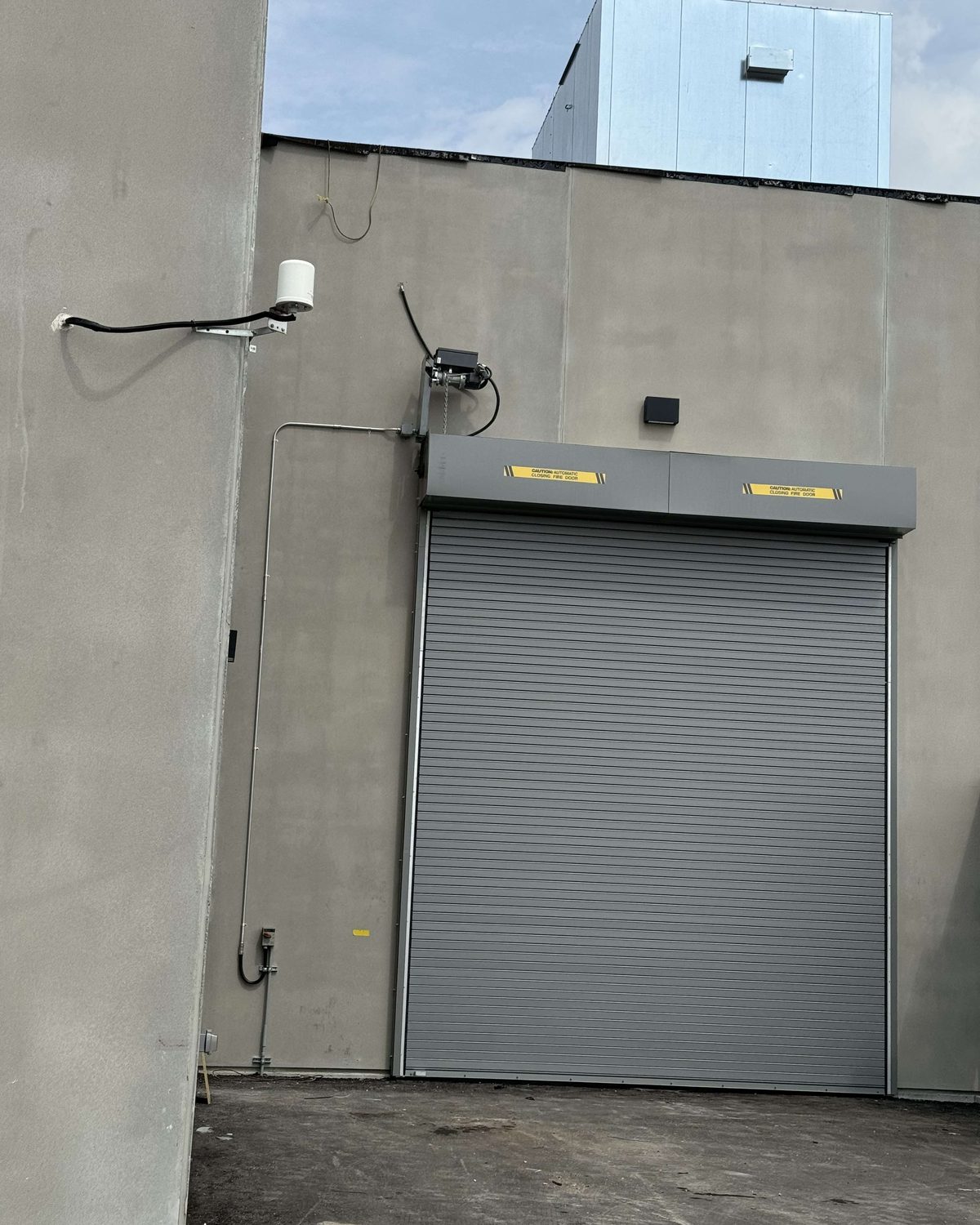
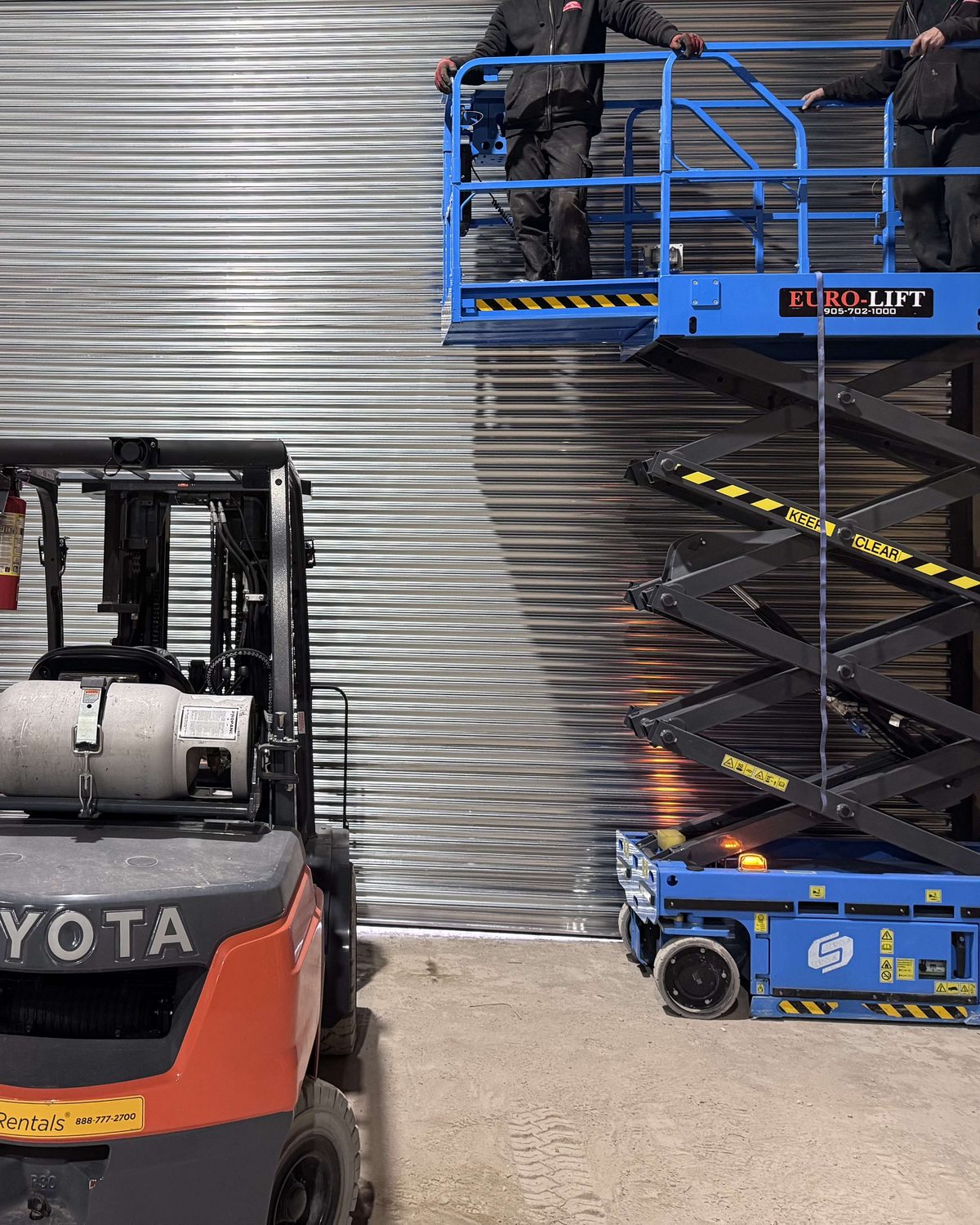
Documented overhead and rolling door jobs from our own project files. Emergency calls are rarely photographed — these are installations and service visits.
Golden Gate Contracting Inc
Newlink Construction
Formtek Structures Inc
Stallion Construction Inc
Winmarm
Ultra-Form Manufacturing Co Ltd
Four decades of doors for names Ontario knows — Canada’s Wonderland, Tim Hortons, Canadian Tire, the LCBO, Metrolinx, Marriott & Hilton hotels, the University of Toronto — plus thousands of businesses across the GTA. Dependable people, quality products, since 1979.
What our customers say
Called Canuck doors for one of our warehouse doors that was malfunctioning , the technician that came was very knowledgeable and efficient, it took him to time to find the issue and fix it. 5 stars
The Canuck team was spectacular with an emergency in the middle of the night when our huge garage door fell. They fixed it with new parts and it is working well. The entire team was amazing.
We have a company. We had the garage door installed by Canuck. From beginning to end they did a great job. We love the doors, the functionality and how great it looks. The price was great as well. Thanks so much Tracey
Overhead door repair across Toronto & the GTA
Crews dispatch from our shop at 1645 Bonhill Road in Mississauga — central to the region rather than at one end of it — and the emergency line is answered 24 hours a day, every day of the year, including holidays.
Core GTA
- Toronto
- Mississauga
- Brampton
- Vaughan
- Markham
- Scarborough
- North York
- Etobicoke
- Richmond Hill
- Oakville
- Burlington
- Milton
Southern Ontario belt
The belt is where we are honest about distance. A 3am call to Niagara is a long drive and we will say so on the phone rather than leave you waiting — planned and preventative work travels much better than emergencies do. See all service areas
What an overhead door repair costs
A repair is priced on labour, parts and the hour. What decides which of those dominates:
- What failed — a spring, a cable, rollers, a section, a track, or the operator (which is replaced rather than rebuilt)
- Whether the part is carried on the truck or has to be ordered for an obsolete door
- Door size and type, since a large rolling steel curtain is not a small sectional
- The hour — after-hours, weekend and holiday call-outs carry a labour premium
- Whether the building can be secured, or the door has to be made safe and left
- Access and height, including whether a lift is needed
- Whether the underlying cause is the door or something that keeps hitting it
We tell you what the call-out costs before a crew is on the road. Where a repair is no longer economic we say so and quote the replacement instead — on a door at the end of its life, another set of parts is the expensive option.
Common questions
How often should overhead doors be serviced?
Service intervals should follow cycles, not the calendar. A door opening ten times a day and one opening two hundred times a day wear at completely different rates, and treating both as "annual" gets one of them wrong. As a practical rule: a lightly used door once a year, a normal warehouse door twice, and a high-cycle dock or production door quarterly. Under Ontario's Occupational Health and Safety Act the equipment has to be maintained and capable of its job, and on a powered door that includes its safety devices.
What are the common problems with overhead doors?
Broken springs lead by a wide margin — the spring stores the energy that lifts the door, it is rated in cycles, and it fails suddenly. After that: cables off the drum or frayed, rollers and hinges worn until the door binds, tracks knocked out of alignment by an impact, bottom sections damaged by whatever hit them, and operators whose limits have drifted. Nearly all of them are inexpensive early and expensive once the door has stopped.
Can I replace a garage door spring myself?
Please do not. A torsion spring holds the entire counterbalance energy of the door, and releasing it without the correct winding bars and technique causes serious injuries every year — this is the single most dangerous component in the building envelope. It is also not a job where partial knowledge helps: the spring has to be matched to the door's weight and drum, and the wrong rating destroys the door and the operator. On a commercial door in a workplace it is straightforwardly not a do-it-yourself item.
How much does it cost to replace a commercial door spring?
It depends on the door's size and weight, the spring rating, whether one or both springs are being changed, and the hour of the call. Two things are worth knowing. First: when one spring on a pair breaks, replacing both is usually the better value, because the second is the same age and the same number of cycles from failing. Second: high-cycle springs cost more up front and, on a busy door, are the least expensive thing on this page over a few years. We give you the number before the work starts.
How long do commercial garage door springs last?
Springs are rated in cycles rather than years — a standard spring is commonly rated around 10,000 cycles, with high-cycle springs rated several times that. One cycle is one open and one close. So a door used ten times a day reaches 10,000 cycles in roughly three years, and a door used a hundred times a day gets there in about four months. If you know roughly how often the door runs, you can predict the failure well enough to schedule it rather than be surprised by it.
How fast can you get to a door that will not close?
The line is answered 24 hours a day and crews dispatch from Mississauga, central to the GTA. On the call we give you a real arrival window based on where a crew actually is — if the honest answer is three hours, we say three hours. What we will not do is publish a fixed response time we cannot hold to for every address in Southern Ontario. If the building cannot be secured, say so on the call, because it changes the priority.
Is it worth repairing an old overhead door?
Usually, up to a point. Springs, cables, rollers, hinges, tracks and seals are all replaceable, the operator can be replaced with a new one, and a door renewed that way is effectively a new door. The point at which it stops being sensible is when the sections or curtain themselves have gone — rusted through, repeatedly dented, or bent across their width — or when an obsolete profile cannot be matched. We will tell you which you have, with the numbers for both options.
Our door keeps breaking. Is it a bad door?
Often it is not the door. Repeated failures usually trace to one of three things: the door is under-specified for its cycle count and needs high-cycle springs, something keeps hitting it and the real fix is bollards or guide rails, or the door is out of balance and quietly destroying its own operator every cycle. Diagnosing which of the three is happening is worth more to you than another repair, and it is what a proper service visit is for.
Do you repair doors you did not install?
Yes — that is the majority of our overhead work, on every common make and plenty of uncommon ones. Springs, cables, rollers, hinges, tracks, seals and sections are all serviceable regardless of who supplied the door, and an operator of any make can be replaced with one we fit. Where a manufacturer no longer exists, parts can often be substituted or fabricated; where they genuinely cannot, we will say so rather than sell you a repair that will not last.
Door stuck, off track, or won’t close?
Call the 24/7 line — that is the fastest route to a crew. Tell us the door type, what it is doing, and whether the building can be secured, and we’ll tell you what happens next.