
Commercial & Industrial · 24/7 emergency dispatch
Loading Dock Repair & Installation
A dead bay is a queue of trucks. We repair levelers, seals, shelters, bumpers and the doors above them — all makes, including units nobody manufactures any more — and install new positions into existing buildings. Across Toronto and the GTA since 1979.
Call 800-522-6825 — 24/7Request a Quote
Dispatched 24/7 from Mississauga · all makes serviced · one bay out at a time
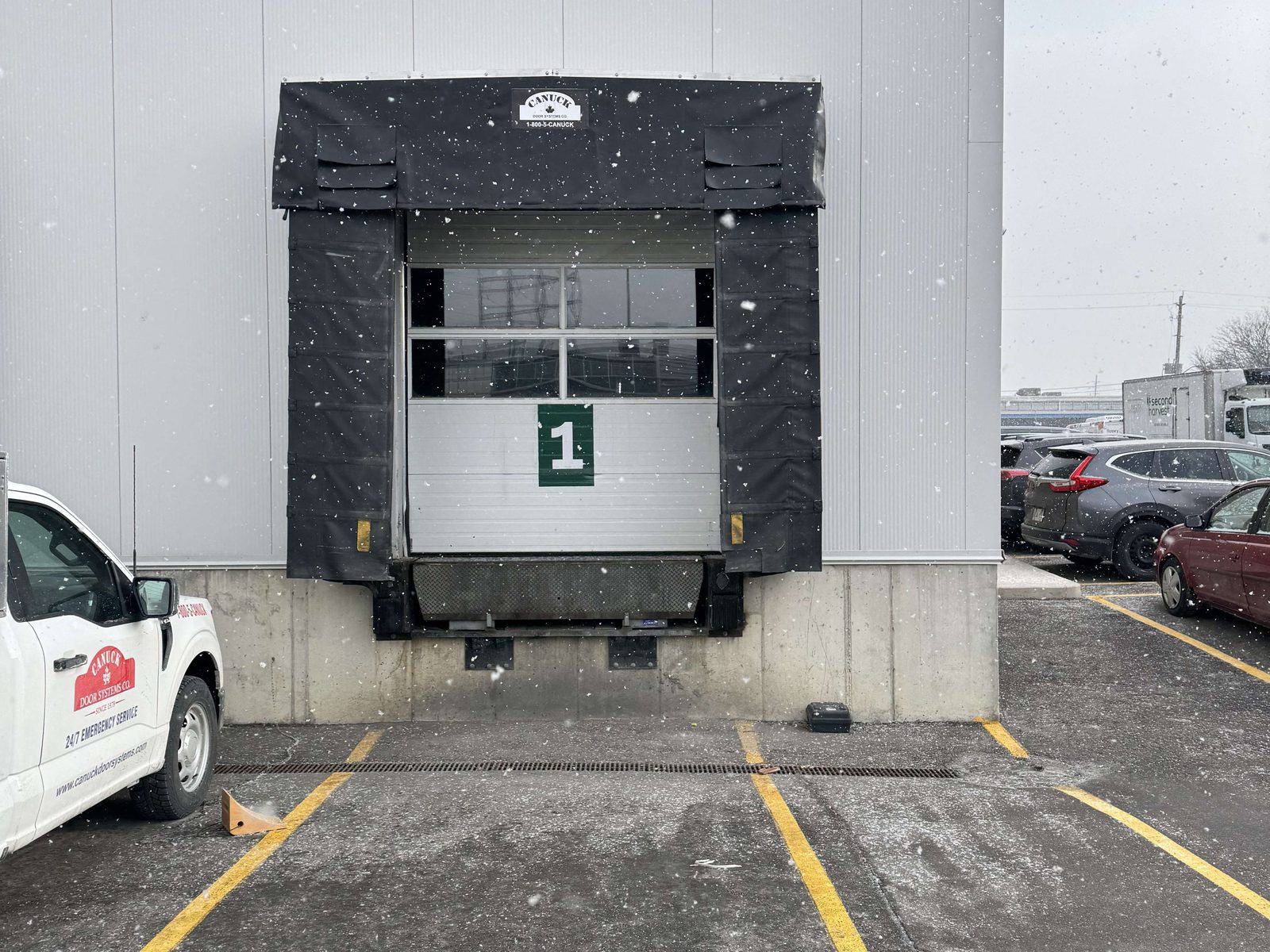
When a dock position stops working, the cost is not the repair. It is the trucks waiting, the labour standing, and the schedule that has to be rebuilt around one bay. That is why dock repair is a dispatch business before it is a parts business, and why our line is answered at 3am.
Canuck Door Systems has serviced dock equipment across the GTA since 1979, on buildings of every age and equipment of every make — including plenty that has not been manufactured for decades. We came to docks from the door side, which turns out to be the useful direction — a dock position is a door and a machine in the same opening, and the two fail together far more often than either fails alone.
Call, don't fill in a form
If a bay is down and trucks are waiting, the phone is the fast route. Four pieces of information let us dispatch the right technician with the right parts:
- The address and which bay — plus how to get to the dock after hours, and who holds the keys.
- What is failing — the leveler, the lip, the seal, the bumpers, or the door.
- What it is doing — will not raise, will not hold, will not return, will not close, jammed part-way.
- Whether the bay is safe. A leveler stuck up or a door hanging is a hazard as well as a stoppage, and it changes the priority.
What we repair
We repair every part of a dock position — the leveler, the lip, the seals and shelter, the bumpers, and the sectional dock door above them — on all makes, including units whose manufacturer no longer exists. Rite-Hite, Blue Giant, Serco, Kelley and Pentalift are the makes we see most often in GTA buildings, but the mechanism matters more than the badge on it. The table below is what we are actually called out for, and what each repair involves.
| Symptom | Usual cause | What the repair involves |
|---|---|---|
| Leveler will not raise | Weakened springs (mechanical) or hydraulic fault | Spring replacement and adjustment, or pack, hose and valve work |
| Deck will not hold under load | Spring tension, hydraulic bypass, or a worn hold-down | Adjustment or component replacement; frame checked at the same time |
| Lip will not extend or return | Bent lip, seized hinge, driven over out of position | Lip and hinge assembly replacement; often bumper wear behind it |
| Seal or curtain shredded | Worn bumpers letting trailers reach the frame; missing wear pleats | Section replacement — head curtain, side curtain or pads — plus the bumpers |
| Bumpers worn or missing | Normal wear, angled approaches, or failed concrete | Bumper replacement; concrete repair where anchors will not hold |
| Door will not close or is off track | Impact damage, broken spring or cable, worn rollers | Track, spring, cable and section repair on the sectional above the dock |
| Position out of alignment | Building movement, concrete failure under the frame | Assessment first — this is usually a replacement conversation, not a repair |
If the same component has now failed three times, the least expensive thing we can sell you is not a fourth one. Repeated seal or lip failure is nearly always bumper projection, and repeated door failure is nearly always something hitting it.
Dock door repair
The sectional dock door above a position fails more often than the leveler beneath it, and one crew attends both rather than sending you to two contractors. Where the fix needs a made-to-order part — a door spring, a leveler lip, a curtain — that part comes back on a second visit. Dock door repair covers broken springs and cables, sections holed or bent by a trailer, rollers and track knocked out of line, weather seals torn off the bottom section, and operators that no longer reverse on the safety edge — all makes, whether or not we installed the door.
The failures are usually shared, which is the practical argument for treating the dock as one system. A trailer that reaches the lip has generally caught the bottom section and flattened the bumpers on the way in, so a call booked as a leveler fault turns out to be three items. One crew that works on both the door and the dock handles all three, rather than a dock company that will not touch the door and a door company that will not touch the leveler.
For overhead doors away from the dock — shipping, drive-in and interior openings — see overhead door repair.
Emergency, scheduled, or planned
Emergency, scheduled and planned dock work are three different jobs, and knowing which one you have changes both the price and the answer. An emergency is a bay down with trucks waiting, dispatched 24/7 at call-out rates; scheduled work is something failing but still working, booked around your shifts at ordinary rates; planned work is maintenance and capital replacement costed across a portfolio. These are the eight ways dock work actually reaches us.
Emergency call-out
A bay is down and trucks are waiting. 24/7 dispatch, arrival window given on the phone, and the bay either working or safely out of service before we leave.
Made safe, fixed later
Where the failed part has to be ordered. We secure the position, take it properly out of service, and return with the part rather than improvising a repair.
Scheduled repair
Something is failing but still working. Booked around your shift pattern at ordinary rates — always less expensive than waiting for it to stop.
Preventative maintenance
Planned visits across every position, catching springs, curtains and bumpers before they fail. Quoted per position across a portfolio.
Component replacement
A leveler or seal at end of life, swapped into a sound existing pit or frame. One day per position in most cases.
New position install
Cutting an opening, forming or rebuilding a pit, and installing leveler, seal, bumpers and door together.
Post-impact repair
A trailer has hit the dock. Usually the lip, the bumpers and the door, and often the concrete face behind them.
Portfolio survey
Every position in every building assessed and reported, so next year's capital budget is based on condition rather than on guesswork.
How long a dock repair takes
Most call-outs are closed on the same visit where the fix is welding a broken part of the leveler on site. The parts that fail most often, though — lips, curtains, bumpers and springs — are custom, so two visits are usually required. What stretches a job is a part that has to be ordered for an obsolete unit, or concrete, which sets its own schedule and cannot be hurried. New equipment is a lead-time item rather than a repair, because levelers, seals and shelters are built to your opening.
- Common failures — springs, lips, curtains, bumpers, door parts: same-day where the part is one we carry, which covers most call-outs.
- Ordered parts — the position is made safe and taken out of service; we return when the part lands.
- Component replacement — a leveler or seal swap into a sound pit or frame is normally one day per position.
- New position or pit rebuild — the concrete and its cure time set the schedule; several days per position, planned rather than squeezed in.
- New equipment — allow 4–6 weeks manufacture plus 1–2 weeks to schedule, since levelers, seals and shelters are made to your opening.
Preventative maintenance, and why docks justify it
Dock equipment fails gradually and then suddenly. Springs weaken for months before a deck stops rising; a seal tears at one corner long before it shreds; bumpers thin steadily until the day a trailer reaches the wall. Every one of those is visible on an inspection and inexpensive to correct at that point.
- Inspect — bumper wear, leveler cycle and hold, lip operation, seal and curtain condition, door balance, tracks and hardware.
- Adjust — spring tension, lip extension, door limits and tracking.
- Replace what is at end of life — before it takes something more expensive with it.
- Report — what was done, what is close, and what to budget for next year.
Plans across several buildings are quoted per position rather than per site, so the twentieth dock is priced like the first. Doors and docks go on the same visit — see preventative door & dock maintenance.
Dock work across the GTA
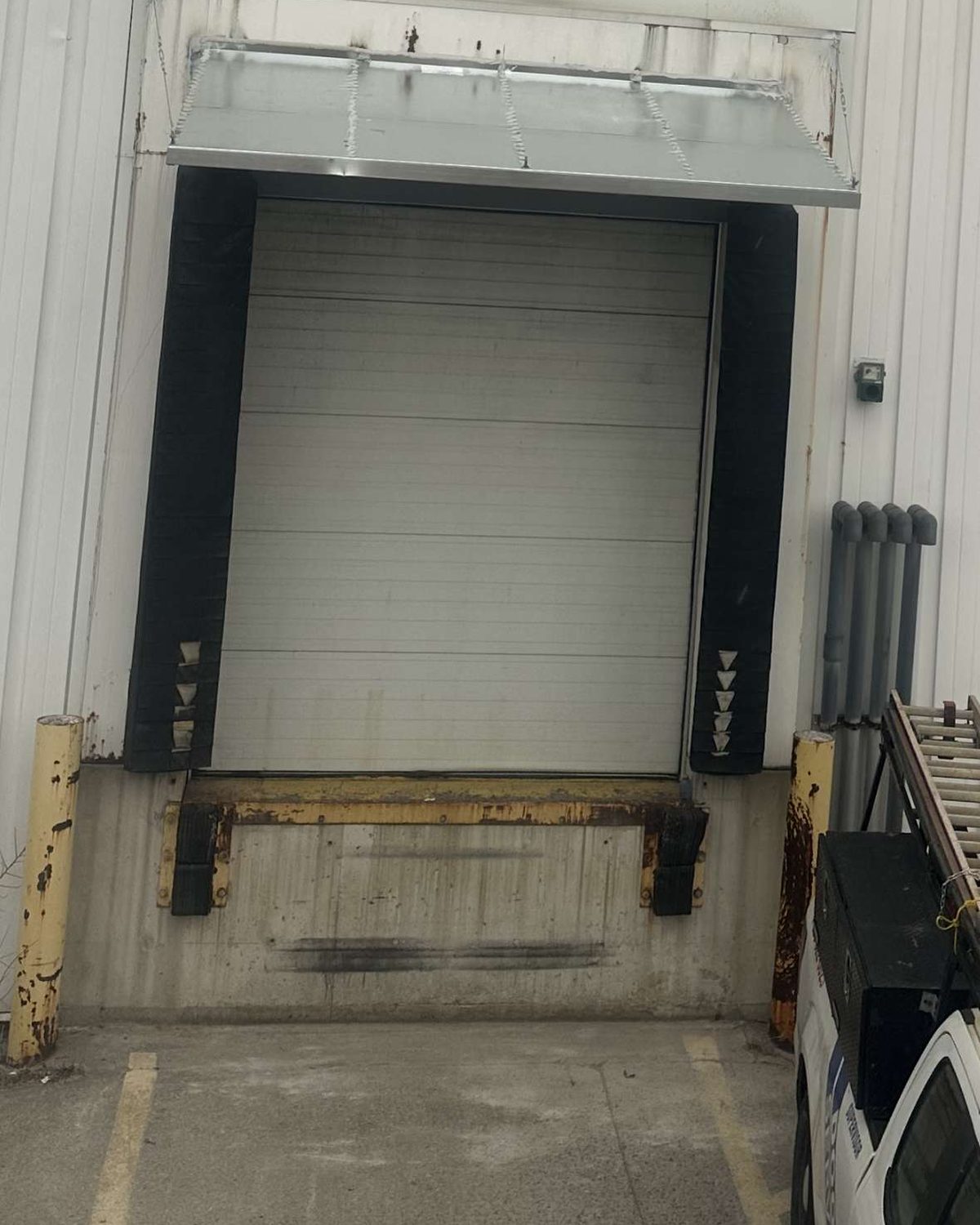
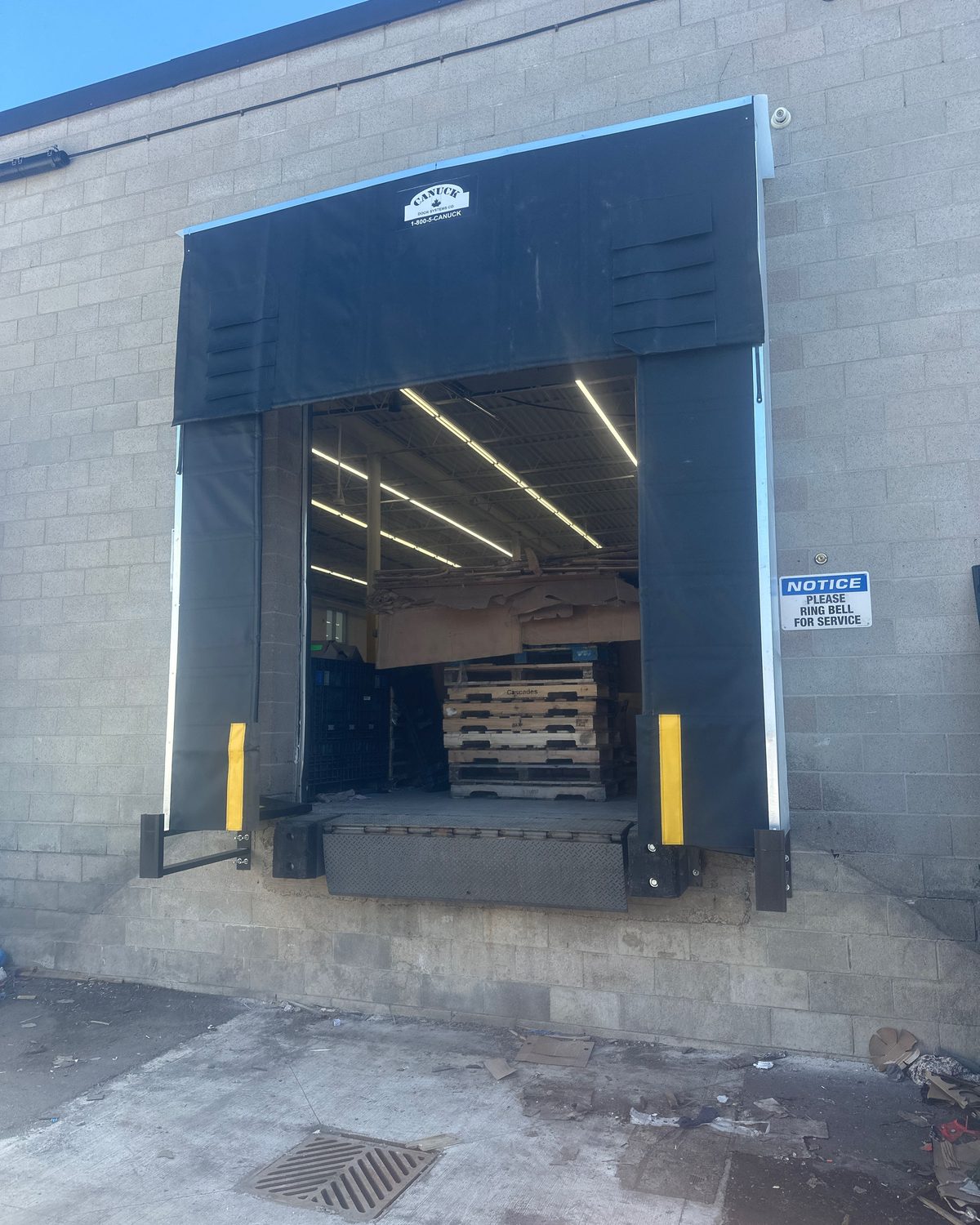
Documented dock jobs from our own project files. Emergency call-outs are rarely photographed — these are installation and service visits.
Black & McDonald Limited
Dock seal, head canopy and leveler service on an existing dock position.
Synerex Construction Group Inc
Dock shelter, bumpers and edge-of-dock leveler installed at a distribution bay, with the sectional door above it.
Four decades of doors and docks for names Ontario knows — Canada’s Wonderland, Tim Hortons, Canadian Tire, the LCBO, Metrolinx, Marriott & Hilton hotels, the University of Toronto — plus thousands of businesses across the GTA. Dependable people, quality products, since 1979.
What our customers say
Excellent service from Fred. Was kept posted by email on arrival of parts. We have had many years of service fixing our dock plates and door replacements.
We had the service a week ago and everything continues to work well on our dock ramp. Very professional front office and they even followed up with a call to see if we were happy. As a service company ourselves I am impressed so far and hope the great experience continues.
Called Canuk door systems to come repair a door within our commercial unit. They responded quickly and the turn around time was very quick. Very pleased with the services provided
Dock repair across Toronto & the GTA
Crews dispatch from our shop at 1645 Bonhill Road in Mississauga — central to the region rather than at one end of it — and the emergency line is answered 24 hours a day, every day of the year.
Core GTA
- Toronto
- Mississauga
- Brampton
- Vaughan
- Markham
- Scarborough
- North York
- Etobicoke
- Richmond Hill
- Oakville
- Burlington
- Milton
Southern Ontario belt
The belt is where we are honest about distance. A 3am call to Niagara is a long drive and we will say so on the phone rather than leave you waiting — planned and preventative work travels much better than emergencies do. See all service areas
What dock repair costs
A repair is priced on labour, parts and the hour. What decides which of those dominates:
- What failed — a lip, a spring, a hydraulic pack, a curtain, a bumper, a door section
- Whether the part is one we carry or has to be ordered for an obsolete unit
- The hour — after-hours, weekend and holiday call-outs carry a labour premium
- Whether the bay can stay out of service or has to be made safe and handed back
- Access, and how many positions are affected
- Whether the underlying cause is the equipment or the concrete and steel behind it
We will tell you on the phone what the call-out costs before a crew is on the road. Where a repair is not economic we say so and quote the replacement instead — a leveler frame or a spalled pit is a capital item, not a service call.
Common questions
What are the most common loading dock repairs?
Five account for most call-outs. A leveler that will not raise or hold — usually weakened springs on a mechanical unit or a hydraulic fault. A lip that will not extend or return, generally bent or seized from being driven over out of position. A shredded seal or head curtain. Bumpers worn through or torn off. And the door above the dock, which fails more often than everything else combined because it is the part that moves most.
Can you repair a leveler that another company installed?
Yes — that is the majority of our dock service work. Rite-Hite, Blue Giant, Serco, Kelley, Pentalift and many others are common in GTA buildings, along with units whose manufacturer no longer exists. Springs, hydraulic packs, lip assemblies, hinges, controls and weather seals are all replaceable, and parts for obsolete units can often be fabricated or substituted. Where they genuinely cannot, we will say so rather than sell you a repair that will not last.
How fast can you get to a dead bay?
The line is answered 24 hours a day and crews dispatch from Mississauga, which is central to the GTA rather than at one end of it. On the call we will give you a real arrival window based on where a crew actually is — if the honest answer is three hours, we say three hours. What we will not do is publish a fixed response time we cannot hold to for every address in Southern Ontario.
Is it less expensive to repair or replace a dock leveler?
Repair, in most cases — the mechanism is designed to be rebuilt, and a leveler with new springs, a new lip assembly and a serviced hydraulic pack is effectively renewed. What is not economic to repair is the structural frame or the pit: badly corroded steel or spalled concrete under the frame means the unit has reached the end of its life whatever condition the mechanism is in. We tell you which of the two you have before quoting.
Can dock repairs be done without shutting the warehouse?
Almost always. Bays come out of service one at a time and the rest of the dock keeps working, with the work scheduled around your shift pattern — frequently overnight or at a weekend. The exception is concrete work, where the cure time keeps a position out for several days; that is the one to plan properly rather than fit into a gap.
What is preventative dock maintenance, and is it worth it?
A scheduled visit that inspects and adjusts before things fail: bumper wear, leveler cycle and hold, lip operation, spring tension or hydraulic condition, seal and curtain condition, door balance and hardware. It is worth it because dock equipment fails gradually and then suddenly — springs weaken for months, a seal tears at one corner long before it shreds. The visit costs a fraction of the emergency call, and on a distribution dock the lost bay is usually the larger number anyway.
Our seal keeps failing. Is it a bad product?
Usually not. In our experience the most common cause of a repeatedly failing seal is worn bumpers: once the trailer can come far enough forward it crushes the seal frame rather than compressing the pads, and the replacement fails exactly like its predecessor. The other frequent causes are angled trailer approaches and missing wear pleats. Any of those will defeat a perfectly good seal, which is why we look at the bumpers before quoting another one.
Do you install new dock positions in an existing building?
Yes — cutting a new opening, forming or rebuilding a pit, and installing the leveler, seal, bumpers and door as one package. This comes up most often when a tenant expands into adjoining units or when a building changes use. The concrete work and the equipment are quoted separately, because the concrete usually drives both the cost and the schedule.
Is a dock door the same as an overhead door?
It is the same kind of door doing a harder job. A dock door is the sectional overhead door in a dock opening, and it differs from a shipping or drive-in door mainly in what happens to it: trailers reverse into it, it cycles far more often, and its bottom section and weather seal take damage that an interior door never sees. We repair both, and on a dock position the door and the equipment beneath it are attended in the same trip rather than by two separate contractors. For openings away from the dock, the overhead door repair page is the right one.
Bay down right now?
Call the 24/7 line — that is the fastest route to a crew. Tell us which bay, what it is doing, and whether trucks are waiting, and we will tell you what happens next.