
Loading Docks in Burlington
Dock levelers, seals, shelters and bumpers for warehouses, plants and receiving bays across Burlington — quoted as one position rather than four line items, and repaired 24/7 from our shop at 14-1645 Bonhill Road, Mississauga.
Dock levelers, seals and shelters we've installed and serviced in Burlington — for Amar Transport, Ugrasen Management & Trading Company, Global Medical Products, Stilmas Americas Inc — among many more businesses here. Dependable people, quality products, since 1979.
Recent loading dock projects near Burlington
These jobs are in neighbouring cities — the same crew and the same trucks cover Burlington.
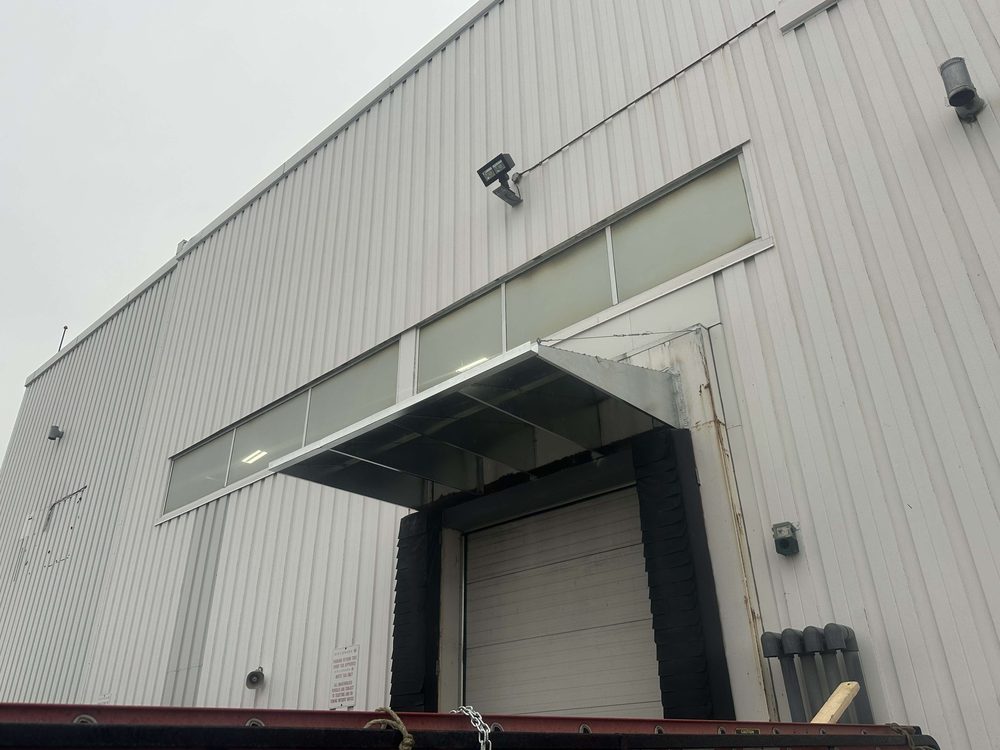
Black & McDonald Limited
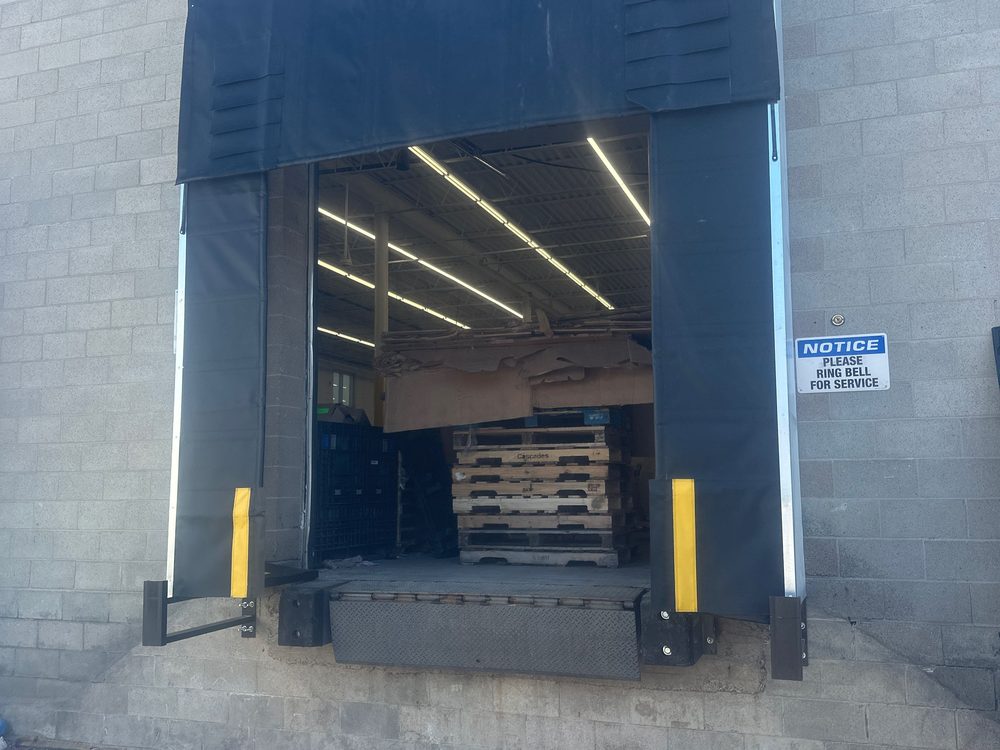
Synerex Construction Group Inc
Loading Docks across Burlington
We work throughout Burlington — Burlington Business Park, Harvester Road corridor, Aldershot and North Service Road. The buildings here are mostly manufacturing, food processing and logistics, and each puts different demands on a door: traffic volume, insurance and fire requirements, and how much downtime an opening can afford. Burlington’s 186,948 residents keep those buildings busy.
We have completed 7 loading dock jobs in Burlington since 2020.
- Population
- 186,948
- Main industries
- manufacturing, food processing, logistics and corporate offices
- Building stock
- logistics and warehousing facilities, manufacturing plants, cold storage facilities and light industrial condos
- Business parks
- Burlington Business Park, Harvester Road corridor, Aldershot and North Service Road
- Serving since
- 1979
- Burlington Business Park
- Harvester Road corridor
- Aldershot
- North Service Road
Broken dock leveler, seal or dock door in Burlington: we dispatch 24/7.
Burlington is roughly a 35-minute run from our Mississauga shop — less if a technician is already in the area — so a truck is usually on site the same day.
Emergency board-up, security and make-safe first — permanent repair scheduled after.
A dock position is four things, and they have to agree with each other
Almost nobody phones about a dock position. They phone about one part of it — a deck that will not lift, a curtain in ribbons, a door that has been hit again. But the leveler, the seal or shelter, the bumpers and the door above them are one system, and changing the trailer mix moves all four answers. Here is how we work through them on a site in Burlington.
Seal or shelter, and it is the trailer mix that decides
Both close the gap between a trailer and the building so you stop heating the yard, and they do it in opposite ways. Picking the wrong one is the commonest reason a dock in Burlington is back on our list within two winters.
Bumpers cost the least and prevent the most
A pair of bumpers is the smallest line on any dock quote and the one that decides what the next five years cost. Once a trailer can touch the building the damage runs in order, each step dearer than the last: the seal, the leveler lip, the door track, then the concrete.
Getting a dock in Burlington repaired without closing the warehouse
Dock equipment declines quietly and then stops all at once, so most of what we are called to could have been a scheduled visit. Either way the work goes in around your shift pattern, one position at a time.
What dock equipment costs in Burlington, and what moves the number
Type moves the price far more than size does: an edge-of-dock unit is the least expensive by a wide margin, a hydraulic pit leveler the dearest. And where a pit has to be formed or rebuilt, the concrete can come to more than the leveler standing in it, so we quote equipment and construction as separate lines.
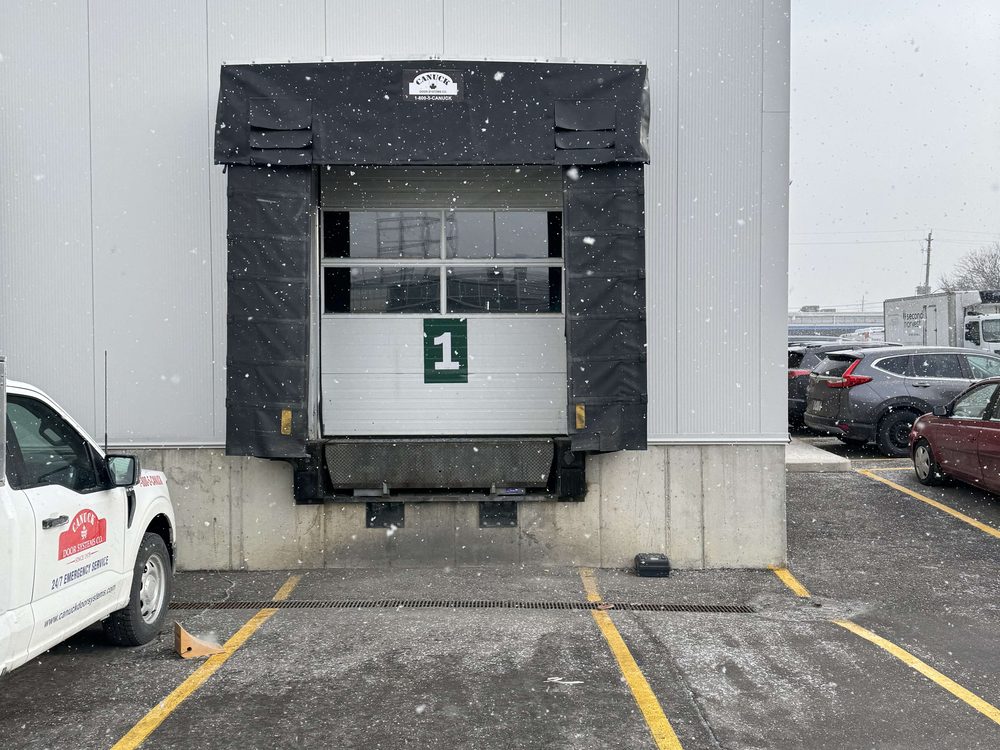
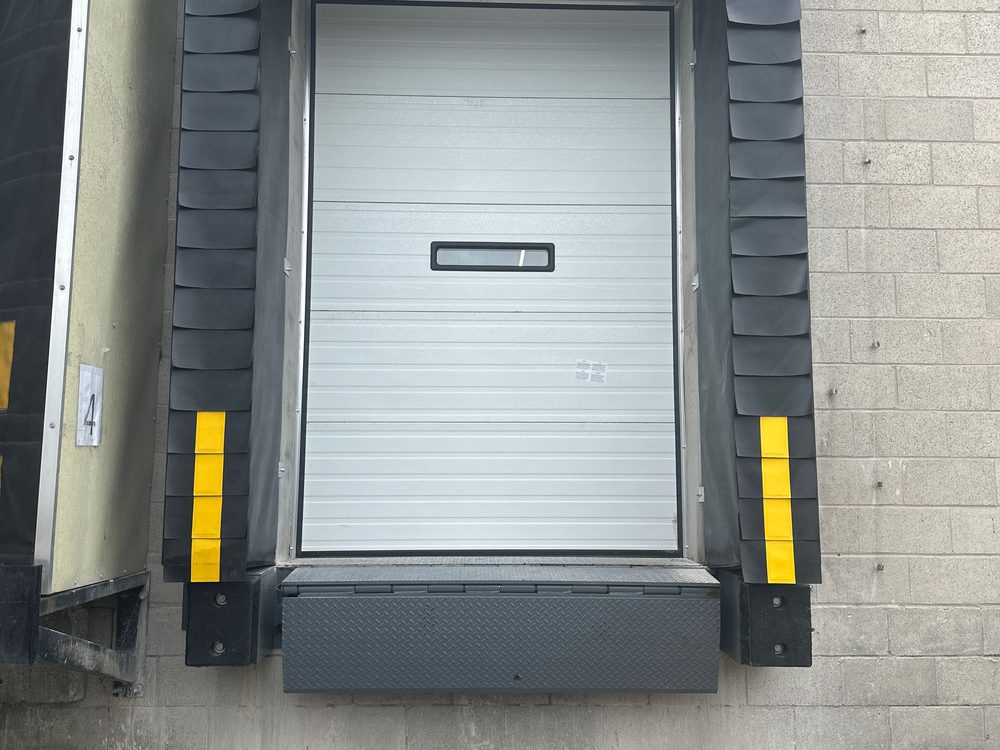
Loading docks for the work Burlington buildings do
The sectors that dominate Burlington — manufacturing, food processing, logistics — each back a different kind of trailer against the building.
Manufacturing
A plant dock takes fewer trailers than a distribution one and treats each of them worse — steel, coil, machine parts, and a counterbalance truck heavier than anything a warehouse runs. That is a capacity question before it is a type question: rate the deck against the loaded forklift, not the pallet, and expect the lip to be what wears.
Food processing
Cold and clean docks are sealed docks. A compression seal on a fleet that arrives at one height is what keeps the cold in and the yard out, and air- powered levelers suit floors where hydraulic fluid is unwelcome. The audit usually asks about the gap at the top corners of the seal, which is the first place foam crushes flat.
Logistics
A distribution dock is the one place where every part of the position is working at once: hydraulic levelers because the beds arrive at every height, shelters rather than seals because the trailer mix is not one thing, and bumpers changed on a schedule instead of after the damage.
Corporate offices
A tower or business park loads through a below-grade bay, so the constraint is height and turning room before it is trailer height: a shallow pit, a leveler that suits a cube van as readily as a five-tonne, and bumpers protecting a wall the building cannot easily repair. Moves and fit-outs are what actually stress it.
Condos & property management
A managed building loads through a service bay that is also a moving bay, and the equipment in it is on somebody’s capital plan. Preventative maintenance is priced per position rather than per building, so a portfolio is quoted the same way as one site — and the report is what tells you which leveler to budget for next year.
Hotels & hospitality
A hotel or venue receives at night, next to rooms people are sleeping in, which makes noise a specification rather than a complaint: a hydraulic leveler instead of a chain-pull mechanical one, a shelter that closes quietly, and bumpers kept in projection so nothing arrives against the building itself.
Get a dock position quoted in Burlington
Four measurements make this a firm number instead of a range: the dock height, the lowest and highest trailer bed you serve, the size of the opening and whether there is a pit already, and what crosses the deck. A photo of the position from the yard covers most of it. Deck stuck down or a bay you cannot close? Call 800-522-6825 — the line is answered 24 hours.
Common questions about loading docks
What is the standard loading dock height?
48 inches is the usual Ontario benchmark for a dock serving standard highway trailers, with real docks commonly falling somewhere between 44 and 52 inches. It is worth knowing that trailer bed heights vary more than dock heights do — a loaded trailer sits lower than an empty one, and refrigerated trailers, drop-decks and cube vans are all different again. The leveler exists to absorb that variation, and its working range is what decides whether your dock can service the fleet that actually arrives.
Can you replace a dock leveler without closing the warehouse?
Yes, and it is how most of this work is done. Bays come out of service one at a time so the rest of the dock keeps running, and the changeover is scheduled around your shift pattern — frequently overnight or at a weekend. A like-for-like leveler swap into a sound existing pit is normally a one-day operation per position. If the pit needs rebuilding, the concrete cure time is what sets the schedule, and we will tell you that number before you commit rather than after the bay is open.
What equipment does a loading dock need?
Four things, and they are normally specified together because each one constrains the others. A dock leveler bridges the gap and the height difference between the dock floor and the trailer bed. A dock seal or shelter closes the gap around the trailer so the building is not heating the parking lot. Dock bumpers absorb the impact of a reversing trailer and hold it far enough off the wall to protect everything else. And the dock door itself — usually an insulated sectional — closes the opening when no trailer is there. Add controls, lights and a vehicle restraint and you have a complete position.
Loading Docks nearby
Full product details: Loading Docks