
Commercial & Industrial · 24/7 emergency dispatch
Overhead Door Springs & Parts
Springs are rated in cycles, not years — which is why two identical doors fail years apart. Torsion springs, cables, rollers, hinges, tracks and seals for commercial overhead doors of every make, across Toronto and the GTA since 1979.
Call 800-522-6825 — 24/7Request a Quote
Springs wound to your door · high-cycle springs on busy doors · all makes
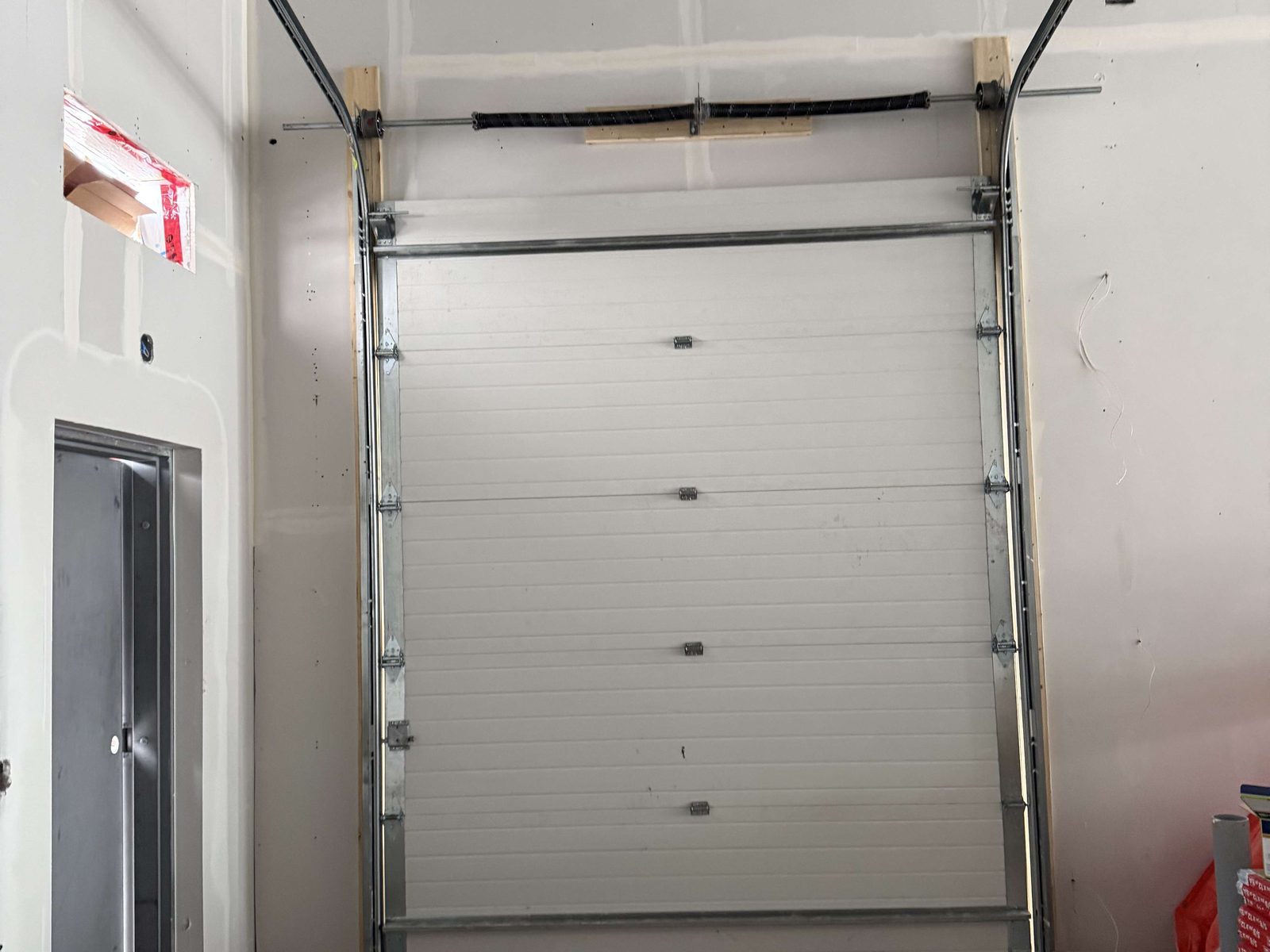
At a glance
| Springs | Torsion (most commercial doors) · extension on some smaller openings |
|---|---|
| Standard rating | Commonly ≈10,000 cycles — one cycle is one open and one close |
| High-cycle | Rated several times higher; the usual answer on doors used all day |
| Other wear parts | Cables · drums · rollers · hinges · track · bottom bar · weather seal |
| Carried on the trucks | Cables, rollers and common hardware — springs are wound to order |
| Service | All makes, including doors whose manufacturer no longer exists |
Nothing on an overhead door fails as often as its springs, and the reason is worth understanding because it changes how you budget for doors entirely.
A spring is rated in cycles, not years. One cycle is one open and one close. A standard commercial torsion spring is commonly rated at around 10,000 of them. So the same spring, in the same door, lasts about three years at ten cycles a day and about four months at a hundred. Two doors that look identical, bought on the same day from the same manufacturer, will fail years apart — and nothing about them looks different when you walk past.
That single fact is why we ask for cycle count before anything else, and why the most useful upgrade available on a busy opening is not a better door. It is a better spring.
What actually wears
| Part | How it fails | What you notice first |
|---|---|---|
| Torsion springs | Metal fatigue over rated cycles; fails suddenly and completely | A loud bang, then a door too heavy to lift |
| Cables | Fray, then come off the drum | The door sits crooked and jams in the track |
| Drums | Wear at the grooves, or slip on the shaft | Uneven lift; one side leading the other |
| Rollers | Bearings dry out and seize | Screeching, then binding in the track |
| Hinges | Elongate at the pin, especially on wide doors | Panels no longer sit square to each other |
| Track | Knocked out of alignment by impact | The door catches at the same point every time |
| Bottom bar & seal | Corrosion at the salt line; impact damage | Draughts, water ingress, daylight under a closed door |
| Operator | Fails early when it has been doing the springs' job | Slower cycles, then nothing |
A balanced door, with the operator disconnected, should stay roughly where you leave it half-open and lift with moderate effort. If it slams or flies, the springs no longer match the door — and the operator has been compensating, which is how operators die young.
Please do not do springs yourself
This is the one thing on this site we will state flatly. A torsion spring holds the entire counterbalance energy of the door. Releasing it without the correct winding bars and technique causes serious injuries every year, and it is not a task where partial knowledge is safer than none.
The replacement also has to be matched to the door's weight and drum. The wrong rating does not announce itself — it quietly destroys the door and the operator over the following months. On a commercial door in a workplace, it is also equipment your organisation is responsible for maintaining properly.
Standard or high-cycle
Under ~10 cycles a day
Standard springs are honest value. High-cycle cannot repay the difference here, and we will tell you so.
20–50 cycles a day
The crossover. Worth pricing both, because the emergency call-outs are what tip it.
Over ~50 cycles a day
High-cycle springs, without much argument. The purchase difference is small against repeated after-hours failures.
Dock doors
Almost always high-cycle. A dock position runs all shift, every shift, and a failure stops loading.
Service bays
Dealerships and body shops cycle far more than owners estimate. Count for a week before deciding.
Fire halls
Low cycle counts, but the one opening where failure has consequences beyond downtime — specify for reliability.
Replace in pairs
When one of a pair breaks, the survivor has identical age and cycles. Doing both once beats doing each separately.
Portfolio scheduling
Similar doors reach end of cycle life together. One planned visit beats several separate emergencies.
How long a parts job takes
- Cables, rollers and common hardware — most hardware types are carried on the trucks, so the majority of calls are fixed on the first visit. Springs are the exception: every commercial overhead door spring is custom, wound to that door, and winding takes 1–2 days — so a spring replacement is two visits, not one.
- Rebalancing — done as part of the same visit; a spring change that skips it is only half the job.
- Track and bottom-bar work — usually same visit, occasionally scheduled if a section has to come.
- Make-specific or obsolete parts — ordered; the door is made safe or left manually usable where it can be.
Maintenance is the whole argument
Every part in the table above wears predictably. That is precisely why inspection works on doors better than on almost anything else in a building — a spring at the end of its cycle life, a fraying cable and a dry roller are all visible before they strand you.
- Springs and cables — cycle wear, tension, and correct balance.
- Rollers, hinges and track — where binding starts, well before the door stops.
- Balance test — the single most informative thing a technician does on the visit.
- Seals and weatherstrip — the least expensive energy saving in the building envelope.
- Report — what was replaced, what is close, and what to budget for next year.
Portfolios are quoted per door — see preventative door & dock maintenance, or overhead door repair (24/7) if something has already failed.
Overhead door work across the GTA
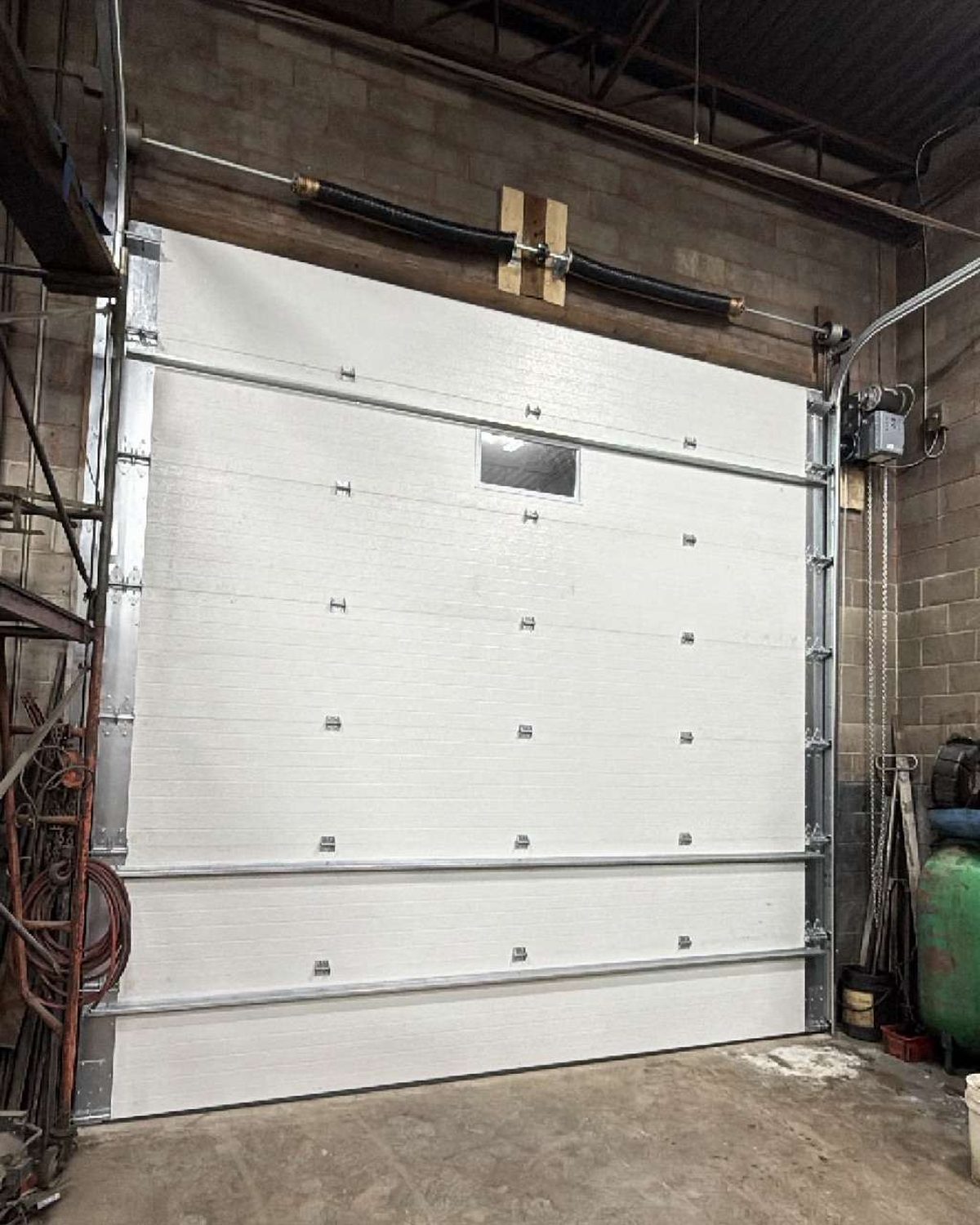
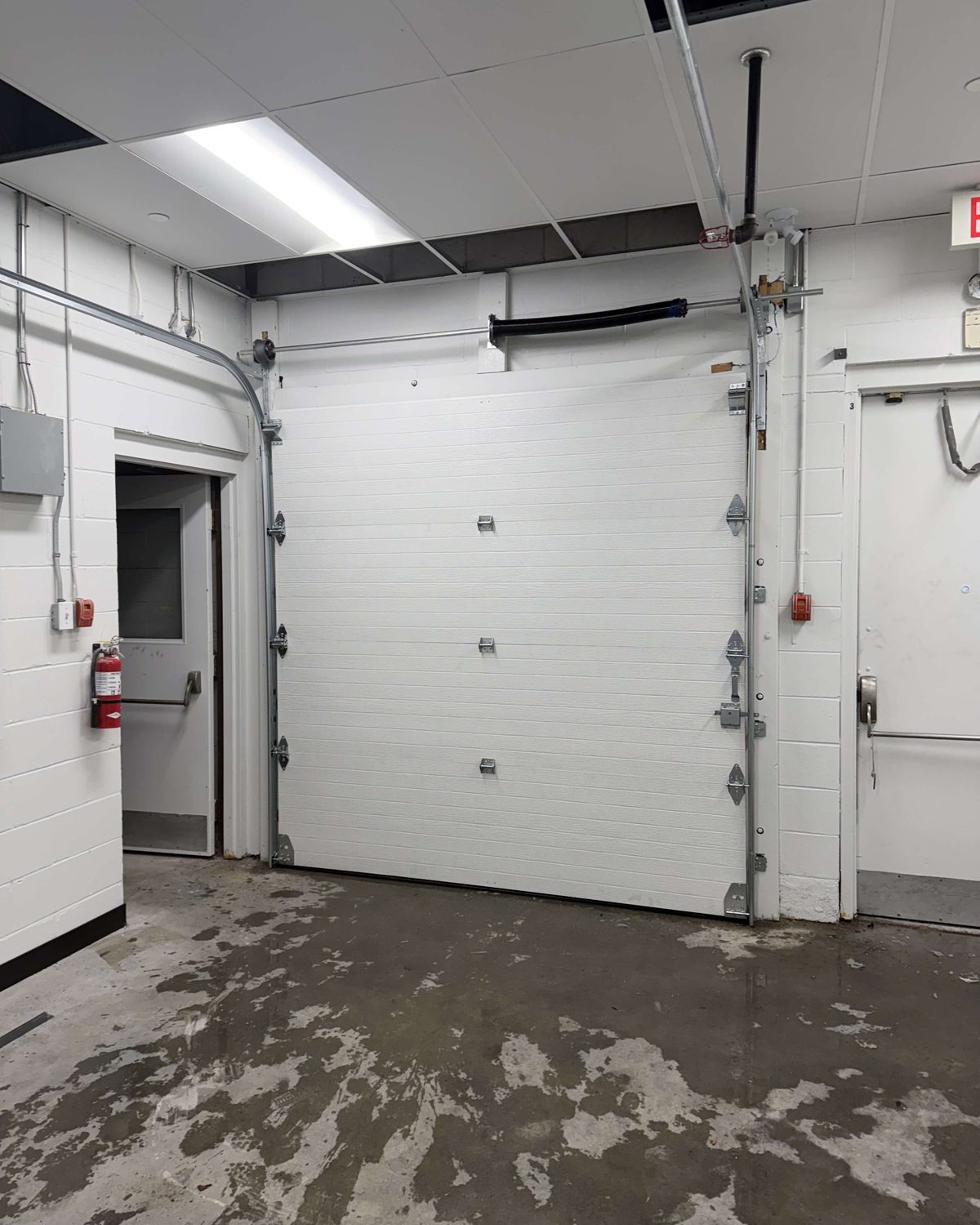
Documented overhead and rolling door jobs from our own project files.
Golden Gate Contracting Inc
Newlink Construction
Formtek Structures Inc
Stallion Construction Inc
Winmarm
Ultra-Form Manufacturing Co Ltd
Four decades of doors for names Ontario knows — Canada’s Wonderland, Tim Hortons, Canadian Tire, the LCBO, Metrolinx, Marriott & Hilton hotels, the University of Toronto — plus thousands of businesses across the GTA. Dependable people, quality products, since 1979.
What our customers say
Called Canuck doors for one of our warehouse doors that was malfunctioning , the technician that came was very knowledgeable and efficient, it took him to time to find the issue and fix it. 5 stars
We have a company. We had the garage door installed by Canuck. From beginning to end they did a great job. We love the doors, the functionality and how great it looks. The price was great as well. Thanks so much Tracey
The Canuck team was spectacular with an emergency in the middle of the night when our huge garage door fell. They fixed it with new parts and it is working well. The entire team was amazing.
Spring and parts service across Toronto & the GTA
Crews carry cables, rollers and common hardware and dispatch from our shop at 1645 Bonhill Road in Mississauga — central to the region rather than at one end of it. Springs are wound to your door, so those run to a second visit. The line is answered 24 hours a day.
Core GTA
- Toronto
- Mississauga
- Brampton
- Vaughan
- Markham
- Scarborough
- North York
- Etobicoke
- Richmond Hill
- Oakville
- Burlington
- Milton
Southern Ontario belt
Buildings with many doors are worth putting on one schedule. Springs on similarly used doors reach the end of their cycle life at similar times, which makes a planned visit much less expensive than several separate emergencies. See all service areas
What springs and parts cost
A parts job is priced on labour, the part, and the hour of the call. What decides the number:
- Which part — springs, cables, rollers, hinges, track sections, seals or a bottom bar
- Door size and weight, which sets the spring and drum specification
- Standard or high-cycle springs, and whether one or both are being replaced
- The hour — after-hours, weekend and holiday call-outs carry a labour premium
- Whether the door is a sectional, a roll-up or a rolling steel curtain
- Access and height, and whether a lift is needed
- Whether the door has to be rebalanced afterwards, which it usually does
Two honest pieces of advice. When one spring of a pair breaks, replacing both is usually better value — the second is the same age with the same cycles on it. And on a door used all day, high-cycle springs cost more once and less every year after that.
Common questions
How long do commercial garage door springs last?
Springs are rated in cycles, not years. A standard torsion spring is commonly rated around 10,000 cycles, and one cycle is one open plus one close. So a door used ten times a day reaches that in roughly three years, and a door used a hundred times a day gets there in about four months — with nothing visibly different about the two doors. High-cycle springs are rated several times higher. If you know roughly how often a door runs, you can schedule the replacement instead of being surprised by it.
Can I fix my own garage door spring?
No, and this is the one place on the site where we will simply say don't. A torsion spring holds the entire counterbalance energy of the door. Releasing it without the correct winding bars and technique causes serious injuries every year, and it is not a task where partial knowledge helps — the replacement also has to be matched to the door's weight and drum, and the wrong rating quietly destroys the door and the operator. On a commercial door in a workplace it is straightforwardly not a do-it-yourself job.
What is the average cost to repair a spring on a garage door?
It depends on the door's size and weight, the spring rating, whether one or both are being changed, and the hour of the call — an after-hours commercial call is a different number from a scheduled daytime visit. Rather than publish a figure that would be wrong for most doors, we give you the number on the phone before the crew rolls. What is worth knowing is that replacing both springs of a pair is usually better value than replacing one, because the survivor has the same age and cycles on it.
Can you retension a garage door spring?
Adjusting spring tension is a normal part of servicing a door, and a correctly adjusted spring is what "balanced" means — the door should stay put when stopped half-open rather than drifting up or down. But retensioning is a remedy for drift and settling, not for a spring at the end of its cycle life. A spring that has been wound tighter to compensate for fatigue is being asked to work harder in exactly the state where it is most likely to break. Adjustment is maintenance; a fatigued or broken spring is a replacement.
Why do two identical doors fail years apart?
Because the thing that wears them out is cycles, and the doors are almost never used the same amount. A shipping door and a rarely used side door in the same building can be identical products with identical springs and be a decade apart in service life. This is also why "annual service" is the wrong frame for a busy door: the interval should follow use, which is why cycle count is the first question we ask about any opening.
Are high-cycle springs worth it?
On a busy door, they are usually the least expensive thing you can buy. They cost more up front, and they change how often you have a door out of service, an emergency call-out at an after-hours rate, and a crew on site. On an opening cycling a hundred times a day, standard springs mean this happens repeatedly; high-cycle springs mean it happens far less. On a lightly used door they cannot repay the difference, and we will say so.
What else wears out besides springs?
Cables, which fray and come off the drums and leave the door crooked in its track. Rollers and hinges, which are where binding starts long before a door jams. Track, knocked out of alignment by impacts. The bottom bar and weather seal, which are nearest the salt, the water and whatever hits the door. And on a powered door the operator itself, which fails early whenever it has been quietly doing the springs' work. Nearly all of these are inexpensive early and expensive once the door has stopped.
How do I know if my door is out of balance?
With the operator disconnected, a balanced door should stay roughly where you leave it when stopped part-way, and lift with moderate effort. If it slams down or flies up, or takes real force to move, the springs are no longer matched to the door. It matters beyond feel: an unbalanced door makes the operator do the springs' job, which is the most common reason an operator dies years earlier than it should. Balance is checked on every service visit as a matter of course.
Do you carry parts for old doors?
Springs, cables, rollers, hinges and common hardware fit across makes, so most older doors are entirely serviceable. Where it gets harder is make-specific items — proprietary track profiles and discontinued sections. Those can often be substituted or fabricated, and where they genuinely cannot, we will tell you plainly rather than sell you a repair that will not last.
Spring gone, door won’t lift?
Call the 24/7 line. We will get the door secured and safe the same day, then wind the spring to your door — 1–2 days — and come back to fit it. Please do not attempt a torsion spring yourself: it holds the whole weight of the door.