
Guides & FAQ · Roll-up & overhead doors
Roll-Up Door Problems, Parts & Care: Questions Answered
Most roll-up door problems come down to four parts: a struck slat that will not enter the guides, a guide bent or packed with debris, a spring that has lost tension, or an operator whose limits have drifted. Below are the questions facility managers and contractors ask us about commercial roll-up and rolling steel doors, from what each part does to when to stop and call.
Every answer below comes from the same place as the rest of our overhead door pages: the rolling doors we install, service and repair across the GTA every week, on our own work and on every other make. Where an answer needs more room, it links to the guide or service page that covers it in full.
Four decades of doors for names Ontario knows — Canada’s Wonderland, Tim Hortons, Canadian Tire, the LCBO, Metrolinx, Marriott & Hilton hotels, the University of Toronto — plus thousands of businesses across the GTA. Dependable people, quality products, since 1979.
Roll-up door parts, and what each one does
Know the names and most service calls get easier to describe. Every rolling door, light or heavy, is built from the same few parts.
What are the parts of a roll-up door?
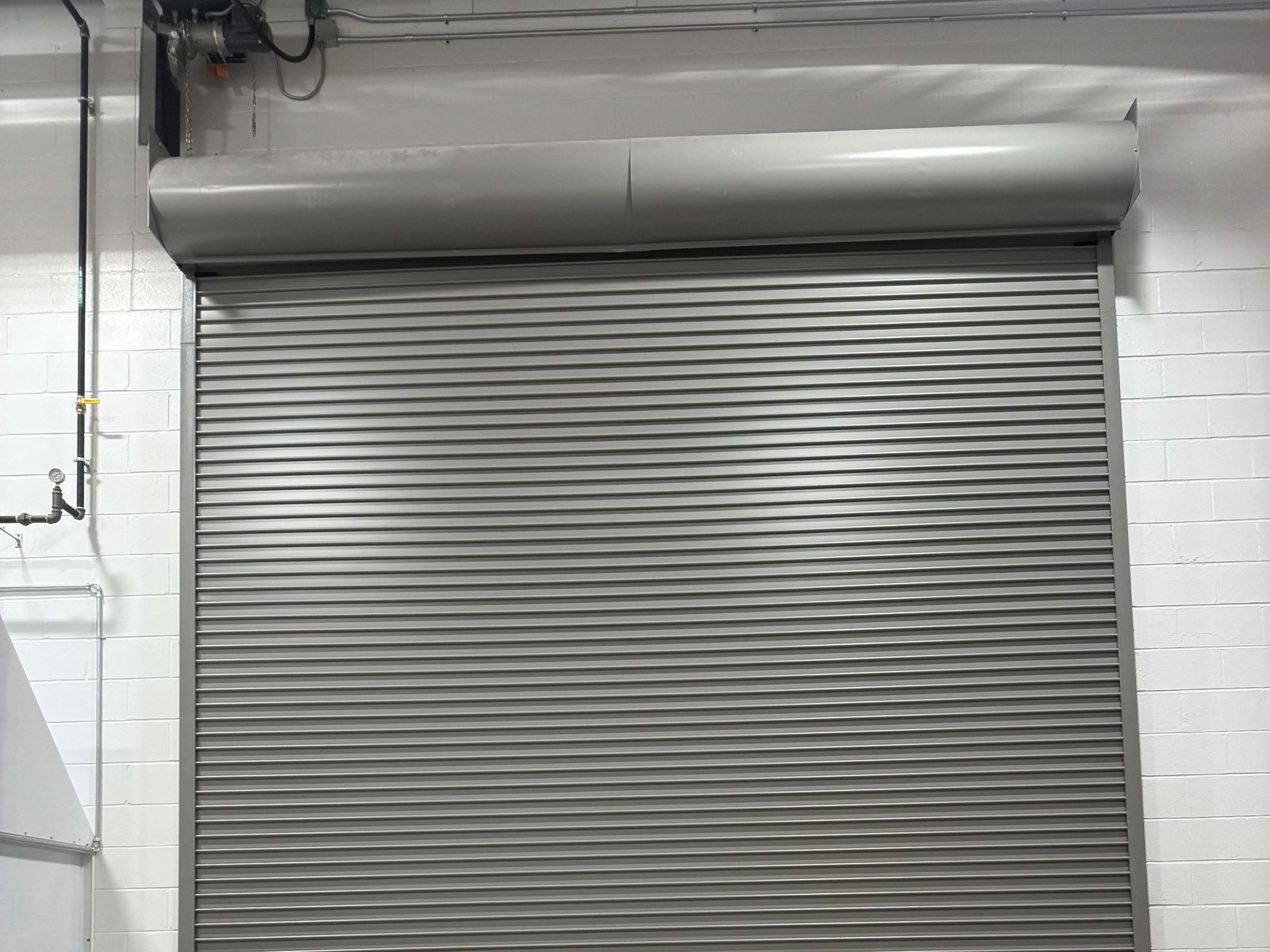
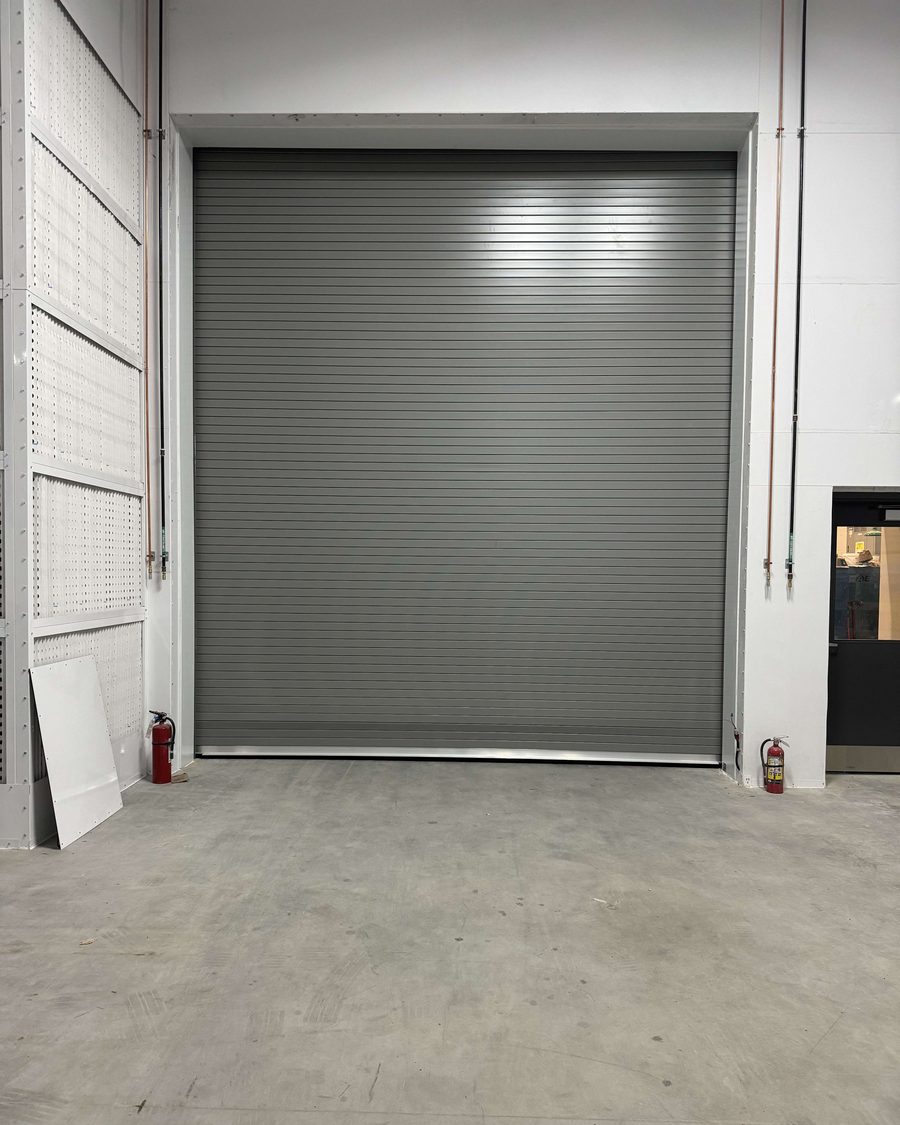
The curtain of interlocking slats, the bottom bar along its lower edge, a guide down each side of the opening, the barrel the curtain coils around, the torsion springs inside the barrel, a bracket at each end that carries the barrel, and a hood over the top that covers the coil. Then whatever lifts it: a push-up handle, a crank, a chain hoist or a powered operator. Heavier doors add endlocks and windlocks on the slats.
How does a roll-up door work?
The slats interlock along their edges, so the curtain bends one way and stays rigid the other. It rides in the guides and winds onto the barrel above the opening. The springs inside the barrel carry most of the curtain's weight, which is why a door weighing hundreds of pounds can be raised by a hand chain or a modest motor. Take the springs out of the picture and nothing else on the door can lift it.
What are slats, endlocks and windlocks?
Slats are the narrow roll-formed steel strips that make up the curtain. Endlocks are fitted to the ends of the slats to stop them sliding sideways against each other and to take the wear where the curtain runs in the guide. Windlocks are fitted on doors that have to resist wind: they hook behind the guide so the curtain cannot be pushed or pulled out of it under load. A missing endlock is a small part that causes large problems.
What is the hood on a roll-up door for?
It covers the barrel and the coiled curtain. Outside it keeps weather off the coil; inside it keeps dust and debris out and keeps hands away from a moving barrel. It carries no load. A dented hood is cosmetic unless it has been pushed down far enough to rub the coil, which you will hear before you see.
What is the difference between a roll-up door and a rolling steel door?
The duty, not the mechanism. Both coil a slatted curtain onto a barrel. "Roll-up" is usually used for the lighter end: thinner slats, smaller openings, storage and service buildings. "Rolling steel" means heavier interlocking slats, larger spans, wind loads and security duty. Parts and faults are the same in principle, which is why this page treats them together.
What is a roll-up sheet door?
A lighter design where the curtain is one corrugated steel sheet rather than interlocking slats, the kind common on self-storage units and small sheds. It is simple and inexpensive, but a crease across the sheet cannot be fixed by swapping a slat, and it is not built for the spans, cycle counts or security of a commercial opening.
Common roll-up door problems
What the symptom usually means, and which ones are safe to look at yourself. None of them is fixed by forcing the curtain.
What are the most common problems with roll-up doors?
In rough order of how often we see them: springs that have lost tension or broken, so the door is too heavy to lift; impact damage to slats or the bottom bar, so the curtain will not enter the guides; guides bent by a forklift or packed with debris and ice; operator faults such as drifting limits or a jumped chain; and curtain wear, including missing endlocks, that lets slats shift sideways.
Why is my roll-up door stuck or not rolling up?
If it feels far heavier than usual, suspect the springs. If it moves freely and then stops at the same height every time, look for a dented slat or a bent guide at that point. If it binds all the way, the guides may be packed with debris or ice. On a powered door that hums without moving, the drive chain or the manual release is the usual cause. In every case, stop: each forced attempt deforms more slats.
My roll-up door is off track. Can I put it back myself?
Not on a commercial door. When the curtain leaves its guide, the springs are still holding their tension against it, and the slats that came out are usually bent. Pushing them back in rarely holds, and a curtain that lets go under spring load can drop or spin the barrel. Lower it only if that is safe, keep people out from under it, and call. Missing endlocks and struck guides are the usual causes, and both need fixing or it happens again.
Why does my roll-up door come down crooked, or drift to one side?
A curtain that is lower at one end, or that creeps toward one guide as it coils, is telling you something is uneven: a barrel no longer level on its brackets, slats shifted sideways because endlocks are missing or worn, or a bent guide pulling one edge. Left alone, the high side rubs the guide until the curtain jams. It is a straightforward adjustment early and a curtain repair late.
Why is my roll-up door so noisy?
Grinding or scraping usually means the curtain or endlocks are rubbing a guide, or the hood is touching the coil. A bang at the top or bottom of travel on a powered door points to operator limits set wrong. Loud clunks from the barrel end deserve prompt attention: they can mean a spring or a bracket bearing is failing.
Can a dented or bent roll-up door be repaired?
Usually. A few struck slats can be replaced individually if the profile is still available, a bottom bar can be straightened or replaced, and a bent guide section can be replaced without touching the curtain. What tips it to a new curtain is damage across many slats, a curtain bent across its width, or an obsolete profile that cannot be matched.
When is a roll-up door problem an emergency?
When the door will not close and the building cannot be secured, when it is stuck open in winter on a heated space, when a curtain is hanging out of its guides, or when a broken spring has left a heavy curtain that could fall. Those are call-now situations, day or night. A door that is slow, noisy or crooked but still closes can wait for a scheduled visit, though not for long.
Springs and balance
The springs inside the barrel do the lifting. They fail on a schedule, and they are the one part that should never be worked on by anyone untrained.
How long do roll-up door springs last?
They are rated in cycles, one cycle being an open and a close. A standard torsion spring is commonly rated around 10,000 cycles, so a door run ten times a day uses that up in roughly three years and a door run a hundred times a day in months. High-cycle springs are rated several times higher and usually pay for themselves on a busy opening.
Can I adjust the spring tension on a roll-up door myself?
No. The tension is set at the end of the barrel and holds the counterbalance energy of the whole curtain. Releasing or adding it without the right tools and procedure is how people get hurt. It also treats the symptom: a door that has started to feel heavy usually has a spring near the end of its cycle life, and winding it tighter makes it work harder in exactly that state.
How do I know the springs on my roll-up door are going?
The door feels heavier to lift than it used to, will not stay put part-way open, or, on a powered door, the operator strains or stalls on the way up. A spring that has broken outright often goes with a loud bang from the barrel end, and the door then may barely move. Stop using the door at that point.
How quickly can a broken roll-up door spring be replaced?
Commercial springs are wound to suit the individual door, which takes 1–2 days once the door has been measured, so a spring replacement is two visits: one to diagnose, make the door safe and size the spring, and one to fit it. Cables, rollers, guides and bottom bars, by contrast, are carried on our trucks and are usually fixed on the first visit.
Operators, manual operation and safety
Push-up, crank, chain hoist or motor. Once a door is powered, safety devices come with it.
Can a manual roll-up door be motorized?
Often, yes. First the door has to be sound and correctly balanced, and its springs rated for the extra cycles it is about to get. Then there has to be somewhere to mount the operator and suitable power at the opening. Motorizing a tired, unbalanced door is a reliable way to kill both the door and the new operator.
How do I open a powered roll-up door during a power failure?
Most commercial operators on rolling doors have a hand chain or a crank for manual operation, engaged by a release on the operator. The instructions are normally on a label on the operator. If there is no label, or the door will not move by hand once released, do not force it: a door that is hard to move manually has a spring problem as well.
What safety devices does a powered roll-up door need?
Entrapment protection: photo eyes across the opening, a reversing edge on the bottom bar, or both, and controls placed so whoever runs the door can see it. Ontario's Occupational Health and Safety Act requires workplace equipment to be maintained and fit for its job, and a powered door with bypassed safety devices is neither. We test them on every service visit.
Our operator runs but the curtain does not move. What is wrong?
Usually the link between them rather than either one: a manual release left disengaged, a broken drive chain, or a sheared coupling. It can also be a broken spring, with the operator running against a curtain it cannot lift. Do not keep pressing the button; that is how a spring failure becomes an operator failure too.
Choosing a rolling door
Headroom, insulation, security and fire rating decide most of the specification, and most of it is covered in more depth elsewhere.
How much headroom does a roll-up door need?
Less than any other overhead door, but not none. The coil sits above the opening and its diameter grows with the height of the door and the thickness of the slats, so a tall insulated door needs noticeably more room than a small service door. The manufacturer's tables give the exact headroom and side room for each size. Measure the opening, the space above it and the space each side before choosing a type.
Roll-up or sectional: which is better for a commercial building?
The building usually decides. A sectional needs headroom and ceiling depth for its track but insulates better, takes vision panels easily and lets you replace one damaged panel. A rolling door needs almost no headroom, is tougher and more secure, and costs less. Heated space and room for a track: sectional. Structure in the way, or security first: rolling.
Can a roll-up door be insulated?
Yes, with insulated slats: a foam core between an outer and inner steel face. It is a real improvement on a single-skin curtain, but with thinner slats and more joints it does not match an insulated sectional panel, and the perimeter seals matter as much as the curtain.
Are roll-up doors secure?
Rolling steel doors are among the most secure overhead doors, which is why they go on parking entrances, shipping openings and back-of-house walls. Heavier slat gauges are hard to breach, and the coil above the opening leaves nothing to pry at the head. The weak points are the lock and the guides, so specify both for the risk. Where security is the main purpose, look at security shutters and grilles too.
What is a rolling fire door?
A rolling steel door built and labelled as a fire-rated assembly. It stays open in daily use and closes automatically when its fusible link melts or the fire alarm releases it, closing by gravity at a governed speed. Under NFPA 80 it needs an annual drop test, documented, and undocumented testing is a common inspection finding.
When is a high-speed door a better choice than a rolling steel door?
When the opening cycles so often that the time it stands open costs more than the door. A fabric high-speed door opens and closes in seconds and keeps heat, cold and dust where they belong. A rolling steel door is slower but far tougher, more secure and better at night. Busy interior openings get high-speed doors; perimeter openings that must lock get rolling steel, and some get both.
Maintenance and service life
A rolling door has few parts, but it uses them every cycle.
How often should a commercial roll-up door be serviced?
At least once a year, and more often on busy doors, because wear follows cycles rather than the calendar. A service visit checks spring balance, the curtain and endlocks, the guides, the bottom bar and seal, the barrel brackets, the operator and its limits, and the safety devices. Rolling fire doors add the annual drop test.
How long does a roll-up door last?
The curtain, guides and barrel often last decades. What wears out is the moving parts, springs above all, and the operator, and their life is measured in cycles. Two identical doors in the same building can be a decade apart in service life simply because one is the shipping door and the other is used once a week.
What should we check on a roll-up door between service visits?
Look, do not adjust. Watch a full cycle: the curtain should wind evenly and come down level, without rubbing or banging. Check the guides for dents and debris, the bottom seal for tears, and, on a powered door, that the photo eyes reverse it. Anything unusual goes to a technician rather than a toolbox.
Cost and lead times
We do not publish list prices for rolling doors; the range is too wide for one number to help. What moves it, and how long it takes, is below.
How much does a commercial roll-up door cost?
It depends on the opening size, the slat gauge, whether the curtain is insulated, the wind rating, and whether it is manual or powered, plus what the opening and header need. A small uninsulated service door and a large wind-rated, insulated, motorized rolling steel door are different orders of magnitude. We measure the opening and send a firm, itemised quote at no charge.
How long does it take to get a new rolling door?
Rolling doors are made to the opening, so there is no stock unit. Plan on roughly 2–4 weeks to manufacture once the opening is measured and any shop drawings are approved, then 1–2 weeks to schedule the crew. Installation is normally a day per opening, with a lift for large curtains.
Is it better to repair or replace a roll-up door?
Repair when the damage is local: a spring, a few slats, a guide, the bottom bar, the operator. Consider replacing when the curtain is damaged across much of its height, the profile is obsolete, several major parts are failing at once, or the door no longer suits the opening's traffic or insulation needs. We will tell you when repairs have started costing more than a new door.
In-depth guides
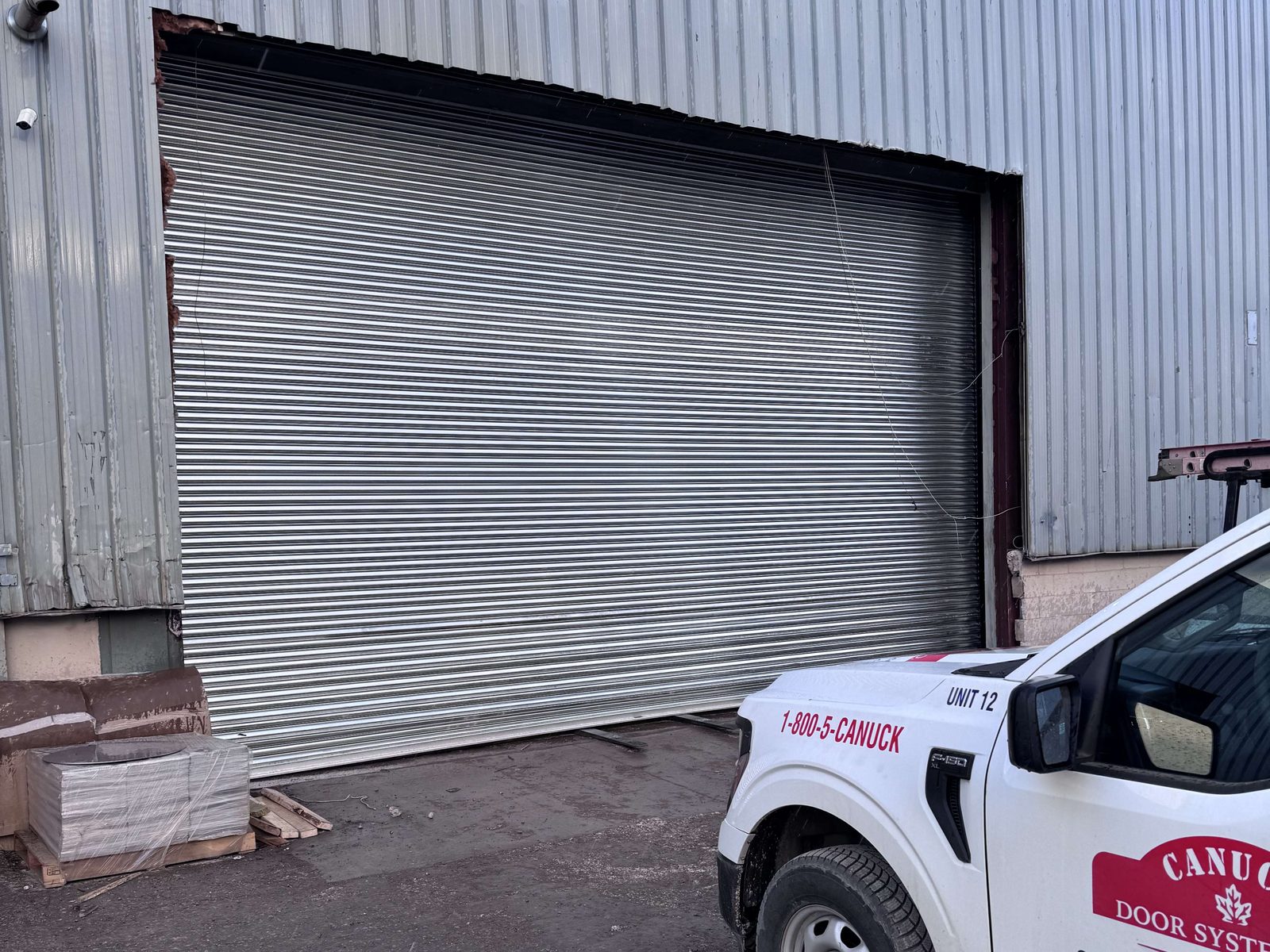
Types of Overhead Doors, and the Standard Sizes They Come In
Sectional, roll-up, rolling steel and high-speed doors compared, plus the standard residential, dock and drive-in door sizes, in feet and metres.
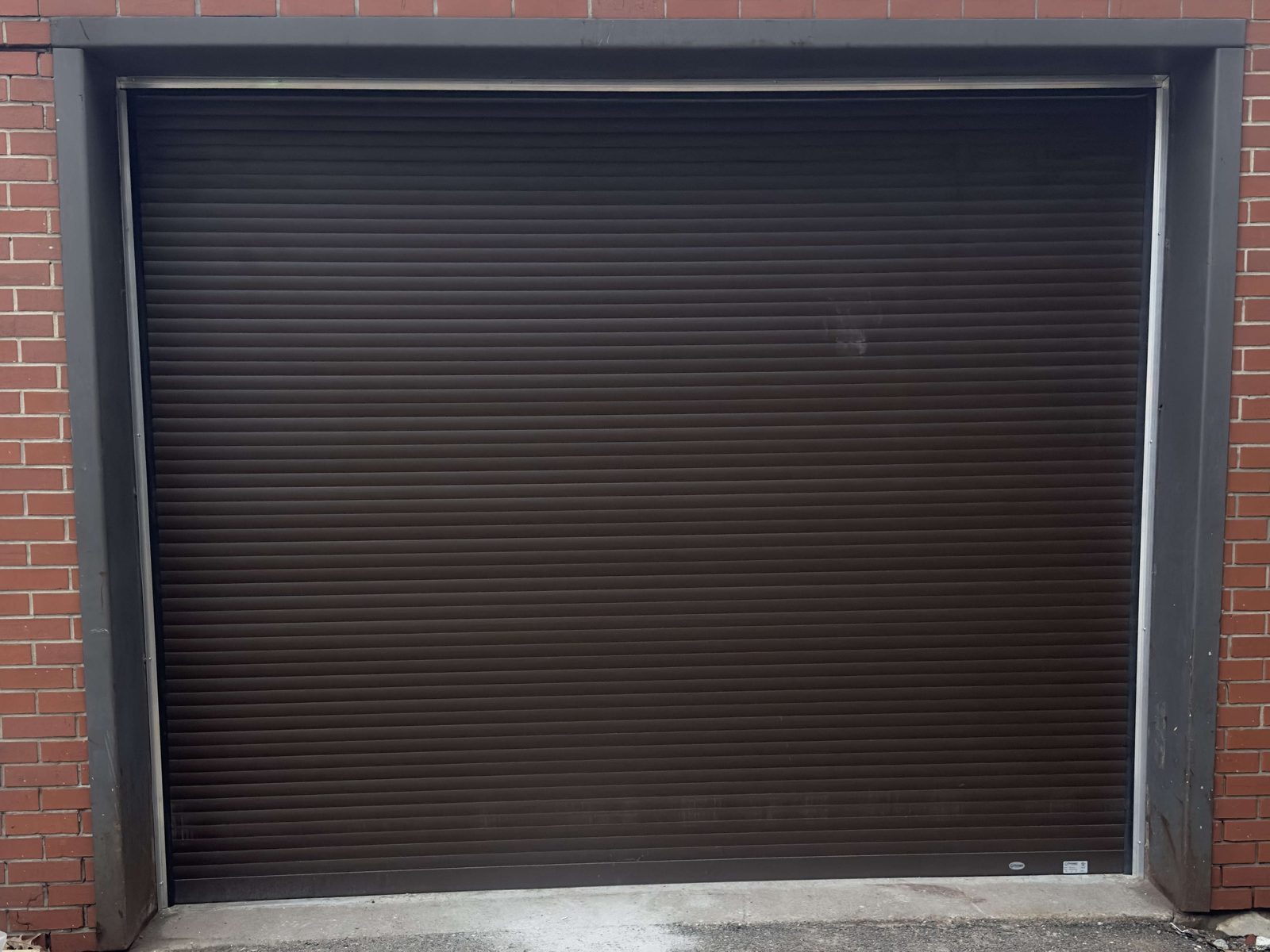
Roll-Up Door Insulation: Insulated Slats, Kits, and What R-Value Really Means
Insulated slats against add-on kits, why a slat's R-value is not the door's, and where a roll-up door actually loses heat in an Ontario winter.
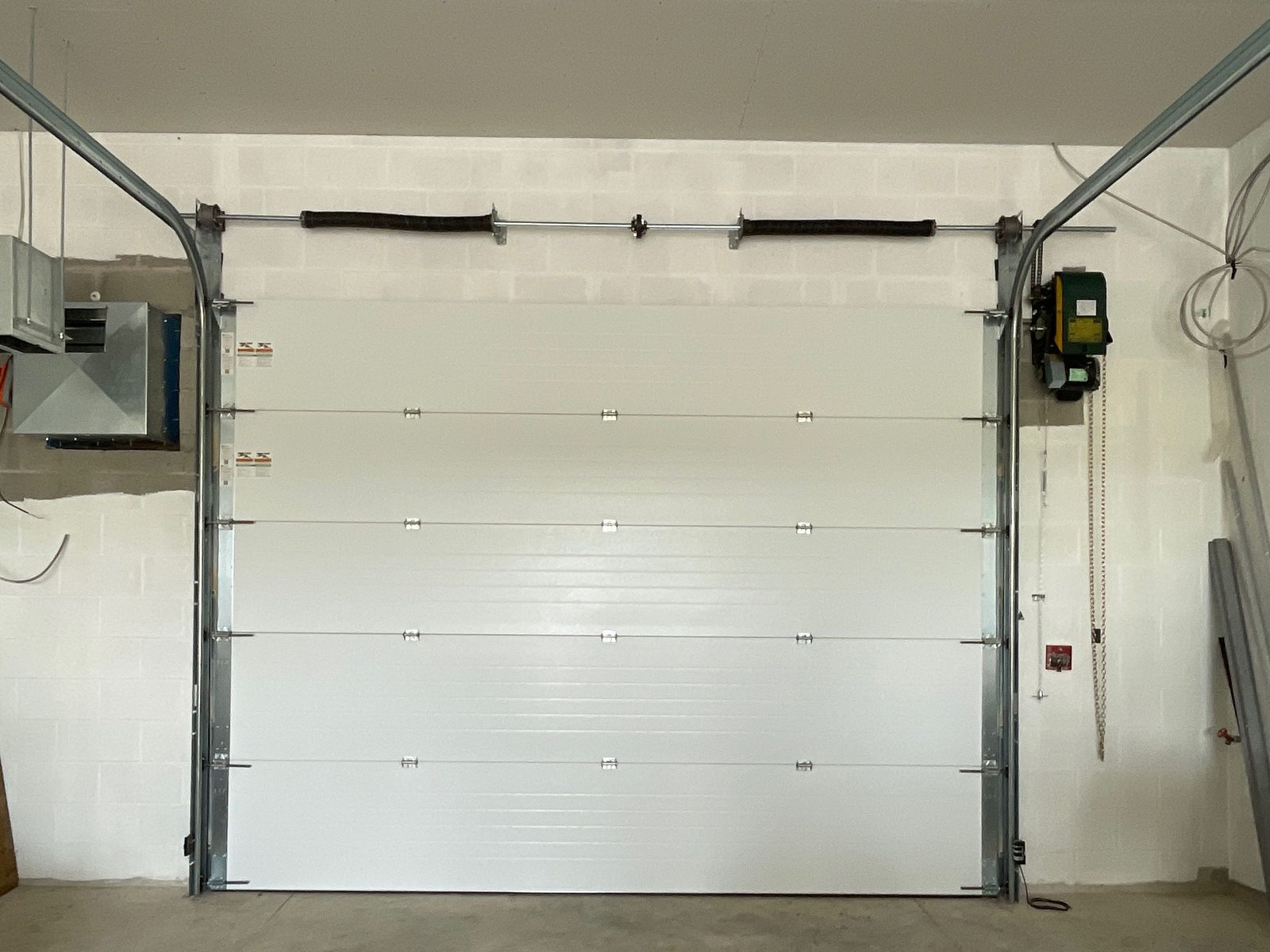
Commercial Overhead Door Not Closing? The Usual Causes, in Order
Why a commercial overhead door stops, reverses or will not come down — photo eyes, limits, springs, cables and operators — and what is safe to check yourself.
Get a roll-up door repaired or replaced
Door stuck, crooked or off track?
Tell us what the door is doing, or send a photo of the curtain and the guides. We will tell you whether it is a same-visit repair, a spring, or a door at the end of its life, and what it costs.