
Commercial & Industrial
Rolling Steel & Coiling Doors
Interlocking steel slats coiling into a barrel above the opening — the tough, secure, low-headroom end of the overhead family, including the fire-rated curtains that drop on alarm. Supplied, installed and serviced across Toronto and the GTA since 1979.
Request QuoteCall 800-522-6825
Large spans, minimal headroom · fire-rated curtains and drop tests · all makes
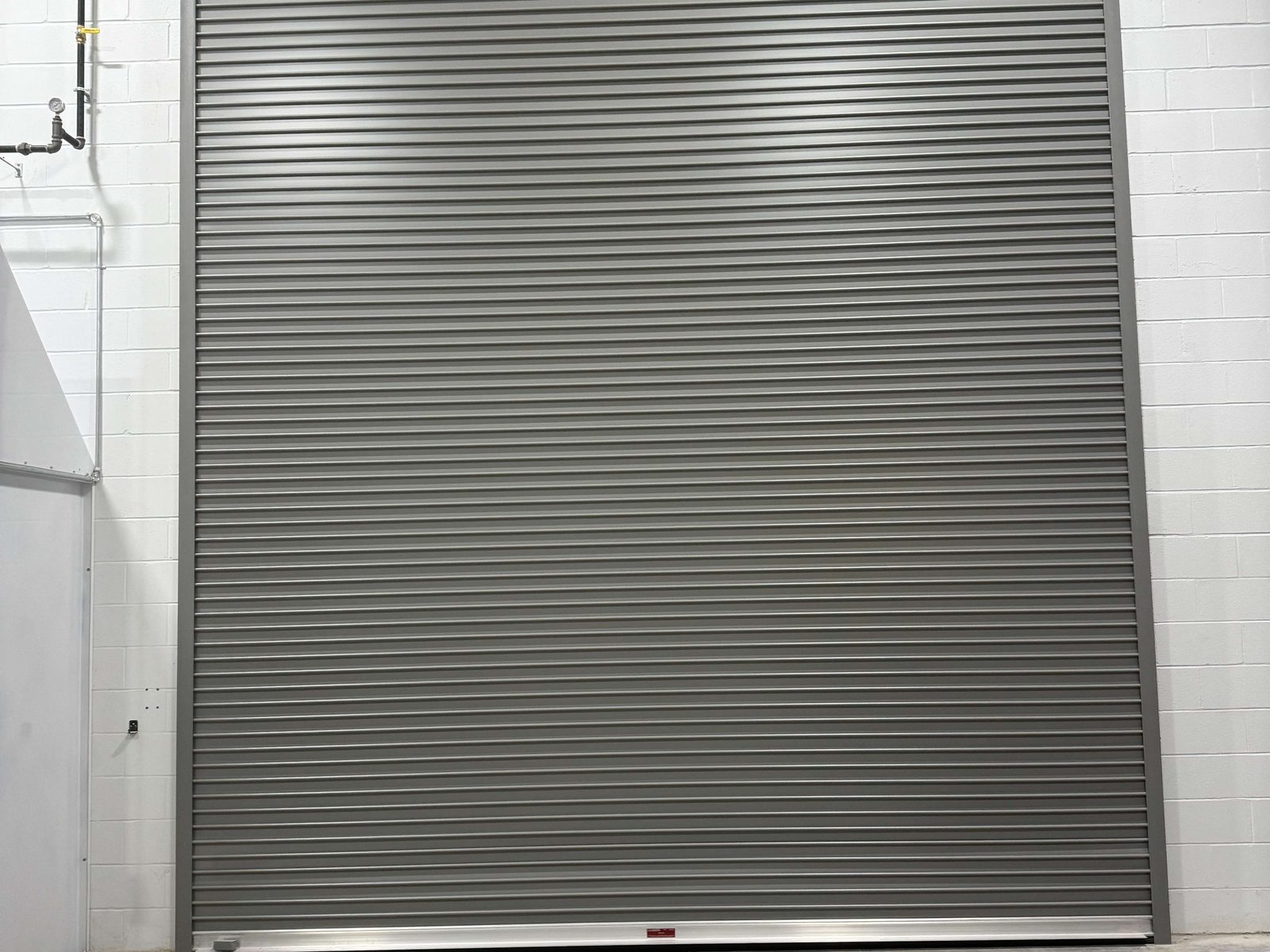
At a glance
| Construction | Interlocking steel slats coiling onto a barrel above the opening |
|---|---|
| Headroom needed | Minimal — the barrel, not a horizontal track |
| Spans | Larger than a sectional can practically cover |
| Fire-rated versions | Available; release on alarm, with an annual drop test required |
| Lead time | 2–4 weeks manufacture, 1–2 weeks to schedule installation |
| Service | All makes — curtains, slats, guides, barrels, springs and operators |
A rolling steel door is a curtain of interlocking steel slats that coils into a barrel above the opening. Because it coils rather than folding back under the ceiling, it fits where a sectional door physically cannot — and because it is a continuous run of steel in guides, it is the toughest and most secure door in the overhead family.
That combination is why these doors end up on plant openings, parking entrances, municipal yards and the large openings in fire separations. Canuck Door Systems installs and services them across the GTA, including the fire-rated versions and the annual drop testing they require.
Rolling steel against the alternatives
| Rolling steel | Roll-up (light) | Sectional | |
|---|---|---|---|
| Duty | Heavy commercial & industrial | Light to moderate | Light to heavy |
| Headroom needed | Minimal — barrel only | Minimal — barrel only | Substantial, for horizontal track |
| Span | The largest of the three | Moderate | Large, but track-limited |
| Security | Best | Good | Moderate |
| Insulation | Limited, even with insulated slats | Limited | Best — sandwich panel |
| Fire-rated version | Yes, with release gear and drop testing | No | No |
| Vision panels / pass door | Difficult | Difficult | Straightforward |
A struck slat is the failure mode to design against. Because the slats interlock, one badly deformed slat can stop the whole curtain coiling — which is why bollards and guide protection on a door that vehicles pass through are inexpensive insurance.
Fire-rated rolling doors
Where a large opening passes through a fire separation, a swinging labelled door is often impractical and a rolling steel fire door is the answer. It works as a normal door day to day; on alarm or on a fusible link, the release gear lets the curtain close under its own weight to seal the opening.
Two things follow from that, and both get missed:
- It has to actually drop. A door that runs perfectly on its operator can still fail to release. That is precisely what a drop test checks, and it is the reason testing exists.
- The testing has to be documented. Undocumented drop testing is a common inspection finding, and it is an easy one to avoid.
We test and service these alongside the swinging labelled assemblies in the same building — see fire-rated doors.
Where rolling steel belongs
Plant & production openings
Large spans with structure right above them, where a sectional's track has nowhere to go.
Parking garages
Entrances that must be secure when the building is unattended, usually powered with loops and access control.
Fire separations
Labelled curtains that release on alarm, with the annual drop test kept on a schedule.
Municipal & works yards
Durability and simple parts availability decades later matter more than appearance.
Warehouse interiors
Zone separation inside a building where headroom is spoken for by structure or services.
Self-storage & compounds
Volume installations where security is the point and insulation is irrelevant.
Counter & service openings
Small coiling counter shutters closing a serving hatch or a till line after hours.
Exposed elevations
Where wind load drives the specification, and slat gauge and guide fixing stop being a formality.
How long it takes
- Measure — opening, headroom, side room, and what the header above it is actually made of.
- Manufacture — 2–4 weeks; the curtain is made to your opening.
- Install — 1–2 weeks to schedule, usually a day per opening, with a lift for large curtains.
- Repairs — guides, bottom bars and door hardware are common items and normally same-visit. A failed operator is replaced rather than rebuilt. Springs are wound to the door and take 1–2 days, so those are two visits.
What goes wrong
- Barrel spring loses tension — the curtain gets heavy, stalls part-way, and starts destroying the operator.
- A slat is struck — deformed slats stop the curtain entering the guides. Individual slats can often be replaced if it is caught early.
- Guides bent or fouled — impact, ice or debris. Inexpensive to straighten, expensive to ignore.
- Corrosion at the bottom bar and guides — the salt line. Worst on exterior doors that see winter road spray.
- Operator limits drift — the door stops short or runs on; an adjustment rather than a repair.
- Fire-rated release seizes — the failure you only find by testing, which is the argument for testing.
Overhead door work across the GTA
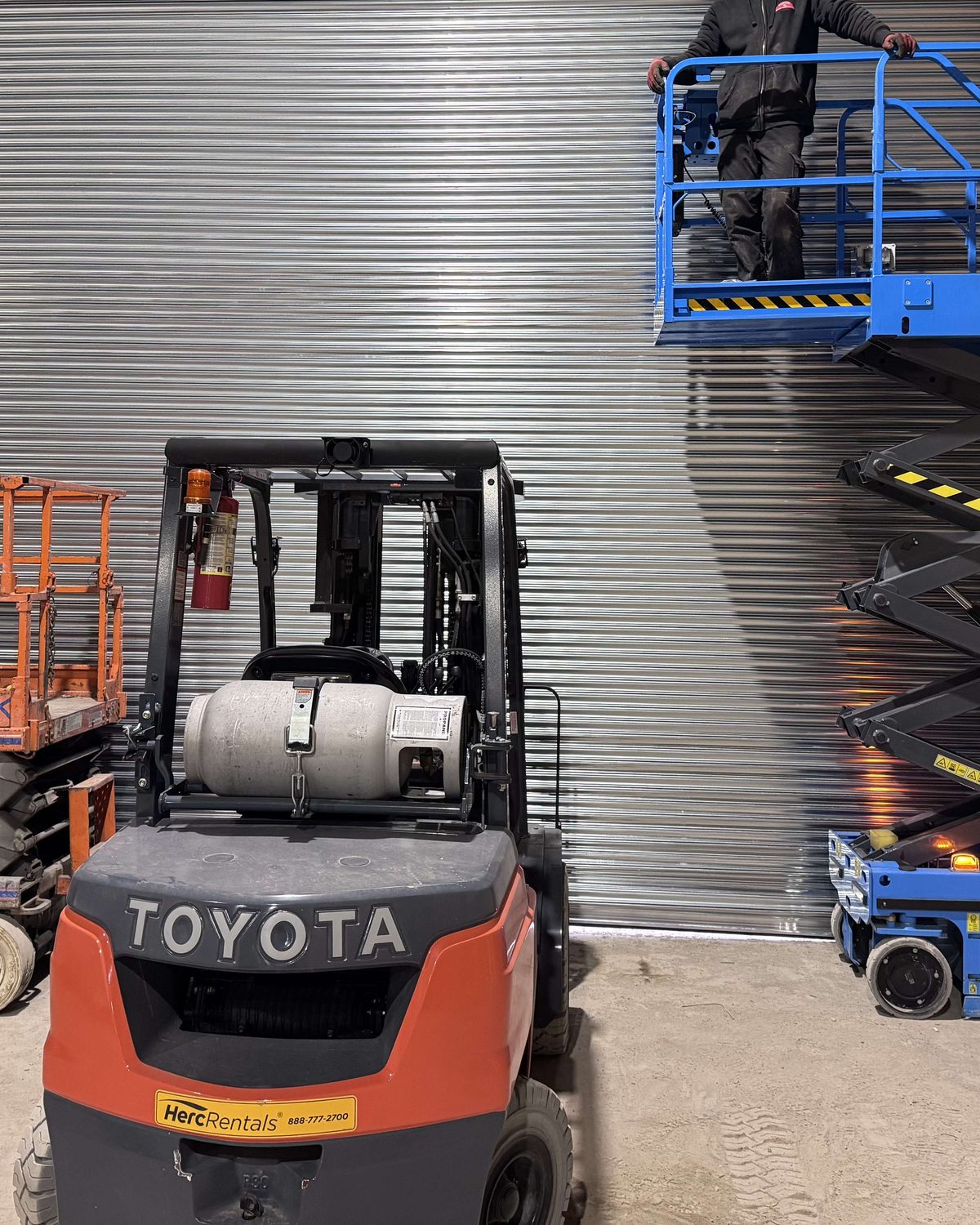
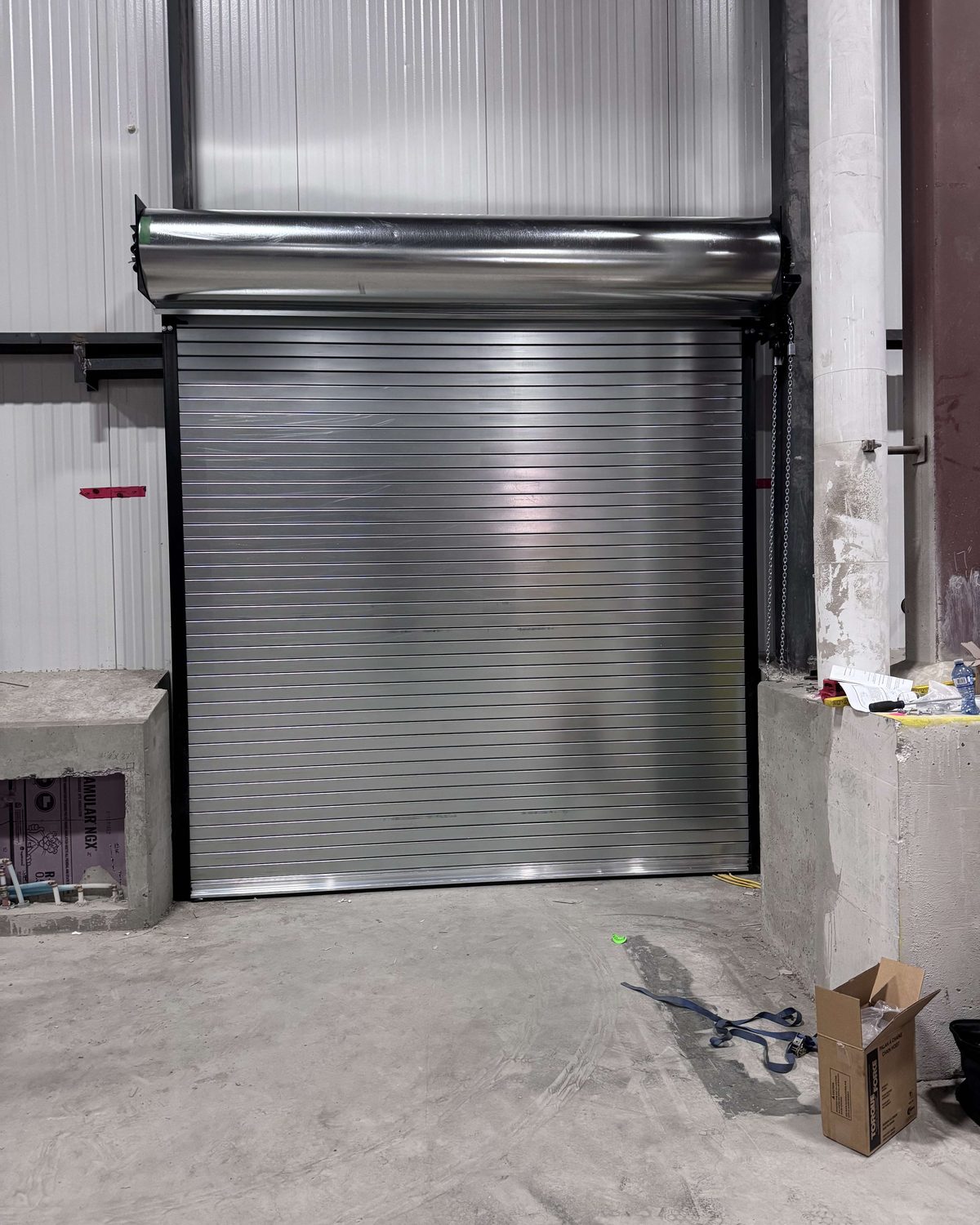
Documented overhead and rolling door jobs from our own project files.
Golden Gate Contracting Inc
Newlink Construction
Formtek Structures Inc
Stallion Construction Inc
Winmarm
Ultra-Form Manufacturing Co Ltd
Four decades of doors for names Ontario knows — Canada’s Wonderland, Tim Hortons, Canadian Tire, the LCBO, Metrolinx, Marriott & Hilton hotels, the University of Toronto — plus thousands of businesses across the GTA. Dependable people, quality products, since 1979.
What our customers say
Called Canuck doors for one of our warehouse doors that was malfunctioning , the technician that came was very knowledgeable and efficient, it took him to time to find the issue and fix it. 5 stars
We have a company. We had the garage door installed by Canuck. From beginning to end they did a great job. We love the doors, the functionality and how great it looks. The price was great as well. Thanks so much Tracey
Hats off to Canuck Doors for finding a quick solution to my dilemma of finding a 16 foot door in under 16 weeks for my new garage build. …
Read the full review
Rolling steel door work across Toronto & the GTA
We supply, install and service rolling steel doors throughout the core GTA and along the Southern Ontario industrial belt, from our shop in Mississauga. Large curtains usually need a lift, which is worth knowing when scheduling access.
Core GTA
- Toronto
- Mississauga
- Brampton
- Vaughan
- Markham
- Scarborough
- North York
- Etobicoke
- Richmond Hill
- Oakville
- Burlington
- Milton
Southern Ontario belt
Plants, parking structures and municipal yards across the belt are where most of this work sits. Portfolios are quoted per opening, and fire-rated curtains are put on one annual drop-test schedule. See all service areas
What a rolling steel door costs
Rolling steel sits between roll-up and sectional on price, and above both when it is fire-rated or very large. What moves the number:
- Opening size — these doors cover spans a sectional cannot
- Slat gauge and profile, and whether insulated slats are specified
- Whether the door is fire-rated, which changes the product, the release gear and the testing
- Wind load and exposure, which the Ontario Building Code drives on exterior openings
- Manual chain hoist, crank, or a powered operator
- Finish — mill galvanized or a factory colour
- Security features, and what the door has to resist
- Access for installation, since large curtains and barrels need a lift
Headroom is less of a constraint than with a sectional, but the barrel and guides still need room and the header still has to carry the load. We check what the structure above the opening actually is before quoting, not after.
Common questions
What are metal rolling doors called?
Several things, and the vocabulary is used loosely across the trade. "Rolling steel door", "coiling door", "roll-up door" and "rolling shutter" all describe a curtain of interlocking slats that coils onto a barrel above the opening. In practice rolling steel and coiling tend to mean the heavier commercial and industrial end, roll-up the lighter end, and rolling shutter or security shutter a door whose main job is protecting a storefront or counter after hours. What matters in an enquiry is the opening size, the exposure and what the door has to resist.
How do rolling steel doors work?
The curtain is made of narrow steel slats that interlock along their edges, so it is flexible across its height and rigid across its width. It runs in guides either side of the opening and coils around a barrel mounted above it. Inside the barrel, torsion springs counterbalance the curtain's weight so it can be lifted by hand, by chain hoist, or by a powered operator. Because the curtain coils rather than folding back, the door needs almost no room behind the opening — which is the whole reason to choose it.
What are the disadvantages of roll-up and rolling doors?
Three, and they are worth knowing before specifying. Insulation is limited: insulated slats exist but do not match a sandwich-panel sectional, so on a heated building the sectional is the better envelope. Impact damage is awkward: a struck slat stays deformed and, because the slats interlock, a bad dent can stop the curtain coiling at all. And vision panels and pass doors are difficult to build into a curtain, where a sectional takes both easily. Against those: minimal headroom, big spans, and real security.
What are the disadvantages of a steel door?
Steel corrodes where its coating is broken, and on a door that is scraped by traffic and salted every winter, that happens. It is also heavy, which means the counterbalance and the structure above the opening have to be right, and it conducts heat unless insulated slats are specified. None of that is a reason to avoid steel on an industrial opening — it is the reason to specify the finish for the environment and to keep the guides and bottom bar maintained, particularly on doors that see road salt.
Are rolling steel doors more secure than sectional doors?
Generally yes. A continuous curtain of interlocking steel slats running in guides presents no panel joints to lever apart and no hinges to attack, and the heavier gauges are genuinely hard to breach. That is why they appear on parking entrances, plant openings, municipal yards and anywhere a building is left unattended. If security is the primary purpose rather than a by-product, look also at <SiteLink url="/commercial/security-shutters/" label="security shutters and grilles" />.
What is a fire-rated rolling door?
A rolling steel door built and labelled as part of a fire separation. It operates normally day to day and is held open by a release mechanism which, on a fire alarm or a fusible link, lets the curtain close under its own weight to seal the opening. They are common where a large opening passes through a rated wall and a swinging door would be impractical. They are also subject to periodic drop testing and inspection, which is a code obligation rather than optional maintenance.
How often does a fire-rated rolling door have to be drop tested?
Fire door assemblies are subject to periodic inspection and testing, and for a rolling fire door that testing includes verifying that the curtain actually releases and closes fully — a door that operates perfectly on its motor may still fail to drop. The standard interval used in the industry is annual. Because the exact requirement depends on the assembly and the authority having jurisdiction, we confirm the schedule against your building rather than assert one; what we can say is that undocumented drop testing is one of the more common findings on an inspection.
Our rolling door has jammed part-way. What now?
Stop, and do not force it. Forcing a jammed curtain deforms more slats and turns a repair into a replacement. The usual causes are a struck slat that will not pass into the guides, guides bent or packed with ice and debris, a barrel spring that has lost tension so the curtain stalls, or an operator whose limits have drifted or whose chain has jumped. All four are diagnosable quickly, and three of them are inexpensive if the curtain is not damaged further first.
How long does a rolling steel door take?
Plan on roughly 2–4 weeks to manufacture once the opening is measured and any shop drawings approved, then 1–2 weeks to schedule — about 3–6 weeks in total, since the curtain is made to your opening. Installation is normally a day per opening, though large curtains need a lift and that has to be arranged with your site access. Repairs are usually faster: guides, bottom bars, springs and operator parts are common items.
Rolling door stuck, or specifying a new one?
Send us the opening size and what the door has to do — close a plant bay, secure a parking entrance, or hold a fire separation. Curtain jammed? Call, and do not force it.