
Commercial & Industrial
Rolling Security Shutters
Interlocking slats that coil above the opening and close it completely — no gaps, no view in, and a weather barrier as well as a security one. The outward-facing closure, fitted over entrances, shopfronts and windows across Toronto and the GTA since 1979.
Request QuoteCall 800-522-6825
Solid and perforated slat · made to the opening · 24/7 emergency call-out
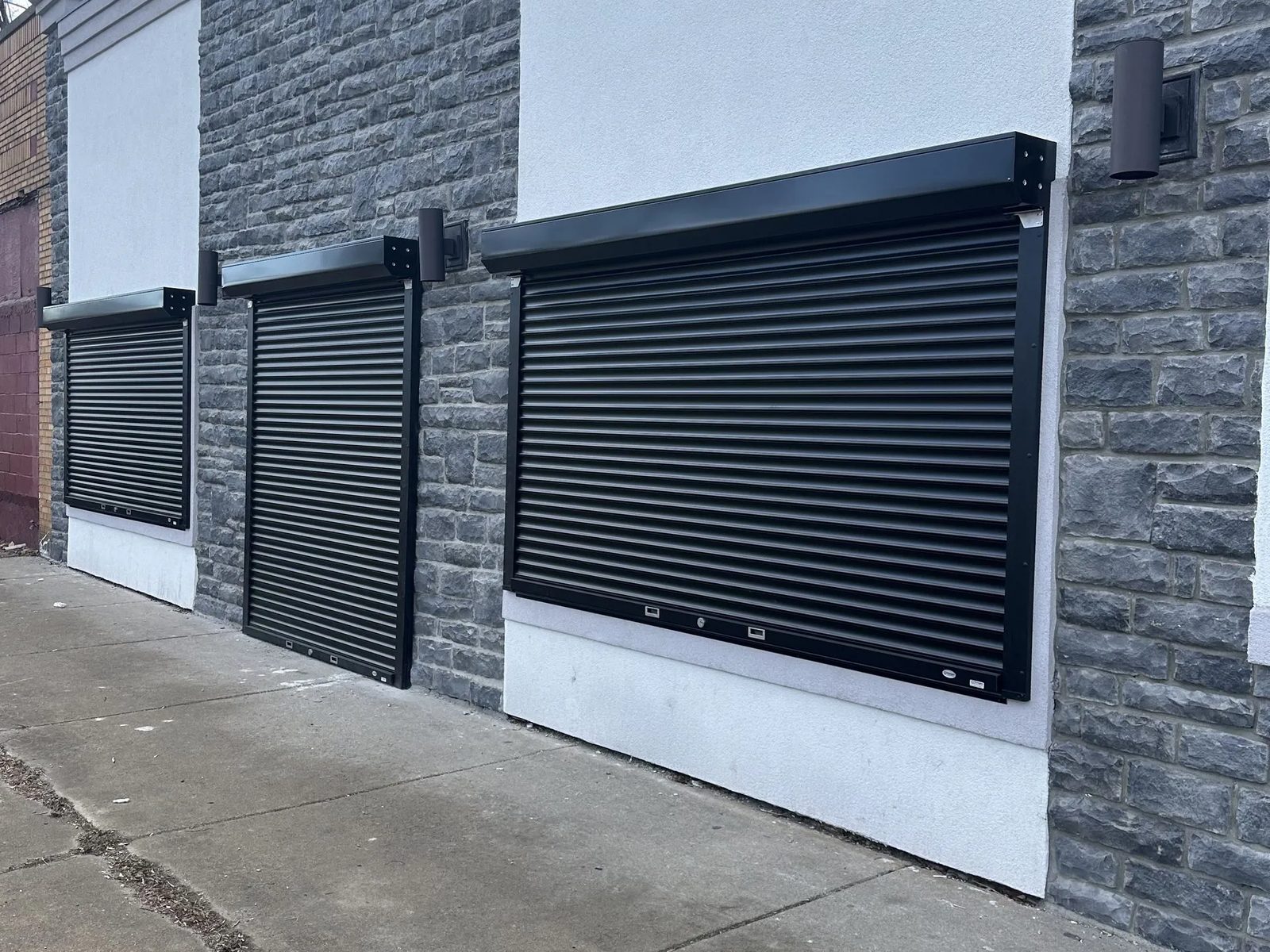
A rolling security shutter is the closure that leaves nothing to see. A curtain of interlocking slats runs in a guide down each side of the opening and rolls onto a barrel above it; closed, it is a continuous metal surface across the whole opening, and it stops the view, the weather and the casual attempt in one product.
That is what separates it from the other closures in this silo. A rolling grille is deliberately see-through, which is why it lives inside shopping malls. This one is normally fitted outside, at the entrance — a shopfront, a street-facing door, a ground-floor window — where being blank after hours is the point. Canuck Door Systems has been supplying, installing and repairing them across the GTA since 1979.
Four decades of doors and closures for names Ontario knows — Canada’s Wonderland, Tim Hortons, Canadian Tire, the LCBO, Metrolinx, Marriott & Hilton hotels, the University of Toronto — plus thousands of businesses across the GTA. Dependable people, quality products, since 1979.
Solid slat, perforated slat, or something else entirely
| Solid slat shutter | Perforated slat shutter | Rolling grille | |
|---|---|---|---|
| What closes the opening | A continuous curtain of interlocking slats | The same curtain, punched | Links or rods with gaps between them |
| See through it | No | Partly — enough to tell the lights are on | Yes, which is the point |
| Weather and heat loss | The only one that does anything about either | Little | None |
| Usual position | Exterior, over the entrance | Exterior, where blank would look derelict | Interior, mall units |
| Strength | Highest | Slightly less — the holes cost some | Lower, and it can be reached through |
| Typical objection | A closed storefront looks closed | Neither one thing nor the other | No privacy, no weather barrier |
The choice between solid and perforated is almost always about how the street reads at night, not about security. A blank shutter across a row of shops looks shut in a way some landlords and BIAs will not accept — that is the argument perforation exists to settle.
What the curtain is made of
| Slat | Interlocking steel or aluminum, rolled to profile. Solid, or punched for perforation |
|---|---|
| Aluminum | The usual choice on a storefront: lighter, corrosion-resistant, easy to motorize, takes colour |
| Galvanized steel | Stronger and heavier — industrial openings, and anywhere impact is likely |
| Stainless | Washdown, food and high-corrosion openings |
| Insulated slat | Foam-filled, for an opening in the building envelope where heat loss is real |
| Guides | One each side, carrying the curtain and taking the wind load. Where grit and salt collect |
| Barrel | The coil above the opening, and the reason headroom decides the product |
| Bottom bar | Where the lock, the sensing edge and most of the damage live |
| Finish | Mill, anodized, or powder-coated — including a landlord's or franchise's specified colour |
Systems we supply: Pentagon rolling security shutters, and equivalents. We specify to the opening rather than to one manufacturer's catalogue, and we service shutters whoever built them — including curtains with no name left anywhere on them.
Operation and locking
- Manual chain or crank — right for an opening cycled once a day. Least expensive, and nothing to fail electrically.
- Tube motor — for wide, heavy or frequently cycled shutters, with a key switch, remote or timer. A manual override for power failures is not optional on an opening people leave through.
- Locking — a centre lock or slide bolts in the bottom bar, or a cylinder keyed into the building's system so staff carry one key rather than four.
- Safety on powered units — a sensing bottom edge and photo eyes wherever the shutter closes across a route people use. This is a moving steel curtain, not a blind.
- Interlocks — where a shutter sits over an exit route, what it does on alarm is specified with the opening, not decided after it is installed.
What "security" actually buys you
A rolling shutter does not make a business burglar-proof, and nobody should sell you one on that basis. What it buys is time and deterrence.
Most retail break-ins are quick and quiet — glass goes in, someone reaches through, and it is over inside a minute. A closed shutter turns that into a job needing tools, making noise, and taking long enough for somebody to notice. The overwhelming majority of attempts move on to an easier target rather than work through it. What no shutter does is stop a determined attack with the right equipment; given enough time and no interruption, anything comes off.
So the shutter is one layer, and it only works as part of a set:
- 24-hour camera surveillance covering the opening, recording somewhere the cameras themselves cannot be taken.
- A monitored alarm connected to a security company or to police — the thing that turns the delay the shutter buys into an actual response.
- The shutter, which is what makes the delay long enough for that response to matter.
A rolling shutter should never be a business's only security measure. On an outward-facing opening it is a physical hurdle that wins time until police arrive — it is not a substitute for cameras and a monitored alarm, and specifying it as one is how businesses end up insured for a loss they thought they had prevented.
Where rolling shutters go
Street-facing retail
Shopfronts closed overnight on a high street or in a plaza — the classic use, and the one this product was made for.
Pharmacies & cannabis retail
Regulated stock behind glass, where the closure is often written into the licence conditions or the insurance.
Restaurants & takeaways
Street windows, patio bars and takeout hatches shut down completely between services.
Banks & cash handling
ATM vestibules, back-of-house openings and after-hours closures inside a wider security plan.
Warehouses & industrial
Loading bays, plant openings and yard-facing doors where the shutter takes weather as well as impact.
Parking garages
Entrance closures and secure storage, wide enough that they are always motorized.
Schools & community centres
Serveries, equipment stores and canteens closed off while the rest of the building stays open.
Auto dealers & service
Showroom glazing and service-bay openings, where a shutter protects stock parked behind glass overnight.
How a shutter job runs
- Measure the opening — width, height, and crucially what sits above it. The barrel needs headroom, and a fit-out that has filled it with ductwork changes the product.
- Check the structure. The guides and barrel load the jambs and the head; on a renovation this is the first thing surveyed, and sometimes steel goes in first.
- Decide the curtain and the drive — solid or perforated, material and finish, manual or motorized, and how it locks.
- Manufacture — 4–6 weeks once measured and approved.
- Install — 1–2 weeks to schedule, then usually a day per opening, worked around trading hours.
- Service — annually: guides cleaned out, curtain and slats checked, bottom bar and lock adjusted, motor limits reset. It costs a fraction of the emergency call it prevents, and winter is when the difference shows.
Service and repair, on any make
The curtain almost never fails first. It is the bottom bar and the guides — caught by something, or forced while the lock is still thrown, and the slats come out of the guide. Powered shutters add motors and limit switches; manual ones add springs and barrels.
Two things worth knowing before you have the problem:
- Slats replace individually. A damaged section does not condemn the curtain, and matching new slats into an existing shutter is routine.
- Other makes are repairable. Unlike automatic door operators, shutter components are largely matched rather than brand-locked, so an unbranded shutter is nearly always still serviceable.
Rolling shutter work across the GTA
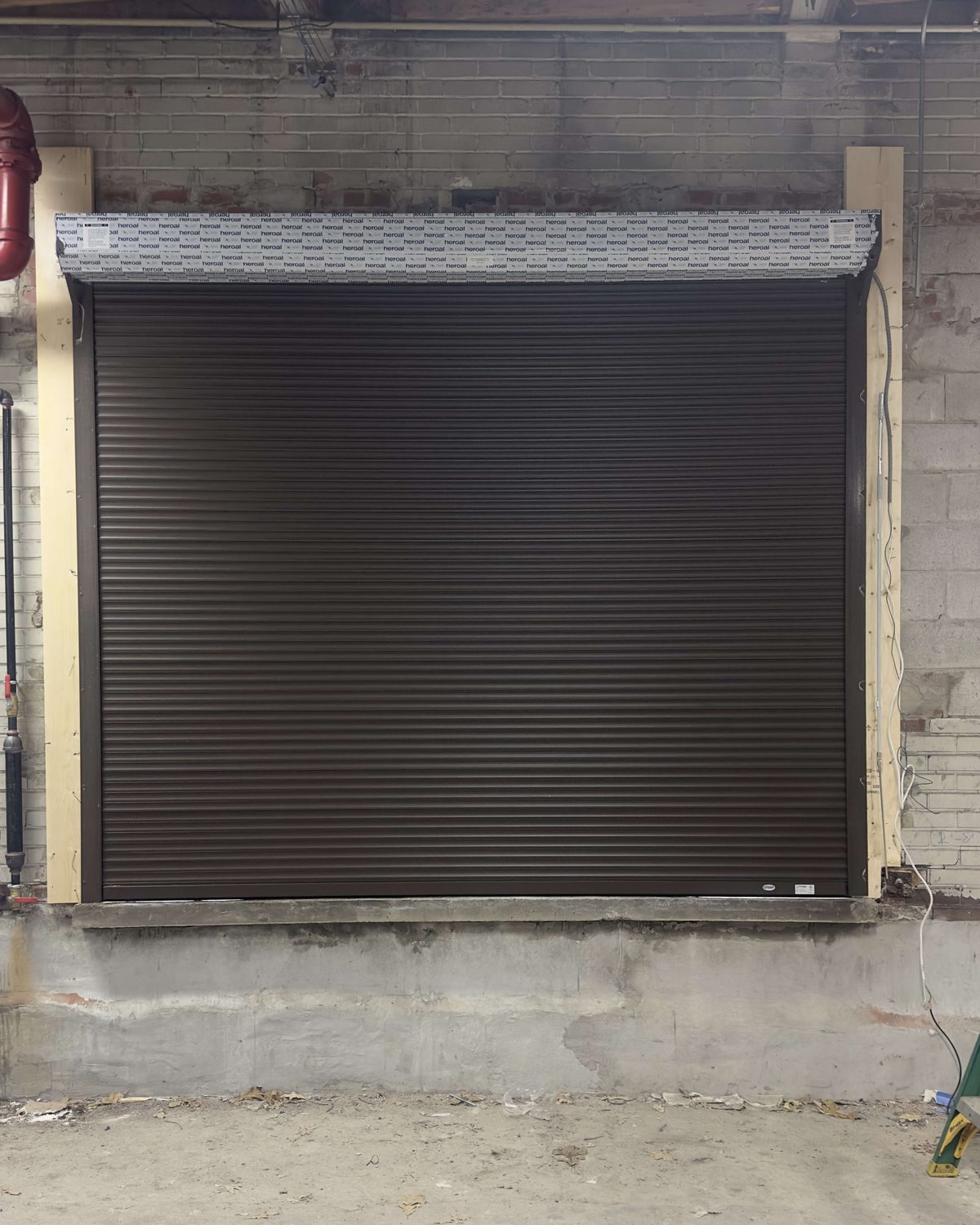
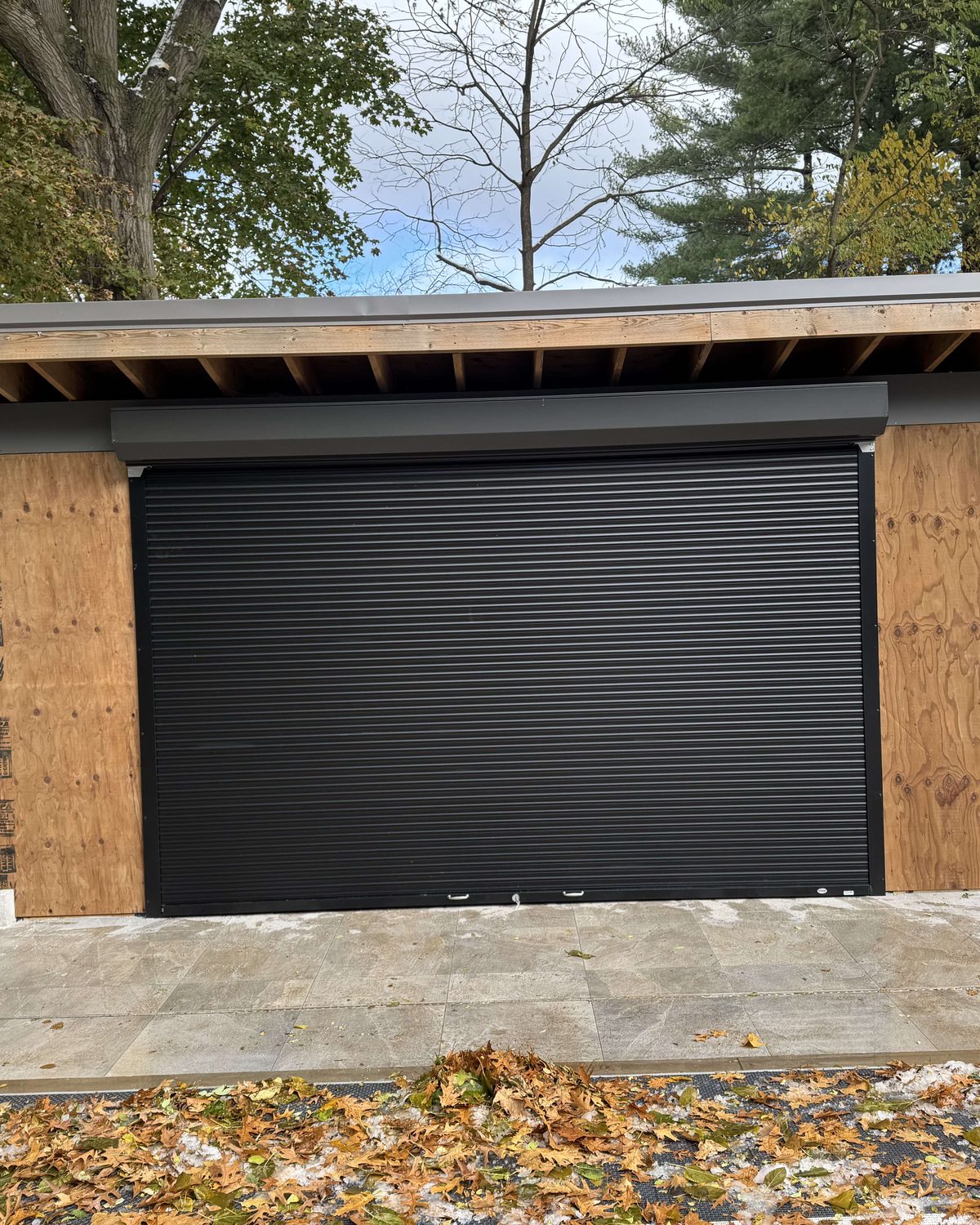
Documented rolling shutter jobs from our own project files — real clients, real openings.
Granite Shore Homes Inc
Allyant Design
Kings Restoration Group
ARJ Airparts Inc
Formtek Structures Inc
Golden Gate Contracting Inc
What our customers say
I called Canuck Door systems regarding my security gate at our retail store, I cannot recommend them enough. Quick turn around, extremely fair pricing compared to competitors. Fixed the problem, called to make sure it was done to my expectations. This is the company to use.
I had an old metal and class commercial door that was sagging. I opted for a re-hinging with new continuous hinge system. Process from quote to job done was very easy and competitive priced. Technicians were on time and did the job professionally. My door opens and closes beautifully.
Canuck Doors provided outstanding service for our new flagship store in Cambridge. Their competitive pricing and superior quality were evident in the flawless installation of our 12-foot oversized glass panels for the storefront system and a side door, a challenging task that nearly all other …
Read the full review
Rolling shutter work across Toronto & the GTA
We install and service rolling shutters right across the core GTA and out into the Southern Ontario belt, from our shop in Mississauga. Storefront work is scheduled around trading, which usually means an evening or a morning before opening.
Core GTA
- Toronto
- Mississauga
- Brampton
- Vaughan
- Markham
- Scarborough
- North York
- Etobicoke
- Richmond Hill
- Oakville
- Burlington
- Milton
Southern Ontario belt
Chains and franchise groups rarely have one location. We quote a portfolio on a single specification so every site gets the same shutter, the same key and the same spare slats — which makes the tenth store far simpler than the first. See all service areas
What a rolling shutter costs
A shutter is priced by the opening and by how hard it has to work. Nothing here comes off a shelf — every curtain is made to the measured opening. What moves the number:
- Opening width and height, and how much headroom there is above it for the coil
- Curtain type — solid slat, or perforated slat where some light and visibility are wanted
- Material and finish — galvanized, aluminum, stainless, or powder-coated to a colour
- Manual chain or crank against a tube motor, and whether it needs a key switch or remote
- Insulated slats, on an opening in the building envelope where heat loss matters
- Interior or exterior mounting, which changes the guides, the finish and often the approvals
- Whether the structure above the opening carries the barrel, or needs steel added first
- Locking — centre lock, slide bolts, or a cylinder keyed into the building's system
- Wind loading on a wide exterior opening, which sets the slat gauge and the guide depth
Headroom decides more of this than budget does. A coil has to live somewhere above the opening, and where a fit-out has already filled that space with ductwork or a bulkhead, the answer is a different product — a side-folding gate — rather than a smaller shutter.
Common questions
What is a rolling security shutter?
A curtain of interlocking metal slats that runs in a guide each side of the opening and coils onto a barrel above it. Closed, it is a continuous surface with no gaps — it blocks the view in, most of the light, and the weather as well. Open, the whole curtain is rolled into the coil and out of the way. It is the most complete closure of the four products in this silo, and the only one that also does anything about wind, rain and heat loss.
Where does a rolling shutter go, compared with a grille?
Outside, at the entrance, is where most of ours end up — a shopfront, a street-facing door, a ground-floor window. The point of a slat shutter is that it closes the opening completely, so it suits anywhere you want the premises blank and sealed when it is shut. A grille is the opposite choice: you use one where the display has to stay visible, which in practice means inside a shopping mall. If the opening faces the street and nobody needs to see in after hours, this is the product.
Solid slats or perforated?
Solid is the default and the stronger of the two: full closure, full privacy, and the only version that keeps weather out. Perforated slats are the same curtain with punched holes, so some daylight and some visibility survive — worth it where a completely blank shopfront would look derelict, or where a fire route needs the space behind to be seen into. Perforation costs a little strength and all of the weather barrier, so it is a deliberate trade rather than an upgrade.
Interior or exterior mounting?
Inside where the opening allows it. An interior shutter is out of the weather, out of reach of graffiti, does not change how the shopfront looks during trading hours, and rarely needs landlord or heritage approval for appearance. Mount outside when there is no interior room for the coil and guides, when the glass itself is what keeps getting broken, or when the opening has no glazing at all. Exterior means a corrosion-resistant finish, guides that shed grit and water, and a service interval that matches an Ontario winter.
Should it be motorized?
The honest test is how often it cycles and who cycles it. An opening closed once a day by the same person can stay on a chain hoist for years. A wide or heavy shutter, one that opens several times a day, or one operated by whoever is on shift, should be motorized — manual operation on those is where the damage comes from. A motor brings a key switch, remote or timer, and it must bring a manual override for a power failure, which is not optional on an opening people leave through.
What actually goes wrong with them?
Almost always the guides and the bottom bar, not the curtain. Something catches the bottom bar, or the shutter is forced while its lock is still thrown, and the slats come out of the guide. After that it is motors and limit switches on powered units, springs and barrels on manual ones, and impact damage from a vehicle or a pallet truck. Grit and road salt in the guides is the winter version of the same fault. Slats replace individually, so a damaged section does not condemn the curtain.
How long does it take to supply and install?
Typically 4–6 weeks to produce once the opening is measured and the finish is confirmed, then 1–2 weeks to schedule and install — around 5–8 weeks in total, depending on the size of the project. Every curtain is made to the opening, so nothing is off a shelf. Repairs run on a different clock: common slats, guides, motors and locks are stocked, and most faults are put right in a single visit. Installing one shutter is usually a day, done outside trading hours where needed.
Can you service a shutter another company installed?
Yes, and most of the shutters we look after came from somebody else. Slats, guides, bottom bars, locks, springs and motors are largely matched rather than brand-locked, which is not true of automatic door operators — so an old shutter with no name anywhere on it is usually still repairable. Where a curtain is genuinely past economical repair we will say so, and quote a replacement against the guides and structure already in the opening.
Opening to close, or a shutter that has stopped rolling?
Send the opening width and height and a photo of what sits above it. That is usually enough to say whether the coil will fit — and to quote the shutter. For a shutter that is stuck or off its guides, tell us what it is doing.