
Commercial & Industrial
Kitchen & Restaurant Traffic Doors
The door between the kitchen and the room full of customers. Double-acting, washable, quiet, and with a window low enough to see someone carrying a tray — supplied, installed and repaired for restaurants, hotels and food service across Toronto and the GTA.
Request QuoteCall 800-522-6825
Washdown-tolerant panels · fitted between services · portfolios on one specification
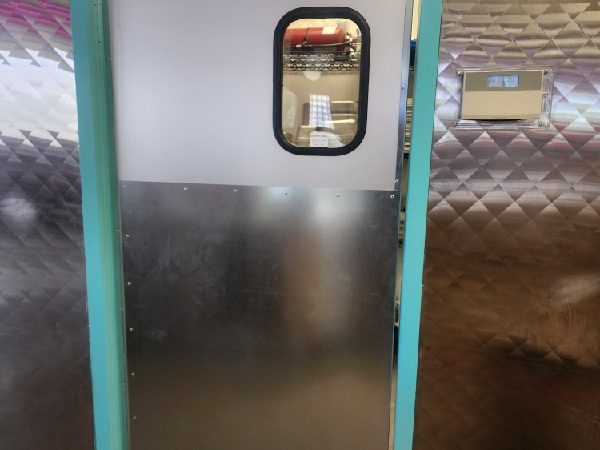
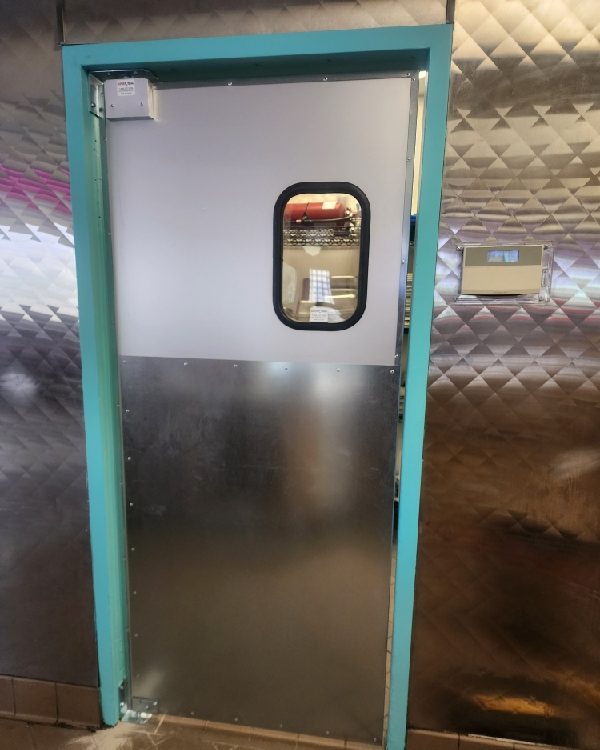
At a glance
| Typical panel thickness | ≈¾″–1″ for foot and cart traffic |
|---|---|
| Panel materials | ABS · polyethylene · laminated fibreglass · stainless-clad |
| Vision panel | Required in practice; height set by the traffic, not by the catalogue |
| Hardware | Gravity or spring-cassette double-acting hinges; no latch, no handle |
| Lead time | 4–6 weeks manufacture, 1–2 weeks to schedule installation |
| Service | Hinges, gaskets, vision glazing and kick plates replaced in place |
The door between a kitchen and a dining room is pushed open by someone holding something in both hands, several hundred times a service. That single fact specifies the whole product: no latch, no handle, swings both ways, closes itself, and has a window positioned where a person carrying a tray will actually be looking.
Canuck Door Systems supplies, installs and repairs kitchen traffic doors for restaurants, hotels, institutional kitchens and food service across the GTA. It is a smaller line for us than steel or glass, and the reason operators call us for it is usually the rest of the building — the walk-in, the fire-rated door to the corridor, the back exit, the shopfront out at the street.
What makes a kitchen door different
An industrial impact door and a kitchen traffic door are the same idea built for different abuse. The kitchen version is lighter, because the traffic is people rather than forklifts — but it has requirements the warehouse version does not.
- It has to be cleanable. Smooth, non-absorbent, no lifted laminate edges, no crevices that trap soil. This is what a health inspector looks at.
- It has to be quiet. A door that bangs on every return is a dining-room problem, not just a kitchen one.
- It is partly on display. In an open kitchen, or where the door is visible from the floor, appearance is part of the specification.
- The window is lower. Servers carry things and look down; the sight line is not the same as a warehouse driver's.
Materials, and what each one is for
| Material | Why it is used | Watch-outs |
|---|---|---|
| ABS / polyethylene | The default: smooth, washable, non-absorbent, inexpensive | Scuffs and marks on the lower half — which is what a kick plate is for |
| Laminated fibreglass | Heavy washdown areas; strong and does not corrode or absorb | Costs more; overkill for a front-of-house service opening |
| Stainless-clad lower half | Where carts and feet land; still looks acceptable after a year | Adds weight, so the hinge duty has to suit |
| Solid core with facing | Quieter and more substantial where the door is on display | Heavier; edges must be properly sealed or moisture gets in |
The one material rule worth holding to: no exposed laminate edge that can lift. That is where moisture gets in, where soil collects, and where a health inspection finding starts.
Where they go
Kitchen to dining room
The classic opening. Quiet return, low window, and a finish that suits being seen from the floor.
Kitchen to dish pit
Wet, noisy and constant. Washdown-tolerant panels and gaskets that survive steam.
Servery & pass
High frequency, short distances, and often narrow openings where door width has to be got right.
Hotel banqueting
Trolleys rather than trays, so a lower window, wider opening and heavier hinge duty.
Institutional kitchens
Schools, hospitals and care homes — cleanability and durability ahead of appearance.
Grocery prep & deli
Back-of-house to sales floor, in customer view, taking carts and cages all day.
Bar & back service
Tight openings, glassware in hand, and a door that must not bang during service.
Walk-in approach
The ambient side of a cold room — note that the cold opening itself needs an insulated door, not this one.
The opening that must not have a traffic door
If the wall between the kitchen and the rest of the building is a fire separation, a traffic door does not belong in it. A double-acting door with no latch cannot be labelled, cannot self-latch, and will not satisfy an inspection of that opening. What belongs there is a labelled assembly with the correct hardware and closer.
This trips people up because the two openings often sit within a few feet of each other — the service opening to the dining room, and the exit corridor door beside it. See fire-rated doors for the labelled side of that wall.
How long it takes
- Manufacture — 4–6 weeks once sizes and materials are confirmed; panels are made to your opening.
- Install — 1–2 weeks to schedule; a single opening is a matter of hours, done overnight or between sittings.
- Repairs — hinges, gaskets, vision glazing and kick plates are stocked items and normally fixed on one visit.
- Portfolios — a group specification once, then each site scheduled around its own service hours.
What wears out, in order
- Hinges. The usual reason a door hangs low or stops closing, and replaceable in place without touching the leaf.
- Vision-panel glazing. Scratched until it cannot be seen through, which makes it a safety item rather than a cosmetic one.
- Kick plates and edge protection. Sacrificial by design — that is what they are for.
- Gaskets and sweeps. First to go anywhere wet or steamy.
- The frame. Knocked out of square by carts over years; a leaf in a twisted frame keeps failing whatever you fit to it.
Four decades of doors for names Ontario knows — Canada’s Wonderland, Tim Hortons, Canadian Tire, the LCBO, Metrolinx, Marriott & Hilton hotels, the University of Toronto — plus thousands of businesses across the GTA. Dependable people, quality products, since 1979.
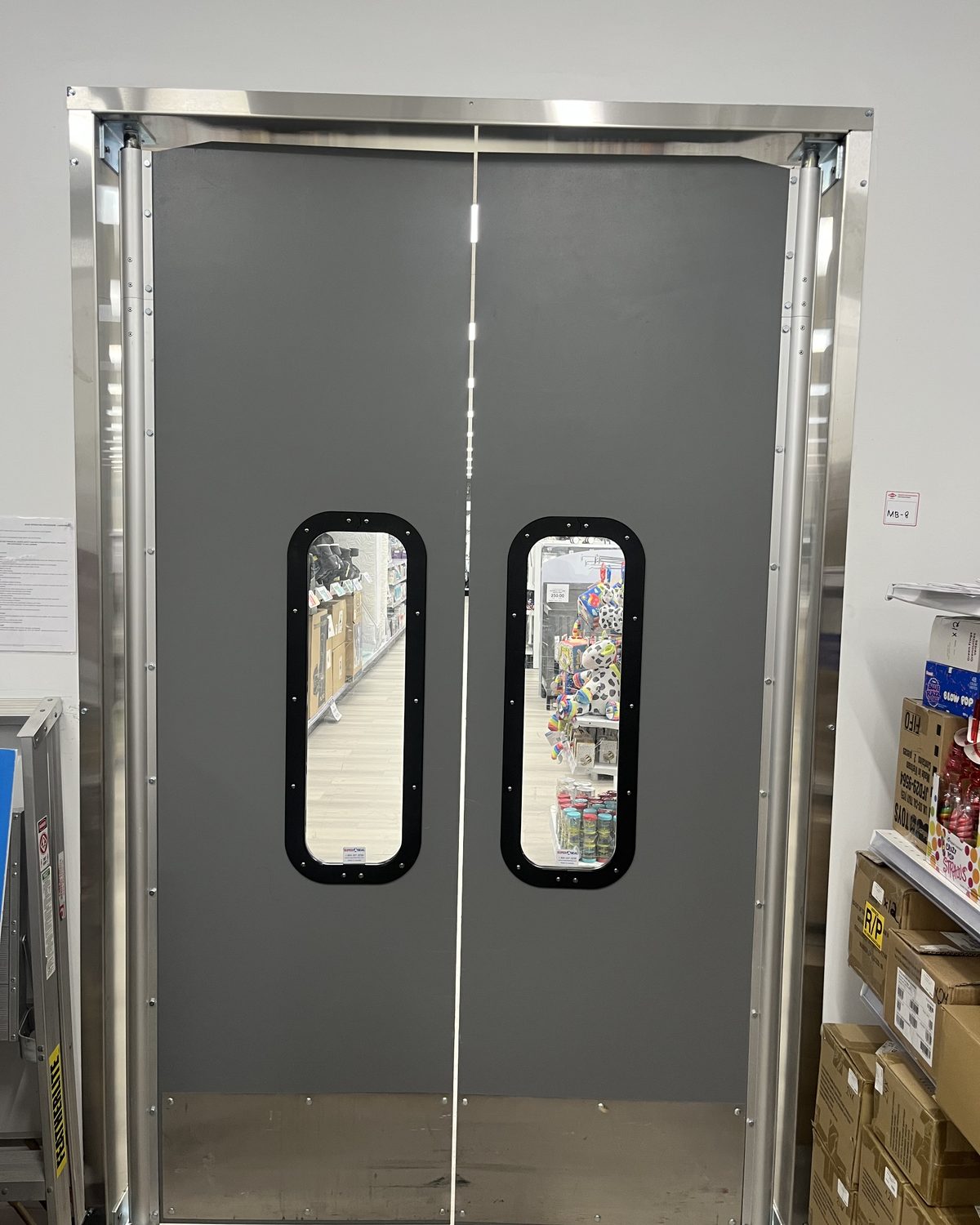
What our customers say
I called Canuck Door systems regarding my security gate at our retail store, I cannot recommend them enough. Quick turn around, extremely fair pricing compared to competitors. Fixed the problem, called to make sure it was done to my expectations. This is the company to use.
Had some doors on our clinic unit repaired. Responded and quotes very quickly. Pricing was fair. Quick turn around time was greatly appreciated.
I Needed to replace the entire glass systems around my commercial building and got recommended by a friend to this place. They have walked me through the entire process from beginning to end. They did great Job in managing to keep me updated, finishing the job on time and did more than asked. …
Read the full review
Restaurant door work across Toronto & the GTA
We supply, install and repair kitchen traffic doors right across the core GTA and out into the Southern Ontario belt, from our shop in Mississauga. Restaurant work is scheduled around service — most often overnight or between lunch and dinner.
Core GTA
- Toronto
- Mississauga
- Brampton
- Vaughan
- Markham
- Scarborough
- North York
- Etobicoke
- Richmond Hill
- Oakville
- Burlington
- Milton
Southern Ontario belt
Restaurant groups and hotel operators rarely have one kitchen. We quote portfolios on a single specification so every location gets the same door and the same spare parts, which makes the tenth site much simpler than the first. See all service areas
What kitchen traffic doors cost
These are among the least expensive doors in a restaurant, and the variables are few. What moves the number:
- Opening size, and single leaf against a pair
- Panel material — ABS or polyethylene, laminated fibreglass, or stainless-clad
- Vision panel size and position, set by who carries what through it
- Hinge type — gravity or spring cassette, and the duty rating
- Kick plate and edge protection, which is where carts and feet land
- Whether the frame is sound, needs protection, or needs replacing
- Washdown and health-inspection requirements
- Working around service hours, which usually means overnight or between sittings
A kitchen traffic door is inexpensive enough that specification matters more than price. A door that cannot be properly cleaned, or whose window is too high to see a server through, gets replaced long before it wears out.
Common questions
What is a commercial kitchen door called?
Most often a traffic door, sometimes a swinging door, a café door or a double-acting door — they all describe the same thing: a leaf with no latch and usually no handle that swings both ways and returns to closed on its own. If a supplier's catalogue says "impact door" it is the heavier industrial cousin of the same product, built for forklifts rather than for servers.
Do kitchen traffic doors have to have a window?
There is no single clause we can point to that says so in every case, but treat it as a requirement rather than an option. A door that swings both ways, is pushed without stopping and cannot be seen through is a collision waiting to happen — and in a restaurant, the person coming through is frequently carrying hot plates with both hands. Every kitchen door we supply has a vision panel, and the height is set by who uses it rather than by whatever the catalogue drawing shows.
What material should a restaurant kitchen door be?
Something that can be cleaned properly and does not absorb anything. ABS and polyethylene panels are the common choice: smooth, washable, and they do not corrode. Laminated fibreglass suits heavy washdown areas. Stainless cladding on the lower half is worth having wherever carts and feet make contact, both because it survives and because it still looks acceptable after a year. Avoid anything with a laminate edge that can lift, since that is where moisture and inspection findings both start.
Will it pass a health inspection?
The material and the condition are what get looked at, not the door type. Surfaces in a food-preparation area need to be smooth, non-absorbent and cleanable, which is exactly why ABS, polyethylene, fibreglass and stainless dominate this category. What actually fails inspections is a door in poor repair — lifted laminate, a cracked panel that traps soil, perished gaskets, a vision panel so scratched it cannot be seen through. Those are all inexpensive to put right and easy to let slide.
How high should the vision panel be?
Low enough to see a person before they arrive, which in a restaurant means low enough to see someone bent slightly forward carrying a loaded tray, and in a hotel low enough to see a trolley. There is no universal number because it depends on the traffic, but the common failure mode is a window placed at the drawing's default height in a kitchen where everyone is carrying something and looking down. Tell us who uses the opening and we will position it for them.
Our kitchen door does not close properly any more. What is wrong?
Almost always the hinges. Gravity and spring-cassette hinges wear, lose tension and let the leaf hang low or stop returning to centre — and they are replaceable in place without touching the door or the frame. The other possibility is the frame itself, knocked out of square by carts over the years; a door hung in a twisted frame will bind whatever hardware you fit. Diagnosis takes minutes on site.
Can you fit a traffic door where a normal door is now?
Usually yes, and it is a common conversion — a latched door between kitchen and floor is a nuisance for staff carrying things and gets propped open, which defeats it entirely. What we check is that the frame is sound and square, that the opening is wide enough for what passes through, and that the opening does not need a fire-rated assembly. That last one matters: if the wall is a fire separation, a traffic door is not permitted there and a <SiteLink url="/commercial/fire-rated-doors/" label="labelled fire-rated door" /> is what belongs in it.
How long do kitchen traffic doors take to arrive?
Plan on about 4–6 weeks to manufacture once sizes and materials are confirmed, then 1–2 weeks to schedule installation — so roughly 5–8 weeks in total, since panels are made to your opening. Fitting a single opening is a matter of hours and is normally done overnight or between sittings. Hinges, gaskets and vision glazing are much quicker to obtain, so a repair does not wait on any of that.
Kitchen door sagging, swinging badly, or failing inspection?
Send us the opening size and we’ll quote the right leaf. Hinges are the usual culprit on a door that no longer closes, and they replace in place.