
Residential · the honest answer
Garage Door Opener Repair or Replacement
Your garage door opener has stopped working and you are looking for someone to repair it. We will not — and we would rather say so on this page than on an invoice. On a residential opener a board, a gear kit or a motor costs a large fraction of a new unit and goes into a machine whose remaining parts are the same age. We quote a replacement instead, and most are fitted the same visit.
Call 800-522-6825Get a Replacement Quote
Installed price quoted before we come out · LiftMaster and Chamberlain carried · door contractors since 1979
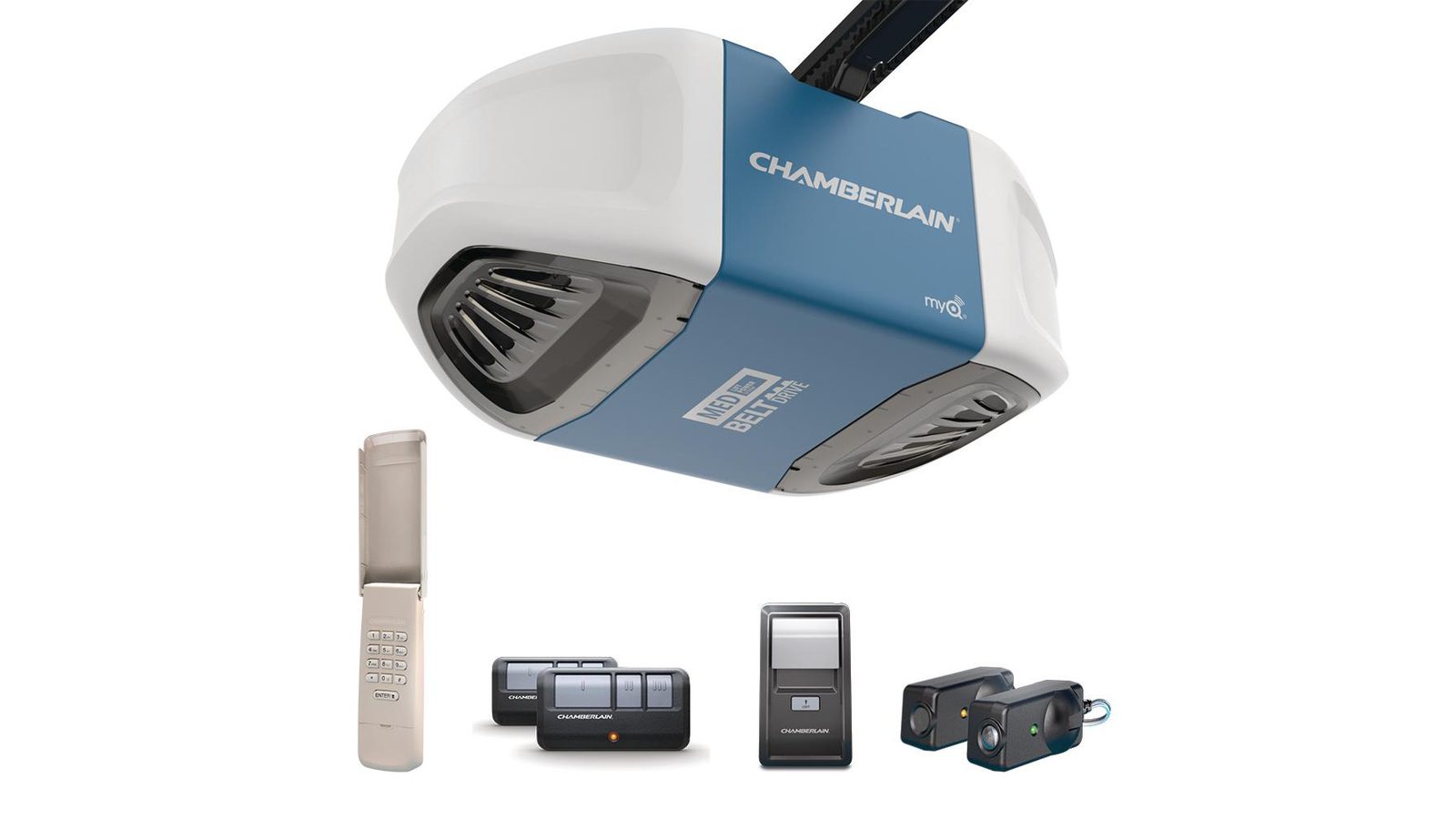
At a glance
| What we do | Supply and install replacement openers — LiftMaster and Chamberlain, belt, chain and jackshaft |
|---|---|
| What we do not do | Rebuild failed openers — logic boards, gear kits, motors and drive assemblies are not repairs we sell |
| Turnaround | Normally one visit of 1–2 hours; the LiftMaster line we fit most is stocked at the shop |
| Makes replaced | All makes, whoever installed the door or the opener — LiftMaster, Chamberlain, Craftsman, Genie, Raynor, Overhead Door and older units |
| What comes with it | New remotes, a wall console and a keypad, paired and set before we leave; the old unit removed |
| Typical opener life | 10–15 years, and it is cycles rather than years — a door out of balance shortens it sharply |
We do not repair garage door openers. If yours has failed, we will quote you a new one — and this page is the arithmetic behind that, so you can judge it for yourself rather than take our word for it.
The short version: on a residential opener, the parts that actually fail are the ones that cost real money. A logic board or a gear-and-sprocket kit, plus the visit to fit it, commonly comes to somewhere between a third and a half of a new opener installed. That money goes into a machine whose motor, rail, trolley and receiver have the same years and the same cycles on them as the part that just died, and it buys a warranty on one component instead of on the whole thing. Twelve months later the next component goes, and the money spent on the first repair has bought nothing.
There is a version of this business that sells you that repair. We would rather sell you the answer.
First: is it actually the opener?
About a third of "the opener is broken" calls turn out to be the door, and the two have completely different prices. There is a thirty-second test that tells you which one you have, and it costs nothing.
- Close the door fully. This matters — see the warning below.
- Pull the emergency release cord, the red handle hanging from the trolley on the rail. The door is now disconnected from the opener.
- Lift the door by hand. It should come up smoothly with moderate effort.
- Stop at about waist height and let go. A correctly counterbalanced door stays roughly where you left it.
Door lifts easily and holds? The door is fine. Your opener is the problem, and the rest of this page is for you.
Door is enormously heavy, will not lift, or drops? The springs have failed, not the opener. That is a repair, we do it, and it is on garage door spring & cable replacement. Fitting a new opener to a door in that state would destroy the new one the same way it destroyed the old one.
Do this test with the door closed. If a spring has broken and you pull the release on a part-open door, the door is no longer counterbalanced and it will come down under its own weight — well over 100 kg on a double. If the door is stuck open, leave it, and call us instead.
Then: the free things, before you pay anyone
Two of the most common opener call-outs cost nothing to fix and do not need us. Try them first — we will tell you the same thing on the phone.
Wipe the photo eyes
The two small sensors either side of the opening, about 150 mm off the floor. A dirty lens, a spider's web or a knocked bracket stops the door closing exactly the way a child would. Clean both, and check the little indicator lights are steady rather than flashing.
Change the remote battery
The single most common reason a door "stops working". If the wall button still operates the door, the motor is fine and you are looking at a remote, a battery or a receiver.
Check the trolley is engaged
If the motor runs and nothing moves, somebody may have pulled the release cord. Pull it again, or run the opener, and the trolley re-latches onto the rail.
Check the outlet
No lights, no click, no response from the wall button: test the outlet with something else, then the breaker and any GFCI. It is an unglamorous cause and it is free.
If none of those is it, the fault is inside the machine — and that is where our answer changes from "here is how to fix it" to "here is what a new one costs".
What actually fails, and what we do about each
| Symptom | What has failed | What we do |
|---|---|---|
| Motor runs, door does not move | Stripped drive gear, or a snapped belt or chain | Replace the opener — the gear kit and the visit approach the cost of a new unit |
| No lights, no response from anything | Logic board, or the power supply to it | Check the outlet first; if there is power, replace the opener |
| Works from the wall button, not from any remote | Failed receiver | Replace the opener; a single remote is a different fault — see remotes & keypads |
| Door reverses just before it closes | Photo eyes dirty, knocked or misaligned | Homeowner job — clean the lenses, straighten the brackets |
| Door stops short, or runs on and reverses | Travel and force settings have drifted | On a healthy opener this is an adjustment; on an old one it is a symptom of a tired gear train |
| Grinding or screeching every cycle | Usually the door, not the opener — dry rollers, loose hinges, poor balance | Garage door repair, before it takes the opener with it |
| Opener runs hot, or cuts out and restarts later | Thermal overload — the motor is working far harder than it should | Check the door's balance first; the opener is usually already damaged |
| Loud bang, then nothing lifts at all | A broken torsion spring. Nothing to do with the opener | Springs & cables — stop using the opener now |
The three cases where we would not sell you a new opener
We are not trying to turn every call into a sale, and there are three answers that are not "buy one from us".
- The opener is still under warranty. Both lines we fit are made by the Chamberlain Group and carry real warranties — years on the motor on the better models. If yours is inside it, the manufacturer owes you the part, not us. We will tell you where to look on the label.
- It is genuinely new and one accessory failed. A keypad, a wall console, a remote or a photo-eye pair on an opener a couple of years old is a part, not a machine. Those are on remotes & keypads.
- The door is the real fault. Very common, and replacing the opener would be spending money on the wrong half of the problem. We would rather do the spring job.
What a replacement involves
- The door gets checked first. Balance, springs, cables, rollers, and whether the top section will take the bracket. Ten minutes, and it is what stops the new opener from failing early.
- The old unit comes down — head, rail, brackets, wall button — and leaves with us.
- The new opener goes up, squared to the door and fixed to the header and the ceiling structure.
- Photo eyes set at the correct height either side of the opening, and wired.
- Travel and force set, and the safety reversal tested against an obstruction. If the door does not reverse, the job is not finished.
- New remotes, wall console and keypad paired, and the keypad code set to something you choose.
Normally one visit, one to two hours. The exceptions are a conversion from a rail opener to a jackshaft, and a first-time installation in a garage with no wiring — that one occasionally needs an electrician for the outlet, and we will say so when we quote rather than on the day. If the door is being replaced as well, that is the longer answer: a door is made to your opening, so allow 4–6 weeks to produce it and 1–2 weeks to schedule the install, with the opener fitted on the same visit.
What we replace it with
Both lines we fit come from the Chamberlain Group, and which one goes in is decided by the garage rather than by the badge.
- Chain drive — the value option, and the loudest. Fine on a detached garage or where nothing sleeps above it.
- Belt drive — the same machine with a reinforced belt instead of a chain. Noticeably quieter, and the right answer when there is a bedroom over the garage.
- Jackshaft — mounts on the wall beside the torsion shaft and turns it directly, leaving the ceiling clear. The only option when there is no headroom for a rail, and the tidiest installation there is.
Model detail, warranties and what actually differs between the two badges: LiftMaster openers and Chamberlain openers. The full belt-versus-chain-versus-jackshaft comparison and the horsepower question are on garage door openers.
The same crews maintain doors and operators for names Ontario knows — Canada’s Wonderland, Tim Hortons, Canadian Tire, the LCBO, Metrolinx, Marriott & Hilton hotels, the University of Toronto — plus warehouses, dealerships, schools and several thousand houses across the GTA. Dependable people, quality products, since 1979.
What our customers say
After having Canuck Door Systems replace the springs in our garage door opening system earlier this year, we continued to have problems with the operation of the door. After an attempt to fix this did not last, Stan ascertained that we needed a new motor, which Sergei installed. …
Read the full review
Almost 16 years ago, Canuck installed a new door on our garage along with an opener. They did a great job and it still looks good as new and until a few days ago, it worked flawlessly too. …
Read the full review
Great service! Technicians came on time. They were very friendly, explained all the options and installation took less than an hour. The new opener works great so far! I would definitely recommend this company.
Opener replacement across Toronto & the GTA
Crews dispatch from our shop at 1645 Bonhill Road in Mississauga, where the LiftMaster line we fit most is stocked — which is what makes a same-visit replacement possible rather than an order and a return trip.
Core GTA
- Toronto
- Mississauga
- Brampton
- Vaughan
- Markham
- Scarborough
- North York
- Etobicoke
- Richmond Hill
- Oakville
- Burlington
- Milton
Southern Ontario belt
An opener swap is an hour or two with the unit on the truck, so it travels about as well as anything we do. What distance changes is the attendance cost, and we quote that on the phone before anyone sets off. See all service areas
What a replacement costs, against what the repair would have
The comparison people actually want, and the reason our answer is what it is:
- A logic board or a gear kit on a residential opener is typically a third to a half of a new unit installed, once the part and the visit are counted
- The rest of the machine is not renewed by it — the motor, the rail, the trolley and the receiver are all the same age as the part that failed
- A repaired opener carries a warranty on that one part; a new one is warrantied as a whole assembly, and the good lines run to years on the motor
- Drive type on the replacement — chain is the value option, belt is quieter, jackshaft is the answer where there is no headroom for a rail
- The horsepower the door's weight needs, which is set by the door, not the budget
- Whether the rail, brackets and wiring can be reused or the whole assembly changes
- Whether the door is sound — a door out of balance is what killed the last opener, and it will do the same to the next one
We give you the attendance cost on the phone before a truck leaves, and the installed price for the new opener once the technician has seen the door and the headroom. There is no diagnosis fee stacked on top of a repair we were never going to sell you.
Common questions
Are garage door openers worth repairing?
Usually not, and we say that as the company you would be paying to do it. Three things stack against a repair. The failed part is expensive relative to the whole — a logic board or a gear kit plus the visit commonly lands at a third to a half of a new opener installed. It goes into a machine whose motor, rail, trolley and receiver have exactly the same years and cycles on them, so nothing else is any newer afterwards. And you get a warranty on one component rather than on the machine. The exceptions are genuinely small and we will tell you when you have one: an opener under warranty, or a nearly new unit where a single accessory has failed.
What is the average cost of repairing a garage door opener?
Companies that do it typically charge the call-out plus the part, and the part is what moves it — a photo eye or a remote receiver is at one end, a logic board or a gear-and-sprocket kit at the other, and a motor is effectively the price of the opener. Which is the point: by the time you are replacing the board or the gears, the arithmetic has already tipped. We do not quote opener repairs, so the number we give you is the installed price of the replacement, with the old unit taken away.
How do I know whether it is the opener or the door?
Pull the emergency release cord — the red handle hanging from the trolley — with the door closed, and lift the door by hand. If it lifts smoothly and stays put around waist height, the door is fine and the opener is your problem. If it is enormously heavy, will not lift, or slams back down, the door has lost its counterbalance and a spring or cable has failed. That is a repair, we do it, and putting a new opener on a door in that state would destroy the new one too. Do not do this test on a door that is already part-open — if a spring is broken, releasing it lets the door fall.
What are the common garage door opener problems?
In rough order: a dead or misaligned photo eye, which stops the door closing and is usually a dirty lens or a knocked bracket; a flat remote battery; a stripped drive gear, which sounds like the motor running while nothing moves; a snapped belt or chain; travel and force settings that have drifted so the door stops short or reverses off the floor; and a failed logic board, which is often no lights and no response at all. The first two are homeowner jobs and cost nothing — always check them first.
Why is my garage door not responding to the remote or the keypad?
Start with the inexpensive causes in this order. Flat battery in the remote — most common by a distance. Then whether the wall button still works: if it does, the problem is the remote or the receiver, not the opener's motor. A keypad that has stopped responding often just needs its code re-entered after a battery change. If nothing at all responds, including the wall button and the lights, check the outlet and the breaker before anything else. When the wall button works and no remote will pair, the receiver has failed, and on an opener of any age that is a replacement conversation.
Can you just replace the circuit board?
We do not, and we would rather explain why than take the job. Boards for older openers are increasingly hard to source, they are frequently a significant fraction of a new unit, and on a fifteen-year-old machine the board is rarely the last thing to go — the gears and the motor are the same age. Where the opener is genuinely young and the board is the only fault, the manufacturer's warranty is usually the right route and we will point you at it rather than at our invoice.
How long does a garage door opener last?
Ten to fifteen years for a well-fitted unit on a well-maintained door, and it is really cycles rather than years — a garage that is the family's main entrance can wear an opener out in well under ten. The single biggest factor is the door: every cycle where the springs are not carrying the weight properly, the opener is, and the gears pay for it. An opener that has failed at six or seven years is almost always telling you about the counterbalance rather than about itself.
Do you replace openers you did not install?
Yes, and that is nearly all of this work. It makes no difference who supplied the door or the old opener — LiftMaster, Chamberlain, Craftsman, Genie, Raynor, Overhead Door or something with no badge left on it. An opener mounts to the top section and the header rather than to anything brand-specific, so what actually decides the job is the door's weight, the headroom and whether the top section is solid enough to take the bracket.
Can you replace it the same day?
Usually, yes. The LiftMaster line we fit most is stocked at our shop in Mississauga and rides on the trucks, so a straight replacement is normally one visit of one to two hours, including setting the travel and force, testing the safety reversal, and pairing the new remotes and keypad. Two things take longer: a conversion from a rail opener to a jackshaft, and a first-time installation in a garage with no existing wiring, which occasionally needs an electrician for the outlet.
What happens to the old opener?
It comes down and goes with us — the head, the rail, the brackets and the old wall button. That is in the installed price rather than an extra line at the end, and it is worth asking anyone quoting you the same question, because a motor head left leaning against your garage wall is a surprisingly common end to this job.
Opener dead? Tell us the door, not the model number.
Single or double, insulated or not, and roughly how much space there is between the top of the door and the ceiling. That is enough to quote the right opener — and most replacements are fitted on the same visit.