
Guides & FAQ · Hollow metal & steel doors
What Is a Hollow Metal Door? Gauges, Frames, Finishes: Questions Answered
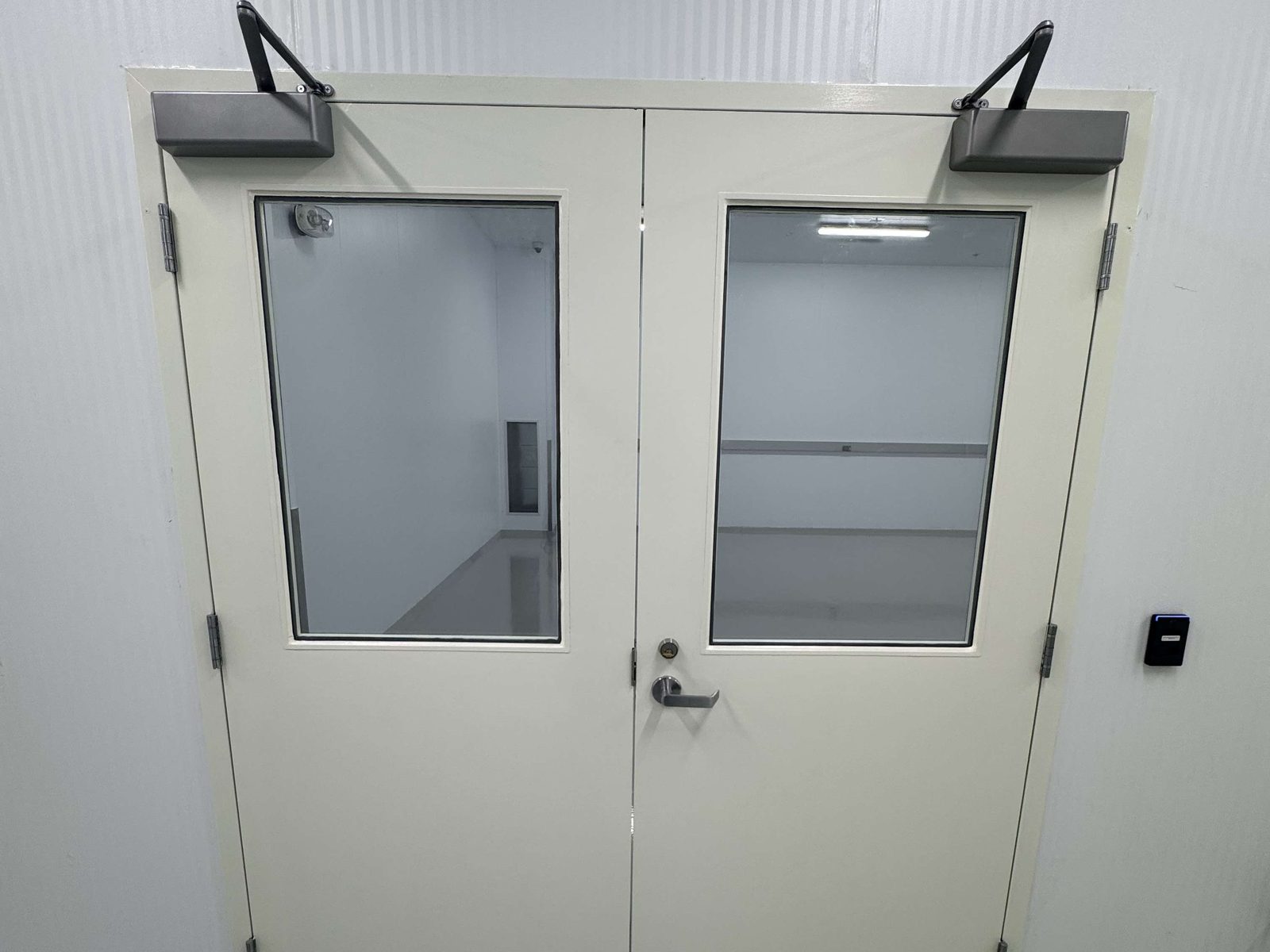
A hollow metal door is a commercial steel door: two formed steel face sheets joined at the edges around a core, hung in a steel frame and prepped at the factory for its hardware. It is rarely hollow. The cavity holds honeycomb, foam, mineral board or steel stiffeners, chosen for what the opening has to do. Below are the questions facility managers and contractors ask us about them most, answered briefly.
These answers come from the doors we specify, install and repair across the GTA every week, and from the Steel Door Institute standards they are built to. Where a question needs more room, it links to the guide or product page that covers it in full.
Four decades of doors for names Ontario knows — Canada’s Wonderland, Tim Hortons, Canadian Tire, the LCBO, Metrolinx, Marriott & Hilton hotels, the University of Toronto — plus thousands of businesses across the GTA. Dependable people, quality products, since 1979.
What a hollow metal door is
The name describes how the door is built, not what is inside it. Most of the confusion starts there.
What is a hollow metal door?
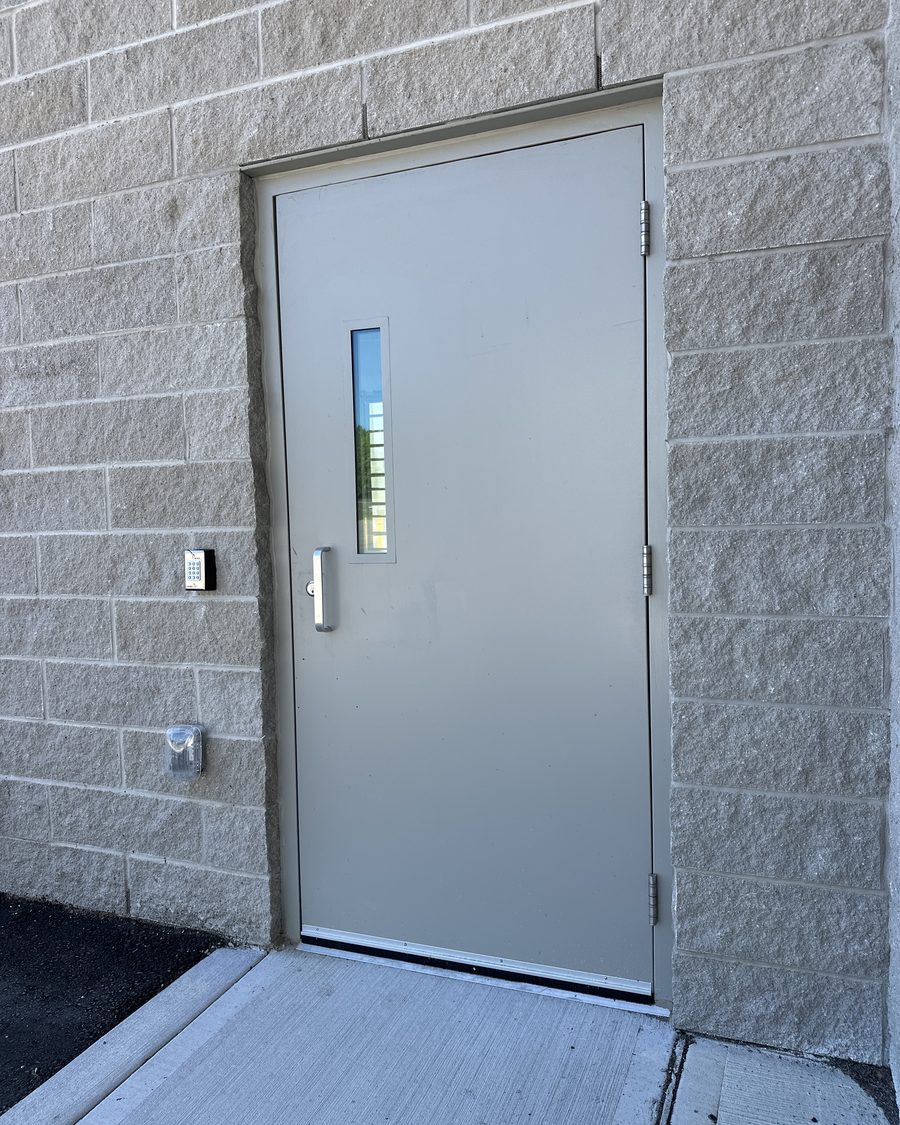
The standard commercial steel door. Two steel face sheets are formed and joined along the edges, the cavity between them is filled with a core, and the leaf is hung in a steel frame. Hinge, lock and closer reinforcements are built in before it leaves the plant. You will find them at rear and service entrances, stairwells, mechanical rooms and warehouse man doors across Ontario.
Hollow metal and commercial steel doors we supply and install
Why is it called "hollow metal" if it isn't hollow?
It is a trade name that stuck. The door is built as a steel shell around a cavity, and the industry named the product after the shell. What goes in the cavity is a separate specification: honeycomb for light interior doors, polystyrene or polyurethane for insulated exterior doors, mineral board for fire-rated doors, and steel stiffeners for heavy-duty ones.
What is the difference between a hollow metal door and a steel door?
In commercial work, none: hollow metal is what the trade calls a commercial steel door. The useful distinction is against a residential steel entry door, which is a pre-hung insulated slab in a wood or composite frame, sold as a finished unit. It is not built for commercial hardware, constant traffic or a fire label.
What is the difference between hollow metal and stainless steel doors?
The metal and its finish. A standard hollow metal door is carbon steel, primed or galvannealed, and relies on paint to resist rust. A stainless door is built the same way from Type 304 or 316 stainless, which needs no paint. It costs more, so it goes where washdown, chemicals or salt would defeat paint: food plants, labs, pools and coastal or de-iced entrances.
Hollow metal or aluminum: which is better for a commercial door?
They do different jobs. Aluminum doors are narrow extruded frames around large panes of glass, built for storefronts and lobbies where people need to see in. Hollow metal is solid, heavier, takes impacts better, and can carry a fire rating. Put glass and aluminum at the front of the building and steel at every opening that has to take abuse, weather or a fire separation.
Are hollow metal doors welded?
The frames often are, and the doors can be. A welded frame arrives as one rigid unit; a knock-down frame assembles in the opening. On the leaf, the vertical edges are either seamless, with the seam welded, filled and ground smooth, or have a visible lock seam where the face sheets interlock. Seamless edges cost more and look cleaner, and they are common on doors in finished areas.
Gauge, thickness, cores and sizes
Four numbers describe most hollow metal doors. They are worth settling before the order goes in, because none of them can be changed afterwards.
What gauge are hollow metal doors?
The ANSI/SDI A250.8 standard sorts them into four levels by face-sheet gauge: Level 1 uses 20 gauge, Level 2 18 gauge, Level 3 16 gauge and Level 4 14 gauge. The lower the number, the thicker the steel. 18 gauge is the most common commercial door; 16 and 14 gauge go where carts, forklifts or abuse are a daily fact. The frame is usually a gauge heavier than the door it carries.
How thick is a commercial hollow metal door?
1¾ inches (about 45 mm), whether the core is honeycomb, foam or mineral board. That is the commercial standard, and the hardware is made for it. Face sheets are thin by comparison: 18 gauge is roughly 1.2 mm and 16 gauge roughly 1.5 mm. Thinner 1⅜-inch steel doors exist, but they are a light-duty and residential product.
Can hollow metal doors be insulated?
Yes, and it is decided when the door is made. A polystyrene or polyurethane core gives an insulated leaf; polyurethane insulates best of the standard cores. Insulating the leaf is only half the job, though. A steel frame without a thermal break still conducts cold straight through the wall, and a worn seal lets it in around the edges. For a heated space, specify the core, the frame and the seals together.
Can you add insulation to an existing steel door?
Not in any practical way: the core is sealed inside the leaf at the factory. On a cold, drafty door, check the weatherstripping and the sweep first, which is where most of the heat goes. If the leaf itself is the problem, the answer is a new door with an insulated core, often in the existing frame.
What sizes do hollow metal doors come in?
The standard single leaf is 3'0" by 7'0". Widths run from 2'0" to 4'0" and heights are usually 6'8", 7'0" or 8'0". Pairs are two standard leaves, so a 6'0" by 7'0" pair is two 3'0" doors. Anything off that grid is made to order, which is usually a longer lead time rather than a problem.
How much gap should there be under a hollow metal door?
It depends on the floor and the threshold, so it is set when the frame is ordered. Around the other three edges, steel doors and frames are made to a nominal 1/8-inch clearance. Fire doors are the strict case: NFPA 80 caps the gap under a fire door at 3/4 inch, so a leaf cannot simply be cut down to clear new flooring.
Frames
The frame fixes to the building, carries the hinges and the strike, and takes the knocks. It decides more about how the opening behaves than the door does.
What is a hollow metal door frame?
A frame formed from sheet steel, usually 16 or 14 gauge, with the hinge, strike and closer reinforcements welded inside it at the factory. It is the standard commercial frame for steel doors and wood doors alike. It either arrives welded as one piece or knocked down, as a head and two jambs that are joined in the opening.
What is the throat of a metal door frame?
The inside dimension between the frame's two faces, where the wall sits. A frame is ordered with a throat to match the finished wall thickness, whether block, brick or drywall on studs. A frame ordered to the wrong throat either will not fit over the wall or leaves a gap that cannot be trimmed neatly. That is why we measure the wall, not the drawing.
How is a steel door installed in a block or concrete wall?
In new masonry, a welded frame is set and braced first, the wall is built up around it with masonry anchors tying the jambs into the block, and the jambs are usually grouted solid. In an existing concrete or block opening, an existing-opening frame goes in instead. It is anchored through the jambs into the wall with expansion anchors, so nothing has to be demolished.
Can you replace a steel door frame without tearing out the wall?
Usually. The old frame is cut out, and an existing-opening frame is fitted and anchored into the finished opening. It is the normal way we change a frame in an occupied building. Most of the time it is not needed at all: a frame that is square and solidly anchored can take a new leaf made to its existing hinge and strike locations.
What happens to a metal door frame in cold weather?
Steel conducts cold, so on an exterior opening the inside face of an ordinary frame gets almost as cold as the outside. Warm indoor air condenses on it, and in a hard frost the condensation freezes and the door can stick shut. A thermally broken frame, with the inner and outer halves separated by an insulating break, stops that. It is the specification for exterior doors into heated space.
Painting and finishes
Paint is what protects most steel doors from rust, so the finish is a maintenance item, not a cosmetic one.
Do hollow metal doors come painted?
Usually they come primed, not finished. The factory primer protects the steel in transit and gives the paint something to bond to, but it is not meant to be the final coat. A primed door left unpainted at an exterior opening will rust, starting along the bottom rail. Plan for a finish coat on site, or order the door with a factory finish.
What paint do you use on a hollow metal door?
A good-quality enamel made for metal and compatible with the primer underneath, usually acrylic or alkyd. Paint that is incompatible with the primer can wrinkle or lift. Any spot sanded or chipped to bare steel needs a metal primer before the topcoat. Paint suitable for exterior use goes on outside faces. Our maintenance guide covers the full preparation sequence.
Can you paint a hollow metal door in place?
Yes, and most are. Remove or mask the hardware, sand and clean the faces and edges, then roll the flat faces with a short-nap or foam roller and brush the edges and the frame stops. Paint in mild, dry weather and prop the door so it can dry without closing on fresh paint. On a fire door, mask the rating labels on the edge of the door and on the frame first.
What is galvannealed steel, and when does a door need it?
Steel with a zinc-iron coating bonded to it before the door is formed. Paint grips it well, and a scratch does not let rust spread underneath. The Steel Door Institute recommends galvannealed steel for exterior doors and frames. We specify it on every exterior opening, because a salted Ontario winter finds any weakness in plain primed steel within a season or two.
Repair and replacement
Hollow metal is worth repairing because nearly every part of the opening can be replaced or rebuilt on its own.
Can a hollow metal door be repaired?
In most cases. We replace hinges, closers and latches, realign strikes, straighten and re-anchor frames, and cut out rusted bottom sections of frames and weld in new ones. Replacement is the answer when the leaf has rusted through or been badly bent, or when the frame cannot be brought back to square.
How do you fix a warped steel door?
First check the frame. A frame knocked out of plumb makes a straight door look warped, and no adjustment to the door will fix it. If the frame is true and one corner of the door still stands proud, the leaf can often be sprung back. A door that binds only on hot, sunny afternoons is usually thermal bow, and a lighter colour on the sunny face helps.
Can you repair the rusted bottom of a steel door?
Sometimes. A light patch of rust can be cleaned back to sound metal, primed and repainted. Where the bottom rail or the face sheet has rusted through, the door usually needs replacing. Rust at the base of the frame is different: frames are routinely repaired by cutting out the rusted section and welding in a new one. Door sweeps and a proper threshold keep meltwater from starting the problem again.
Can a hole be drilled in a hollow metal door for new hardware?
On an ordinary door, yes, with care, but the reinforcements for locks and closers are built into the leaf when it is made, so hardware fitted afterwards may have nothing solid to fix to. On a fire-rated door, generally not: unapproved field modifications void the label. That is why the hardware is settled before the door is ordered.
Cost and lead times
The number for your opening comes from a site measure. These are the things that set it.
How much does a hollow metal door cost?
It is priced per opening, as an assembly: the leaf, the frame, the hardware and the installation. What moves the number is the gauge and core, whether the existing frame stays, any fire rating, galvannealed or stainless steel, glass and louvres, and the hardware. Closers, exit devices and access control often cost more than the door itself.
Are hollow metal doors less expensive than wood?
A plain hollow metal door usually costs less than a solid-core commercial wood door of the same size. It also stands up better at a hard-used or exterior opening. Wood earns its price where appearance matters, such as lobbies, offices and suites. Most commercial wood doors still hang in hollow metal frames.
How long does it take to get a hollow metal door?
Typically 4–6 weeks to produce a door and frame once the shop drawings are approved, then 1–2 weeks to schedule and install. Stock sizes in a common gauge and prep can be faster. Fire-rated, galvannealed, stainless and custom-size openings take the longest. Repairs are usually scheduled within days.
In-depth guides
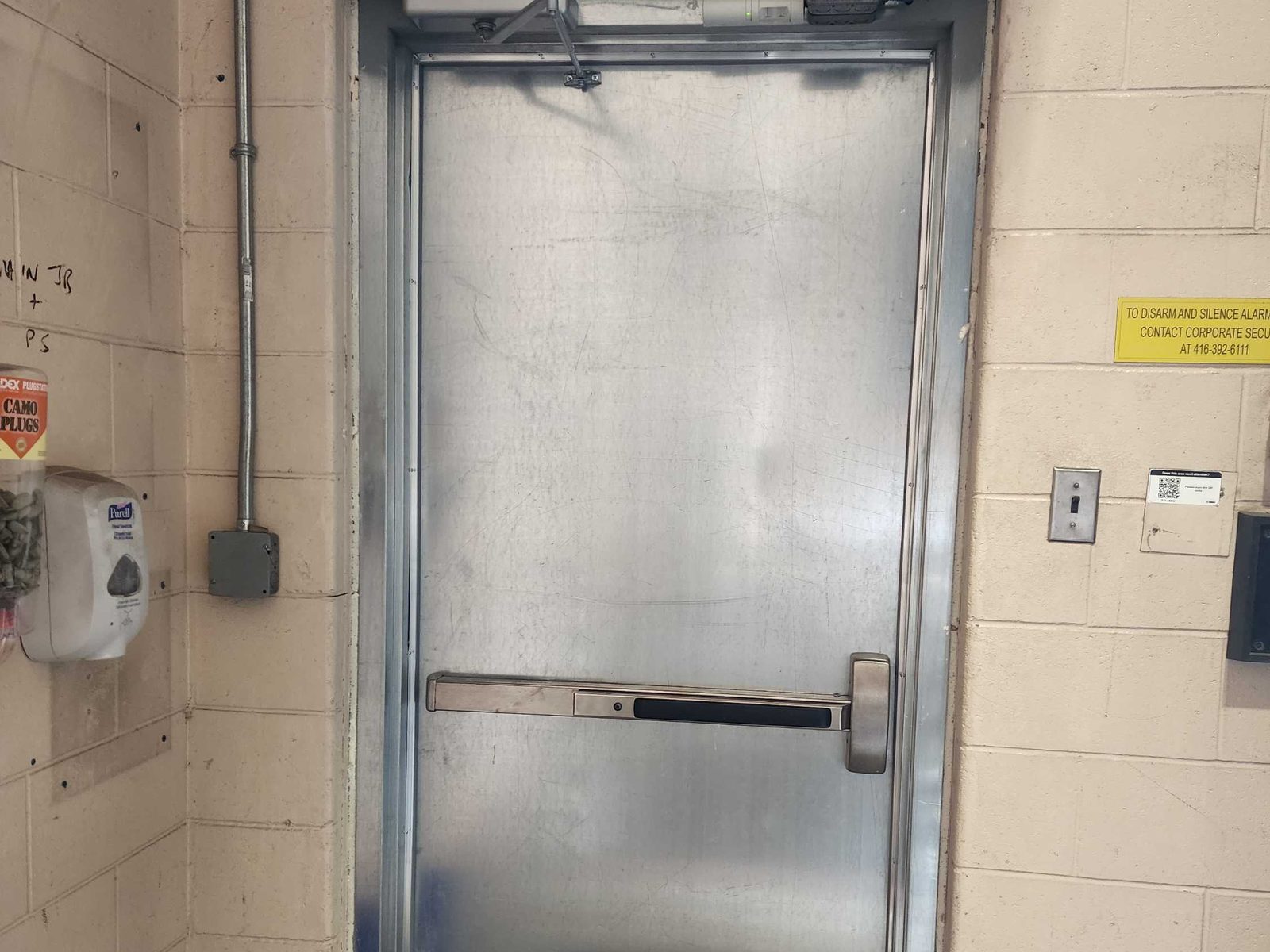
How to Maintain, Adjust and Paint a Hollow Metal Door
The checklist for keeping steel doors and frames working — hinges, closers, latching, seals — plus how to adjust a binding door and how to repaint one properly.
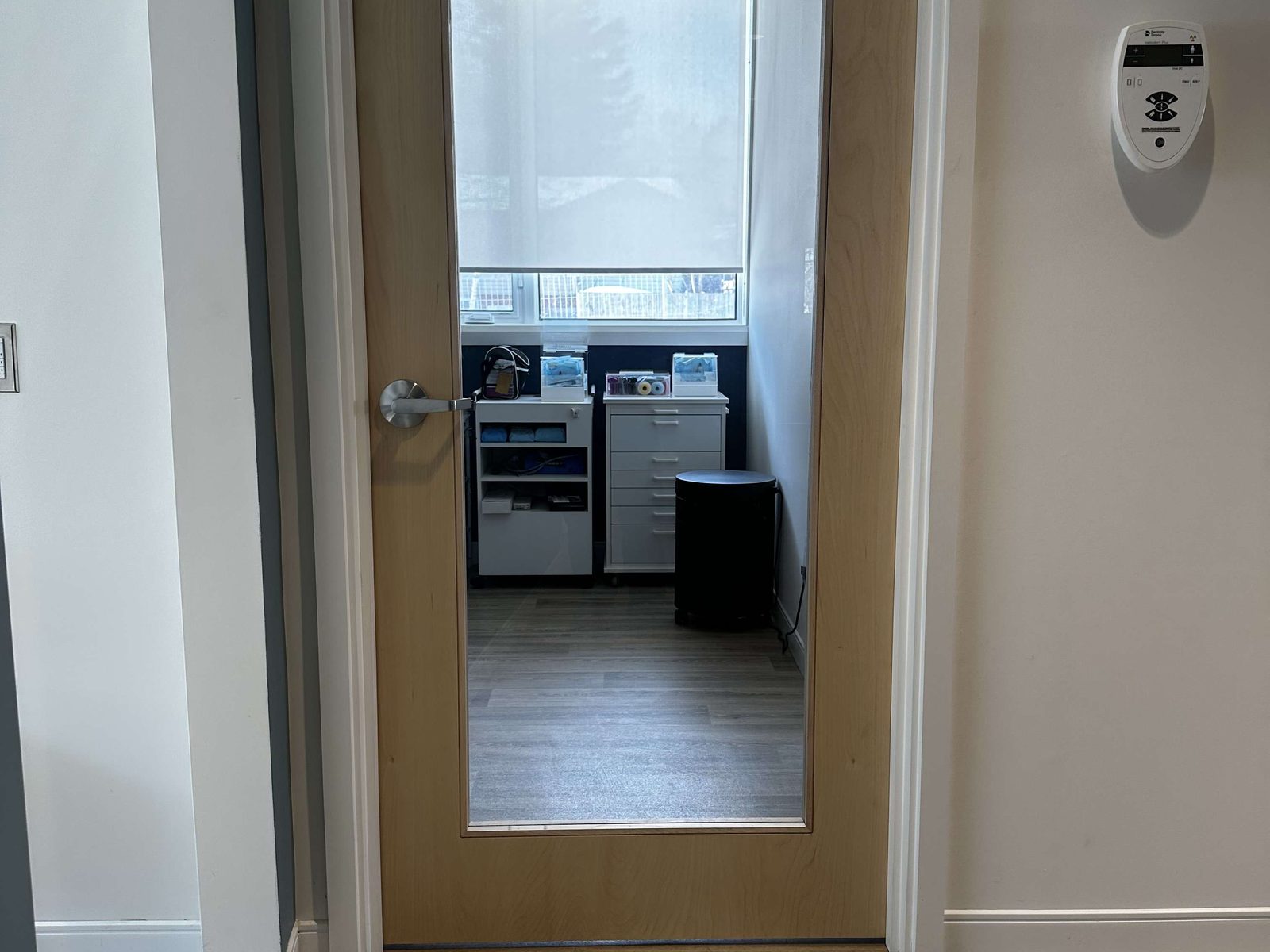
Solid Core vs Hollow Core Doors — and Why Commercial Buildings Use Solid
What is inside each type, what the difference means for sound, strength and fire ratings, and how commercial wood doors — hotel room doors included — are actually specified.
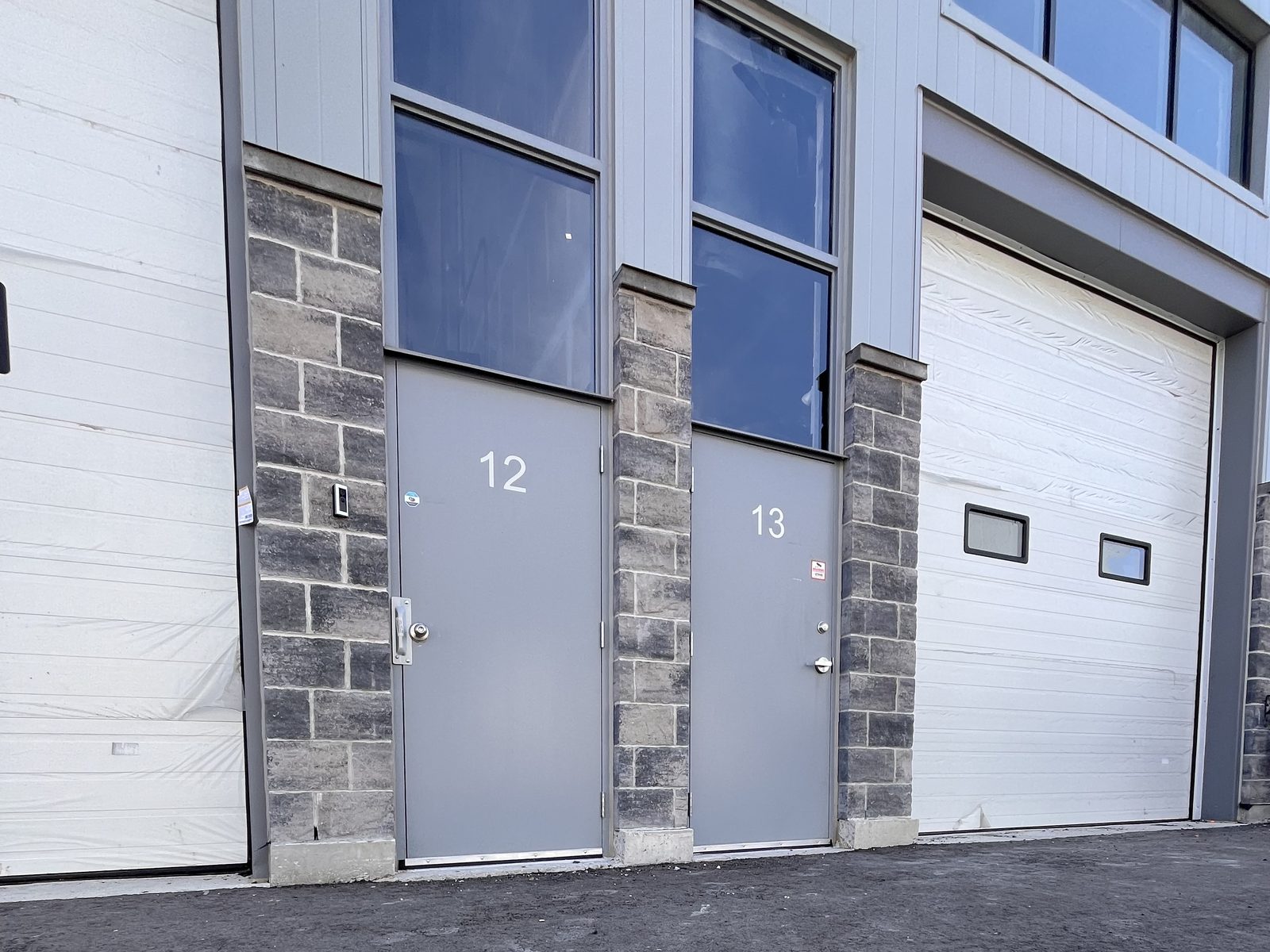
How to Choose Commercial Doors for an Ontario Building
Door type by opening, material, fire rating, swing, accessibility, hardware and lead time — and exactly what to send so a quote comes back right the first time.
Get steel doors or frames replaced
A steel door that drags, rusts or won't lock?
Send us a photo of the opening, or a list of the doors. We will tell you which can be repaired, which need a new leaf in the old frame, and what it costs.