
Guides & FAQ · Commercial door hardware
Commercial Door Closers, Exit Devices & Astragals: Questions Answered
To adjust a commercial door closer, find the valve screws on the closer body, usually marked S or 1 for sweep speed and L or 2 for latch speed, and turn them in eighth-turn steps: clockwise to slow the door, anticlockwise to speed it up. If the door slams or will not latch after that, the problem is usually the closer's power, the hinges or the strike. Below are the questions facility managers and contractors ask us most about closers, exit devices, locks, astragals, seals and hinges, answered briefly.
Every answer below comes from the doors we fit and service, the ANSI/BHMA standards commercial hardware is tested to, and the Ontario Building Code. Where an answer needs more room, it links to the guide or service page that covers it in full.
Four decades of commercial door hardware for names Ontario knows — Canada’s Wonderland, Tim Hortons, Canadian Tire, the LCBO, Metrolinx, Marriott & Hilton hotels, the University of Toronto — plus thousands of businesses across the GTA. Dependable people, quality products, since 1979.
Adjusting a commercial door closer
A hydraulic closer has a spring that closes the door and oil valves that control how fast. Most closer complaints are a valve setting, not a broken closer.
How do you adjust a commercial door closer?
Open the door fully and time how it closes, then work on the valve screws on the closer body. Sweep speed controls the main swing, from fully open to roughly the last 10 to 15 degrees. Latch speed controls that last stretch, where the latch has to catch the strike. Turn in small steps, an eighth of a turn at a time, and test between each. Adjust sweep first, then latch. Never back a valve screw far out: past a certain point it lets the oil out, and the closer is finished.
What do the 1 and 2, or S and L, on a door closer mean?
They label the valves. On most closers S or 1 is sweep speed and L or 2 is latch speed, and BC is backcheck, the cushion that stops the door being flung open into a wall. Some closers also have a delayed-action valve that holds the door open briefly before it starts to close. Numbering is not universal across makers, so check the closer's instruction sheet or the markings cast into the body before turning anything.
Which way do you turn a door closer screw to slow it down?
Clockwise slows it, anticlockwise speeds it up, on almost every hydraulic closer. Clockwise closes the valve and restricts the oil. The screws are sensitive, so a quarter turn can change the closing time by several seconds. A door that suddenly needs large adjustments is usually telling you something else is wrong.
How do you fix a door closer that slams?
First slow the latch speed a little, since the slam is usually the last few degrees. If the whole swing is fast, slow the sweep as well. If the valves make no difference, or there is oil on the door, the floor or the closer body, the seals inside have failed and the closer needs replacing. A closer that slams only in summer, or crawls only in winter, is reacting to temperature, which is covered below.
Why won't my commercial door close all the way?
Four causes cover most cases. The latch speed is set too slow, or the closer's spring power is too low for the door. Air pressure is holding it open: on entrances and stairwells, building pressure and wind can beat a closer that is sized for a still day. Or something is fighting it, such as new weatherstripping that is too tight, a sagging hinge, or a strike that no longer lines up with the latch. On a fire door this is a deficiency, not an annoyance.
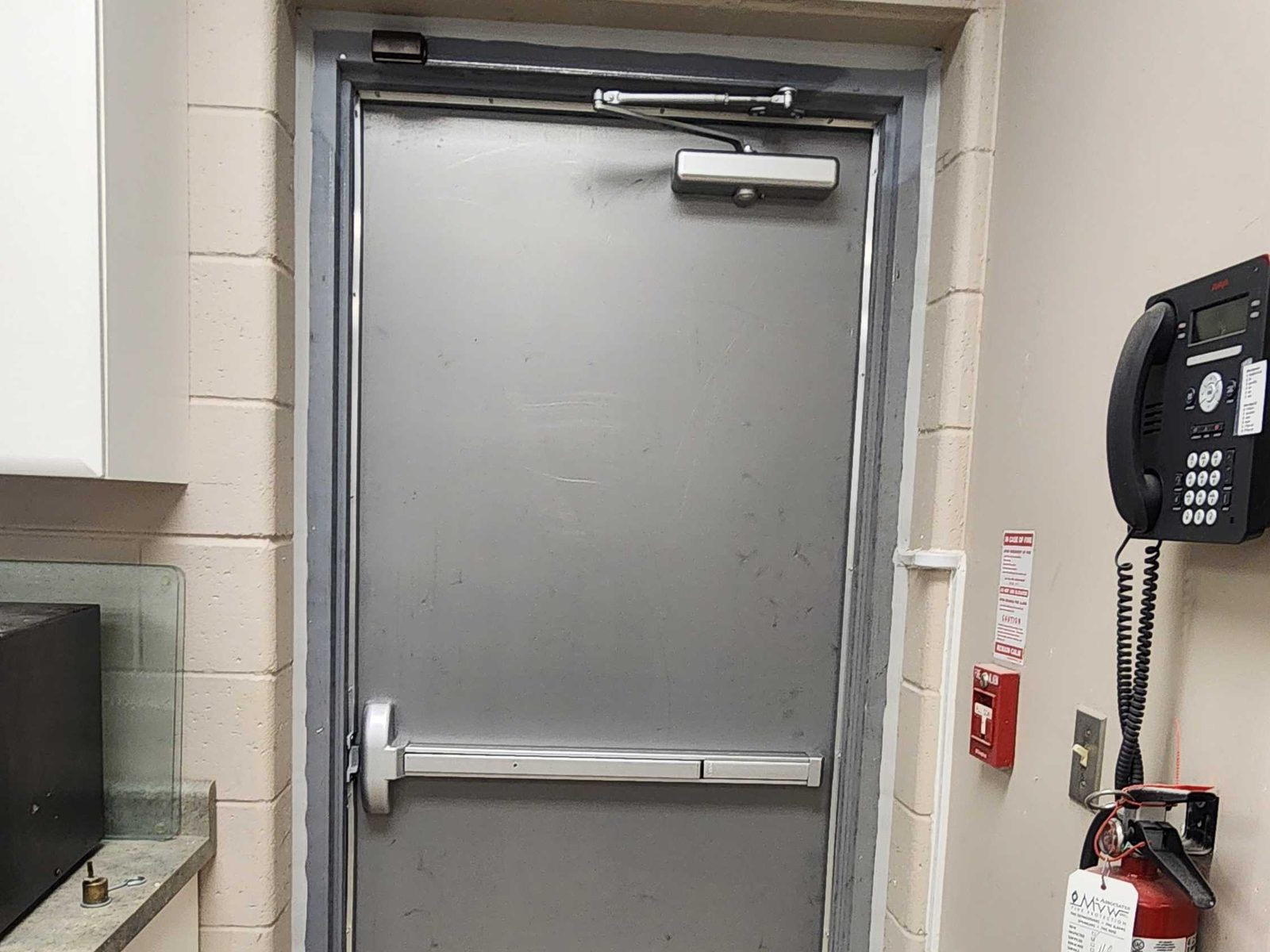
Fire door inspection, where closing and latching are checked
Why does my door closer work differently in winter?
The oil thickens in the cold, so an exterior closer set in July can close slowly or stop short in January, and the reverse in spring. Many commercial closers use fluid that changes less with temperature, but a closer on an exterior door in Ontario often still needs a seasonal touch-up of its sweep and latch speed. That is one of the items on a preventative maintenance visit.
How do you adjust the closing force on a door closer?
Many commercial closers have a spring power adjustment, often a larger nut or screw at one end of the body, that sets the closer size for the door's width and exposure. More power closes a heavy or exterior door against wind. Less makes the door easier to open. On a barrier-free route the opening force is limited by code, so power has to be balanced against accessibility, and on a fire door the closer must still close and latch it every time.
Closer repair, replacement and types
When adjustment is not enough, the question is whether to repair the arm, replace the body, or change the kind of closer on the door.
Can a door closer be repaired?
The arm and the mounting can be, and often are: loose screws, a stripped arm shoe, a worn or bent arm, or a closer that has pulled away from a door without reinforcement. The body itself generally cannot. Once a closer leaks oil, its seals have failed, and the practical repair is a new closer body, usually on the same template so it fits the existing holes.
Can you refill the hydraulic fluid in a door closer?
Not in any practical sense. Closers are sealed at the factory, and oil on the outside means the seals inside have failed. Adding fluid would not fix the seal, and it would leak out again. Replace the body. Commercial closer bodies are designed to be swapped, and the arm can often stay.
What are the common problems with door closers?
Leaking oil, a door that slams, a door that will not close or latch, an arm that has come loose, a closer torn off a door that has no reinforcement for it, and a closer that fights people because its power is set too high. Most are adjustments or a fastener problem. Leaks, and damage from doors blown open or used as a stop, mean replacement.
What is the difference between a regular arm and a parallel arm closer?
Where it mounts. A regular arm closer sits on the pull side of the door, with the arm sticking out at a right angle to the door when it is closed. A parallel arm closer sits on the push side, with the arm folded along the frame head. Parallel arm is the usual choice on exterior doors and in public corridors, because the arm does not project into the space and is harder to hang from or break.
How do you fit a closer on an outward-opening door?
On an exterior door that swings out, the closer usually goes inside, on the push side, with a parallel arm. That keeps the closer out of the weather and out of reach from the street. Heavy or windy doors often get a parallel arm with a stop or a separate overhead stop, so the wind cannot throw the door past its limit and tear the closer off the frame.
What is a concealed door closer?
A closer hidden in the frame head or in the floor instead of mounted on the door face. Overhead concealed closers are standard in aluminum storefront entrances. Floor closers sit in a box under the threshold and carry a pivoting door, common on frameless glass. They look cleaner but cost more and take more work to service, so on a steel door in a service corridor a surface closer is usually the better call.
Who makes the best commercial door closer?
The grade matters more than the badge. Look for a closer certified to ANSI/BHMA A156.4 Grade 1, the heaviest duty, for any door that sees public traffic. The Grade 1 lines most often specified in Canadian commercial work come from makers such as LCN, Norton Rixson, dormakaba and Sargent. For a building, one make and model throughout matters more than which one you choose, because it keeps parts and adjustment simple.
Exit devices and panic bars
The hardware that lets a crowd leave a building by pushing, and the hardware most often confused with the fire-rated version of itself.
What is a panic bar?
The common name for an exit device: a bar or pad across the door that unlatches it when someone pushes, so an exit opens simply by people arriving at it. Exit devices are tested to ANSI/BHMA A156.3. Whether an exit needs one is a Building Code question based on the occupancy and the number of people it serves, not a preference, and the architect's code review answers it.
What types of exit devices are there?
Four main types. A rim device latches into a strike on the frame, the simplest and most common on single doors. A surface vertical rod device latches at the top and bottom of the door, often used on pairs. A concealed vertical rod device hides those rods inside the door. A mortise device throws the latch from a lock case built into the door edge. Pairs of doors take either vertical rods or rim devices latching to a removable mullion.
What does dogging an exit device mean?
Holding the latch retracted, with a key or a hex key, so the door can be pushed open without unlatching during business hours. It saves wear and suits busy entrances. Fire exit hardware cannot be dogged, because a fire door has to latch every time it closes. If a fire-rated exit is being propped open for convenience, the fix is an alarm-released hold-open device, not dogging.
Why won't my panic bar latch, or why does it stick?
Usually alignment. The door has dropped on its hinges, the frame has moved, or the strike has worked loose, so the latch no longer meets the strike cleanly. On vertical rod devices, the rods need adjusting or the bottom latch is catching on the floor or threshold. A worn device can also stick. Most of these are fixed on site. A device that has been kicked or forced often needs replacing.
Can you add an alarm or a delay to an exit door?
Yes, within limits. Exit alarms, local alarms that sound when the door is used, are common on emergency-only doors in retail and warehouses. Delayed egress, where the door stays locked for a short delay after someone pushes, is allowed only in some occupancies, with conditions that include release on the fire alarm and on power failure. Both are code questions to settle before the hardware is ordered.
Commercial locks, keys and cylinders
On a commercial door the lock is part of a system: the lockset, the cylinder, the key plan and, more and more often, the access control.
Should I rekey or change the locks after a tenant or staff change?
Rekey when the locks are sound and only the keys are the problem. The cylinders are repinned or replaced so old keys stop working, at a fraction of the cost of new hardware. Replace the lockset when it is worn, the wrong grade, or does not do what the door needs. Buildings on interchangeable cores can swap a core in seconds with a control key, which makes frequent changes inexpensive.
What is the difference between a cylindrical and a mortise lock?
A cylindrical (bored) lock fits through two round holes in the door and is the economical standard, tested to ANSI/BHMA A156.2. A mortise lock sits in a pocket cut into the edge of the door, is heavier and longer-lived, and is tested to A156.13. Mortise is the usual specification for entrances, high-traffic corridors and anywhere a lock is worked hundreds of times a day.
Can a commercial door lock be repaired?
Often. A lock that will not latch, a lever that droops, or a key that is hard to turn is usually an alignment, strike, lubrication or worn-cylinder problem. A lock that has been forced, has a broken internal part on an older or discontinued model, or is the wrong grade for the door is usually less expensive to replace than to rebuild.
Why is my magnetic door lock not working?
A maglock does not latch; it holds the door with an electromagnet against a steel plate on the door. If it will not hold, check whether the plate is meeting the magnet flat and clean, whether the door is closing fully, and whether the lock has power. If it will not release, the access control, a request-to-exit device or the power supply is the usual culprit. By code a maglock must release on the fire alarm, on power loss and from a manual station near the door.
What lock should a classroom door have for lockdowns?
A lock that a teacher can secure from inside the room, without stepping into the corridor, while the inside lever always opens the door for anyone leaving. That is the classroom-security function, usually with a key or thumb-turn on the inside and often a visible locked indicator. Free exit from inside is the part that cannot be compromised: a lock that traps people in a room fails the Building Code.
Astragals, thresholds and seals
The parts that close the gaps: between the leaves of a pair, under the door, and around the frame.
What is an astragal on a door?
A vertical strip that covers the gap where the two leaves of a pair meet, or where a single door meets its frame. It stops light, draughts, smoke and prying tools getting through the gap. Astragals come as a flat overlapping bar fixed to one leaf, a split astragal with a half on each leaf, or a T-astragal, and many carry a brush or rubber seal.
Does a double door need an astragal?
Most exterior and fire-rated pairs do. On an exterior pair it seals the meeting stiles and, on an outswing pair, shields the latch from being pried. On a fire-rated pair the door's listing decides whether an astragal is required and which one. A pair with an overlapping astragal also needs a coordinator, which makes the inactive leaf close first so the pair latches in the right order.
What is the difference between an astragal and a mullion?
An astragal is fixed to a door leaf and moves with it. A mullion is a vertical post in the frame between the two leaves. A removable mullion lets each leaf of a pair latch into it with its own rim exit device, and can be taken out when equipment needs the full width.
How high can a commercial door threshold be?
On a barrier-free entrance, low: Ontario's accessibility requirements keep the threshold to about 13 mm (½ inch) high, bevelled so a wheelchair or walker can roll over it. Service and back doors can take taller thresholds, but a threshold is also a trip hazard and the base of the door's weather seal, so it is chosen with the door bottom and the sweep, not on its own.
Does weatherstripping go on the door or the frame?
On a commercial door, mostly the frame: perimeter seals go on the stops of the frame head and jambs, and the door carries the sweep or an automatic door bottom. The threshold sits on the floor, and pairs add an astragal between the leaves. The four parts are chosen together, because a seal that is too thick can stop the closer latching the door.
Hinges and pivots
The hardware that carries the door. When a door drops, everything else stops lining up.
How many hinges does a commercial door need?
The usual rule is one hinge for every 30 inches of door height, or part of it, so a standard 7-foot (84-inch) door takes three and a taller door four. Heavy, wide or very busy doors take heavy-weight hinges or a continuous hinge running the full height, which spreads the load and ends hinge-side sagging. On a fire door, the number and type are whatever its label requires.
Can you just replace door hinges?
Yes, if the new hinge matches the old one's size, thickness, corner shape and screw pattern, so it drops into the existing cutouts. Commercial doors with closers should have ball-bearing hinges. Changing a door from butt hinges to a continuous hinge is a common upgrade on doors that keep sagging, and it is done on the door we already have.
What is a continuous hinge?
A hinge that runs the full height of the door, in geared aluminum or pin-and-barrel stainless steel. It carries the leaf along its whole edge instead of at three points, which is why schools, hospitals and busy entrances use them on doors that are abused. It also stops fingers being caught at the hinge edge.
What is a pivot hinge?
A hinge that carries the door at the top and bottom instead of along its edge: a top pivot in the frame head and a bottom pivot in the floor or on the door bottom. Pivots carry heavy and glass doors and pair with overhead concealed or floor closers, which is why they are standard on aluminum storefront and frameless glass entrances.
Hardware schedules and specifications
For contractors and designers: where door hardware sits in the paperwork.
What specification section is door hardware?
MasterFormat Section 08 71 00, Door Hardware, in Division 08, Openings. It sits beside the sections for the doors and frames themselves (hollow metal in 08 11 13, for example) and is usually written as hardware sets, each set listing every item for one type of opening.
What is a door schedule in construction?
A table in the drawings that lists every opening with its number, size, door and frame type, material, fire rating and the hardware set it takes. It is what the door, frame and hardware suppliers price and order from, and what we check every opening against on site. Getting the schedule right before ordering is what keeps a rated opening from arriving with hardware its label does not allow.
Does door hardware need to be fire-rated?
On a fire door, yes. Every piece has to be listed for use on fire doors: the hinges, the closer, a latch that throws positively, and fire exit hardware in place of panic hardware. Anything added later, such as a card reader or a kick plate, has to be listed and fitted within the door's prepared openings, not drilled in on site.
Cost and lead times
Typical Canadian-dollar ranges from our own work. The number for your doors comes from a site visit.
How much does commercial door hardware repair cost?
A hardware adjustment, such as setting a closer, tightening hinges, realigning a strike or refitting seals, typically runs under $400. A common repair with parts typically runs $200 to $600. The price depends on how many doors are done in one visit, what parts are needed, access, and whether the work has to happen after hours.
How long does commercial door hardware take to arrive?
Common closers, cylindrical locksets and exit devices in standard finishes usually take days to a couple of weeks. Electrified hardware, restricted keyways, special finishes and hardware for rated openings take longer. For a whole-building hardware schedule, plan on 4 to 6 weeks to supply once the schedule is approved, then 1 to 2 weeks to schedule the installation.
In-depth guides
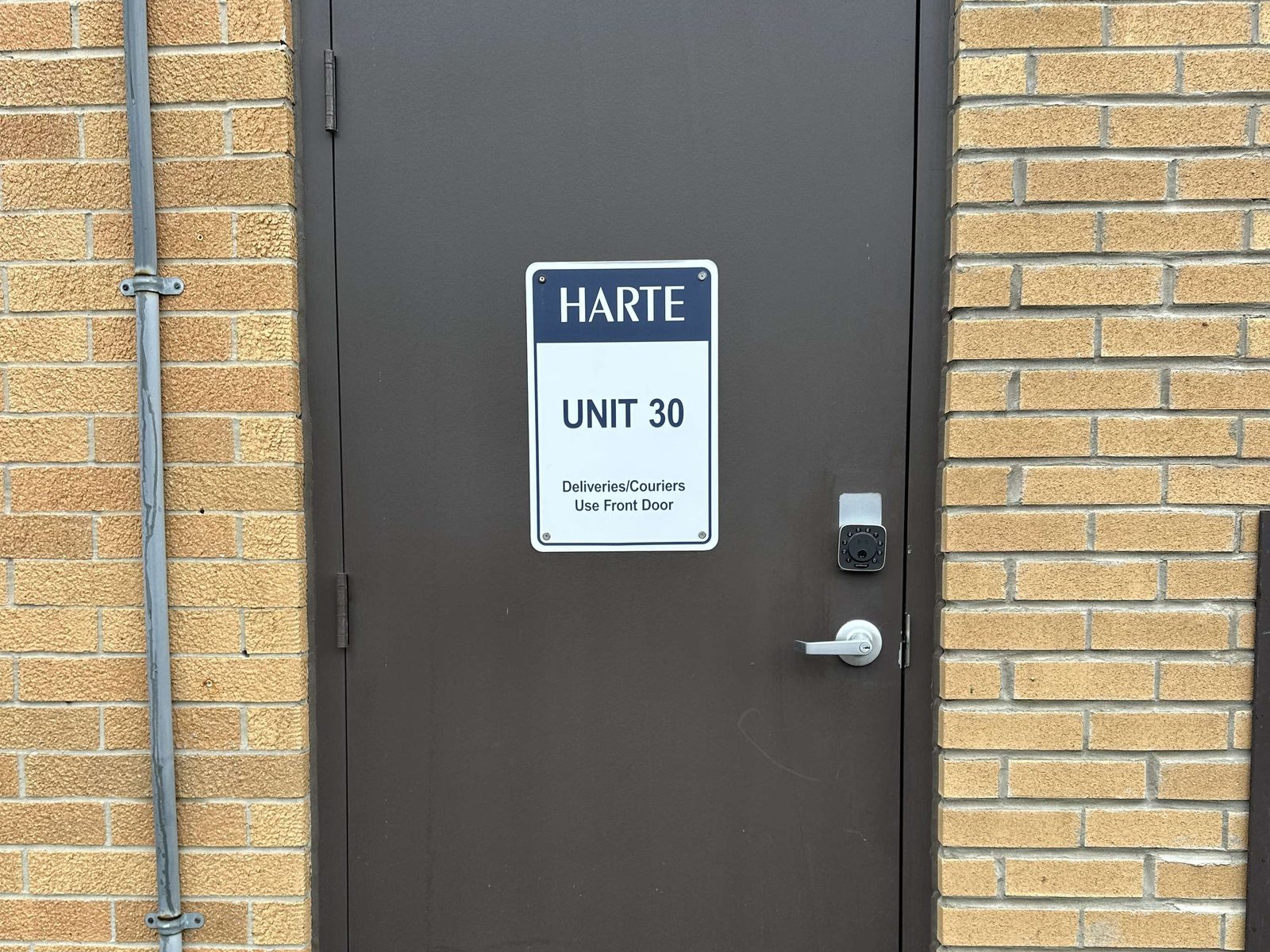
Electronic Locks for Commercial Buildings: Types, Fail-Safe and Code
Keypad, card, strike, maglock or electrified exit device: how each works, fail-safe versus fail-secure, and what the Ontario Building Code allows on an exit door.
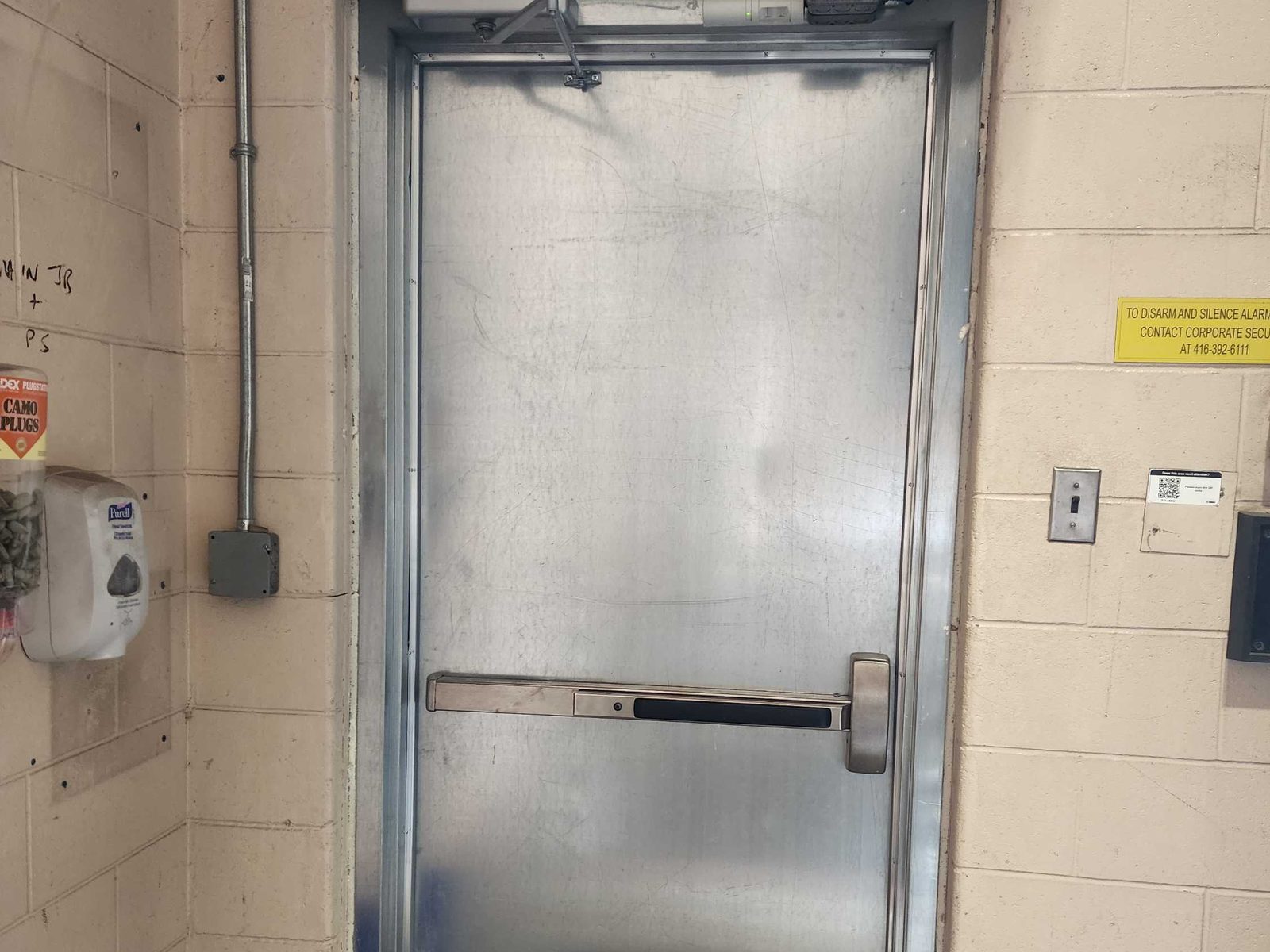
How to Maintain, Adjust and Paint a Hollow Metal Door
The checklist for keeping steel doors and frames working — hinges, closers, latching, seals — plus how to adjust a binding door and how to repaint one properly.
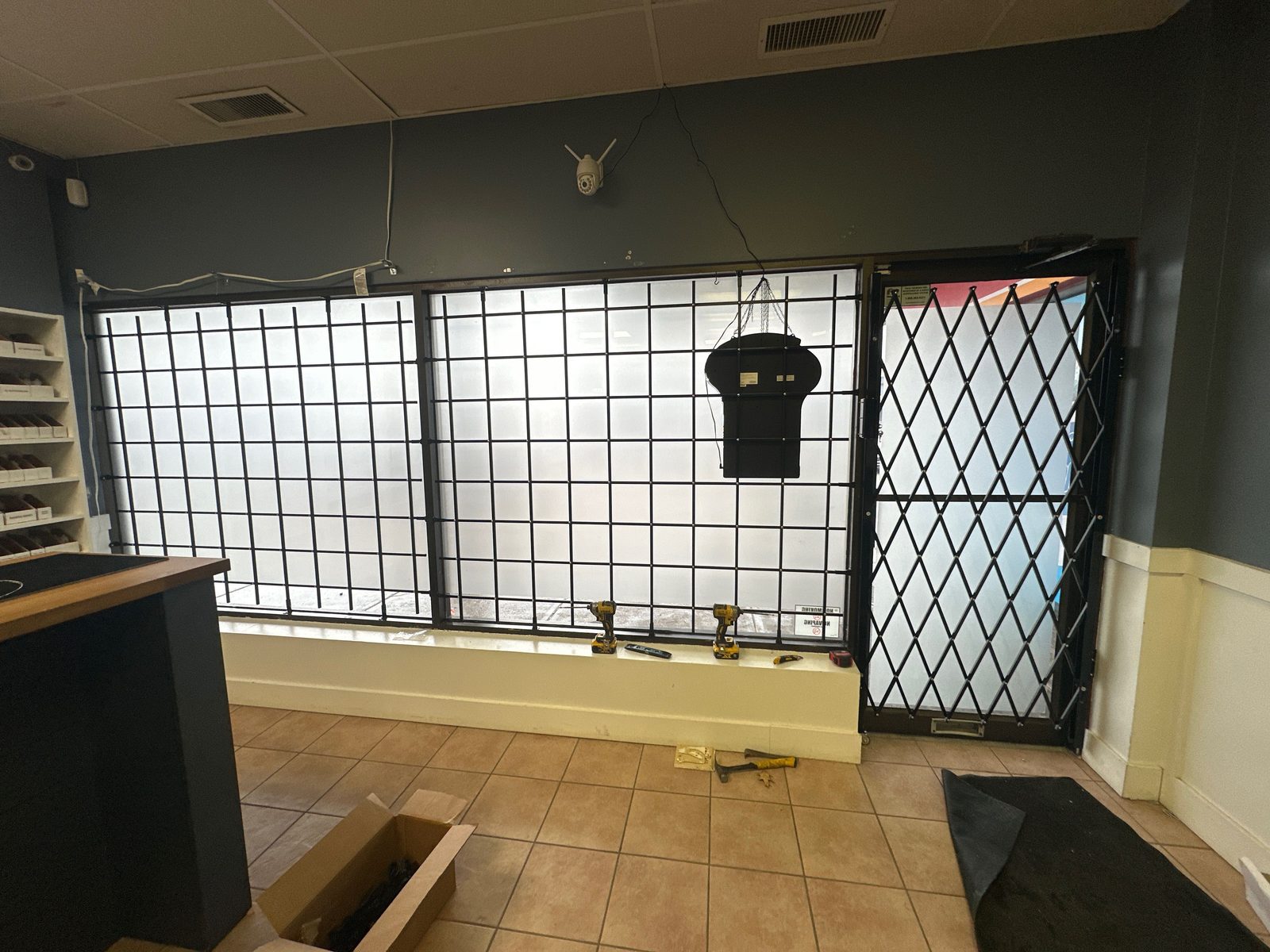
How to Prevent Break-Ins at a Commercial Property
Where intruders actually get in, what grilles, shutters, bars, locks and glass each buy you, and the order to fix a building's weak points in.
Get a closer adjusted or hardware replaced
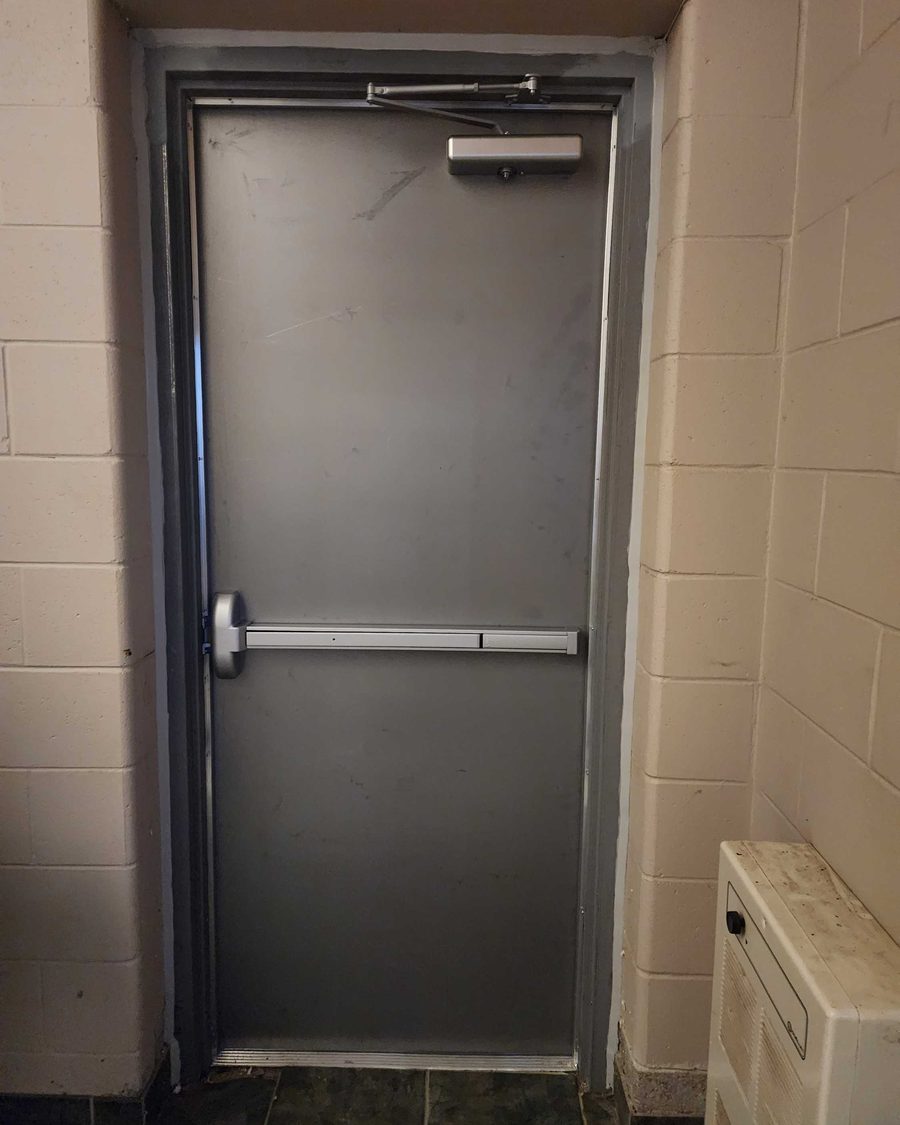
A closer that slams, or a building full of mismatched hardware?
Tell us what the door is doing, or send the hardware schedule. Most hardware problems can be diagnosed from a description and two photographs, and quoted from there.