
Guide
Electronic Locks for Commercial Buildings: Types, Fail-Safe and Code
Electronic locks for commercial buildings range from standalone keypad and card locksets to electric strikes, maglocks and electrified exit devices wired into access control. The right one depends on the door, whether it must fail safe or fail secure, and what Ontario's Building Code allows on an exit.
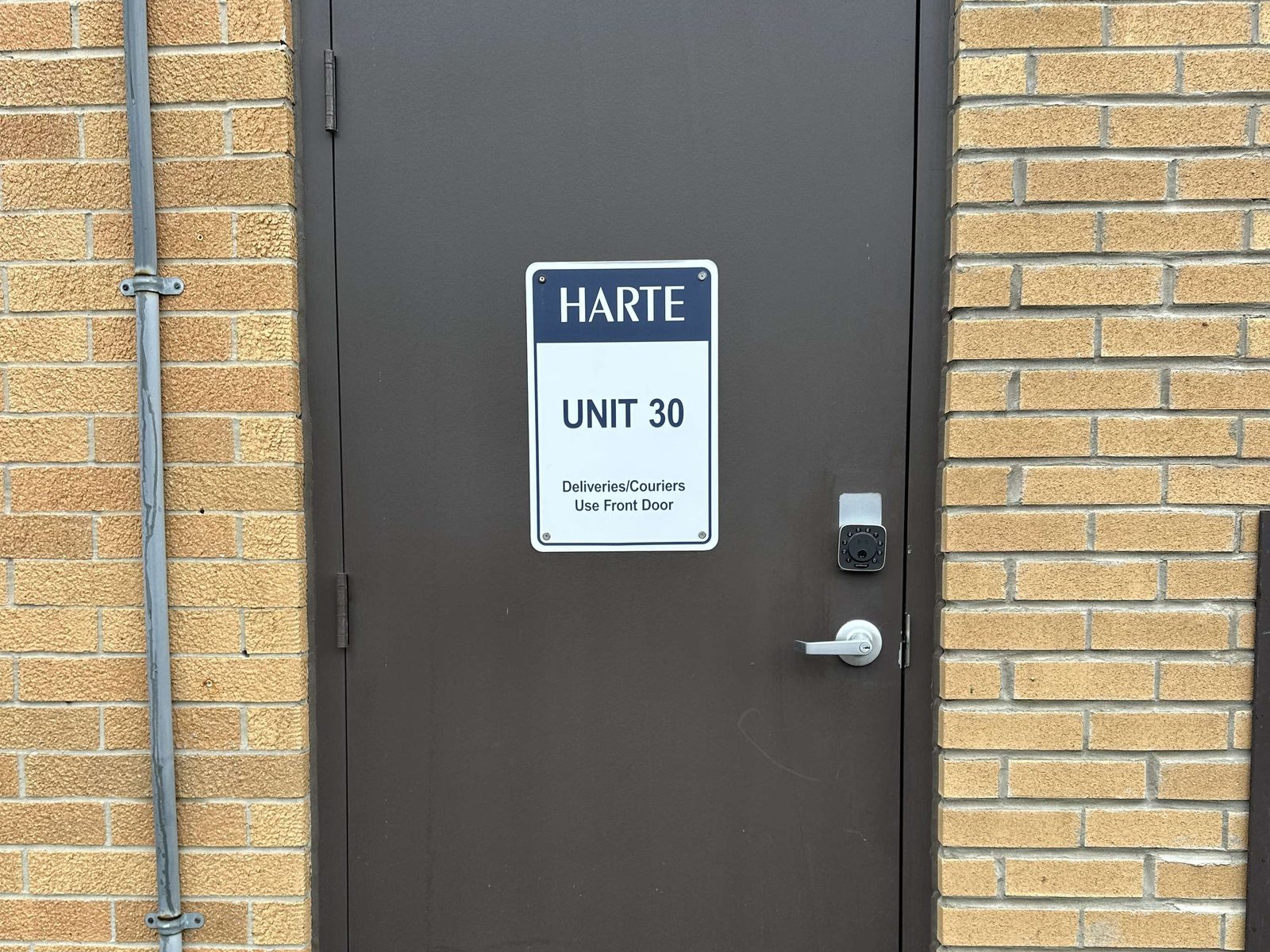
Most of what ranks for this question is a product catalogue. That is useful once you know what you want, and not much help before. The real decisions on a commercial door are which kind of electrified hardware suits the opening, what should happen when the power fails, and what the Building Code allows on a door people may need to escape through.
We fit and service electrified hardware as part of the whole opening — door, frame, hinges, closer and lock together — so this guide is written from the door's side.
Four decades of commercial door hardware for names Ontario knows — Canada’s Wonderland, Tim Hortons, Canadian Tire, the LCBO, Metrolinx, Marriott & Hilton hotels, the University of Toronto — plus thousands of businesses across the GTA. Dependable people, quality products, since 1979.
What are the types of electronic locks for commercial buildings?
There are two families. Electronic locksets carry their own keypad or card reader on the door and usually run on batteries. Electrified hardware — electric strikes, maglocks, electrified mortise locks and exit devices — is powered by wire and released by an access-control system, intercom or button somewhere else.
| How it releases | When power fails | Typical door | |
|---|---|---|---|
| Keypad lockset | Code entered on the door | Battery-powered; key override | Single office, back door, storage room |
| Card or fob lockset | Credential presented at the door | Battery-powered; key override | Hotel rooms, suites, staff areas |
| Networked or wireless lockset | Reader on the door, linked to a system | Battery-powered; stays in last state or per setting | Buildings adding doors without new wiring |
| Electric strike | Frame keeper releases the latch | Ordered fail-safe or fail-secure | Entrances and interior doors on access control |
| Electromagnetic lock (maglock) | Magnet releases the door | Always releases (fail-safe) | Exits where release on alarm is needed |
| Electrified mortise lock or exit device | Lock or exit device releases in the door | Ordered fail-safe or fail-secure | High-traffic and fire-rated openings |
How does electronic access control improve security?
Electronic access control replaces keys with credentials you can issue and cancel. When someone leaves, their card, fob or code is deleted rather than a building being rekeyed, and nobody can copy a key at a kiosk.
The other gains are the ones the old keyed system never gave you:
- A record. A networked system logs who opened which door and when — useful for the server room, the pharmacy, the records office or the cash room.
- Doors that relock themselves. A door on access control relocks as it closes, instead of relying on the last person out to lock up.
- Alarm integration. A door held open or forced can raise an alert on the alarm or access system.
- Layers. Critical rooms can require a second factor — a code with the card, or a biometric reader where the risk justifies it.
- Fewer hands on the hardware. Card and fob readers open without anyone touching a key or handle on the way in.
Should a commercial lock be fail-safe or fail-secure?
A fail-safe lock unlocks when power is removed; a fail-secure lock stays locked. Allegion puts it plainly in its fail-safe vs fail-secure explainer: the term describes the secure (key) side of the door, and most products still allow free egress from the inside either way.
The choice turns on what a power failure should mean at that door:
- Fail-secure suits most perimeter and interior doors. If the power goes, the building stays locked from outside and people still walk out from the inside.
- Fail-safe suits doors that must release when power or the fire alarm drops — stairwell re-entry, some exits and doors released for fire-service access.
- Maglocks are fail-safe only. With no power there is no magnetic hold.
- Fire-rated doors need positive latching. Allegion notes that fail-secure strikes must be used on fire doors because fail-safe strikes do not provide the positive latching and listings NFPA 80 requires.
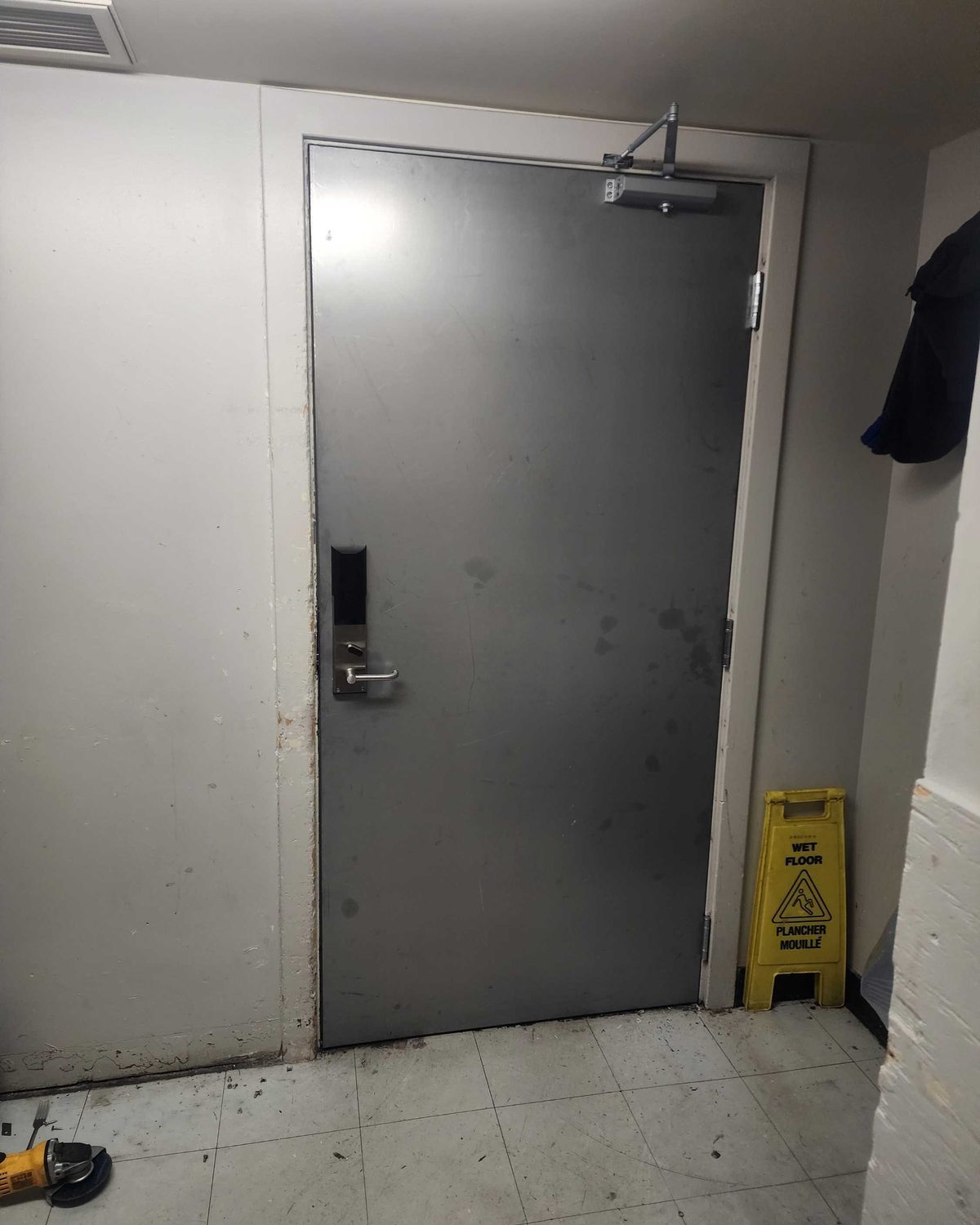
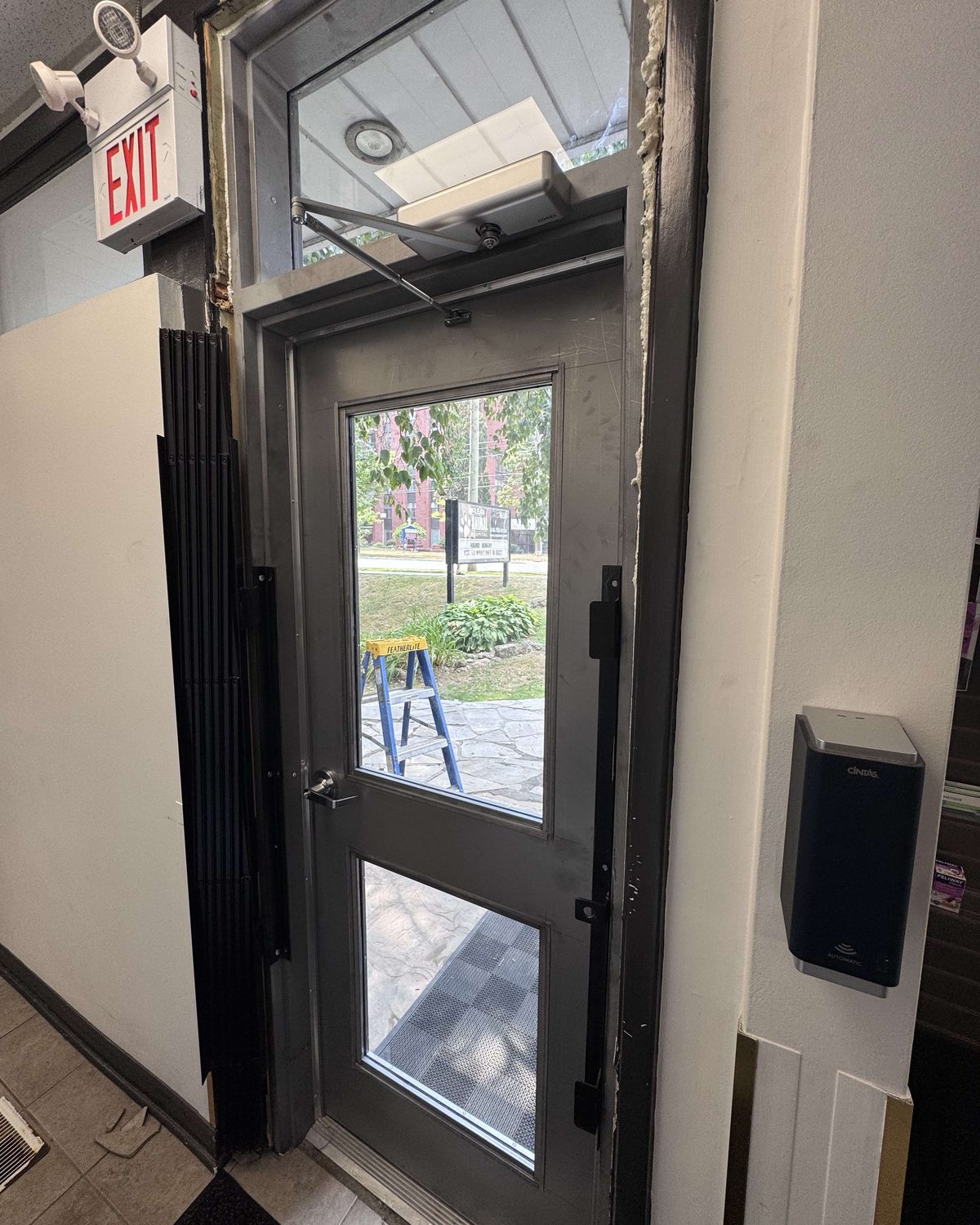
What does Ontario's Building Code say about electronic locks on exit doors?
On an exit door, the Code wins over security. Ontario Building Code
Article 3.4.6.16requires locking devices on every exit door to let the door be opened from the inside with no more than one releasing operation and without keys, special devices or specialized knowledge. A keypad needed to get out is not allowed on an exit.
Electromagnetic locks are permitted on exit doors only under conditions. The building needs a fire alarm system, and the lock must release immediately on:
- activation of the fire alarm signal;
- loss of power;
- a manual switch available to authorized staff;
- a fault in the lock's electrical circuit; and
- operation of a fire-alarm manual station on the wall no more than 600 mm from the door.
The same article also requires signage on and near the door, manual reset after release and emergency lighting. Those details are for the designer and the authority having jurisdiction to confirm on each project; our job is to make sure the hardware on the door does what that design requires.
Accessible entrances add their own layer. Where a door has a barrier-free power operator, the lock has to release before the operator opens the door, so the lock and the operator are wired and tested together.
What are the downsides of electronic door locks?
Electronic locks add failure points a mechanical lock does not have, so each door needs a plan for power, batteries and upkeep. None of these is a reason not to fit them; all of them are reasons to plan the job before ordering hardware.
- Power and batteries. Wired hardware needs a power supply sized for the run and, often, a battery backup. Battery locksets need a battery routine.
- Getting power into the door. Electrified locks and exit devices need a power transfer hinge or a door loop to carry wires into a moving leaf.
- The door has to latch. A dropped leaf, a strike out of line or a closer too weak to beat the seal defeats any lock. That is why lock work on older buildings often starts with hinges, strikes and closers.
- Fire labels. Hardware on a rated door must be listed for it, and field-cutting a rated door or frame can void the label. The hardware is chosen before the door is ordered.
- Codes get shared. A keypad code known to every former employee is a key nobody can recall. Change codes, or use credentials that can be cancelled.
What does fitting electronic locks to an existing building involve?
Fitting electronic locks is door work as much as electrical work. We survey each opening, confirm the door and frame can take the hardware, prepare or replace them where they cannot, and fit and adjust the lock, strike, hinges and closer so the door latches every time. Readers, panels and software usually come from the access-control or security contractor, and the two trades test each door together.
Electrified hardware is rarely a stock item. Where new doors or frames are part of the job, plan on typically 4–6 weeks to produce once shop drawings are approved, then 1–2 weeks to schedule and install. On a building with fire-rated openings, doing the locks alongside the annual
fire door inspectioncatches both problems in one visit.
The hardware we specify, fit and repair — closers, exit devices, strikes, maglocks, electrified locksets and keying — is on the commercial door hardware page. If the door itself is past saving, see hollow metal doors and frames, and for the physical side of keeping people out, our guide to preventing break-ins at a business.
Common questions
What is the best commercial electronic door lock?
The one that suits the door and the building rather than a particular brand. A single office or back door is usually well served by a standalone keypad or card lockset. A building with many doors, staff turnover and a need for an audit trail wants networked access control with electric strikes or electrified locksets. Whatever the choice, it needs commercial-grade hardware and a door and frame in good enough condition to latch every time.
What's the difference between a smart lock and an electronic lock?
Every smart lock is an electronic lock, but not the other way round. An electronic lock releases electrically, by keypad, card, fob or a signal from an access-control panel. A smart lock adds a connection, usually Wi-Fi or Bluetooth to a phone app. Most products sold as smart locks are built for houses; commercial doors need hardware rated for commercial traffic, fire labels and exit rules.
What are the downsides of digital door locks?
They depend on power, batteries or a network, so each one needs a plan for what happens when that fails. They cost more than a mechanical lock and usually need door and frame preparation. Codes get shared, so they must be changed. And an electronic lock does nothing on a door that does not latch: a sagging leaf or a weak closer defeats any lock.
Is a maglock fail-safe or fail-secure?
Fail-safe, always. A maglock holds the door with an electromagnet, so when the power goes the door is released. That is why maglocks are useful on exits and why the Ontario Building Code sets conditions on them, including release on fire alarm, on loss of power and from a manual station near the door. An electric strike can be ordered either way.
Can you put an electronic lock on a fire door?
Yes, if the hardware is listed for use on fire doors and the door still latches positively every time it closes. That usually means a fail-secure electric strike or an electrified lockset rather than a fail-safe strike. Cutting a rated door or frame on site for hardware it was not prepared for can void the label, so the hardware is chosen before the door is ordered.
Pricing a job like this?
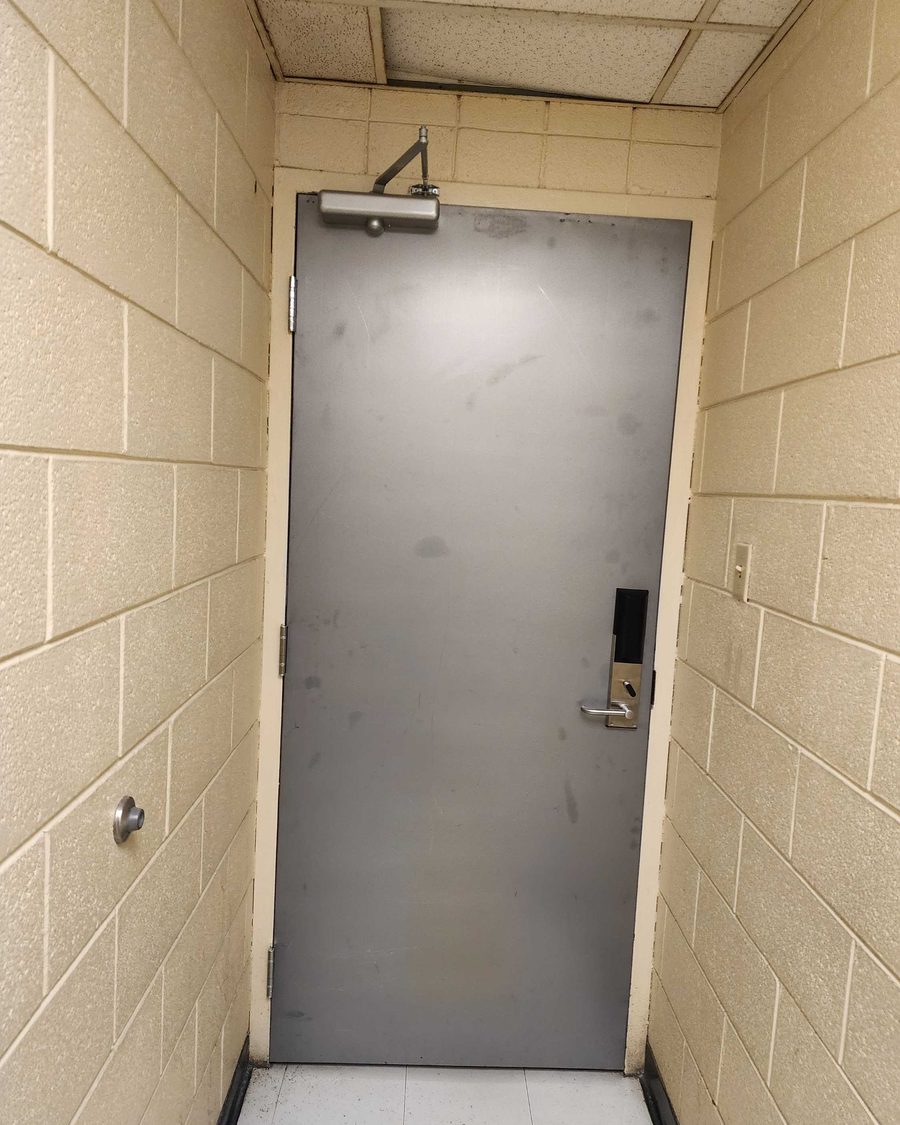
Adding electronic locks to an existing building?
Send us the door count, photographs of each door and frame, and whether any are fire-rated or on an exit route. We will tell you what each opening needs and what has to change before a lock is fitted.