
Guides & FAQ · Accessible & automatic doors
Wheelchair Accessible Door Width & Automatic Doors: Questions Answered
In Ontario, a doorway on a barrier-free path needs a clear width of at least 850 mm (about 33½ inches) under the 2024 Ontario Building Code. That is measured from the face of the open door to the stop on the other side, not across the door leaf. In practice it takes a 36-inch leaf. Below are the questions building owners, contractors and property managers ask us most about accessible doorways and the operators that open them, answered briefly.
Every answer below comes from the same sources as the rest of our automatic door pages: the Ontario Building Code, CSA B651, the ANSI/BHMA standards our operators are built to, and what our AAADM-certified technicians find on site. Where an answer needs more room, it links to the guide or service page that covers it in full.
Four decades of doors for names Ontario knows — Canada’s Wonderland, Tim Hortons, Canadian Tire, the LCBO, Metrolinx, Marriott & Hilton hotels, the University of Toronto — plus thousands of businesses across the GTA. Dependable people, quality products, since 1979.
Accessible door width and clearances
Width is the question we are asked most, and the one most often measured wrong.
How wide does a wheelchair accessible door have to be in Ontario?
A doorway on a barrier-free path of travel needs a clear width of at least 850 mm (about 33½ inches) under the 2024 Ontario Building Code, Article 3.8.3.3. The rule applies when a building is built or renovated. It is written against clear width, the space a person actually passes through, so the size of the door leaf is only the starting point.
How is the clear width of a door measured?
With the door open at 90 degrees, from the face of the door to the stop on the opposite jamb. The door's own thickness, the hinges and the stops all come off the width of the leaf, and so does any hardware that projects into the opening, such as a push bar. That is why a door can look wide enough and still fail.
What size door do I need for 850 mm of clear width?
In practice, a 36-inch (915 mm) leaf. Once a standard 1¾-inch (45 mm) door and its stop are taken off, a 36-inch door gives roughly the 850 mm required, while a 34-inch door falls well short. A pair of doors can also qualify, as long as one leaf on its own gives the clear width, because that is the leaf most people will use.
What is the minimum door width for wheelchair access in Canada?
It depends on where the building is, because each province adopts its own building code, so check the one that applies. In Ontario it is 850 mm clear. Older buildings often have narrower doorways that met the code when they were built; those generally have to be widened only when the space is renovated.
Is a 32-inch door wide enough for a wheelchair?
Not for barrier-free access in Ontario. A 32-inch leaf gives only about 29 to 30 inches (roughly 750 mm) of clear width once it is open. Many manual wheelchairs are 25 to 27 inches wide, so a chair may physically pass, but with no room for hands on the wheels and no margin for a larger chair or a scooter. That is well short of the 850 mm the code asks for.
Can a wheelchair fit through a 30-inch door?
Some narrow chairs can, but with difficulty. A 30-inch leaf opens to roughly 27 inches clear, about the width of many manual wheelchairs, so the user scrapes their hands and the frame. It is not an accessible door by any Canadian standard, and powered chairs and scooters usually cannot use it at all.
Is a 32-inch door ADA compliant?
The ADA is American law and does not apply in Ontario, but for reference it asks for 32 inches of clear width (815 mm) with the door open at 90 degrees. That is the clear opening, not the leaf, so a 32-inch door does not meet it either; a 36-inch leaf is the safe choice. Ontario's 850 mm is stricter.
Is width the only thing that makes a door accessible?
No. A barrier-free door also needs level manoeuvring space beside the latch so a person in a chair can reach the handle and pull the door past themselves. It needs a low, bevelled threshold, hardware that works without tight grasping or twisting, and an opening force low enough to manage. CSA B651 puts that at about 38 N at an exterior door and 22 N inside. Where a door cannot meet the force limit, a power operator is the answer.
How do you make an existing doorway wheelchair accessible?
Start with the clear width. If it is short of 850 mm, the opening has to be widened, which in a block wall means structural work, a new frame and a new door. If the width is there, the usual fixes are a low-energy door operator with push plates, lever handles, a lower threshold and a closer adjusted to the force limit. We survey the whole opening first, because an operator on a doorway that is too narrow does not make it accessible.
Barrier-free rules in Ontario
Two documents do most of the work: the Ontario Building Code for new and renovated space, and the AODA's Design of Public Spaces standard.
What are the barrier-free guidelines in Ontario?
For buildings, they are Section 3.8 of the Ontario Building Code, which covers barrier-free entrances, paths of travel, doors, washrooms and signage in new and renovated buildings. The AODA's Design of Public Spaces standard adds rules for exterior paths, parking and service counters. Both apply when space is built or redeveloped. Neither orders an existing building to rebuild every door.
Are automatic doors required in Ontario?
For new work, often. The 2024 Ontario Building Code requires a power door operator on the doors that form the barrier-free path through a barrier-free entrance, and on doors to public washrooms that must be barrier-free. No rule makes an existing building automate its doors. The work is usually triggered by a permit, a renovation, a tenant requirement or an accessibility complaint.
What are the five accessibility standards of the AODA?
Customer Service, Information and Communications, Employment, Transportation, and Design of Public Spaces. Only the last one deals with the built environment, and it covers outdoor areas and some interior elements such as service counters and waiting areas. Most of the rules for doors themselves are in the Ontario Building Code.
What is the difference between barrier-free and accessible?
In everyday use they mean the same thing. "Barrier-free" is the term the Ontario Building Code uses, so it is the word on permit drawings and inspection reports. "Accessible" is the broader term the AODA and CSA B651 use. "Handicap" and "ADA" appear in searches and product names but not in any Ontario document.
What is a universal washroom?
A single-user washroom that anyone can use, whatever their mobility or gender, with the fixtures, grab bars and turning space for a person in a wheelchair and an assistant. Under the Ontario Building Code its door needs a power operator, a lock that someone with limited hand strength can use and that releases from outside in an emergency, and an emergency call system. We supply those door elements as one wired package.
Can a fire door have an automatic operator?
Yes, if the operator and the fire door assembly are compatible and the door still closes and latches on its own when the fire alarm sounds. Low-energy operators are fitted to fire-rated stair and corridor doors all the time. What cannot happen is an operator or a hold-open that keeps a fire door open during an alarm.
Door operators and push plates
Most barrier-free doors are ordinary swing doors with a small operator on the header.
What is a handicap door opener called?
In the trade, a low-energy power operator, a barrier-free operator or an automatic door operator. The wall button that sets it off is an actuator, usually called a push plate or push button, and marked with the wheelchair symbol. A "power-assist" operator is a variant that lightens the door as you push rather than opening it for you.
How does a handicap door opener work?
Pressing the push plate sends a signal to the operator on the door's header. The operator's motor swings the door open slowly, holds it for a set time, then lets it close under control. A low-energy operator moves the door slowly enough, at least three seconds to open, that it needs no motion sensors or guide rails. The door can still be pushed open by hand.
How high should a handicap door push button be?
Within reach of someone seated, typically 900 to 1,100 mm above the floor. It should also sit outside the arc of the door, so the user is not in the door's path when it opens. A plate mounted inside the swing is the commonest placement mistake we correct. In a vestibule, the second door is sequenced to open as the user crosses.
Can any door be made automatic?
Most swing doors can, if the door hangs square, swings freely and the frame and header can carry the operator. The job also needs power at the header, which is electrical work for a licensed electrician and often the biggest surprise on a retrofit. A sagging or binding door is repaired or replaced first, because automating a bad door makes a worse one.
What happens to an automatic door if the power goes out?
A swing door with a low-energy operator can simply be pushed open by hand, with the closer working as usual. An automatic sliding door on an exit route has break-out leaves that swing out when pushed, so the opening clears even with no power. Whether an electrically locked door locks or unlocks on power loss is a separate decision, made with the fire code and security in mind.
Automatic sliding doors
The busy main entrance: sensors instead of push plates, and no leaf swinging into anyone.
How do automatic sliding doors work?
A motor in the header drives the sliding leaves along a track on a belt. A motion sensor sees someone approaching and opens the door; a presence sensor holds it open while anyone is in the opening. When both go quiet, the control board waits a set time and closes the door at a controlled speed. Most faults are somewhere in that chain, and usually in the sensors.
How do you manually open an automatic sliding door?
On most commercial sliders, switch the operator to off or open at the program switch, then slide the leaves apart by hand. On an exit door with break-out leaves, pushing hard from inside swings the leaves out. If the door is locked, it has to be unlocked first. Forcing a leaf along a track that has jumped or seized causes more damage than it solves.
How do you reset an automatic door?
Many operators reset by switching them off at the program switch or breaker, waiting a few seconds and switching them back on; the door then runs a slow learning cycle. If it faults again straight away, the cause is usually a sensor seeing something, such as a new mat, a display or snow, or a jammed track. Repeated resets without finding the cause wear the operator.
What are automatic sliding doors called?
By the way they open: single-slide (one leaf moving one way), bi-parting (two leaves meeting in the middle) and telescopic (leaves that nest as they slide, for a wide opening in little wall space). Break-out sliders have leaves that also swing out in an emergency. They are covered by the ANSI/BHMA A156.10 standard.
Problems, inspection and lifespan
An automatic door is a machine that works thousands of times a day, and it is checked like one.
Why is my automatic door not working?
Most often a sensor: dirty, knocked out of aim, or seeing something new in its field such as a mat, a sign or a display. After that come grit and salt in the floor track, worn rollers or belts, a program switch left on the wrong setting, and a failed control board or motor. A door that closes on people should be switched off and secured until it is repaired.
Why won't my handicap door close?
Usually because something keeps triggering it: a push plate stuck on or wired wrong, or a wireless actuator sending repeatedly. Other causes are a hold-open time set too long, a door dragging on a threshold or new flooring, or the operator and an electric lock working against each other. A door that will not close is a security and, on a fire door, a code problem, so it is worth a service call rather than a wedge.
How often should automatic doors be inspected?
A quick daily safety check by building staff, and a full annual inspection by an AAADM-certified inspector, as the American Association of Automatic Door Manufacturers recommends. The annual inspection covers sensors, speeds, forces, hold-open times, break-out and signage. Our technicians hold AAADM certification.
How long do automatic doors last?
There is no single number. It depends on the number of cycles, how the door has been maintained and whether parts are still made for its operator. Framing and glass usually outlast the operator, often by more than one generation of operator, so replacing the operator in sound framing is a common and much less expensive answer than a new entrance.
Cost and lead times
Typical Canadian-dollar ranges from our own quotes. The number for your door comes from a site visit.
How much does an automatic door cost?
A new automatic sliding entrance typically runs $3,500 to $8,500 or more installed, depending on whether it is a new operator in existing framing or a complete bi-parting or telescopic entrance with new framing and glass. A low-energy operator on an existing swing door costs far less. A common automatic door repair typically runs $350 to $1,200.
How much does a handicap door opener cost?
The operator is usually the smaller part of the price. What moves it is whether there is power at the header, how many push plates you need and where, whether the door is electrically locked, and whether the door itself needs repair first. Running a new circuit through a masonry wall can cost more than the operator. We quote the whole opening rather than the box on its own.
How long does it take to install a door operator?
An operator retrofitted to an existing door typically takes 1–2 weeks to supply and install once the opening is surveyed, and usually one day on site. A new automatic entrance takes 4–6 weeks to produce once shop drawings are approved, then 1–2 weeks to schedule and install. Repairs are dispatched 24/7.
In-depth guides
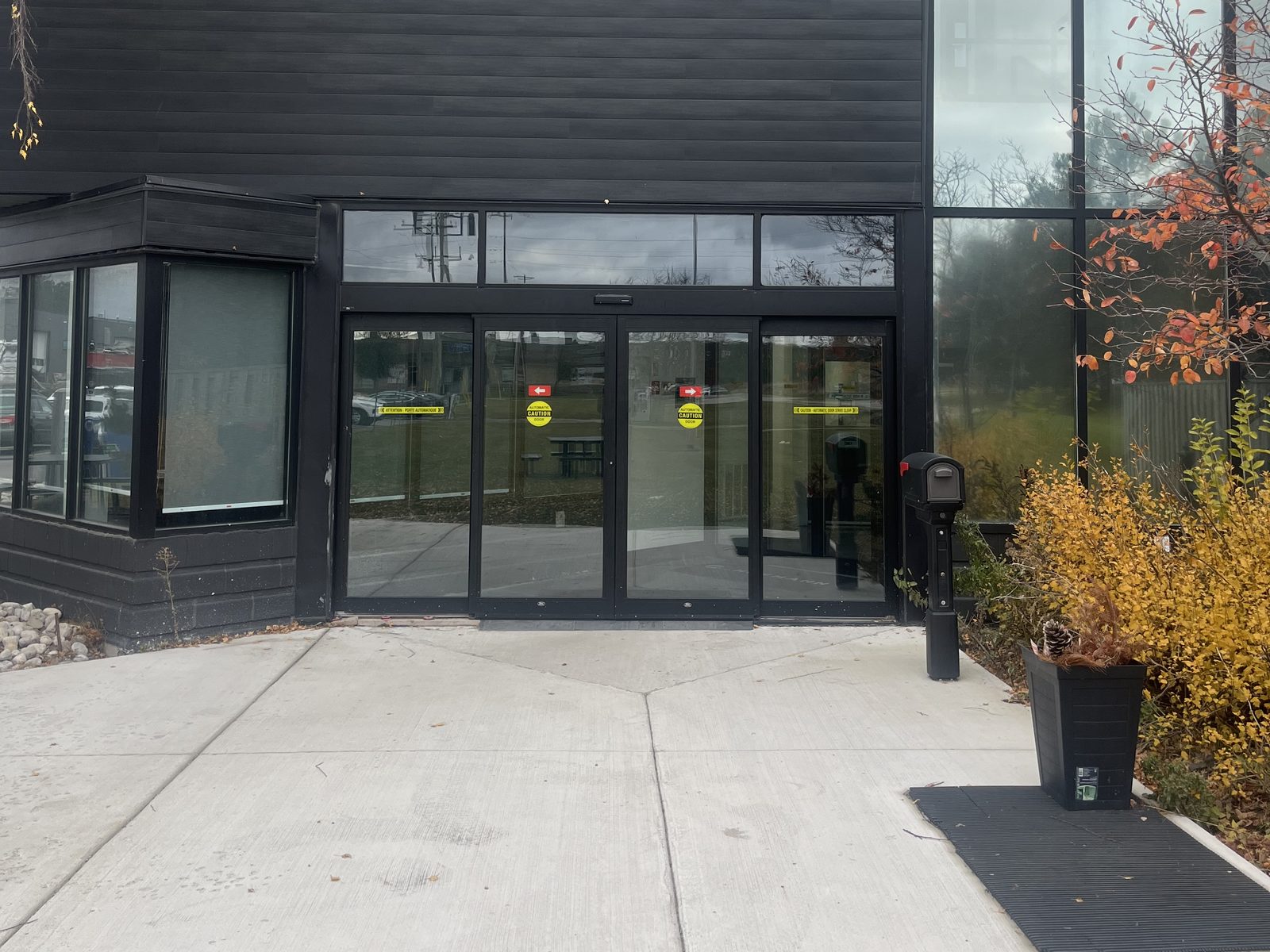
Types of Automatic Doors: Which One Suits Your Building?
Sliding, swing, folding, revolving and low-energy operators compared: where each belongs, the standard it is built to, and what Ontario code actually requires.
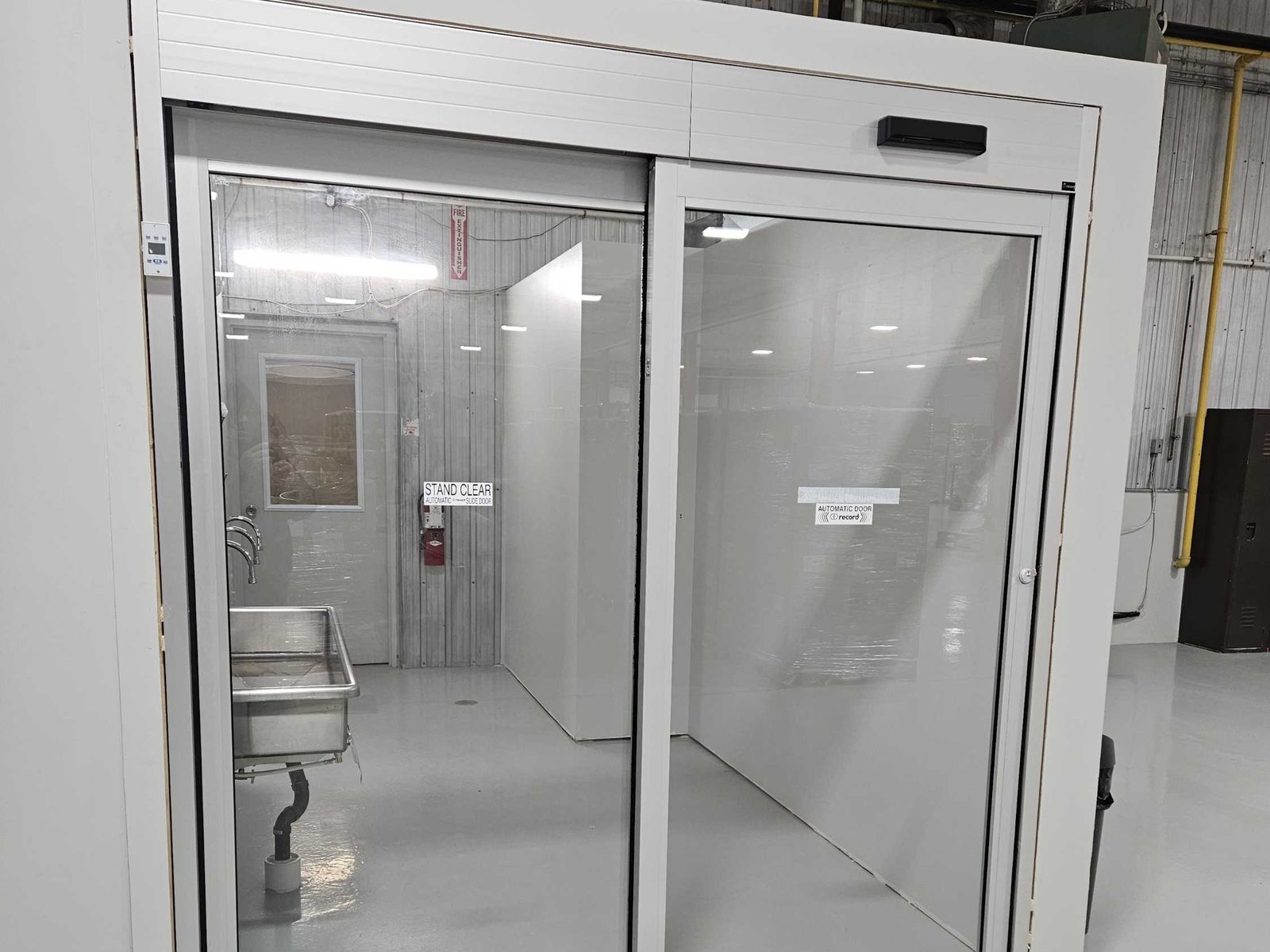
Automatic Sliding Door Sensor Not Working? What to Check First
Why automatic sliding door sensors stop working, what building staff can safely check, how to reset the door, and when it becomes a job for a certified technician.
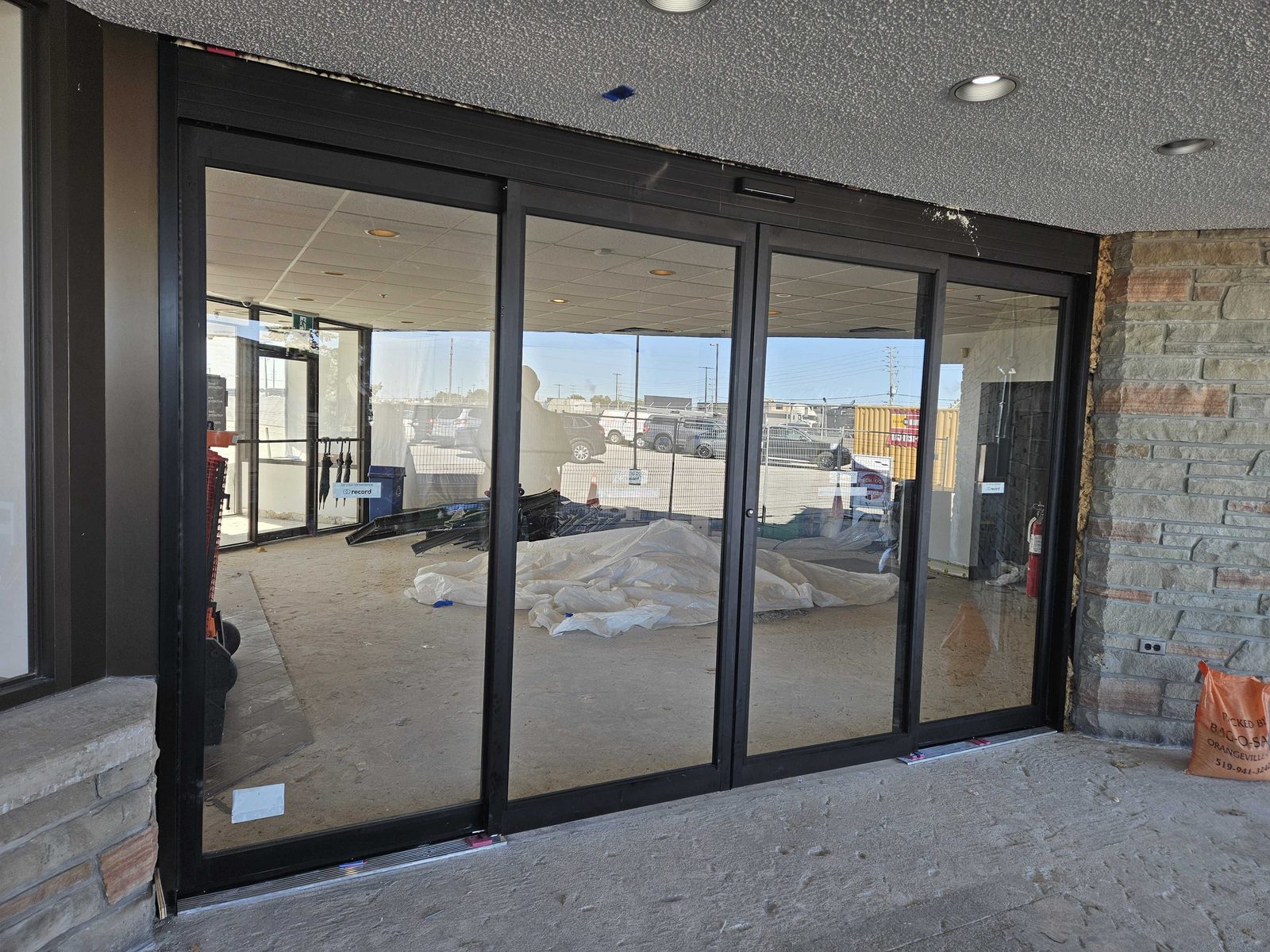
Automatic Sliding Door Repair vs Replacement: Which Saves More?
When fixing an automatic sliding door is the better money, when a new operator or a whole new entrance is, and the middle option most buildings overlook.
Get an opening made accessible or an operator fixed
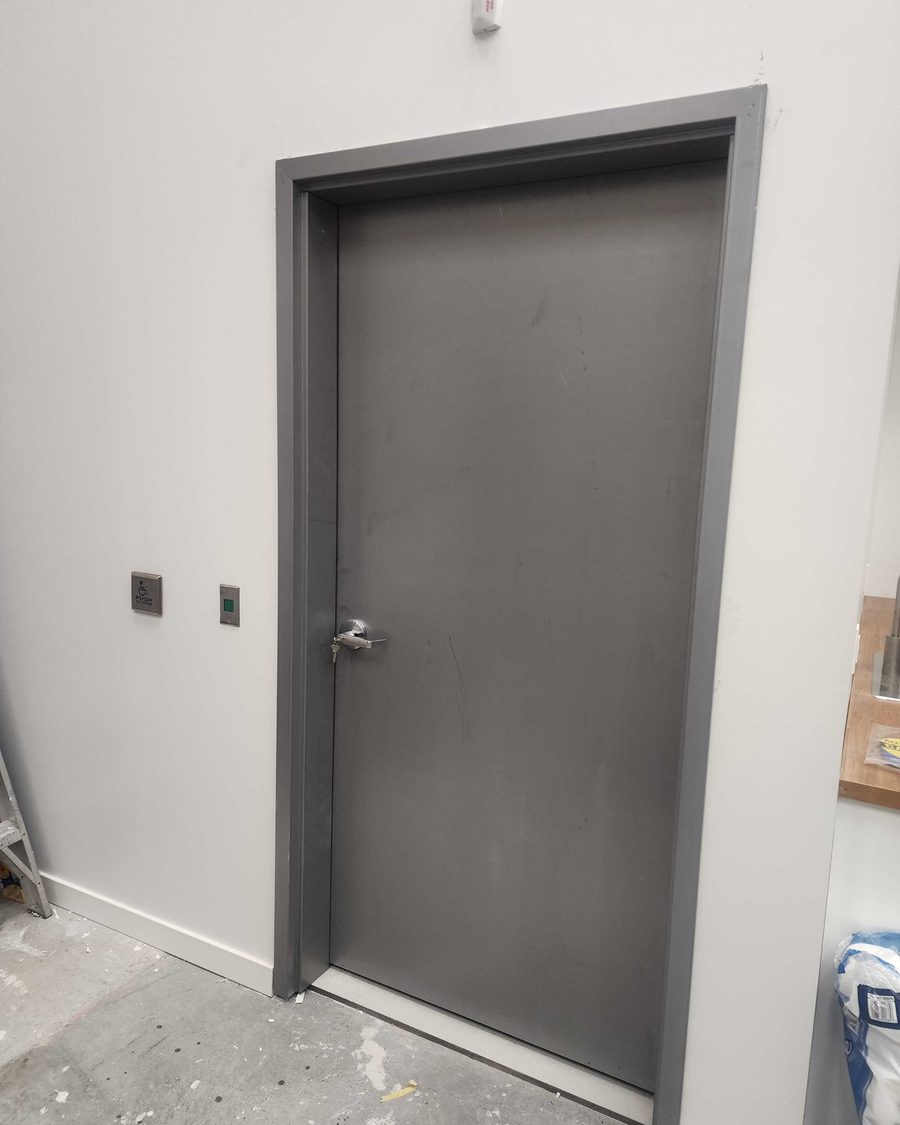
A door that has to become barrier-free?
Send us a photo of the door and the width of the opening. We will tell you whether it needs an operator, a wider doorway or both, and what it costs.