
Troubleshooting
Automatic Sliding Door Sensor Not Working? What to Check First
When an automatic sliding door sensor stops working, the cause is usually something in its field of view, such as a mat, sign or display, a dirty lens, the door switched out of automatic, or a power fault. Those take minutes to check. A sensor that is knocked out of aim or has failed needs a certified technician.
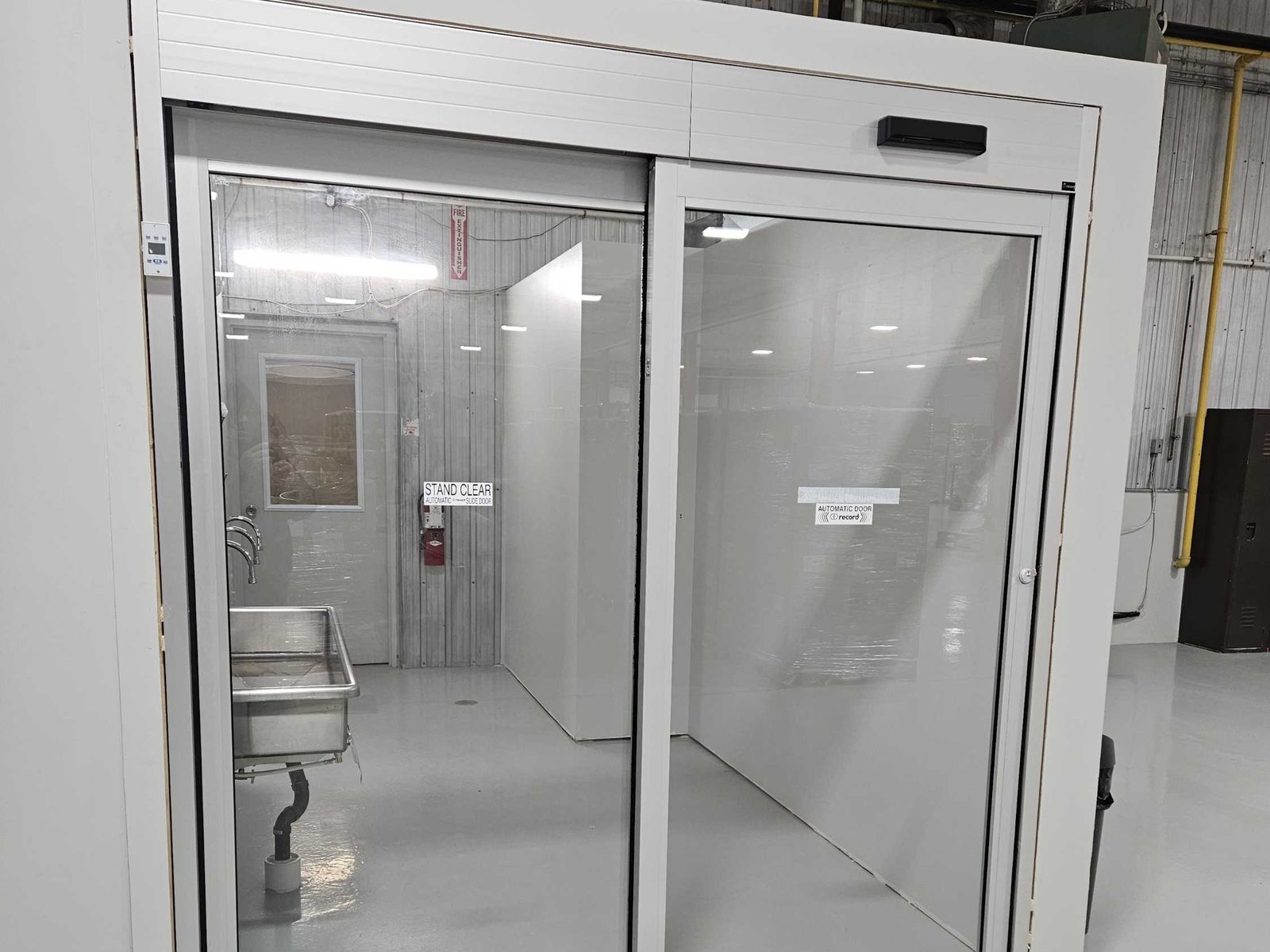
An automatic sliding door that will not open, will not close or keeps opening for no reason is almost always a sensor problem. The fault is usually not the sensor itself but what it is seeing. Some of those causes can be cleared by building staff in a few minutes. The rest need a technician, because the sensors are part of what keeps the door from closing on someone.
This guide covers both: what to check first, what not to touch, and when to pick up the phone.
Four decades of doors for names Ontario knows — Canada’s Wonderland, Tim Hortons, Canadian Tire, the LCBO, Metrolinx, Marriott & Hilton hotels, the University of Toronto — plus thousands of businesses across the GTA. Dependable people, quality products, since 1979.
Why is my automatic sliding door sensor not working?
In most cases, something in the sensor's field of view has changed, or the door has lost power or been switched out of automatic mode. A new mat, a sign, a seasonal display, a cart parked in the doorway or strong low sunlight can all make a door open at random or refuse to close. A dirty or misaligned sensor, loose wiring and ageing electronics follow behind.
An automatic slider usually has two kinds of sensor. Each fails differently, so the symptom tells you where to look.
- Motion sensors sit on the header and detect people approaching. When one fails, the door will not open, or opens late.
- Presence sensors watch the door path and hold the door open while someone is standing in it. When one fails or is triggered by something that is not a person, the door stays open or keeps reversing.
| Symptom | Most likely cause | What staff can check | When to call |
|---|---|---|---|
| Door will not open at all | No power, mode switch off or on "manual", failed motion sensor | Mode switch, power switch, breaker, one reset | If it stays shut after a reset |
| Door opens and stays open | Presence sensor seeing a mat, sign, display or object | Clear the door path and the approach | If it stays open with the path clear |
| Door opens by itself | Motion sensor catching passing traffic, weather or moving objects | Anything new that moves near the door, such as flags or banners | If it continues once they are gone |
| Door reacts late or not every time | Dirty sensor face or a sensor knocked out of aim | Wipe the sensor face with a soft dry cloth | If cleaning does not fix it |
| Door closes on people or objects | Presence or safety sensor not detecting | Nothing: switch the door off and secure it | Immediately |
| Door judders or stalls | Usually grit or salt in the track, not the sensor | Sweep the floor track clear | If it continues after the track is clean |
The most common "sensor fault" we attend is a change in the building that nobody connected to the door. A new entrance mat, a re-finished floor, a sandwich board or a holiday display can all sit inside a sensor's field. Once found, they are a five-minute fix.
What can building staff safely check?
Building staff can safely check the mode switch, the power, the area in front of the door and the sensor face, and they can reset the door once. Manufacturers draw the line there. Stanley Access Technologies, for example, tells owners not to open the header, not to lubricate the door and to leave further service to a certified technician (Stanley Access, automatic door troubleshooting).
- Check the mode switch. Most sliders have a key or program switch with settings such as automatic, exit only, hold open and off. A door left on "off" or "exit only" after closing time looks broken the next morning.
- Check the power. Confirm the door's power switch is on and the breaker has not tripped.
- Clear the field. Move anything new out of the door path and the approach: mats, signs, displays, carts, pallets, stacked stock.
- Wipe the sensor face. Use a soft, dry microfibre cloth. Do not use solvents or glass cleaner on the sensor, and do not push or twist it on its bracket.
- Reset once. Turn the door off, wait 15 to 30 seconds and turn it back on.
- Watch a full cycle. Walk towards the door, stand in the opening, and step clear. It should open, stay open while you are in it, and close after a short delay.
If the door is closing on people, will not stop, or is hanging off its track, skip all of this: switch it off, secure the opening and call.
How do you reset an automatic sliding door?
Set the mode switch to automatic, turn the door's power off, wait 15 to 30 seconds and turn it back on. The operator restarts, and many models run a slow learning cycle to find their open and closed positions before returning to normal service. That clears many minor electronic glitches.
Two cautions apply. First, one reset is a diagnostic, not a repair. A door that needs resetting every few days has a fault that will get worse. Second, some operators have a reset button or menu on the control board inside the header. Opening the header is a technician's job, because it exposes the drive belt and live electrics.
Why do automatic door sensors fail in commercial buildings?
Sensors on commercial entrances fail because they work constantly in a dirty, changing environment. Heavy traffic, dust, grit, salt, condensation, low winter sun and building changes all affect them. Age plays a part too: older sensors and control boards drift out of calibration and eventually fail outright.
Winter is the hardest season on a GTA entrance. Salt and grit carried in on boots build up in the floor track, wet mats get moved into the door path, and the low sun of a January afternoon shines straight into a west-facing sensor. That is why more automatic door calls come in between December and March than in any other quarter.
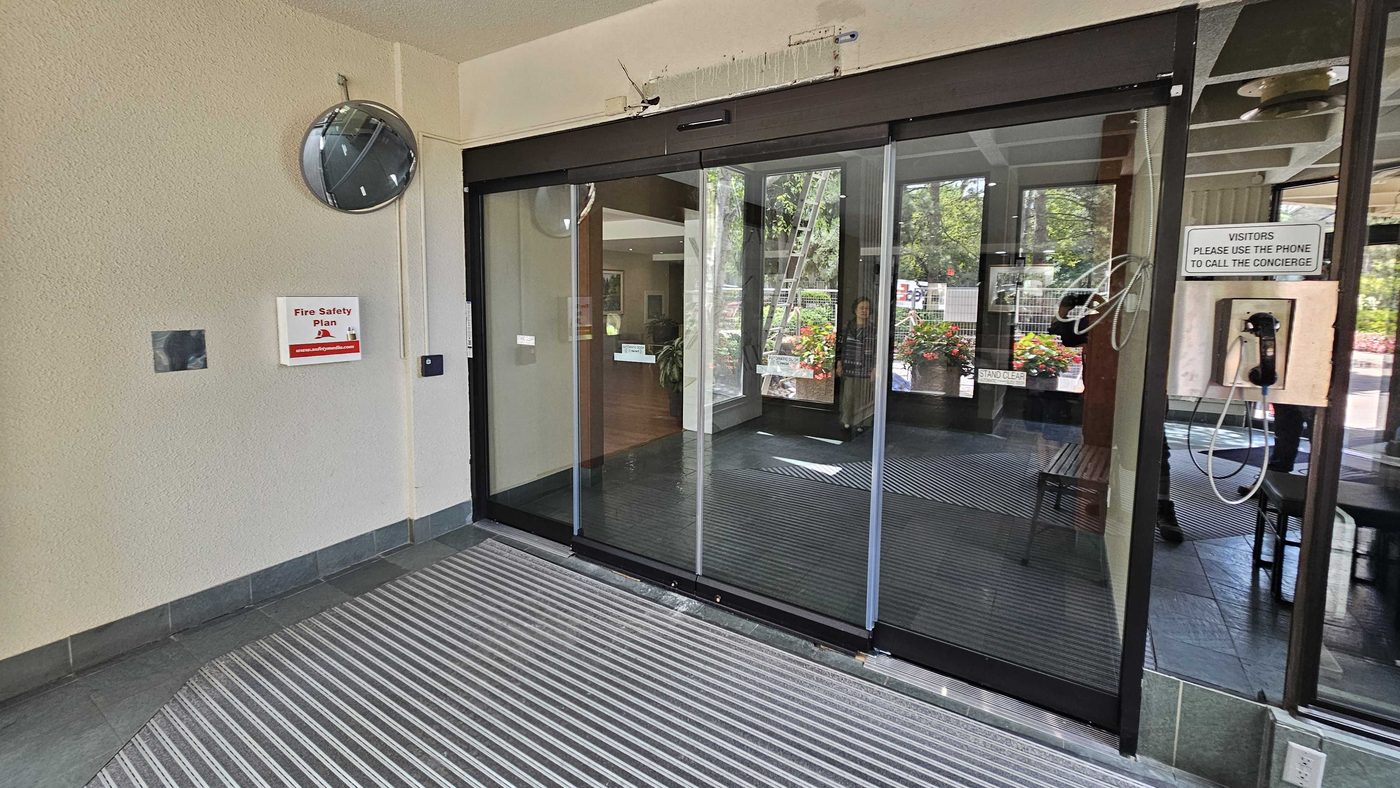
When do you need a technician?
Call a technician when the checks above have not fixed it, when the fault keeps returning, or at once if the door is closing on people or cannot be secured. Sensor aim, detection zones, hold-open times, speed and force are all set to meet the door's safety standard, so adjusting them is not a job for building staff.
Call straight away if:
- a presence or safety sensor is not detecting people, and the door closes on them;
- the door is stuck open and the building cannot be secured or heated;
- the door is stuck shut at an entrance that is the barrier-free route into the building;
- you suspect an electrical fault, such as burning smells, tripping breakers or a dead control panel;
- the same fault has come back after a reset or a previous repair.
We repair automatic sliding and swing doors of every make, including doors we did not install, and the emergency line is answered 24 hours a day from our Mississauga shop. Automatic door repair explains how a call-out works and what a technician checks first.
Should a faulty sensor be repaired or replaced?
A sensor that is dirty, knocked out of aim or loosely wired is repaired: cleaned, re-aimed, re-connected and re-tested. A sensor that has failed electronically, or is too old to hold its setting, is replaced on its own, without touching the operator or the door. Sensors are brand-specific, so knowing the make on the header helps us bring the right part.
The bigger decision comes when the sensor is not the only problem. If the operator's boards are no longer made, or faults are spreading across the whole system, compare the cost of continuing to repair against an operator replacement. Our
guide to automatic sliding door repair vs replacementcovers that decision.
How do you keep automatic door sensors working?
Keep sensors working with a daily check by staff, a clear door path, a clean floor track and an annual inspection by a certified technician. The American Association of Automatic Door Manufacturers publishes the daily safety check most buildings use (AAADM daily safety check). It also recommends that every automatic door be inspected once a year by an AAADM-certified inspector (AAADM FAQ).
| Every day, staff | Walk towards the door at different angles: it should open smoothly and stop without impact. Stand in the opening: it should stay open. Step clear: it should close after a short delay |
|---|---|
| Every day, staff | Keep the door path and approach clear of mats, signs, displays and stock |
| Weekly, more often in winter | Sweep grit and salt out of the floor track and from under the leaves |
| As needed, staff | Wipe the sensor faces with a soft dry cloth; clean the glass as usual |
| Never, staff | Lubricate the track or header, open the header, or adjust sensors, speed or force |
| Every year, certified technician | Full inspection of sensor coverage, hold-open times, speeds, forces, break-out, signage and the operator's condition |
| At service visits, technician | Check and replace worn rollers, carriers, belts and guides before they fail |
Rollers, carriers, belts and floor guides are the wear parts on a slider. They are best checked at the same visit as the sensors, because a door that drags makes the operator work harder and wears out the electronics too. Our technicians hold AAADM certification for the annual inspection, and it can be scheduled as part of a
preventative maintenance plancovering the building's other doors and docks, so the entrance is looked at on a schedule rather than after it fails.
Common questions
How do I reset my automatic sliding door?
Check first that the mode switch is set to automatic, then turn the door off at its power switch or breaker, wait 15 to 30 seconds, and turn it back on. Many operators then run a slow learning cycle, and the restart often clears a minor electronic fault on its own. If the door still does not behave after one reset, stop there and call a technician rather than cycling it again.
What are common problems with automatic doors?
Sensors that have been knocked, blinded by sunlight or confused by a new mat or display; grit and salt in the floor track that make a slider judder or stall; presence or safety sensors that hold the door open or make it reverse at random; worn rollers, carriers and belts; and control boards or motors at the end of their life. Many faults turn out to be a change in the building in front of the sensor rather than a failure in the door.
What can I do if my door sensor isn't working?
Clear anything new from in front of the door, including mats, signs, displays and carts. Wipe the sensor face gently with a soft dry cloth. Check the mode switch and the power, then reset the door once. If it still misbehaves, or if it closes on people or will not stop, switch it off, secure the opening and call a technician.
Should I adjust the sensor angle myself?
No. Sensor aim, detection zones, hold-open time, speed and force are all part of how the door meets its safety standard, and changing them can leave a door that closes on someone. Adjustments should be made by a technician certified to inspect automatic doors, who will test the door against the standard afterwards.
Can automatic door sensors be repaired?
Often. Many sensor faults are cleared by cleaning, re-aiming or re-commissioning the sensor and fixing loose wiring. Where the sensor itself has failed, it is replaced on its own, without touching the operator or the door. A sensor is one of the less expensive parts of an automatic door, so replacing a faulty one is rarely a big decision.
Pricing a job like this?
Door still stuck after the checks?
Call the 24/7 line and tell us what the door is doing, whether it is a slider or a swing door, and any make you can read on the header. We service automatic doors we did not install.