
Guides & FAQ · Commercial glass & glazing
Commercial Glass Thickness, Types & Broken Glass: Questions Answered
Most commercial glass is 6 mm (¼ inch) thick as a single lite, and 25 mm (1 inch) overall as the sealed double-glazed unit in an exterior window or storefront. All-glass doors run thicker, at 12 or 19 mm. Below are short answers to the questions property managers and store owners ask us about commercial glass: what goes where, what to do when it breaks, and what it costs.
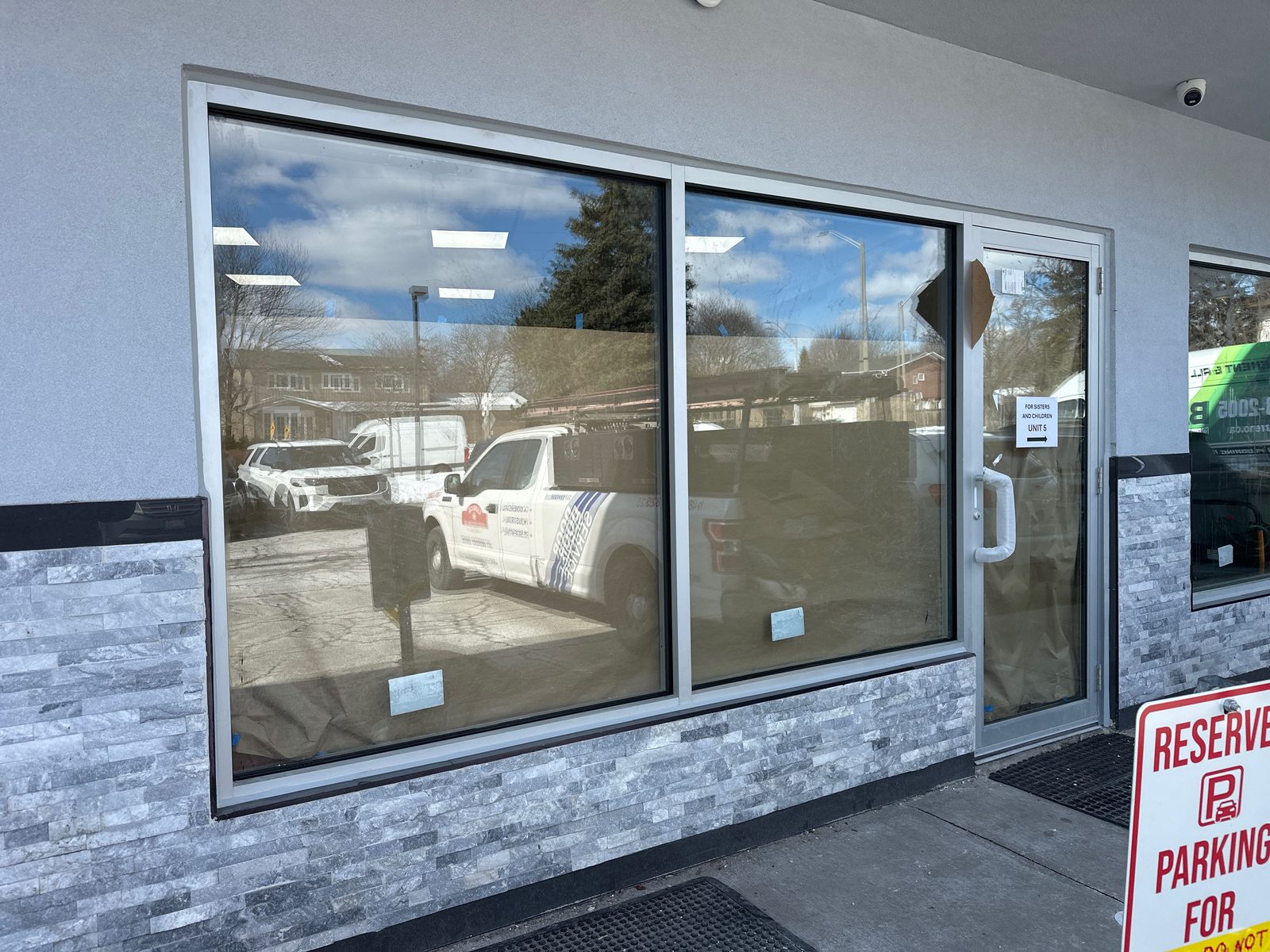
These answers come from the glass work we do every week on storefronts, entrance doors and windows across the GTA. Where a question needs more room, the answer links to the guide or service page that covers it in full.
Four decades of glass for names Ontario knows — Canada’s Wonderland, Tim Hortons, Canadian Tire, the LCBO, Metrolinx, Marriott & Hilton hotels, the University of Toronto — plus thousands of businesses across the GTA. Dependable people, quality products, since 1979.
How thick commercial glass is
Thickness follows the job the glass does: a single lite inside, a sealed unit on an exterior wall, heavy tempered glass where there is no frame at all.
How thick is commercial glass?
A single commercial lite is most often 6 mm (¼ inch), going to 8 or 10 mm as the pane gets larger or more exposed to wind. Exterior windows and storefronts use a sealed insulating unit instead: typically about 25 mm (1 inch) overall, built as a 6 mm lite, a 12.7 mm air or argon cavity and a second 6 mm lite. Laminated glass starts at about 6.38 mm, the glass plus its plastic interlayer.
What is commercial glass thickness in inches?
The usual conversions are 6 mm ≈ ¼ inch, 10 mm ≈ ⅜ inch, 12 mm ≈ ½ inch and 19 mm ≈ ¾ inch, and a 25 mm sealed unit is sold as a 1-inch unit. So between ⅜ and ½ inch glass, ½ inch is the thicker. Glass is made to metric thicknesses, which is why the inch figures are all approximate.
How thick is commercial door glass?
It depends on the door. An exterior aluminum storefront door usually carries the same 1-inch sealed unit as the storefront around it, tempered because it is in a door. An interior aluminum door or office front usually takes a single 6 mm tempered lite. An all-glass (frameless) door has no frame to stiffen it, so the glass itself is the door: tempered, typically ½ inch (12 mm) or ¾ inch (19 mm).
How thick is storefront glass?
On an exterior storefront in Ontario, the glass is a 1-inch (25 mm) sealed insulating unit with a low-E coating, and it is tempered in and beside the door. Older storefronts may still have single glazing, often 6 mm. Interior storefronts, such as shop fronts inside a mall, are usually single 6 mm tempered lites.
What decides how thick the glass in an opening has to be?
Mainly the size of the lite and the wind load it has to carry, which rises with the height of the building and how exposed the elevation is. In Canada, structural glass design follows CAN/CGSB-12.20. Then the location: safety glazing where the code asks for it, laminated glass where it has to stay in the frame once broken. The frame's glazing pocket sets a hard limit too: a frame built for a single 6 mm lite cannot take a 25 mm sealed unit.
Is thicker glass more secure?
Not much. Thicker glass takes more force to break, but once it breaks the opening is still empty. What delays a break-in is laminated glass, whose plastic interlayer holds the broken glass in the frame. Where a storefront keeps getting hit, laminated glass plus a shutter or grille does more than a thicker lite.
Which glass goes where
Commercial buildings use four or five kinds of glass, each chosen for a location rather than for looks.
What kind of glass is used in commercial buildings?
Sealed insulating units on almost every exterior opening, usually with a low-E coating and argon in the cavity. Tempered glass in doors, beside doors and anywhere else the code requires safety glazing. Laminated glass where the glass must stay in place once broken: overhead glazing, security and sound control. Plain annealed glass only in interior locations where safety glazing is not required.
What is commercial glazing?
Glazing is the trade of setting glass into frames, and commercial glazing covers the glass and aluminum framing of non-residential buildings: storefronts, entrance doors, windows, curtain wall and interior glass partitions. Besides the glass itself, it covers the gaskets, glazing tape, stops and sealant that hold the glass and keep water out. The people who do it are glaziers.
What is safety glazing, and where is it required?
Glass that breaks in a way that limits injury: tempered, which breaks into small blunt pieces, or laminated, which holds together. In Canada it is tested to CAN/CGSB-12.1, written for glass in doors and the panels beside them, and the Ontario Building Code requires it in those locations. A storefront door and its sidelites are safety-glazing locations, and that is not optional.
Is wired glass still allowed in doors?
It is on its way out. Traditional polished wired glass does not meet even the lower impact class in the 2017 revision of CAN/CGSB-12.1, and it is expected to stop being permitted in fire-rated doors and sidelites once building codes adopt that revision. A cracked wired lite is a good moment to replace it with fire-rated ceramic glass that also passes the impact test, where the door's listing allows.
Cracked and broken glass
Whether the glass is broken or has simply failed decides what happens next, and who you call.
Can broken glass be repaired?
Not in a commercial opening. Broken tempered glass has lost its strength, a cracked annealed lite keeps cracking, and a sealed unit with a broken lite has lost its seal, so the glass is replaced. What can often be repaired is what surrounds it: the frame, the gaskets and stops, and the door hardware, which is often what broke the glass in the first place.
Do glass repair kits work on commercial glass?
Not in any lasting way. Resin repair kits are made for small chips and short cracks in laminated windshield glass, where the interlayer holds the glass together while the resin fills the gap. A tempered lite that breaks goes all at once, so there is nothing to fill. A crack in annealed glass keeps spreading, and resin cannot reach the inside faces of a sealed unit. On a door or storefront, a kit is at most a stopgap for appearance.
Why did my window crack when nothing hit it?
Usually thermal stress: sun heats part of the lite while the edge stays cool in the frame, and the difference cracks the glass. It typically shows as a long crack starting at the edge, with no impact point. The other common cause is edge damage or a frame that has moved and now presses on the glass. Either way, find the cause before reglazing, or the new lite can crack the same way.
Can you replace just one pane of glass, or just the glass in a door?
Yes, as long as the frame is sound. Commercial windows and storefronts are made to be reglazed: the stops and gaskets come off, the broken lite or unit comes out, and a new one goes into the same pocket. A glass door leaf works the same way. The frame only has to come out when it is bent, corroded or too shallow for the glass you want.
Why is there fog between the panes of my window?
The edge seal of the sealed unit has failed, and moist air has got into the cavity and condensed on faces nobody can reach to clean. The fog cannot be removed. The unit is replaced and the frame usually stays, which makes it a planned reglaze rather than an emergency. Units on the same elevation tend to fail at around the same age.
Board-ups and emergency glass
When glass breaks after hours, the first visit makes the opening safe. The glass comes later.
Is a broken window an emergency?
It is when the building can no longer be locked, when the opening lets weather in, or when broken glass is still standing in a frame over a sidewalk. A crack in an intact pane high up can usually wait for a scheduled visit. A shattered storefront at street level cannot.
What does "board-up" mean in construction?
Covering an opening with plywood or sheathing so the building is secure and weathertight until the permanent glass or door goes in. In glass repair, the board-up is done the night the glass breaks: the remaining glass is cleared out, the panel is cut to the opening and fixed into the existing frame, and the opening is measured for its replacement at the same visit.
What can I use to temporarily fix a broken window?
On a commercial opening, a proper board-up. Tape holds fragments together long enough to photograph them, but it does not make the opening secure or weathertight, and it leaves loose glass in the frame. If the opening is small, inside the building and otherwise intact, waiting for morning is reasonable. If someone could get in through it, it needs boarding.
Why can't broken commercial glass be replaced the same night?
Because it is made to size. Tempered glass cannot be cut, drilled or edged after it is toughened, and sealed units are assembled to the measured opening, so nobody carries a storefront lite on a truck. The same-night job is the board-up. The glass is made to the measurements taken that night and installed on a second visit.
How long does replacement glass take?
Usually 1–2 weeks from measuring to glazing. Plain tempered glass is the quickest; laminated glass and sealed insulating units take longer. The board-up keeps the opening secure in the meantime.
What glass work costs
Glass is priced unit by unit, so what matters is knowing what moves the number.
How much does it cost to replace commercial glass?
There is no flat rate, because each unit is made to its opening. The price depends on the size of the lite, the make-up (single tempered, laminated, or a low-E sealed unit), access (a ladder, a lift or a swing stage), and whether the opening had to be boarded first, which makes it two visits. After-hours call-outs carry a labour premium, not a higher price for the glass. We quote the glass once the opening is measured.
Is it less expensive to replace the glass or the whole window?
Replacing the glass, almost always, because you pay for glass and labour rather than new frames, anchors, sealant and finishing work around the opening. Published Canadian contractor ranges for a whole commercial window run about $800 to $2,500 per opening installed. Replacing the whole window makes sense when the frame is bent or corroded, the thermal break has failed, or the opening itself has to change.
Will insurance cover broken glass and the board-up?
Glass breakage is commonly covered, and the board-up is usually treated as mitigation that your policy expects you to carry out promptly. Adjusters typically ask for photos of the damage before anything is touched, an itemised invoice, and the date and time of the call-out. We photograph every emergency opening on arrival and invoice the board-up and the glazing separately.
In-depth guides
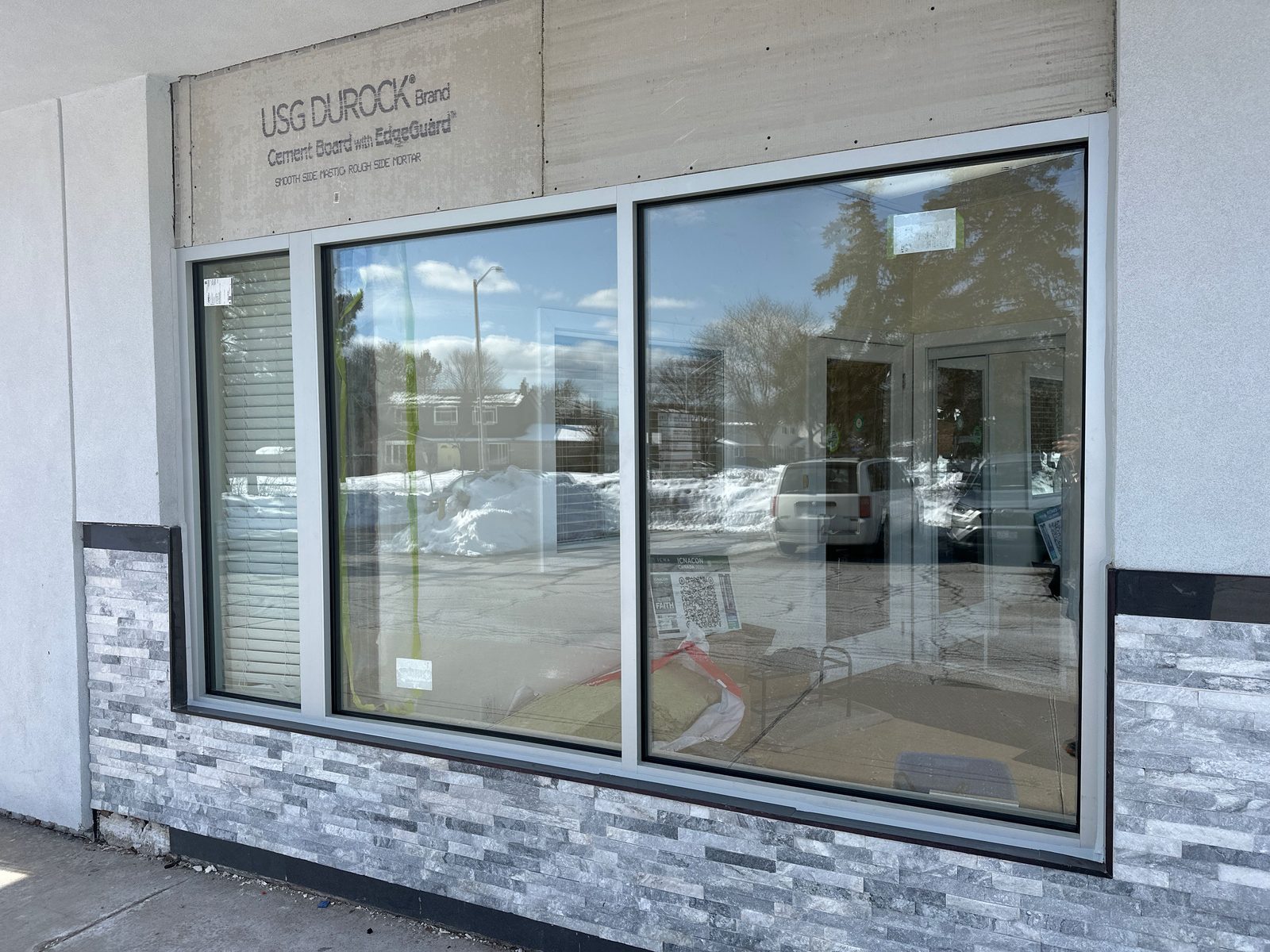
Tempered vs Laminated Glass: Which One Does Your Building Need?
How tempered and laminated glass are made, how each breaks, which is safer and which is more secure — plus where low-E coatings and insulating units fit in a commercial window.
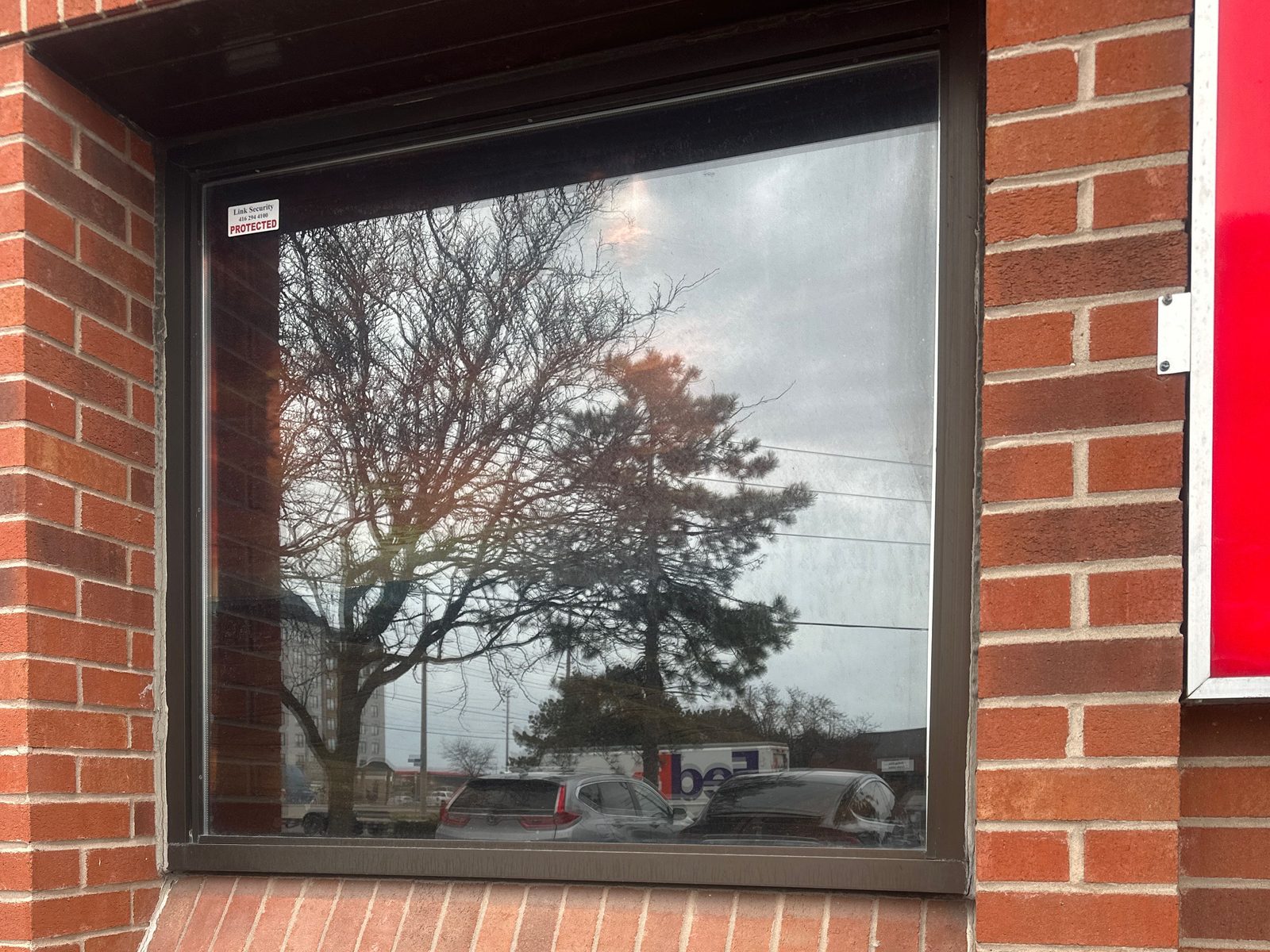
Repair or Replace Commercial Windows? How to Decide, Opening by Opening
The frame test that decides repair or replacement, what each common window and door-glass fault really needs, and how to plan a replacement when the frames are done.
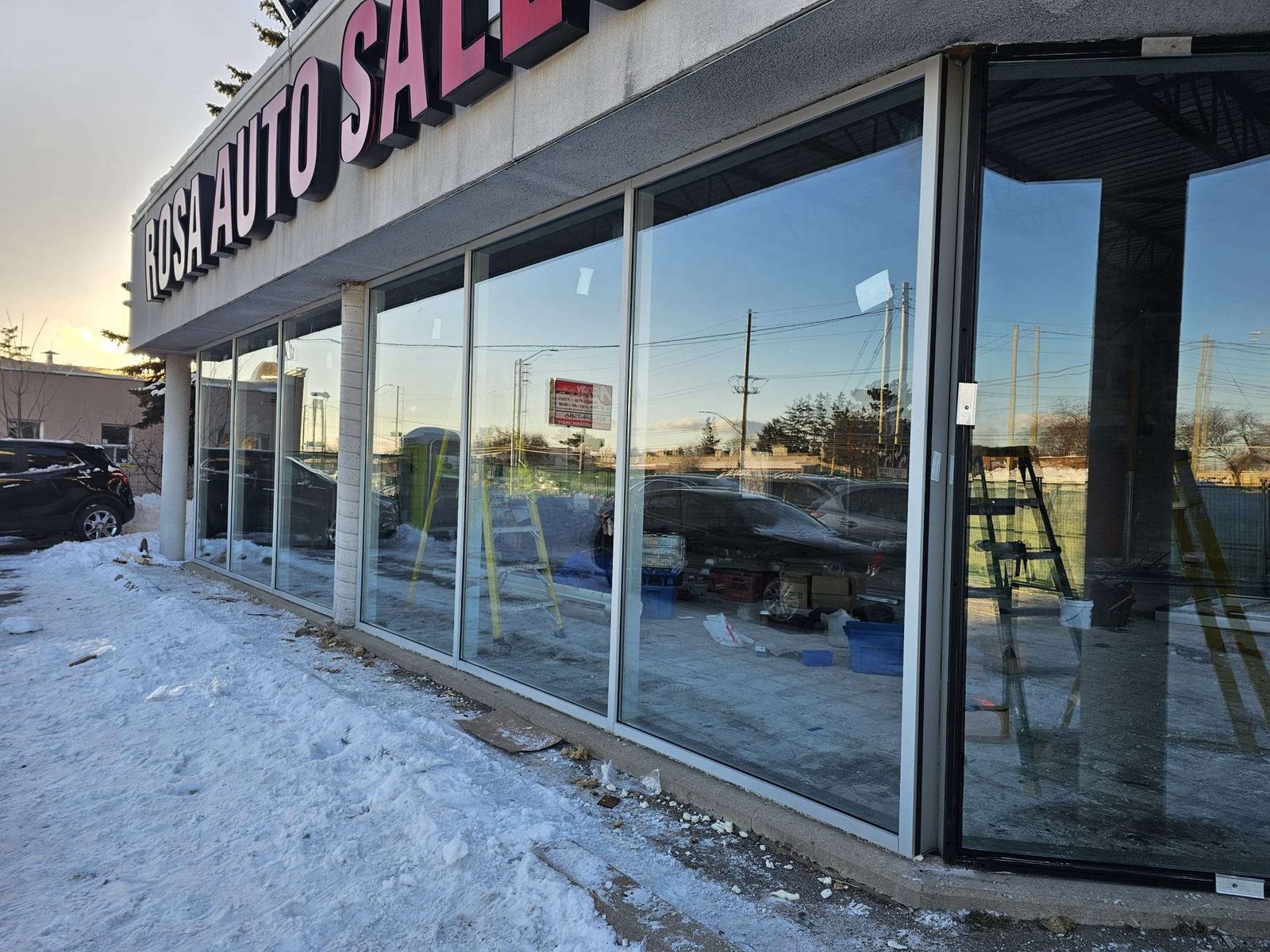
What Commercial Window Replacement Costs in Ontario
What the market actually publishes per opening, why per-square-foot numbers mislead on commercial work, and what the cost of ten windows really turns on.
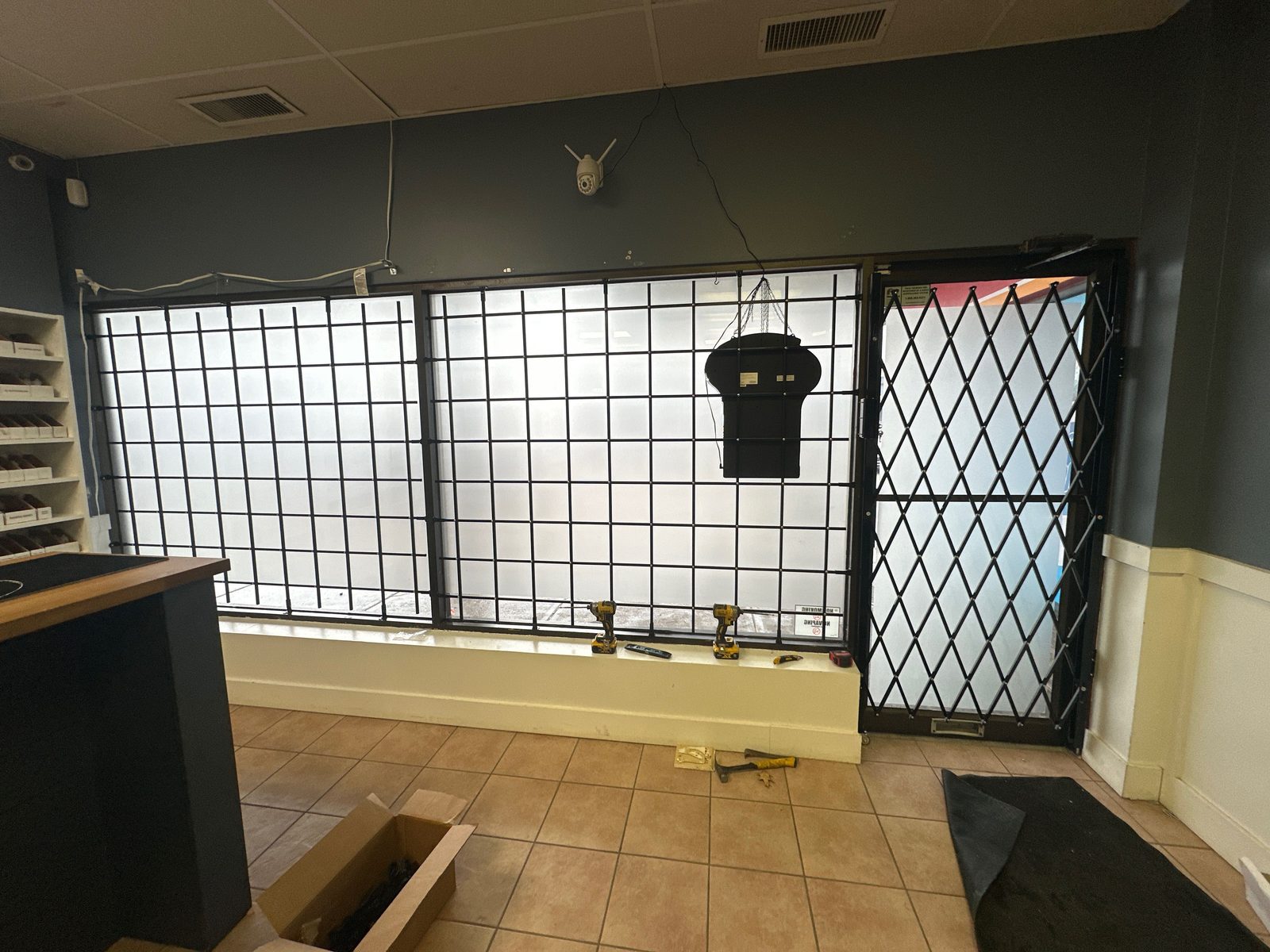
How to Prevent Break-Ins at a Commercial Property
Where intruders actually get in, what grilles, shutters, bars, locks and glass each buy you, and the order to fix a building's weak points in.
Get broken glass boarded up or replaced
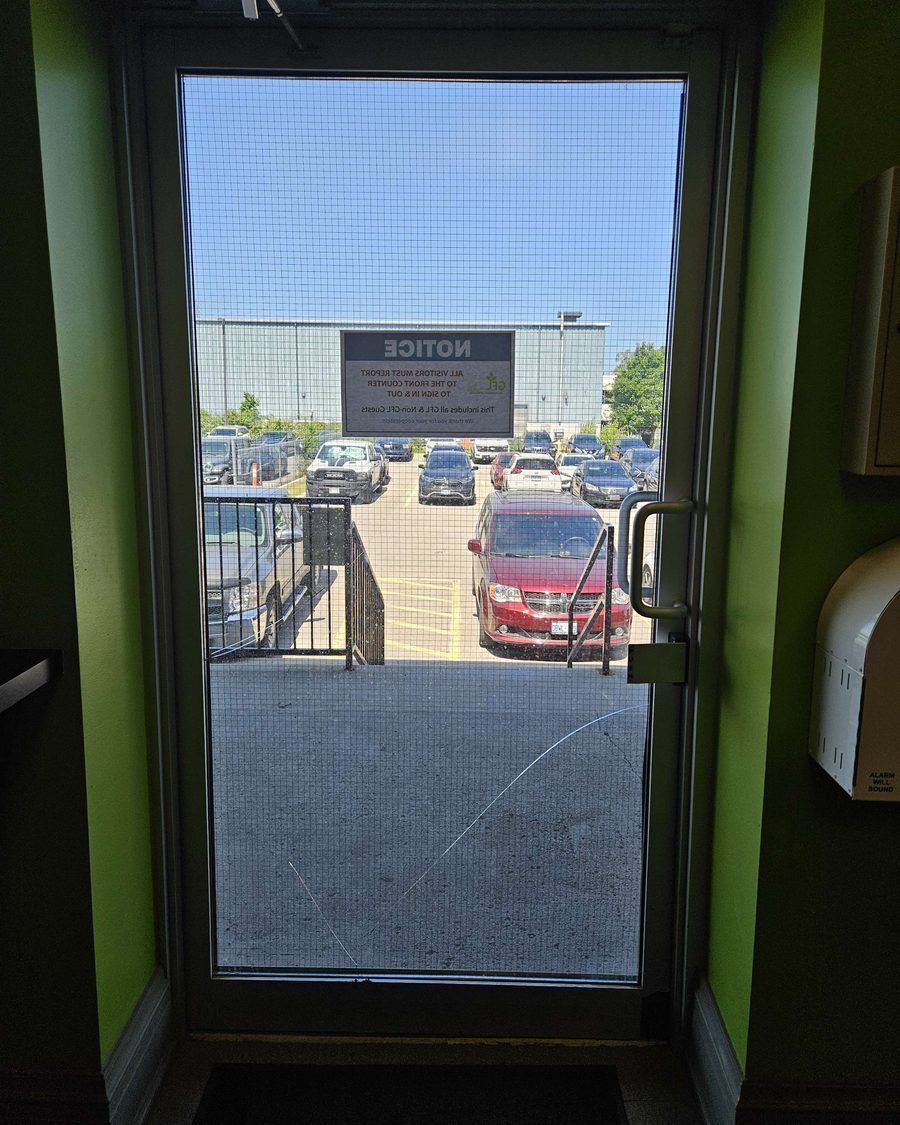
Glass broken, or glass failing?
If the building will not lock tonight, call and we board it up. If it can wait, send us a photo of the opening and we will tell you what glass it needs and what it costs.