
Guide
Repair or Replace Commercial Windows? How to Decide, Opening by Opening
Repair when the frame is sound and only the glass, seal or hardware has failed — a fogged unit, a cracked lite or a worn vent is a reglazing or service job. Replace when the frame itself is finished: corroded, out of square, non-thermal or leaking.
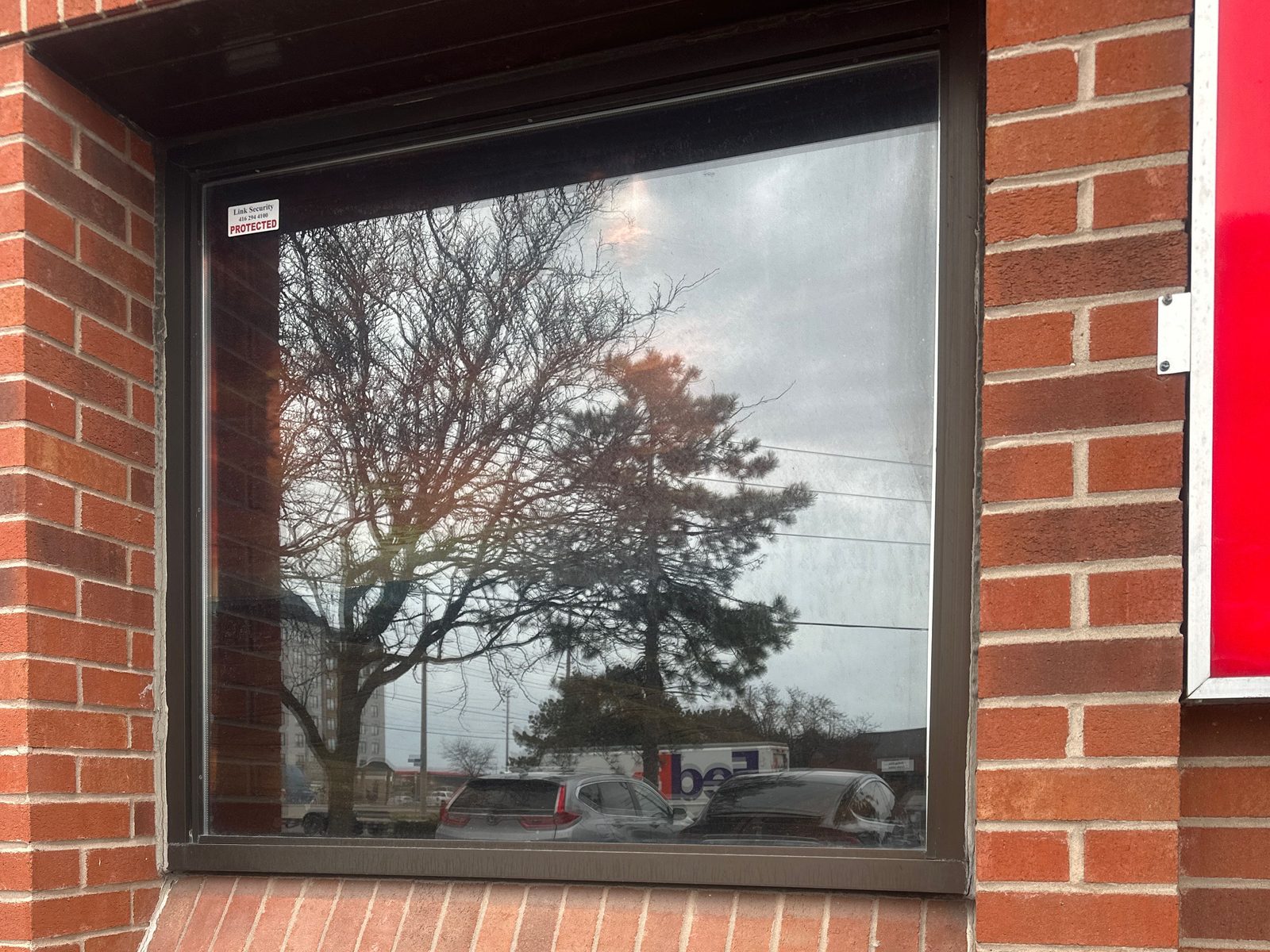
A commercial window that is fogged, cracked, drafty or leaking does not usually need replacing. Most of the time one part of it has failed — the sealed glass unit, a gasket, a vent's hardware, the perimeter seal — and the frame around it is fine. The expensive mistake is replacing a whole window because one part of it wore out, and the other expensive mistake is reglazing a frame that is finished.
This guide gives the test we use on site, what each common fault actually needs, how the same decision applies to door glass, and how to plan a replacement when it is the right answer.
Four decades of glass repair and reglazing for names Ontario knows — Canada’s Wonderland, Tim Hortons, Canadian Tire, the LCBO, Metrolinx, Marriott & Hilton hotels, the University of Toronto — plus thousands of businesses across the GTA. Dependable people, quality products, since 1979.
Should you repair or replace a commercial window?
Look at the frame, not the glass. If the aluminum frame is straight, anchored, thermally broken and sealed at its perimeter, whatever has failed inside it can be repaired or reglazed for a fraction of a new unit. If the frame itself has failed — corroded, out of square, sweating every winter, or leaking where it meets the wall — no amount of new glass will fix it, and replacement is the honest answer.
A well-finished aluminum frame usually outlives several sets of glass. That is why the frame is the test, and why age alone is not: a sound thirty-year-old frame with failed sealed units is a glass job, and a fifteen-year-old frame that was never anchored square is not.
What does each common fault actually need?
| Symptom | What has usually failed | Repair or replace |
|---|---|---|
| Fog or moisture between the panes | The insulating unit's edge seal | Repair — replace the sealed unit, keep the frame |
| Cracked or broken lite | The glass, from impact, edge damage or thermal stress | Repair — secure the opening, then reglaze |
| Draft around a closed vent | Weatherstrip, or hardware not pulling the sash tight | Repair — new weatherstrip, adjust or replace hardware |
| Vent will not open or close | Hinges, operator or lock on the vent | Repair — service or replace the vent hardware |
| Water inside at the frame edge | Perimeter sealant, or blocked weep holes | Repair first — reseal and clear drainage; replace if it persists |
| Condensation on the frame every winter | No thermal break, or a failed one | Replace — glass alone will not stop it |
| Frame bent, corroded or out of square | The frame | Replace |
Can fogged or cracked glass be repaired?
Yes — by replacing the glass, not the window. Fog between the panes means the edge seal of the insulating unit has failed and moisture has got into the cavity; it cannot be cleaned out from either side. The failed unit is removed and a new one is glazed into the existing frame. A cracked or broken lite is the same job, preceded by making the opening safe.
That is also the moment to upgrade the glass. A frame that took a clear double-glazed unit twenty years ago will usually take a modern low-E unit with an argon fill, and Natural Resources Canada credits low-E coatings with cutting winter heat loss and summer heat gain by up to 30 per cent (NRCan technology primer).
Commercial window glass replacementcovers the process and the make-ups.
What if the glass is broken tonight?
Secure it first, glaze it second. Broken glass on a storefront or window is a security and safety problem before it is a glazing one, so we dispatch 24/7, remove the loose glass, board the opening and measure the replacement lite on the same visit. Tempered and insulating glass is made to size and cannot be cut on site, so the permanent glass goes in on a return visit once it is made. If a door has to keep working in the meantime, the board-up is fitted so it still opens and closes.
See emergency glass repair and board-up for how that works, and commercial glass and window repair for everything else we fix.
Is door glass the same decision?
Mostly, yes. Broken glass in an aluminum storefront door is normally a reglaze: the leaf comes out of service briefly, new safety glass goes in, and the hardware is checked while it is apart. The exception is when the leaf itself is finished — bent, racked out of square after an impact, or corroded at the corners — or when its stiles are too narrow for the lock or exit device it now needs. Then a new leaf, or a new door and frame, is the better spend.
A door that sticks, drags or will not latch is usually not a glass problem at all but a closer, pivot or hinge, and those are repairs.
Commercial glass door repaircovers the door side, and how storefront doors are built explains why stile width matters when a door is replaced.
When is replacement the right answer?
When the frame has failed, or when the building needs something the old frame cannot give it. Replacement earns its cost when frames are corroded, bent or out of square; when they are non-thermal and condense every winter; when the glazing pocket is too shallow for a sealed unit; when the perimeter leaks despite resealing; or when rooms now need vents the old fixed frames cannot take.
A reglaze is a service visit; a replacement is a project, with a site measure, shop drawings, fabrication and removal. Typically the windows take 4–6 weeks to produce once the shop drawings are approved, then 1–2 weeks to schedule and install. What it costs is set out in what commercial window replacement costs, so we will not repeat it here.
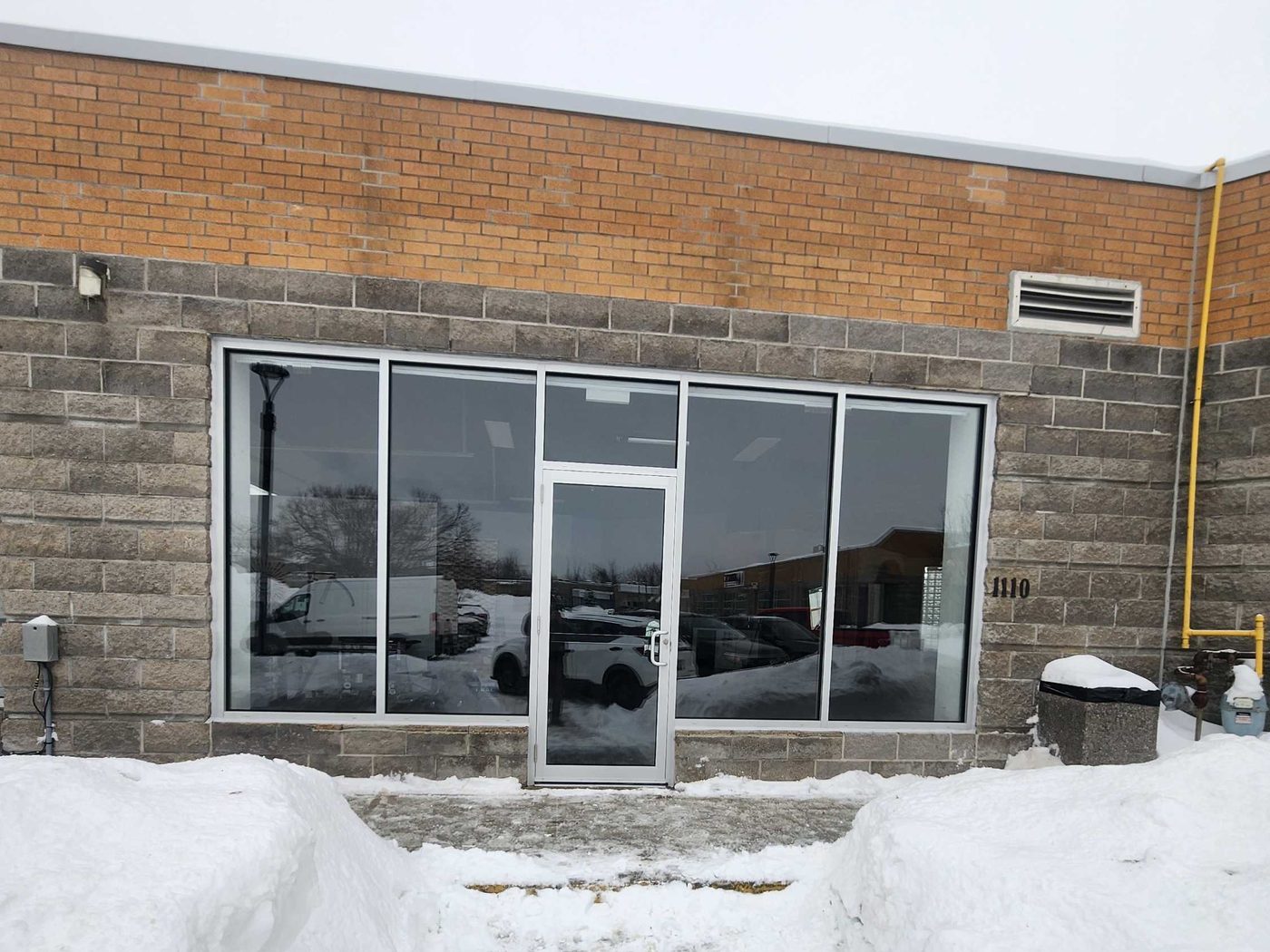
What should you plan for when replacing commercial windows?
Five decisions shape a replacement, and each is worth making before anyone orders glass:
- Climate performance. Thermally broken aluminum framing and a low-E insulating unit are the baseline for an exterior opening in Ontario. Natural Resources Canada lists thermal breaks at least 12 mm wide as a feature of an energy-efficient commercial window.
- Budget per opening, not per building. Spend on the elevations and openings that matter; not every lite needs the same make-up.
- Frame material. Aluminum for commercial openings, for strength, glass size and a lasting finish; see aluminum vs vinyl windows.
- Glass make-up. Tempered where the code requires safety glazing, laminated for security or overhead glass, low-E and argon for energy.
- Fixed or operable. Fixed where the building is mechanically ventilated; awning, hopper, casement or slider vents where rooms need air.
If glass is broken, photograph the damage from inside and outside before anything is moved. Your insurer will ask for it, and the photographs let us see the frame, the make-up and the access before the crew arrives.
How do you decide across a whole building?
Opening by opening. Walk the building with a list, mark each opening as glass, hardware, seal or frame, and group the results. A building where a dozen sealed units have failed in sound frames is a reglazing programme that can be phased by floor or by season. A building where the frames are non-thermal and leaking everywhere is a replacement project, and patching it one lite at a time only defers the spend. Most buildings are somewhere between, and the right plan reglazes what is sound and replaces what is not.
We repair and reglaze aluminum windows and storefronts whoever supplied them, including systems no longer made. Where a discontinued profile cannot be matched, replacing the unit is the honest answer. See commercial windows when the frames are done.
Common questions
Can a fogged commercial window be repaired?
The fog cannot be cleaned out, because it is moisture sealed inside a failed insulating unit. The fix is to replace the sealed unit and glaze it back into the existing frame. That is a reglazing job, not a new window, as long as the frame is sound. Services that drill and vent a fogged unit leave a window that no longer insulates.
Can you replace just the glass in a commercial window?
Yes, and it is the usual repair. If the frame is straight, the thermal break is intact and the glazing pocket will take a modern sealed unit, the old glass comes out and a new unit — usually low-E with an argon fill — goes into the frame you already have.
How do you know when a commercial window frame is finished?
When the problem is the frame rather than the glass. Corrosion, a frame out of square, vents that no longer close tight, water getting in at the perimeter that fresh sealant does not stop, or a non-thermal frame that condenses every winter. Age alone is not the test; a sound old frame can take new glass for years.
What happens if a storefront window breaks overnight?
Call and we dispatch 24/7. The opening is secured the same visit, usually with a plywood board-up, and the new lite is measured at the same time. Tempered and insulating glass is made to size and cannot be cut on site, so the permanent glass goes in on a second visit.
Is broken door glass repaired, or is the whole door replaced?
Usually the glass alone. The door is reglazed with new safety glass and the hardware is checked while it is apart. The whole door is replaced when the leaf itself is damaged, bent or racked out of square, or when the stiles are too narrow for the lock or exit device it now needs.
Pricing a job like this?
Not sure whether to repair or replace?
Send us photographs of the worst openings and a rough count. We will tell you which are glass jobs and which need new frames, and secure anything broken first, 24/7.