
Guide
What Is a Storefront Door? Stiles, Hardware and Glass Explained
A storefront door is a glass door in an extruded aluminum frame — narrow, medium or wide stile — hung in the same aluminum framing as the shop's display glass. It is made to the opening, and the stile width decides what hardware it can carry.
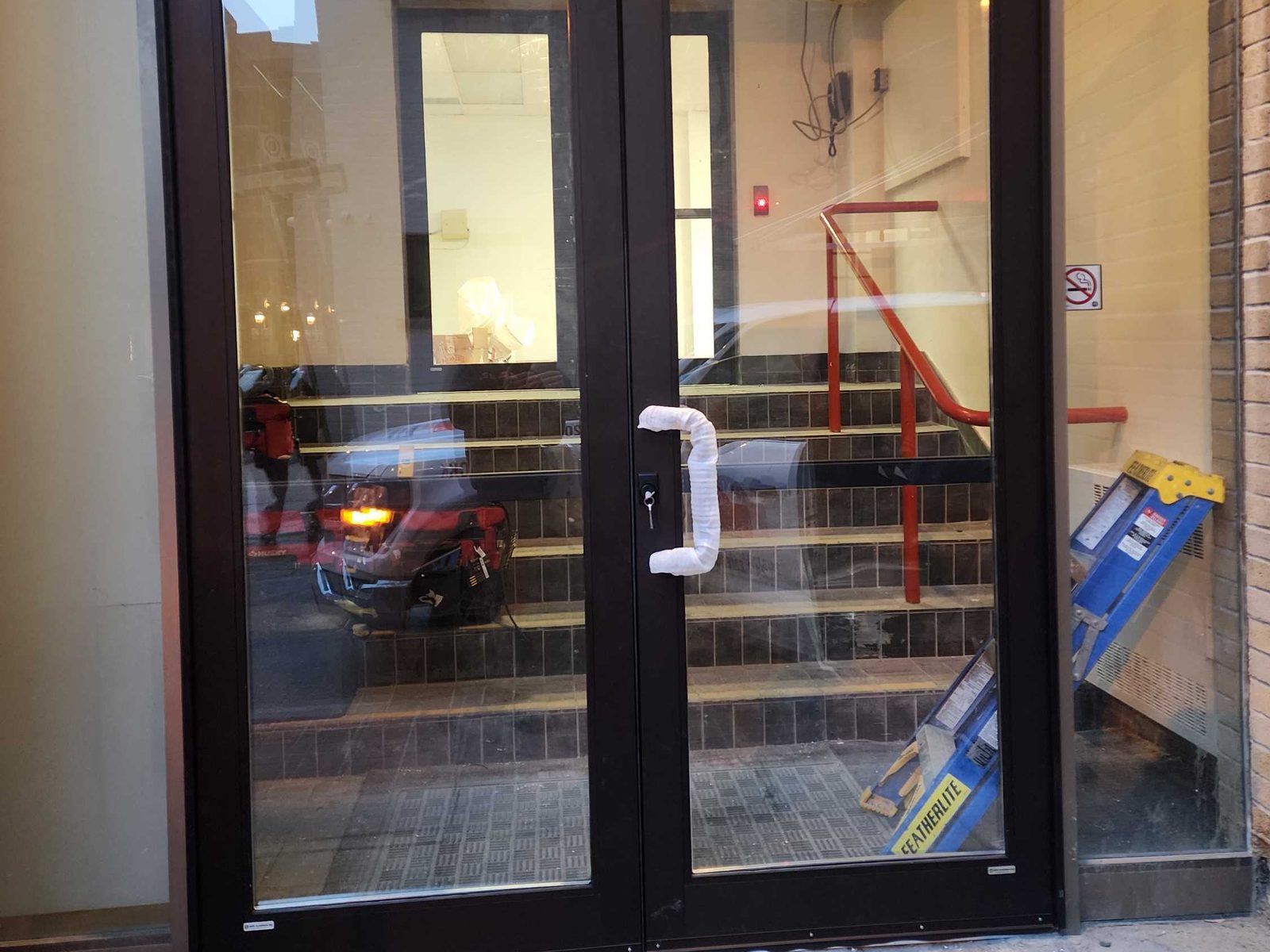
Walk up to almost any shop, clinic, bank branch or office lobby in Ontario and the door you push open is a storefront door. It is so common that nobody names it — until it stops latching, the glass breaks, or the building needs a new one and the quote asks questions about stiles, pivots and thermal breaks.
This guide explains what a storefront door is, the choices that actually matter when you buy one, and why most of them come down to traffic and hardware rather than looks.
Four decades of storefront doors and entrances for names Ontario knows — Canada’s Wonderland, Tim Hortons, Canadian Tire, the LCBO, Metrolinx, Marriott & Hilton hotels, the University of Toronto — plus thousands of businesses across the GTA. Dependable people, quality products, since 1979.
What is a storefront door?
A storefront door is a glass door framed in extruded aluminum: two vertical stiles, a top and bottom rail, and a large glass lite between them. It is normally 1¾″ thick and hangs in the same aluminum framing as the fixed display glass beside it, so the door, sidelites and transom read as one system.
Three things separate it from other commercial doors. It is mostly glass, where a hollow metal door is mostly steel. It has a frame around the glass, where a frameless door is a single slab of tempered glass on patch fittings. And it is fabricated to the measured opening, then prepared for the specific hardware it will carry. The storefront systems we install are built this way from Windspec, Commdoor and Herd aluminum lines.
What are storefront doors made of?
The stiles, rails and frame are extruded aluminum. Aluminum is used because it carries a large lite of glass on a slim section, does not rot or swell, and takes a durable finish: clear, black or bronze anodized, or a powder-coat colour. The two behave differently after damage: an anodized finish cannot be touched up after a scratch, and powder-coat can.
The glass is safety glazing — tempered or laminated. On an exterior door in Ontario it is usually a sealed insulating unit in thermally broken framing; on an interior door, a single lite of tempered glass. Everything else — the closer, the lock, the pull, the hinges or pivots, the threshold and the weatherstrip — is hardware, and it is the hardware that wears out first.
What is the difference between narrow, medium and wide stile?
The stile is the vertical section of aluminum on each side of the glass, and its width is the single most important choice on a storefront door. A wider stile means more aluminum around the glass, which means more room for a lock case, an exit-device rod and the reinforcement a closer pulls against. Industry rough sizes are about 2″ for narrow, 3½″ for medium and 5″ for wide (Locksmith Ledger).
| Stile width | Best for | Watch-outs | |
|---|---|---|---|
| Narrow stile | About 2″ | Retail and showrooms where the glass should dominate | Limited room for hardware; not every lock or exit device fits |
| Medium stile | About 3½″ | Main entrances taking all-day public traffic | The usual upgrade when a narrow-stile door keeps failing |
| Wide stile | About 5″ | Heavy use, panic hardware, schools and institutions | Reads heavier; more aluminum, less glass |
| All-glass (frameless) | None | Lobbies and interior openings that should disappear | Tempered glass is made to size — damage means a new leaf |
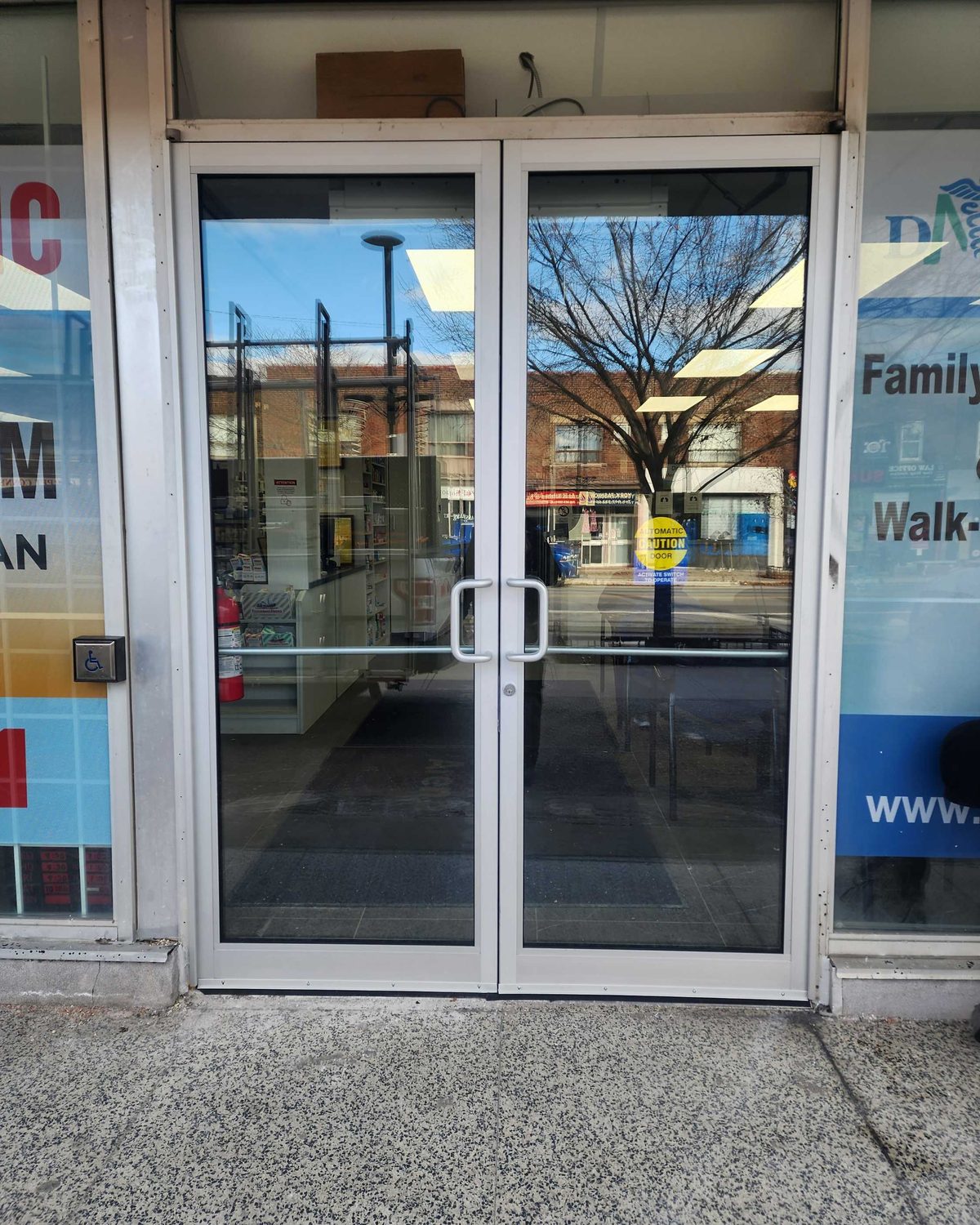
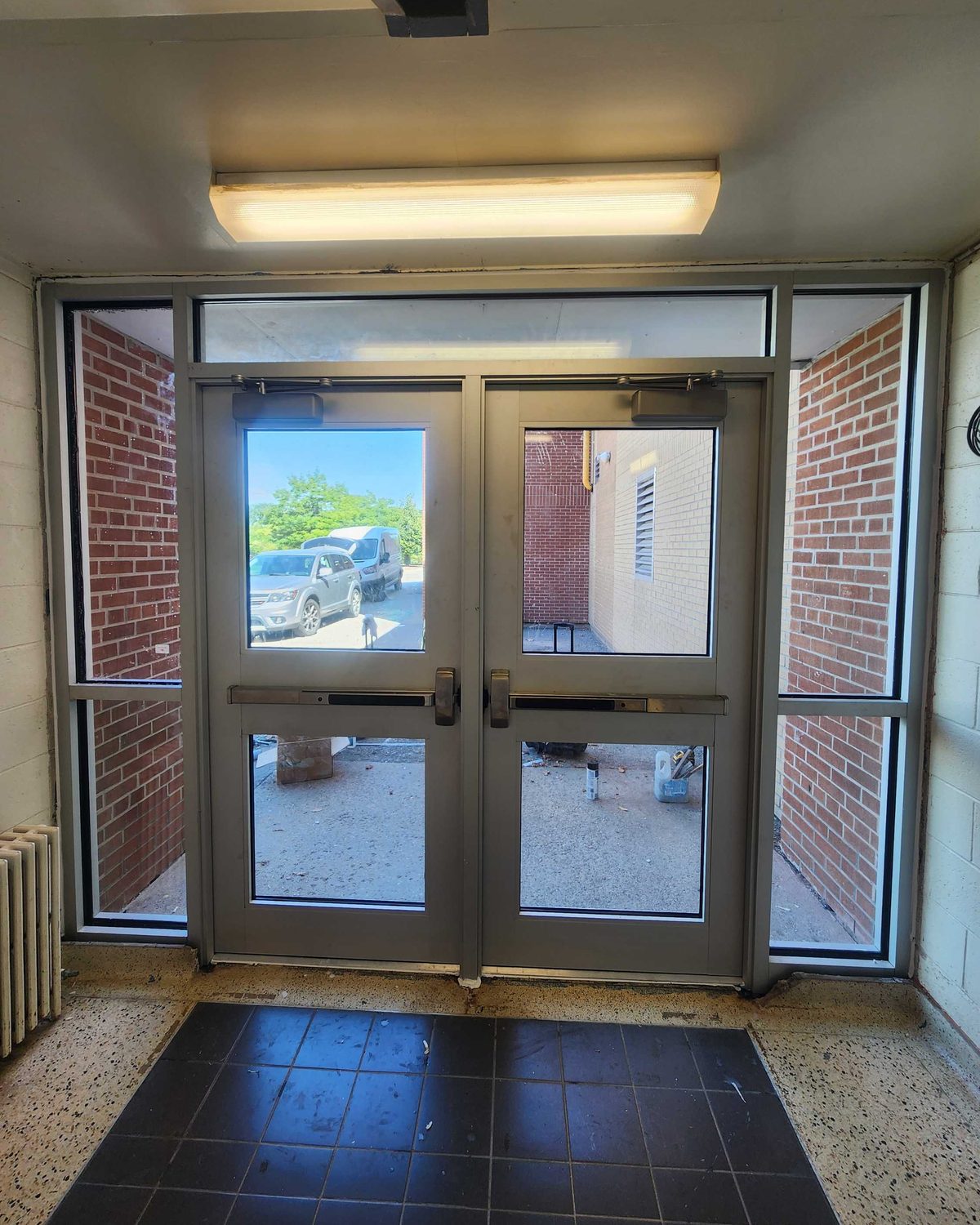
Real doors sit between those marks. The HERD 218 series doors on a
Mississauga plaza storefront we replacedhave 2½″ stiles, a 3⅛″ top rail and a 4⅛″ bottom rail — a narrow-to-medium door chosen for plaza units with steady public traffic.
Should a storefront door swing, slide or open automatically?
Most storefront doors swing, and the choice is how they are hung: butt hinges for light traffic, offset pivots at the top and bottom for the classic storefront, or a continuous hinge running the full height for doors that take the most abuse. Singles and pairs are both common, with or without sidelites and a transom.
The alternatives each solve a specific problem:
- Automatic operators on a swing door — a push plate or wave sensor opens the existing door. This is how most storefronts meet accessibility needs without changing the door itself; see handicap and automatic door operators.
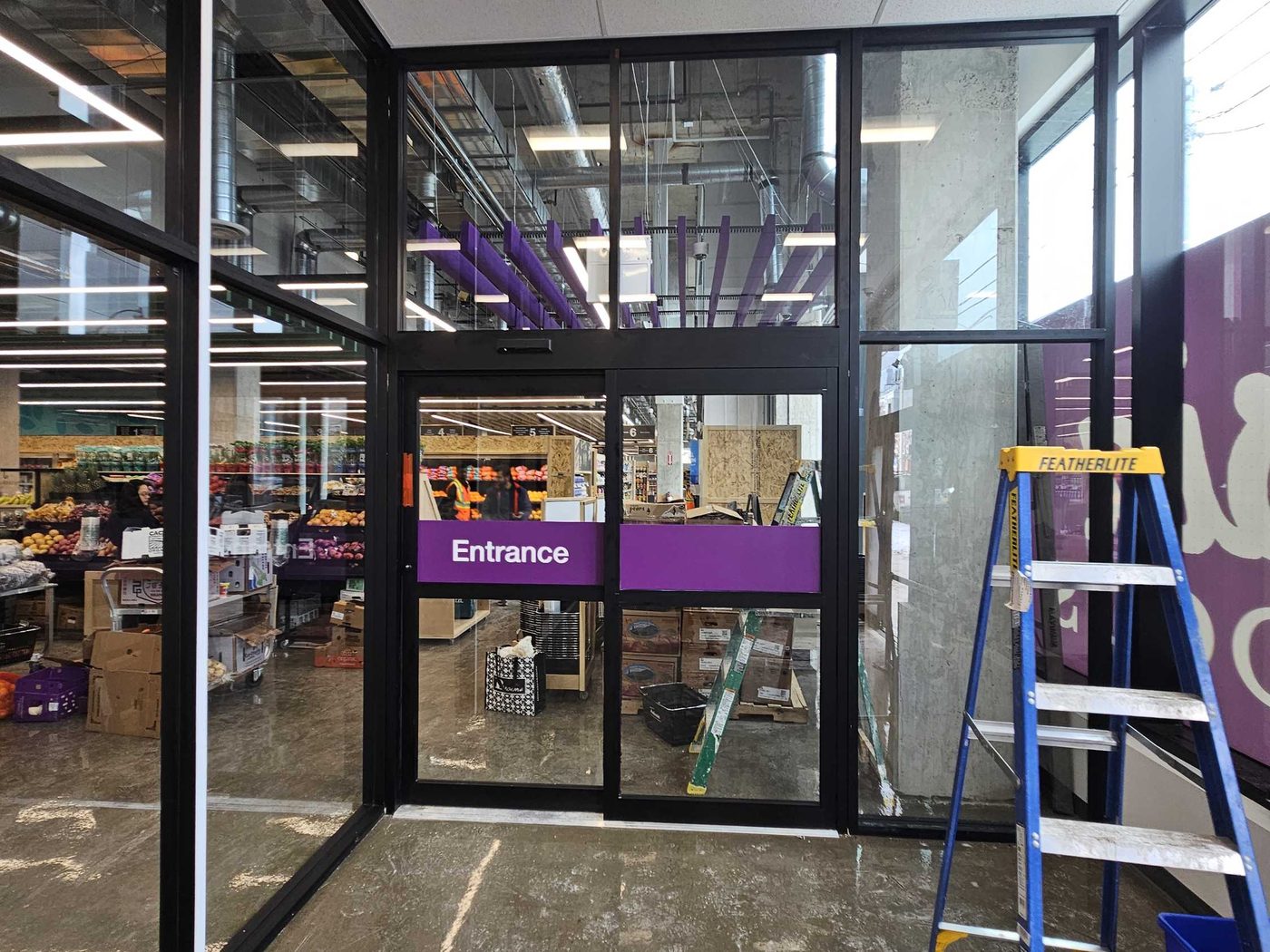
- Automatic sliding doors — the leaves slide sideways, so a grocery store, pharmacy or clinic with constant two-way traffic never has a door swinging into a customer.
- Bi-folding doors — the leaves fold back to open a whole wall, the restaurant and patio answer.
The guide to automatic door types covers the powered options in detail. One thing worth knowing: automatic pedestrian operators — sliding and swing — are repaired, not just replaced, and we service them.
What hardware does a storefront door carry?
Hardware is the part that decides whether an entrance is still working in ten years, and it is where almost every service call starts. A storefront leaf typically carries:
- A closer — surface-mounted on the frame, or concealed in the header or the floor.
- A lock — usually a narrow-profile deadlock matched to the stile width.
- An exit device where the code calls for panic hardware — a rim or concealed-rod device, which is one of the main reasons for choosing a wider stile.
- Pulls and push bars, often offset pulls on a pair.
- Hinges or pivots, which carry the whole weight of a glass leaf.
- A threshold, weatherstrip and door sweep — the air and water seal at the bottom.
Most "the door won't close" calls are a closer out of adjustment or a pivot worn out of line, and both are repairs. We repair storefront door hardware 24/7, whoever supplied the door.
What glass goes in a storefront door?
Safety glass, always. In Canada the safety-glazing standard is CAN/CGSB-12.1, written for glass in doors and the panels beside them, and its 2017 revision applies to all safety glazing materials, not only tempered and laminated glass (National Glass Association). On an exterior Ontario storefront the usual make-up is a 1″ sealed insulating unit with a low-E coating; laminated glass replaces tempered where security matters more than anything else. Tempered vs laminated glass sets out the trade-off.
Does a storefront door need a thermal break?
On an exterior wall in Ontario, yes. Aluminum conducts heat, so a non-thermal frame runs cold enough in January to condense on the inside face, then drip onto the floor. A thermally broken frame separates the inside and outside aluminum with an insulating barrier. Natural Resources Canada lists thermal breaks at least 12 mm wide as a feature of an energy-efficient commercial window (NRCan technology primer), and the same logic applies to the door frame beside it.
If two quotes for the same entrance differ widely, check the thermal break before anything else.
Commercial aluminum doorscovers the framing options.
What size is a standard storefront door?
The most commonly stocked single leaf is 3′0″ × 7′0″, and a pair is two of those in a 6′0″ opening (a typical stock listing). Stock sizes are fine for new construction drawn around them. On a replacement the existing opening is almost never a stock size, so the frame and door are fabricated to a site measure.
What does a storefront door cost to repair or replace?
A common storefront door repair typically runs $250 to $800, and a replacement $1,200 to $3,500 or more. Repairs are usually the hardware: a closer, a pivot, a lock or an exit device. The replacement figure climbs with the stile width, the glass make-up, a thermally broken frame, a custom finish and any automatic operator.
| Work on a storefront door | Typical cost (CAD) |
|---|---|
| Hardware adjustment: closer, hinge or pivot, seals, latch | Under $400 |
| Common repair | $250 – $800 |
| Replacement door | $1,200 – $3,500+ |
| Replacement with the frame taken out | $1,500 – $3,500+ per opening |
These are typical ranges in Canadian dollars, not a quote: the number for your opening comes from your photos or drawings, or a site visit when needed. For the glass on its own, see storefront glass repair and replacement.
How long does a new storefront door take?
Typically 4–6 weeks to produce once the shop drawings are approved, then 1–2 weeks to schedule and install. The measure comes first, because tempered glass and insulating units are made to size and cannot be recut. A broken door does not wait for any of that: the opening is secured the same day and the permanent glass follows.
How do you choose the right storefront door?
Start from the traffic and the hardware, not the look. Decide what the door has to carry and how often it opens, pick the stile that fits, then settle the glass, the operation and the finish.
- Traffic first. High traffic and panic hardware point to medium or wide stile.
- Hardware second. Choose the lock and exit device, then the stile that fits them.
- Thermal break on anything exterior.
- Glass make-up per the code and the exposure — insulating, low-E, tempered or laminated.
- Operation. Manual, automatic operator on a swing door, or automatic sliding.
- Finish. Stock anodized is economical; a custom powder-coat colour is a price and lead-time decision.
See storefront doors and systems for what we supply and how we quote it.
Common questions
What is a storefront door?
A storefront door is a commercial entrance door made of extruded aluminum stiles and rails around a large glass lite, normally 1 3/4 inches thick, hung in the same aluminum framing as the fixed display glass beside it. It is fabricated to the measured opening rather than bought in a stock size, and it is built in narrow, medium or wide stile depending on the traffic and the hardware it has to carry.
What are storefront doors made of?
Extruded aluminum for the stiles, rails and frame, finished in clear, black or bronze anodizing or a powder-coat colour, with safety glass in the lite. Exterior doors usually carry a sealed insulating glass unit in thermally broken framing; interior doors often carry a single lite of tempered glass.
What is the standard size of a storefront door?
The most commonly stocked single leaf is 3 feet wide by 7 feet high, and a pair is usually two of those in a 6 foot opening. Stock sizes suit new openings drawn around them. On a replacement the existing opening rarely matches a stock size, so the door and frame are fabricated to a site measure.
How do you adjust a storefront door?
Most adjustments are made at the closer: its valves set how fast the door sweeps and how firmly it latches. A door that drags, will not latch or has dropped at the lock side usually has a worn pivot or hinge rather than a closer problem, and that is a repair rather than an adjustment. We service both, on doors we installed and on doors we did not.
How much does it cost to install a storefront door?
A replacement glass and aluminum storefront door typically costs $1,200 to $3,500 or more, and a common repair $250 to $800. The price moves with the stile width, the glass make-up, whether the frame is thermally broken, the finish, the hardware on each leaf and whether an automatic operator is involved, so we measure the opening and price it itemised.
Pricing a job like this?
Replacing a storefront entrance?
Send us a photograph of the entrance and tell us how much traffic it takes. That is enough to say which stile, glass and hardware it needs, and to book the measure.