
Comparison
Tempered vs Laminated Glass: Which One Does Your Building Need?
Tempered glass is heat-treated to about four times the strength of ordinary glass and breaks into small blunt pieces. Laminated glass bonds two lites to a plastic interlayer, so it cracks but stays in the frame. Tempered is the everyday safety glass; laminated is the security choice.
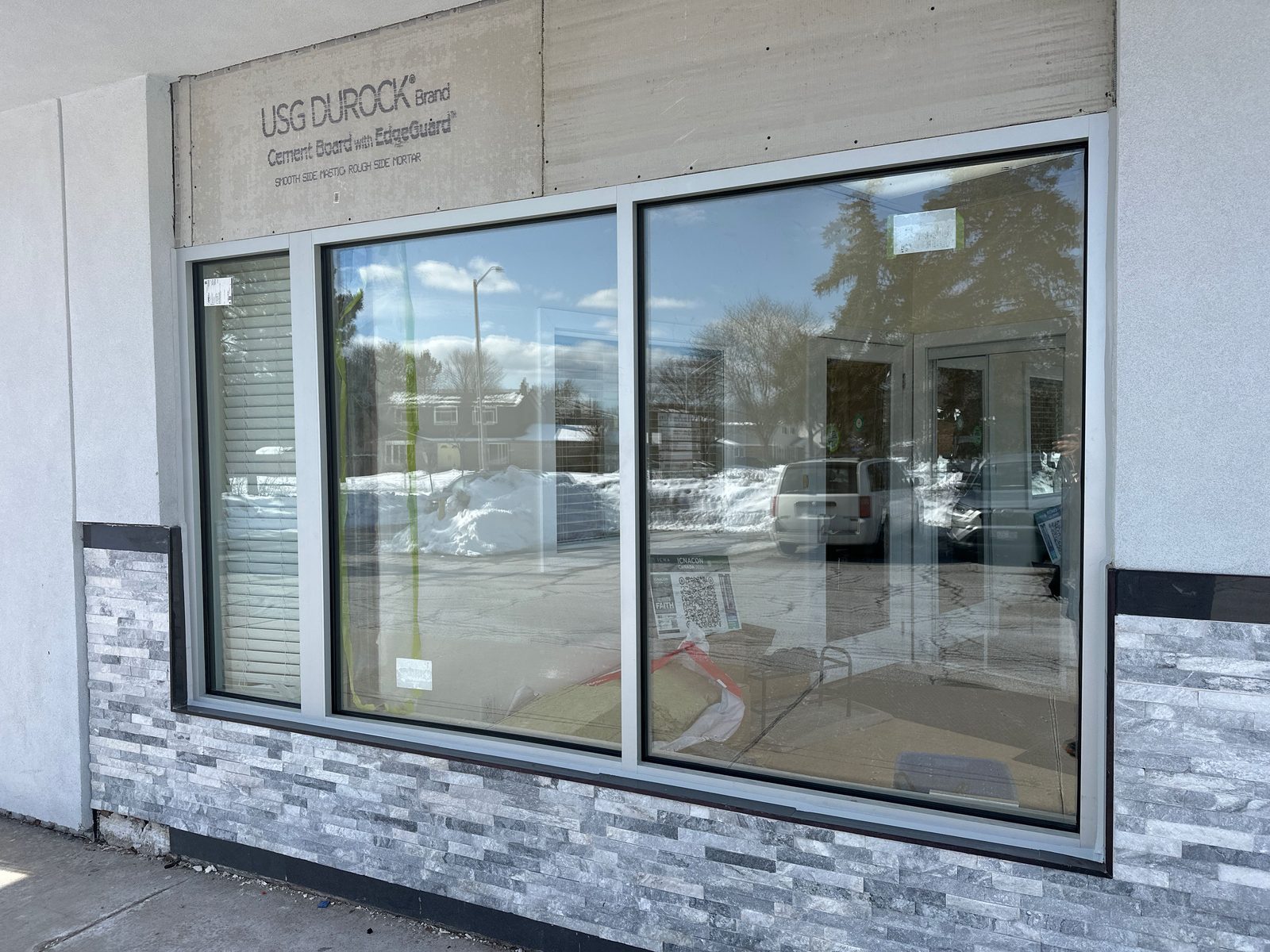
Tempered and laminated are both "safety glass", and both end up in the same storefronts, doors and windows. They are made in completely different ways, they fail in completely different ways, and the right one depends on what the opening has to do — keep people from being cut, keep intruders out, or keep the noise of the street out of the office.
This guide compares the two, then covers the rest of the commercial glass make-up: low-E coatings, insulating units, and the older glass types you may still have in the building.
Four decades of commercial glass and glazing for names Ontario knows — Canada’s Wonderland, Tim Hortons, Canadian Tire, the LCBO, Metrolinx, Marriott & Hilton hotels, the University of Toronto — plus thousands of businesses across the GTA. Dependable people, quality products, since 1979.
What is the difference between tempered and laminated glass?
Tempered glass is a single lite that has been heated and rapidly cooled so its surface is locked in compression, making it about four times stronger than ordinary annealed glass; when it does break, it falls into small blunt pieces. Laminated glass is two or more lites bonded to a plastic interlayer; when it breaks, the fragments stay stuck to the interlayer and the lite stays in the frame. One is about strength and a safe break, the other about holding together.
| Tempered glass | Laminated glass | |
|---|---|---|
| How it is made | Heated, then force-cooled to lock the surface in compression | Two or more lites bonded to a plastic interlayer under heat and pressure |
| Strength | About 4× annealed glass of the same thickness | Depends on the glass used; the interlayer mainly adds retention after breakage |
| How it breaks | Into small, blunt, granular pieces; the opening is left empty | Cracks in a spider-web pattern; stays bonded and in the frame |
| Security | Strong against impact, but once broken the opening is open | Resists being pushed through after it cracks |
| Sound and UV | No special benefit | Interlayer dampens sound and blocks most UV |
| Can it be cut later? | No — cutting or drilling shatters it | Yes, by a fabricator with the right equipment |
| Typical commercial use | Doors, sidelites, storefront and interior glass | Security glazing, overhead and sloped glass, acoustic glazing |
How is tempered glass made, and why is it stronger?
Tempered glass is ordinary float glass cut to its final size, heated to around 1,200 °F and then force-cooled with air. The architectural glass maker Vitro puts the result at a surface compression of at least 10,000 psi and four to five times the strength of annealed glass; a gentler cooling produces heat-strengthened glass instead, about twice as strong as annealed and breaking into larger pieces (Vitro Architectural Glass).
That locked-in stress has three consequences an owner should know. Tempered glass cannot be cut, drilled or edged afterwards — any change shatters it, so every lite is made to an exact measure. Its edges are its weak point, so a nick during handling can grow into a failure later. And, rarely, a nickel sulfide inclusion can make a tempered lite break on its own years after it was made (Wikipedia: Tempered glass).
How does laminated glass work?
Laminated glass bonds two or more lites to an interlayer — most often polyvinyl butyral (PVB), or a stiffer ionoplast where the glass has to carry more load (Viracon interlayers). When it is struck hard enough to crack, the glass breaks in a spider-web pattern but stays bonded to the interlayer, so the lite stays in the opening (Wikipedia: Laminated glass).
That retention is the whole point. It is why laminated glass is used overhead, where a tempered lite would drop its pieces on the people underneath, and why it is the glass to specify where the worry is someone getting in rather than someone getting cut. The interlayer also dampens sound and blocks most ultraviolet light, which slows fading of stock and furnishings behind a shop window.
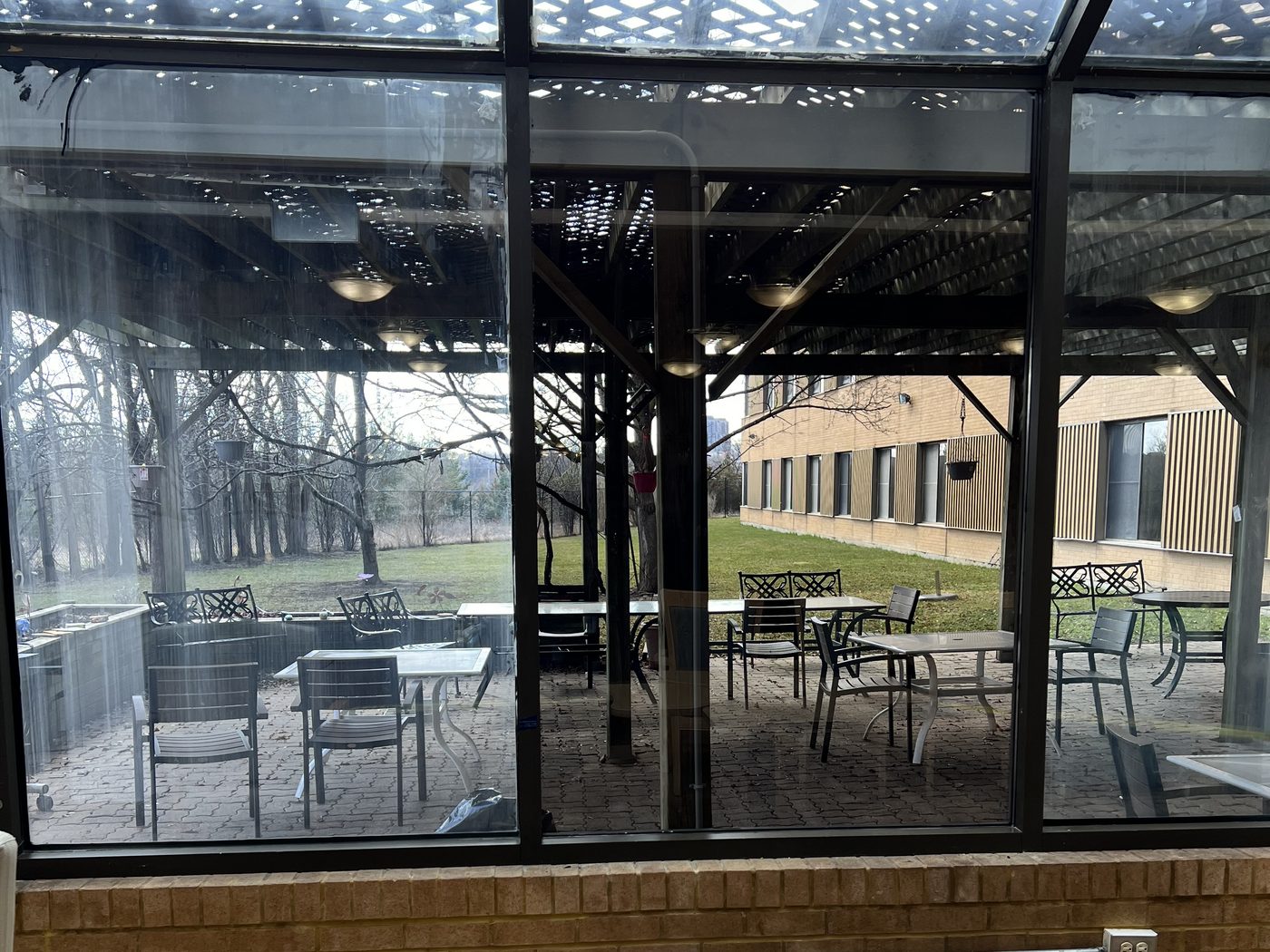
Which is safer, and which is more secure?
For safety — people walking into glass — both qualify. In Canada the safety-glazing standard is CAN/CGSB-12.1, written for glass in doors and the panels beside them; its 2017 revision applies to all safety glazing materials, not only tempered and laminated (National Glass Association). The same revision is the one under which traditional polished wired glass does not meet even the lower Class B impact rating (Construction Canada).
For security — someone trying to get in — laminated wins. A tempered lite is harder to break, but once it breaks the opening is empty. A laminated lite cracks and stays put, so getting through it takes sustained effort. On a storefront that worries about break-ins, the honest answer is often laminated glass plus a rolling shutter or grille, not thicker glass. How to prevent break-ins covers the rest of that plan.
What glass do commercial windows and storefronts actually use?
On an exterior wall in Ontario, a sealed insulating glass unit (IGU): two lites bonded to a spacer around a sealed cavity. A common commercial make-up is about 25 mm overall — a 6 mm lite, a 12.7 mm cavity, and another 6 mm lite — with a low-E coating on an inner surface and argon in the cavity. Each lite in that unit is then specified for its location: tempered where it is a door or beside one, laminated where security, overhead glazing or noise calls for it.
Natural Resources Canada describes the typical energy-efficient commercial window the same way: double glazing, low-E coatings, inert gas fill, warm-edge spacers and thermally broken metal frames (NRCan technology primer). Interior glass — office fronts, partitions, interior doors — is usually a single lite of tempered.
What is low-E glass, and is it worth it?
Low-E (low-emissivity) glass carries a microscopically thin metallic coating that reflects long-wave infrared heat while letting visible light through. Vitro gives ordinary clear glass an emissivity of about 0.84 and high-performance low-E coatings as low as about 0.02 (Vitro: how low-E glass works), and NRCan credits low-E coatings with cutting winter heat loss and summer heat gain by up to 30 per cent.
On new exterior commercial work, low-E is standard rather than an upgrade. The question is usually which coating — one tuned to keep heat in, or one tuned to keep solar heat out on a sunny elevation. Low-E is not an alternative to tempered or laminated: it is a coating, and it goes on a tempered or laminated lite inside the same insulating unit.
What about tinted, wired and fire-rated glass?
Tinted glass — grey or bronze — cuts glare, solar heat and visibility from outside; the darker the tint, the less light it lets through. It is chosen per elevation, often with low-E.
Wired glass is the older fire-rated glass with a wire mesh inside. It holds together in a fire, but as noted above it does not meet the current Canadian safety-glazing impact classes, and Construction Canada reported that once the revised standard is referenced in the National Building Code, traditional wired glass will no longer be permitted in fire-rated doors and sidelites. If your building still has wired glass in doors, it is worth asking about when those doors are next serviced. Fire door ratings explains what the rating on a glazed fire door actually covers.
How do you choose, opening by opening?
| Entrance doors and sidelites | Tempered as standard; laminated where break-ins are the concern |
|---|---|
| Ground-floor display glass | Insulating unit with low-E; laminated outer lite for security-sensitive retail |
| Overhead and sloped glazing | Laminated, so a broken lite stays up |
| Office fronts and partitions | Single tempered lite; laminated where sound matters |
| Upper-floor windows | Insulating unit with low-E and argon; tempered where the code requires safety glass |
| Fire-rated doors | Fire-rated glazing listed for the door assembly, not ordinary glass |
Whatever the make-up, tempered and insulating units are made to size and cannot be recut, so the measure comes before the order. When glass is broken rather than merely failed, we board the opening up first and glaze it once the new lite is made.
If a lite has already failed or broken, see commercial window glass replacement, or emergency board-up if the opening is open tonight.
Common questions
Which is better, laminated or tempered glass?
Neither is better everywhere. Tempered glass is stronger against impact and breaks into small blunt pieces, which makes it the standard safety glass for doors and the panels beside them. Laminated glass cracks but stays bonded to its interlayer and in the frame, which makes it the choice for security, overhead glazing and noise. Many commercial openings use both, as the two lites of one insulating unit.
Is laminated glass more expensive than tempered glass?
Price depends on the thickness, the interlayer and the size of the lite, so there is no fixed ratio, and we price each lite from a measure. The practical difference owners notice more is the lead time: laminated and insulating units generally take longer to fabricate than plain tempered, and neither can be recut once made.
How can you tell if glass is tempered or laminated?
Look at the exposed edge if you can: laminated glass shows two layers of glass with a thin plastic interlayer between them. Tempered glass shows a strain pattern when viewed through polarising sunglasses. And when it breaks the difference is obvious: tempered falls into small pieces, laminated cracks in a spider-web pattern and stays in place.
What are the disadvantages of tempered glass?
It cannot be cut, drilled or edged after tempering, so every lite must be made to exact size and a wrong measure means a new lite. Its edges are its weak point, so a nick during handling can later cause the whole lite to fail. And rarely, a nickel sulfide inclusion can make a tempered lite break on its own years after manufacture.
Which is better, low-E or tempered glass?
They are not alternatives. Tempering is a heat treatment that makes glass stronger and safer when it breaks; low-E is a thin coating that reduces heat loss and heat gain. A commercial insulating unit very often has both: a tempered lite, a low-E coating on an inner surface and an argon-filled cavity.
Pricing a job like this?
Not sure what glass your openings need?
Tell us where the glass is, what happened to it and whether the building stays open. We will specify the make-up per opening and secure anything broken in the meantime, 24/7.