
Commercial & Industrial · Planned & emergency
Commercial Window Glass Replacement & Reglazing
Replacing the glass in commercial windows that are staying put — failed sealed units, fogged double glazing, cracked lites, and low-E retrofits across a whole elevation. We keep the frame where the frame is worth keeping, and we tell you when it isn’t. Toronto and the GTA, since 1979.
Request a Glass QuoteCall 800-522-6825 — 24/7
Dispatched from our Mississauga shop · since 1979 · we reglaze frames we did not install
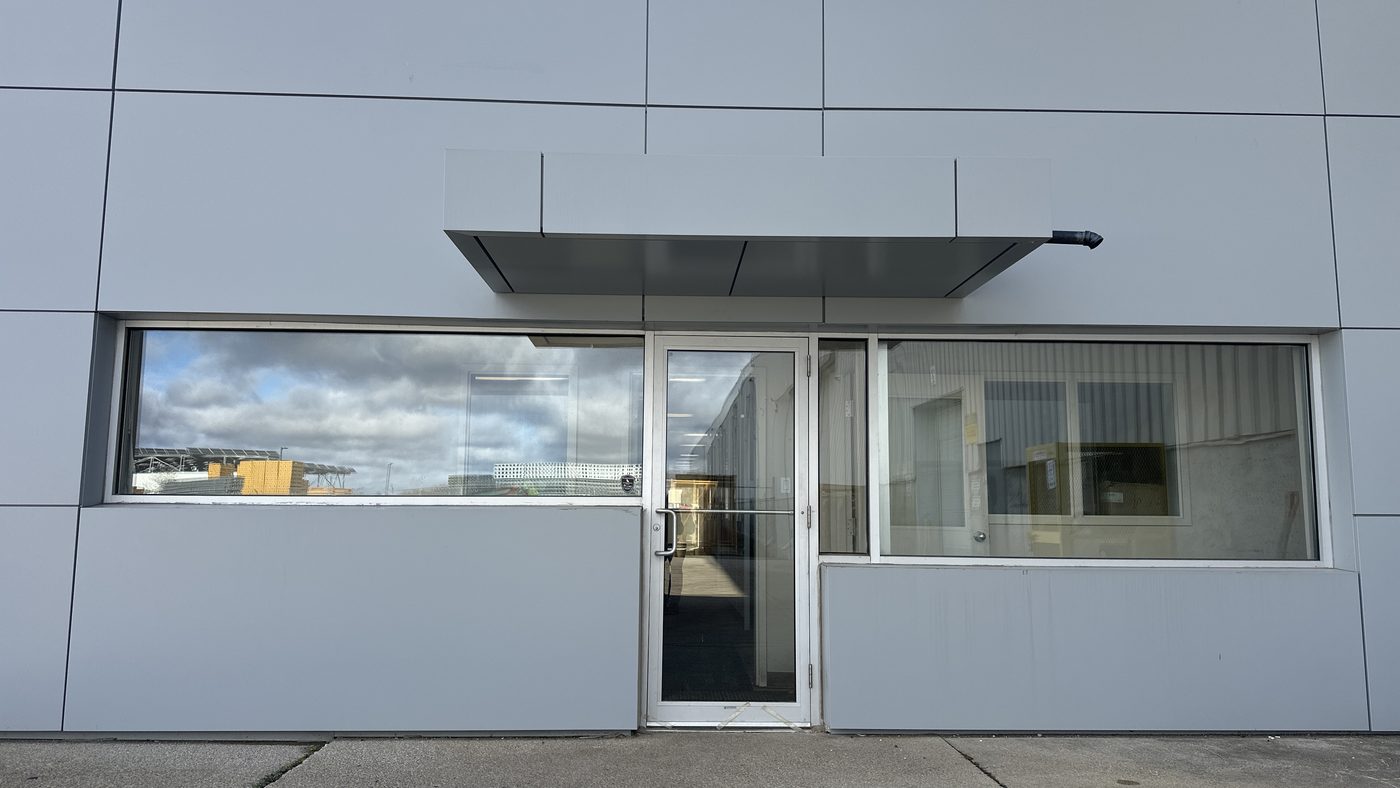
Most commercial window calls are not broken glass. They are windows that have quietly stopped doing their job — a sealed unit that has fogged, a lite that has cracked from edge damage or thermal stress, or a whole elevation of single glazing costing a fortune to heat. In all three the frame is usually fine. The glass is the part with the service life.
That distinction is the whole decision. Reglazing keeps the frame and replaces what sits in it; window replacement takes both. Canuck Door Systems does the framing and the glass, so we can tell you which one your building actually needs — including when the less expensive answer is the right one.
When the frames are past saving as well as the glass, the job looks like 19 aluminum windows replaced for Doodle All Daycare in Toronto.
Reglaze it, or replace the window?
The test is not the age of the window. It is whether the parts that have failed are the parts that can be swapped out.
| Reglaze it | Replace the window | |
|---|---|---|
| Frame condition | Straight, sound, thermal break intact | Bent, corroded, or the thermal break has failed |
| What has failed | The sealed unit, or a cracked or broken lite | The frame sweats, leaks or has dropped out of square |
| Glazing pocket | Deep enough to take a modern sealed unit | Built for single glazing and cannot accept the new unit |
| The opening | Stays exactly as it is | Has to change size, or become operable or barrier-free |
| Typical outcome | Measure, order, glaze — the elevation never comes apart | Frames out, new units in, making good inside and out |
| Relative cost | Glass and labour only | Glass, frames, fasteners, sealant and interior finishing |
We quote the reglazing before we do it, and when reglazing is the less expensive answer we say so. The windows we install are the windows we then have to keep coming back to, so there is no upside for us in replacing a frame with years left in it.
Fogged double glazing: what has actually happened
A double-glazed window is an insulating glass unit — two panes bonded to a spacer bar with a sealed cavity of dry air or argon between them, and a desiccant in the spacer to absorb the small amount of moisture left at manufacture.
When the edge seal fails, humid air gets into that cavity. The desiccant saturates, and moisture starts condensing on the inner faces of the glass. That is the haze, and it is on surfaces no one can reach — there is no way into the cavity that does not destroy the unit. Cleaning services that claim to defog a sealed unit drill it, vent it and leave you with a window that is no longer insulating.
The unit gets replaced. The frame does not. Most commercial sealed units start failing somewhere between 15 and 25 years, and they tend to go in batches on the same elevation, because they were installed at the same time and face the same sun.
Glass make-up — what goes back in
| Glass | Typical commercial thickness | Where it is used |
|---|---|---|
| Monolithic annealed | 6 mm (8–10 mm on larger lites) | Interior lites and non-safety locations |
| Tempered | 6 mm | Doors, sidelites, low sills — anywhere code requires safety glazing |
| Laminated | 6.38 mm and up (glass + interlayer) | Security, sound reduction, overhead glazing, retained-on-break needs |
| Sealed insulating unit | 25 mm overall — 6 mm / 12.7 mm / 6 mm | Every exterior opening; the cavity is air or argon |
| Low-E sealed unit | 25 mm overall, coating on an inner face | Energy retrofits — cuts solar gain and heat loss without changing frames |
Two constraints decide what your opening can take. Code sets where safety glazing is mandatory rather than optional — doors, sidelites and glazing close to the floor among them — and that is not a preference we can quote around. The glazing pocket sets what physically fits: a frame built for a single 6 mm lite will not accept a 25 mm sealed unit, which is the usual reason a low-E retrofit turns into a window replacement.
Buying new windows rather than new glass? New frames, new units and the framing that carries them are covered on commercial windows. This page is for glass going back into frames that are staying.
Low-E retrofits across an elevation
The most common planned version of this work: a hotel, an office or a managed property keeps its windows and changes every unit in them for low-E glass. The elevation is unchanged from the street, the tenants keep their windows, and the building gets most of the energy benefit of new windows without the cost or the disruption of taking the frames out.
It works when the frames are sound and the glazing pocket is deep enough — which is the first thing we check, on the first visit, before anything is quoted. Done across a whole elevation at once it also prices considerably better per unit than replacing sealed units one at a time as they fog, which is what usually happens by default.
- We survey the elevation — frame type, pocket depth, thermal break, unit sizes and how many have already failed.
- We tell you which project it is — reglaze, or replace the frames, with the numbers for both where it is genuinely close.
- We phase it around occupancy — floor by floor or elevation by elevation, including evenings and weekends, so suites and storefronts stay in use.
What we reglaze
Everything glazed that is not a door leaf: fixed lites, operable vents, window walls, spandrel panels, interior borrowed lites and sidelites.
- Failed sealed units — the fogged, hazed or visibly wet ones, replaced like for like or upgraded to low-E.
- Cracked and broken lites — from impact, edge damage or thermal stress.
- Single glazing — upgraded to sealed units where the frame will take them.
- Safety glazing — tempered and laminated where the location requires it and the original did not have it.
- Gaskets, glazing tape and sealant — replaced with the glass; a new unit in perished gaskets leaks.
- Spandrel panels — back-painted or fritted glass in the non-vision bays of the same elevation.
Glass broken right now? An opening that is not secure tonight is an emergency, not a reglazing job. We board up first and glaze when the unit lands — see emergency glass repair & board-up, or call the 24/7 line. Broken glass in a door leaf is commercial glass door repair.
How a reglazing job runs
- We measure. Every unit, on site. Tempered glass is made to size and cannot be recut, so this is where the accuracy has to be.
- We quote. Per unit and for the whole scope, with the reglaze-or-replace answer stated plainly.
- We order. Lead times depend on the make-up — plain tempered is quickest, laminated and insulated units take longer.
- We glaze. Stops and gaskets out, old unit out, new unit in, resealed. Scheduled around your hours and your access.
- We clean up and check. Every unit inspected for seating and seal before we leave the elevation.
Window replacement and reglazing across the GTA
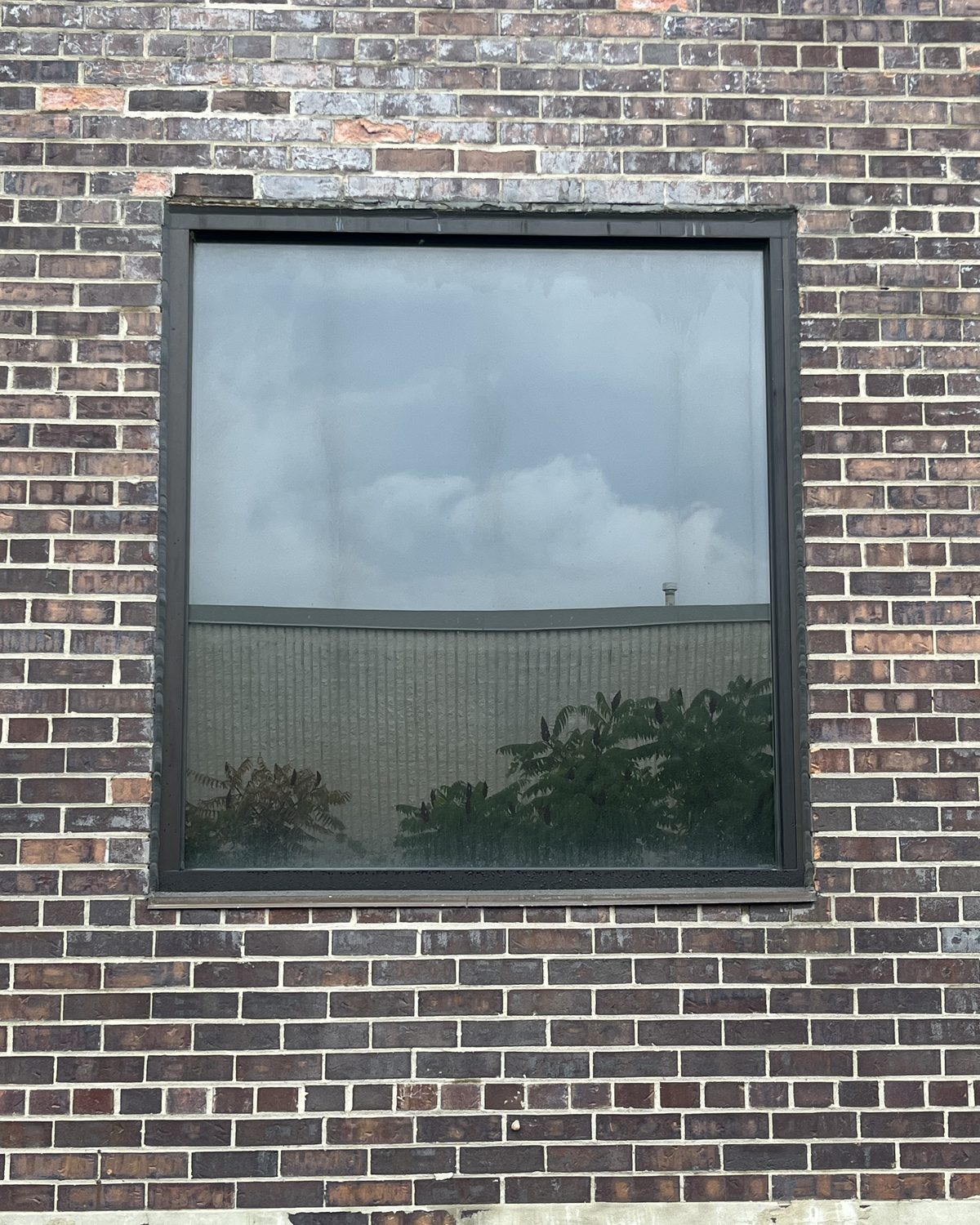
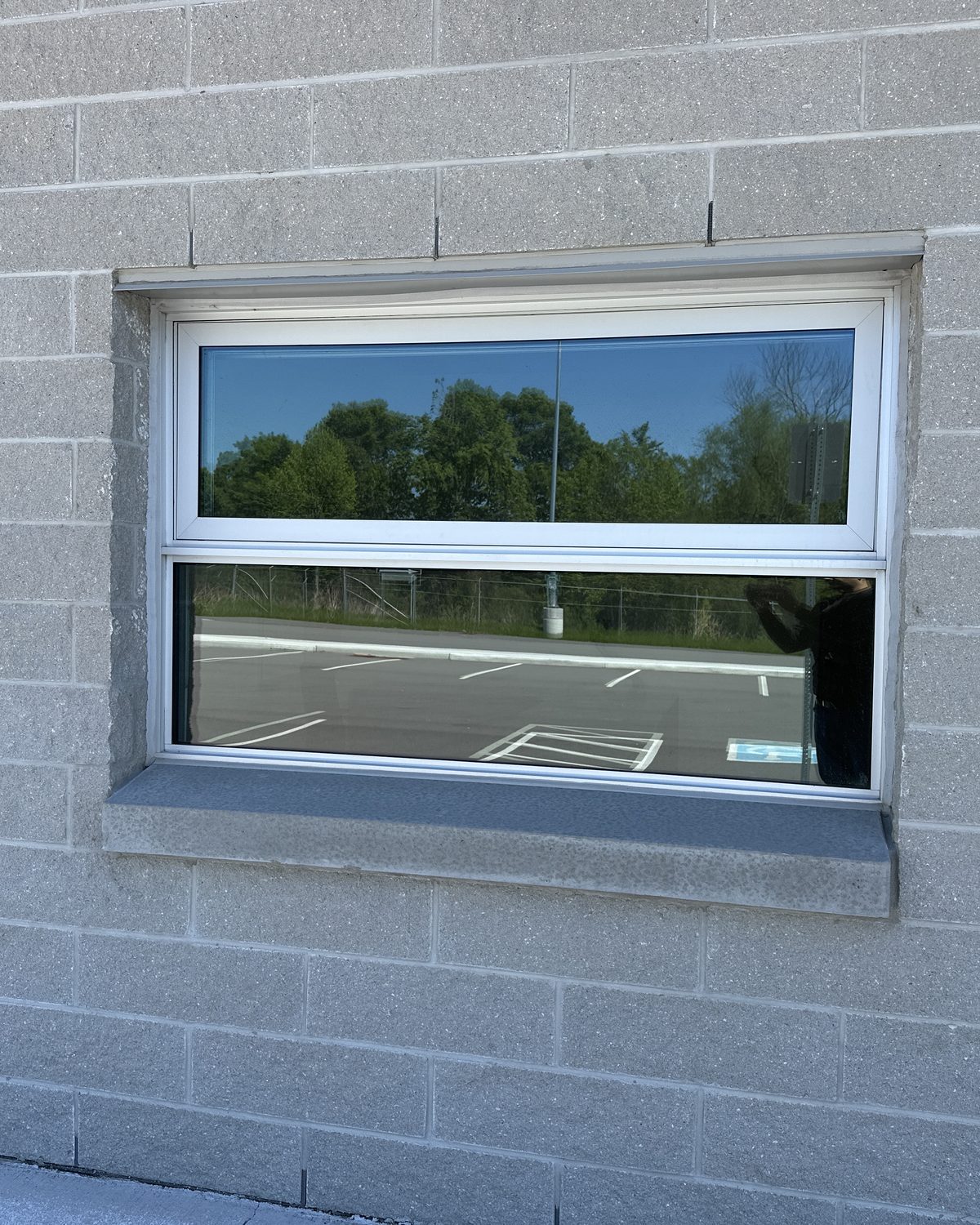
Recent window work from our own project files — real clients, real elevations.
Sable Metal Fabrication
Replaced outdated glass-and-aluminum windows with modern, energy-efficient units at their Markham plant.
PCI Pharma Services
Replaced the exterior glass-and-aluminum storefront door and the surrounding windows.
EFCO Corp
Glass-and-aluminum window replacement at 30 Todd Road in Georgetown, as subcontractor to MIRODAN Contracting.
Four decades of windows for names Ontario knows — Canada’s Wonderland, Tim Hortons, Canadian Tire, the LCBO, Metrolinx, Marriott & Hilton hotels, the University of Toronto — plus thousands of businesses across the GTA. Dependable people, quality products, since 1979.
What our customers say
We had a break-in at our office windows/doors smashed... If I could give Canuck 6 stars I would. They gave us an emergency-repair service within a few hours of calling and boarded up our office for safety and security. They also gave and extremely competitive quote on the market. …
Read the full review
The wind blew my commercial glass door open and it broke. Canuck Door systems came fast and board it up. They then replaced the glass door and everything is perfect now.
Canuck Doors provided outstanding service for our new flagship store in Cambridge. Their competitive pricing and superior quality were evident in the flawless installation of our 12-foot oversized glass panels for the storefront system and a side door, a challenging task that nearly all other …
Read the full review
Window glass replacement across Toronto & the GTA
We reglaze commercial windows right across the core GTA, dispatched from our shop in Mississauga — central to the region rather than at one end of it. Planned work is scheduled around your operation; broken glass is 24/7.
Core GTA
- Toronto
- Mississauga
- Brampton
- Vaughan
- Markham
- Scarborough
- North York
- Etobicoke
- Richmond Hill
- Oakville
- Burlington
- Milton
Southern Ontario belt
Not on the list? Reglazing travels — a whole-elevation retrofit is worth the trip. Call and ask. See all service areas
What reglazing costs
Glass is priced per unit, so the useful question is what drives the number. Reglazing an existing frame is almost always less expensive than replacing the window. The variables:
- The size of the unit — glass price scales with area, and large lites need more hands
- The make-up — monolithic, tempered, laminated, or a sealed insulating unit with low-E and argon
- Whether the location requires safety glazing by code rather than by choice
- Access — ground level off a ladder, a boom lift, or a swing stage above the third floor
- Quantity — one failed unit is a service call, a whole elevation is a project and prices better
- Whether the frame needs repair, new gaskets or a thermal-break assessment first
- Working after hours to keep a lobby, store or suite in service during your day
We measure and quote before anything is ordered. Tempered glass is made to size and cannot be recut, so the measurement stage is where the accuracy has to be.
Common questions
Can you replace just the glass part of a window?
Usually yes, and it is the less expensive answer. If the frame is straight, the thermal break is intact and the hardware works, the glass is a replaceable component — we remove the stops and gaskets, take out the old lite or sealed unit, and glaze the new one into the frame you already have. What forces a full window replacement is the frame, not the glass: a bent or corroded frame, a failed thermal break that sweats every winter, or an opening that has to change size or become operable.
Why is my double-glazed window foggy, and can it be cleaned?
It cannot be cleaned, and no one can clean it — the moisture is sealed inside. A double-glazed window is an insulating glass unit: two panes bonded to a spacer with a sealed cavity of dry air or argon between them. When the edge seal fails, humid air gets into that cavity and condenses on the inside faces, which is the haze you are seeing. There is no access to those surfaces without destroying the unit. The fix is to replace the sealed unit, and because the frame is untouched this is reglazing rather than window replacement.
What thickness glass is used in commercial windows?
For a single monolithic lite, 6 mm is the common commercial thickness, with 8 mm and 10 mm used as the pane gets larger or more exposed. For insulated units the usual overall thickness is 25 mm (1 inch), typically built as 6 mm glass, a 12.7 mm air or argon cavity, and another 6 mm pane. Laminated glass adds an interlayer and runs thicker again. The right answer for your opening depends on the size of the lite, the wind load, the floor it sits on and whether the location needs safety glazing — we confirm it when we measure rather than guessing from a photo.
Is it expensive to replace glass in windows?
Reglazing is materially less expensive than replacing windows, because you are buying glass and labour rather than glass, frames, fasteners, sealant and the making-good around a new opening. The cost is driven by the size of the unit, the make-up (plain, tempered, laminated, or a low-E sealed unit), and access — a lite above the third floor needs a lift or a swing stage and that can exceed the glass itself. Doing a whole elevation at once prices better per unit than replacing them one at a time as they fail.
Is it worth replacing 20-year-old windows?
Often the glass is worth replacing and the frames are not yet. Sealed units have a service life — most commercial units start failing somewhere between 15 and 25 years — while a properly finished aluminum frame with an intact thermal break can outlast several sets of glass. So the honest first question is which part has actually reached the end of its life. If the frames are straight and thermally broken, reglazing with a modern low-E unit gets you most of the energy benefit for a fraction of the cost. If the frames are single-glazed, non-thermal or corroded, glass alone will not fix the cold edge and the condensation, and replacement is the right call.
Can you retrofit low-E glass into our existing windows?
Yes, provided the frame will take the unit. This is one of the most common requests we get from hotels, offices and property managers: keep the elevation, change the glass, cut the solar gain and the heat loss. The constraint is the glazing pocket — the frame has to accept the thickness of the new sealed unit, and an older frame built for single glazing often cannot. We check the pocket depth and the frame condition on the first visit and tell you which of the two projects you are actually looking at.
How long does replacement glass take to arrive?
Plan on a lead time, always. Tempered glass cannot be cut, drilled or edged after it is manufactured, so every unit is made to your exact measurement rather than cut from stock — and insulated and laminated units take longer than plain tempered. That is why we measure before we order and why, when glass is broken rather than merely failed, we board the opening up on the first visit and glaze when the unit lands. On a planned elevation retrofit the lead time is a scheduling input rather than a problem.
Do you reglaze windows your company didn’t install?
Yes, and most of this work is exactly that. We reglaze commercial windows whoever supplied them, including systems no longer manufactured, where the job starts with identifying the frame and the glazing method before anything is ordered. We also do the framing side of the trade, so when the answer is that the frame has to go we can quote that instead rather than handing you to another contractor.
Fogged units, a cracked lite, or a whole elevation?
Send us the building and roughly how many units and we’ll quote the reglazing. If the glass is broken right now, call — dispatch runs 24/7.