
Comparison
Aluminum vs Vinyl Windows: Which Belongs on a Commercial Building?
Vinyl frames insulate better and cost less, which is why houses use them. Aluminum is stronger and more stable, carries far larger glass on slimmer frames and takes a lasting finish, which is why commercial buildings use it — thermally broken, for an Ontario winter.
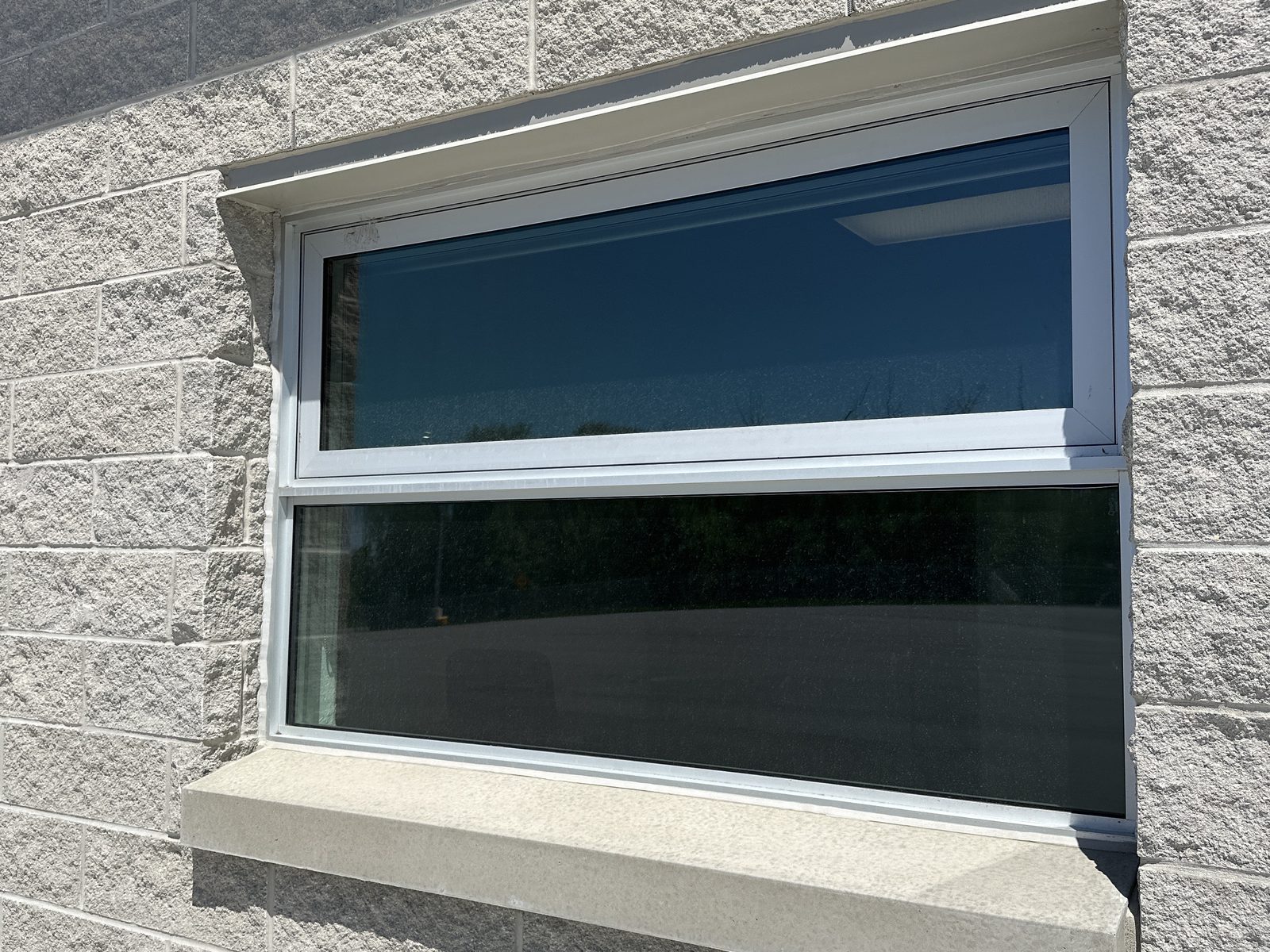
Almost every "aluminum vs vinyl" article is written for a homeowner, and for a house its answer — usually vinyl — is sensible. A commercial building asks different questions of a window: bigger glass, heavier use, a storefront or curtain wall beside it, and a frame expected to outlast several sets of glass. That is why the answer flips.
This guide sets out where each material wins, what a thermal break changes, how to choose between fixed and operable aluminum windows, and how to keep them working.
Four decades of windows and glazing for names Ontario knows — Canada’s Wonderland, Tim Hortons, Canadian Tire, the LCBO, Metrolinx, Marriott & Hilton hotels, the University of Toronto — plus thousands of businesses across the GTA. Dependable people, quality products, since 1979.
What is the difference between aluminum and vinyl windows?
The frame material. Vinyl windows are framed in extruded PVC with hollow internal chambers, which insulate well and keep the price down. Aluminum windows are framed in extruded aluminum, which is much stronger and more stable but conducts heat. Everything else in the comparison follows from those two facts.
| Aluminum | Vinyl | |
|---|---|---|
| Frame insulation | Conducts heat; needs a thermal break on exterior work | Insulates well without a break |
| Strength and stiffness | High — carries large lites on slim frames | Lower — frames get deeper as the glass grows |
| Thermal movement | About 23 millionths per °C | About 52 millionths per °C — more than twice aluminum |
| Glass size | Large fixed lites, storefront and ribbon glazing | Best in standard residential sizes |
| Finish | Anodized or powder-coat, any colour | Limited colour range |
| Ties into storefront or curtain wall | Yes — same framing family | No |
| Typical use | Commercial, institutional, mixed-use | Houses and low-rise residential |
| Relative cost | Higher | Lower |
The thermal movement figures are standard linear expansion coefficients — 23.1 × 10⁻⁶ per kelvin for aluminum, 52 × 10⁻⁶ for PVC (Wikipedia: Thermal expansion). Over a long frame and a Canadian range of temperatures, that difference is the one you can see.
Which insulates better, aluminum or vinyl?
Vinyl, frame for frame. Gentek, which makes both, puts it plainly: vinyl insulates well, while aluminum conducts heat and cold more readily (Gentek). For a house full of standard-size windows, that settles the question.
On a commercial building the answer is a thermal break: an insulating barrier inside the aluminum frame that separates the cold outside section from the warm inside one. Natural Resources Canada lists thermal breaks at least 12 mm wide, with double glazing, low-E coatings and inert gas fill, as the features of a typical energy-efficient commercial window (NRCan technology primer). The glass also matters more than the frame on a big window: most of the area is the insulating unit, and a low-E, argon-filled unit does the heavy lifting.
If a commercial window quote does not say whether the aluminum is thermally broken, ask. A non-thermal exterior frame in Ontario condenses every winter, and that water ends up on the sill, the drywall and the floor.
Why do commercial buildings use aluminum windows?
Because the openings are bigger, the use is harder and the window rarely stands alone. Aluminum's strength lets a slim frame carry a large lite of glass and resist wind load over a long span. It stays straight across a range of temperatures that would make a long vinyl frame move twice as much. It takes an anodized or powder-coat finish in any colour, and it belongs to the same framing family as the building's storefront and curtain wall, so the windows, doors and facade can be one system.
On our own jobs the framing comes from the aluminum lines common in Ontario — Windspec, Commdoor and Herd — with operable vents where they are needed. See commercial windows and aluminum window systems.
When does vinyl make sense on a commercial property?
When the openings are small, residential in character, and cost is the priority — the punched windows of a low-rise apartment building or a small office in a converted house, for instance. Vinyl is a perfectly good window in the sizes it is designed for. It is the wrong answer for a storefront, a large fixed lite, ribbon glazing or anything that has to join aluminum framing.
Fixed or operable: which aluminum windows do you need?
Fixed wherever you can, operable where you must. A fixed lite has no moving parts, seals permanently, costs less and carries the largest glass. An operable vent gives fresh air but costs more and is the part that eventually needs service. On a mechanically ventilated building most of the glass is fixed; operable vents go where a room genuinely needs to ventilate.
| Fixed lite | Does not open; daylight and view where ventilation is mechanical |
|---|---|
| Awning | Hinged at the top, opens outward at the bottom; ventilates in the rain |
| Hopper | Hinged at the bottom, opens inward at the top; common in schools |
| Casement | Side-hinged, swings out; the largest opening area |
| Slider | Slides sideways within the frame; nothing projects inside or out |
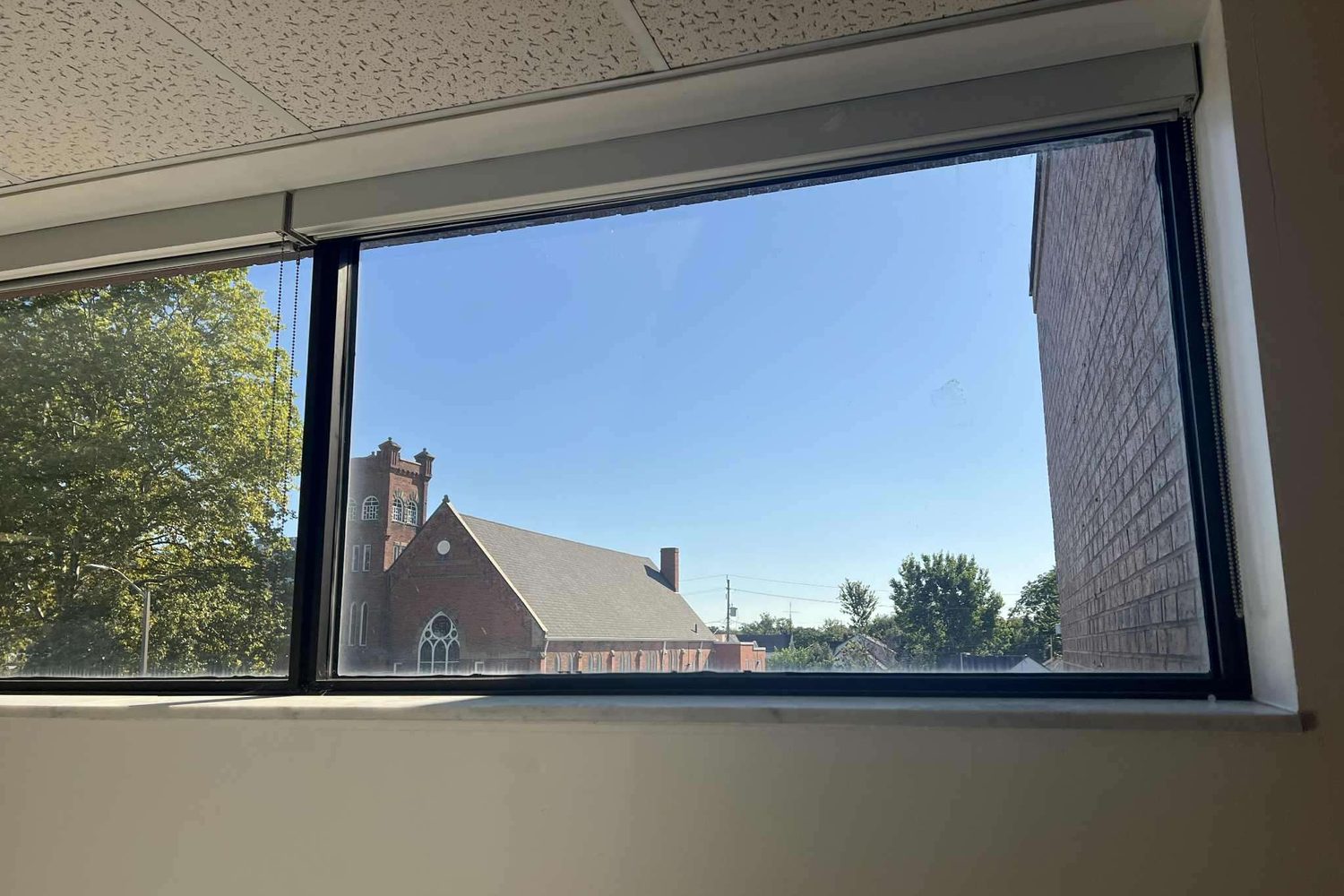
Most commercial elevations mix the two in one frame — a vent above or beside a fixed lite, as in the photographs here. Choose the vents room by room, not elevation by elevation.
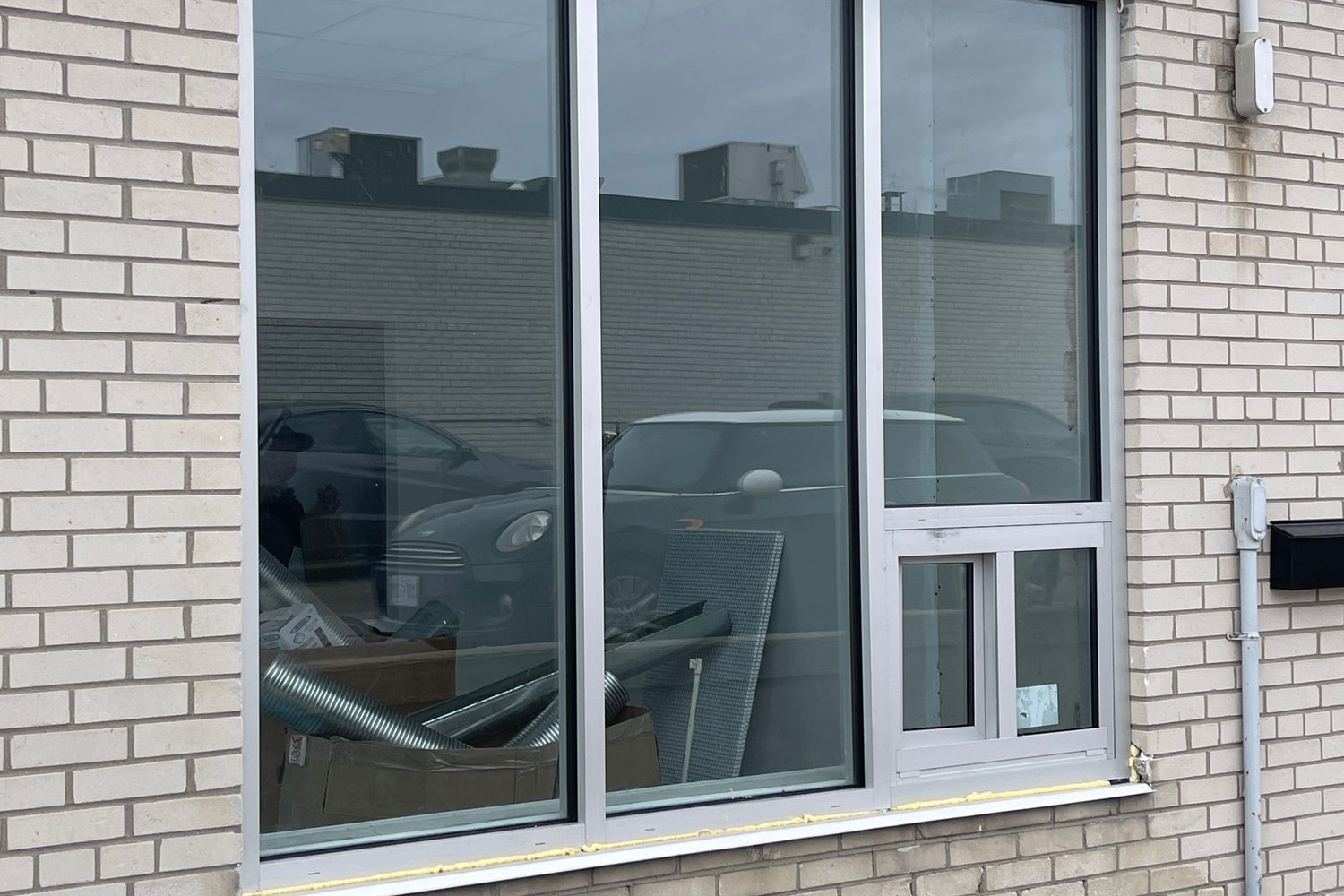
How long do aluminum commercial windows last?
The frame and the glass have different lives. Properly finished aluminum framing with an intact thermal break can run 30 to 40 years and often outlasts two sets of glass. The sealed insulating units are the wearing part: on the buildings we service, commercial units typically start failing somewhere between 15 and 25 years, usually in batches on the elevation that takes the most sun.
That is the practical case for aluminum on a commercial building. When the glass fails, a sound aluminum frame is reglazed with a new low-E unit and carries on; the frame is not the thing you replace. Knowing which part has reached the end of its life is the whole of the repair-or-replace decision.
How do you maintain aluminum windows?
Aluminum windows need little, but not nothing, and most of it is about water. Aluminum does not rust the way steel does, but grime, road salt and airborne dirt left on the finish will dull and mark it, and a blocked drainage path will put water where it should not be.
- Wash frames and glass with mild soap, water and a soft cloth. No abrasive pads or harsh solvents on anodized or powder-coated finishes.
- Keep the weep holes clear. The small slots in the sill let water that gets into the frame drain out. Blocked with dirt or paint, they let it back up inside.
- Check the perimeter sealant and gaskets once a year for gaps, cracks and shrinkage, especially on the sunny and windward elevations.
- Service operable vents — clean the tracks, lubricate the hinges and check that the locks pull the sash tight against its weatherstrip.
- Watch the glass. Fog between the panes means the sealed unit has failed; that is a glass replacement, not a new window.
Which should you choose?
For a storefront, an office, a school, a clinic or any commercial elevation with large glass, choose thermally broken aluminum with a low-E insulating unit, fixed where the building is mechanically ventilated and operable where rooms need air. Choose vinyl only where the openings are small, residential in character and nothing has to tie into aluminum framing.
For budgeting, see what commercial window replacement costs; if the frames are sound and it is the glass that has failed, reglazing is far less expensive than a new window.
Common questions
What are the disadvantages of aluminum windows?
Aluminum conducts heat, so a frame without a thermal break runs cold in winter and condenses on the inside. Aluminum commercial windows also cost more than vinyl units of the same size. Both problems are managed rather than inherent: a thermally broken frame fixes most of the first, and the second buys strength, larger glass and a finish that lasts.
What are the disadvantages of vinyl windows?
Vinyl expands and contracts more than twice as much as aluminum with temperature, which matters over the long spans of commercial openings. It is less stiff, so frames get deeper as the glass gets larger, and the colour and finish options are narrower. For standard-size openings in houses and low-rise residential buildings, those limits rarely matter.
Are aluminum windows better than vinyl for a commercial building?
For most commercial openings, yes. Storefronts, large fixed lites, ribbon windows and anything tied into curtain wall or storefront framing are aluminum because of its strength, stability and slim sightlines. Vinyl can make sense on a commercial property where the openings are small, residential in character and the priority is lowest cost.
Should commercial windows be fixed or operable?
Fixed wherever the building is mechanically ventilated, because a fixed lite is less expensive and has nothing to wear out. Operable vents — awning, hopper, casement or slider — where the room genuinely needs fresh air, such as classrooms, offices without good ventilation or staff areas. Most commercial elevations mix the two in the same frame.
How do you maintain aluminum windows?
Wash the frames and glass with mild soap and water and a soft cloth, never abrasives. Keep the weep holes in the sill clear so water can drain. Check the perimeter sealant and gaskets for gaps once a year, and lubricate and adjust the hinges and locks on operable vents. Aluminum does not rust, but grime and road salt left on the finish will dull and mark it.
Pricing a job like this?
Deciding on windows for your building?
Send us the opening count, a photograph of the elevation and which rooms need to ventilate. We will say what should be fixed, what should open, and what the framing should be.