
Comparison
Commercial Glass Doors vs Hollow Metal Doors: Which Goes Where
A commercial glass door is the aluminum-framed glass door at a store, lobby or office entrance. A hollow metal door is the steel door at a stairwell, service entrance, electrical room or warehouse. Most buildings need both. The right choice for each opening comes down to five things: whether people need to see through it, how hard it gets used, whether it needs a fire rating, how much security it needs, and whether it faces the weather.
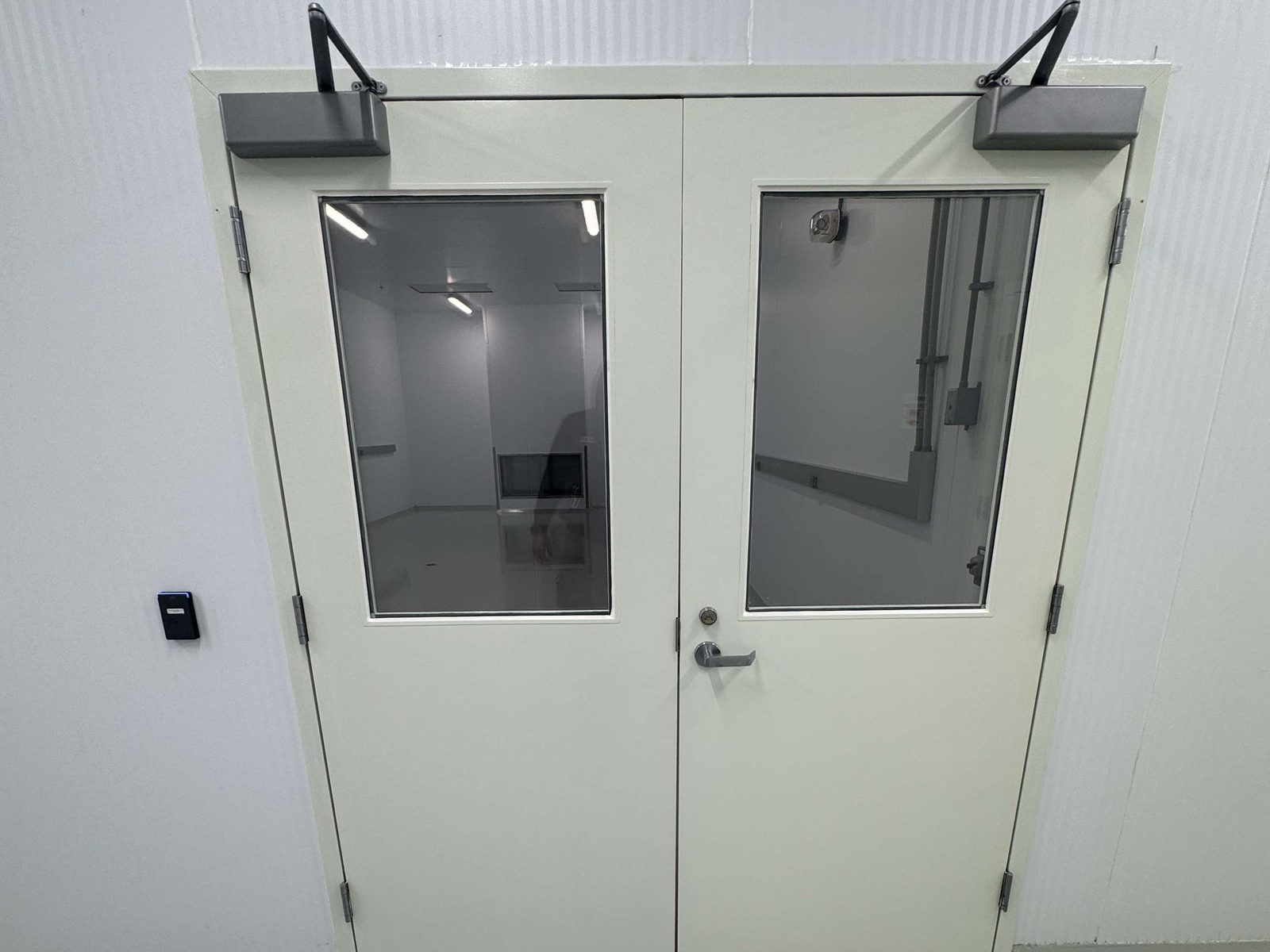
Commercial glass doors and hollow metal doors are rarely an either-or choice. We supply, install and repair both kinds of door across Toronto and the GTA, and this guide compares them the way we do when we go through a door schedule with a general contractor or a property manager.
What is the difference between a commercial glass door and a hollow metal door?
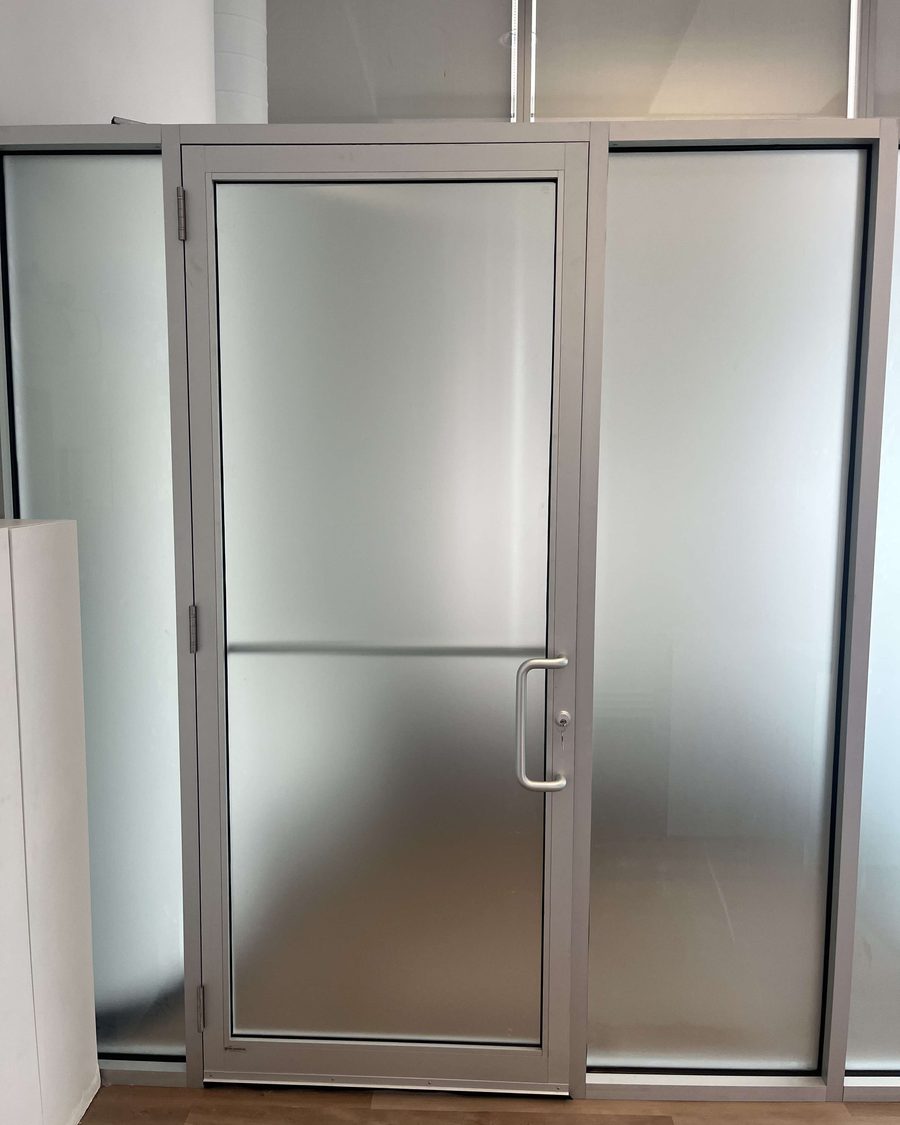
A commercial glass door is a large lite of safety glass held in extruded aluminum stiles and rails. It is usually 1 3/4 inches thick and hung in the same aluminum framing as the glass beside it. Storefront doors come in narrow, medium and wide stile, and the stile width decides which locks and exit devices the door can carry. Our guide to storefront doors covers them in detail.
A hollow metal door is two steel face sheets over a core, hung in a welded or knock-down steel frame. 18-gauge faces are the commercial standard. 16- or 14-gauge is used where traffic or abuse is heavy. Exterior doors come galvannealed, a zinc-iron coating that stops rust from spreading under a scratch.
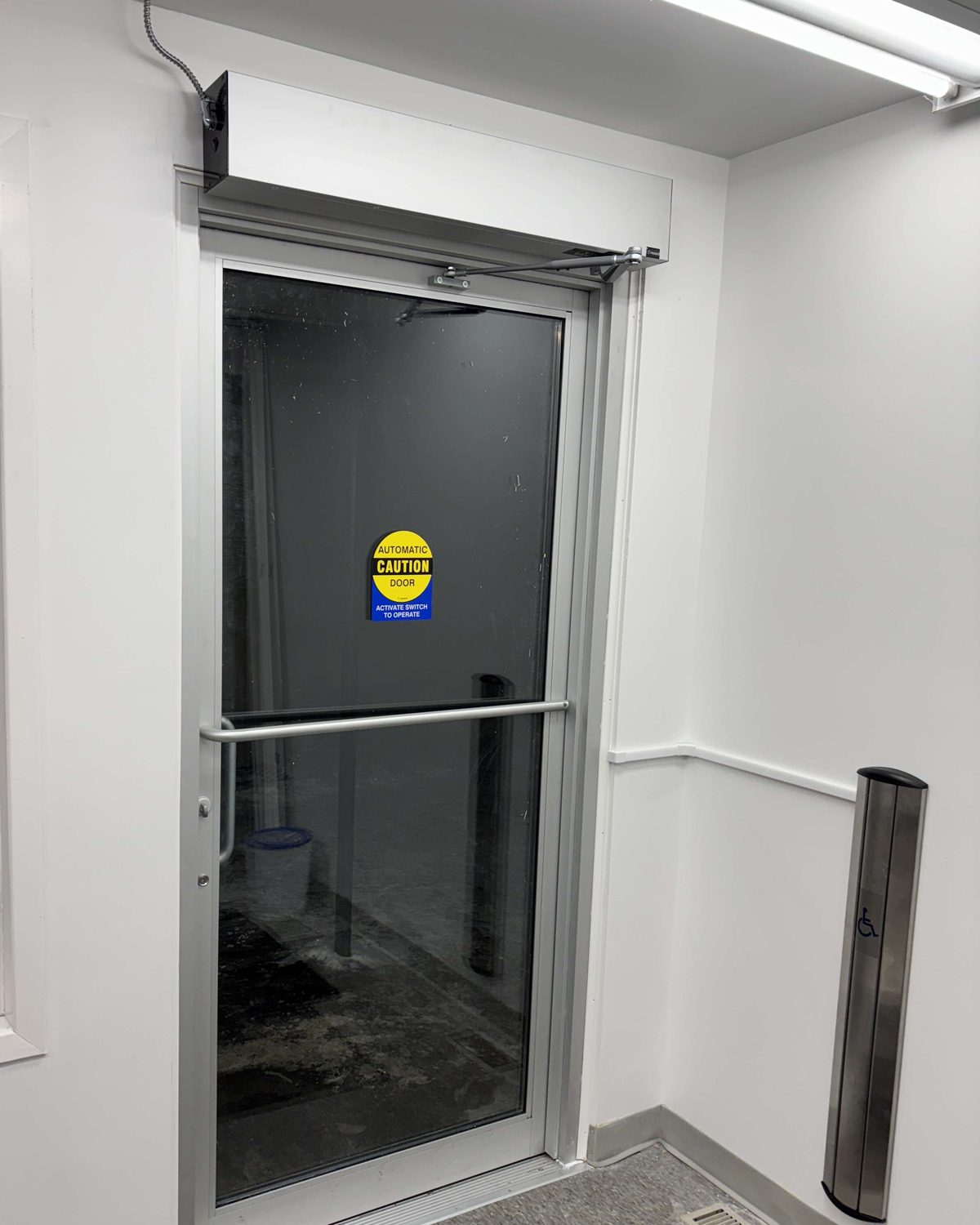
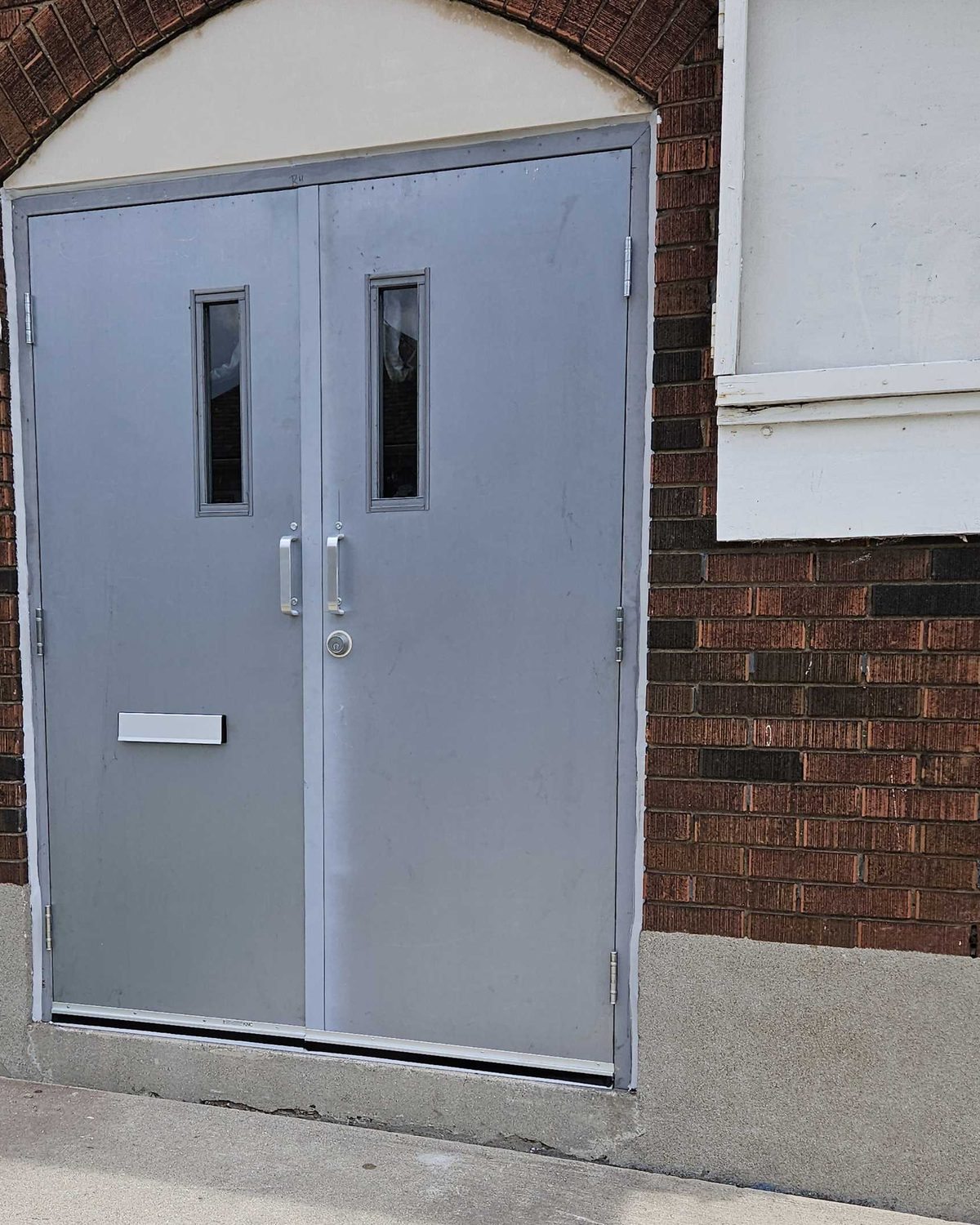
Glass vs hollow metal: side-by-side comparison
| Factor | Commercial glass door | Hollow metal door |
|---|---|---|
| Best at | Being seen through, letting in light, welcoming customers | Taking abuse, keeping people out, holding a fire rating |
| Typical openings | Storefronts, lobbies, offices, restaurants, showrooms | Stairwells, service and exit doors, mechanical and electrical rooms, warehouses |
| Security | Good with the right lock and glass. The glass is the weak point. | High. Takes almost any lock, exit device or access control. |
| Fire rating | Only specially built, labelled assemblies | Common, from 20 minutes to 3 hours as a labelled door and frame |
| Exterior use | Needs a thermally broken frame and insulating glass | Galvannealed steel, insulated core, weatherstripping and threshold |
| Typical repair | $250 – $800 | $200 – $600 |
| Typical replacement door | $1,200 – $3,500+ | $900 – $2,500+ |
| Lead time | 4–6 weeks after shop drawings, plus 1–2 weeks to install | 4–6 weeks after shop drawings, plus 1–2 weeks to install. Stock sizes are faster. |
Costs are typical ranges in Canadian dollars, not a quote. Frame replacement, automatic operators, access control and special glass all add to them.
Which door goes where in a commercial building?
Match each opening to its job. A typical mid-size commercial building ends up with a door schedule like this:
| Opening | Usual choice | Why |
|---|---|---|
| Main entrance or storefront | Glass and aluminum | Customers see in, light gets in, and an automatic operator can be added |
| Office lobby or reception | Glass and aluminum | Open, bright, easy to supervise |
| Stairwell | Fire-rated hollow metal, often with a small rated vision lite | The wall is usually a fire separation |
| Mechanical and electrical rooms | Hollow metal | Locked, hard-wearing, often rated |
| Rear exit and service doors | Galvannealed, insulated hollow metal with panic hardware | Weather, deliveries and break-in attempts |
| Warehouse personnel door | Heavy-duty hollow metal, 16 or 14 gauge | Carts, pallets and constant use |
Mixing the two is normal and usually the most economical answer. Specifying one material for every opening means paying for performance an opening does not need, or going without it where it does.
Which is more secure?
A hollow metal door, as a rule. Steel faces in a steel frame resist prying and impact, and the door can carry heavy-duty locks, exit devices, electric strikes and card readers without weakening.
A glass door can be secured well too. It takes commercial locks, exit devices and access control. The glass itself stays the weak point. Laminated glass holds together when it breaks, and on a street-facing store a security grille or rolling shutter covers the entrance after hours. Our guide to tempered vs laminated glass explains the difference.
Can a glass door be fire-rated?
Rarely, and only as a specially built and labelled assembly. Most fire-rated openings in commercial buildings are hollow metal or wood. Hollow metal doors are made for ratings from 20 minutes to 3 hours.
The rating belongs to the whole assembly, not the door alone: door, frame, hinges, latch, closer and any glass in it. A standard aluminum storefront door is not a fire door, and cutting a vision lite into a rated steel door voids the label unless the lite and its glass are rated too. Our guide to fire door ratings explains which rating goes where.
Which holds up better outside in an Ontario winter?
Both can, if they are specified for it. An exterior glass entrance needs a thermally broken aluminum frame and sealed insulating glass. Without them the frame frosts on the inside and the door sweats. An exterior hollow metal door needs galvannealed steel, an insulated core, full weatherstripping and a proper threshold. Without galvannealing, rust starts at the bottom edge where salt and meltwater sit.
Heavy traffic in winter is hard on both. Closers and hinges wear faster when a door is cold and opened hundreds of times a day, so plan for maintenance either way. Our guide to hollow metal door maintenance covers the steel side.
What about accessibility?
Either door can form a barrier-free entrance. The Ontario Building Code asks for a clear opening of at least 850 mm, a low threshold, hardware that works without tight grasping, and an automatic operator at many public entrances. Glass entrances take automatic sliding or swing operators easily. Hollow metal doors take a low-energy swing operator. Plan the operator, power and access control at the design stage, not after the frame is in. See handicap door operators.
What does each door cost?
Compare complete openings, not door slabs. A stock-size hollow metal door with a standard lock usually costs less than a glass door. A storefront entrance with insulating glass, a thermally broken frame, panic hardware and an automatic operator costs much more, and does a different job.
What moves the price on either door:
- size and number of openings
- whether the frame is replaced or kept
- glass make-up and finish
- fire rating
- hardware: locks, exit devices, closers, access control
- automatic operators
- site conditions and working hours
Common mistakes when choosing between them
Choosing on looks alone
A glass door at a busy rear service entrance gets broken. A plain steel door at a retail entrance hides the store.
Forgetting the fire rating
A door in a fire separation has to be a labelled assembly. Swapping in an unrated door, or adding glass to a rated one, fails the next inspection.
Choosing the door before the hardware
On a glass door the stile has to be wide enough for the lock and exit device. On either door, access control and operators need power and preps planned before the door is ordered.
Deciding late
Doors take 4–6 weeks to produce after shop drawings are approved. Choices made during construction hold up framing, electrical and the other trades.
How to choose for your project
Start from the drawings and the door schedule. For each opening, settle these in order:
- what the space behind it is used for
- whether a fire rating is required
- how much traffic and abuse it takes
- how secure it has to be
- whether it is exterior
- whether people need to see through it
- accessibility and automatic operation
- hardware and access control
Material usually follows from the first three answers. Our guide on how to choose commercial doors goes through the full checklist. For product details see our hollow metal doors and frames and storefront doors and systems.
Common questions
What are the downsides of glass doors?
Glass doors usually cost more than a plain steel door, and the glass is the weak point for security and impact. They lose more heat than an insulated steel door, and they generally cannot be used where a fire rating is required. Outdoors in Ontario they need a thermally broken frame and insulating glass.
When should you use hollow metal doors?
Use hollow metal where durability, security or a fire rating matters more than visibility. That means stairwells, service and exit doors, mechanical and electrical rooms, warehouses and back-of-house areas. A small vision lite can be added where people need to see through.
What type of door is best for an exterior commercial entrance?
For the customer entrance, a glass and aluminum door with a thermally broken frame and insulating glass. For rear, service and exit doors, a galvannealed, insulated hollow metal door with weatherstripping and panic hardware.
Can a hollow metal door have glass in it?
Yes. Hollow metal doors take vision lites from a narrow strip up to large half or full lites. On a fire-rated door, the lite size and glass must be rated with the door, or the label is void.
Pricing a job like this?
Planning doors for a new building or a renovation?
Send us your drawings, your door schedule or photos of the openings, and we will price each opening with the right door.