
Commercial & Industrial · STC-rated
Metal Acoustic & Soundproof Doors
Steel acoustic door assemblies for the noisy end of a building — mechanical and generator rooms, plant, studios, test space and back-of-house corridors. Layered hollow metal leaves with acoustic frames, seals and drop seals, rated and installed as one assembly across Toronto and the GTA.
Request QuoteCall 800-522-6825
STC-tested steel assemblies · since 1979 · fire-rated where the opening needs both
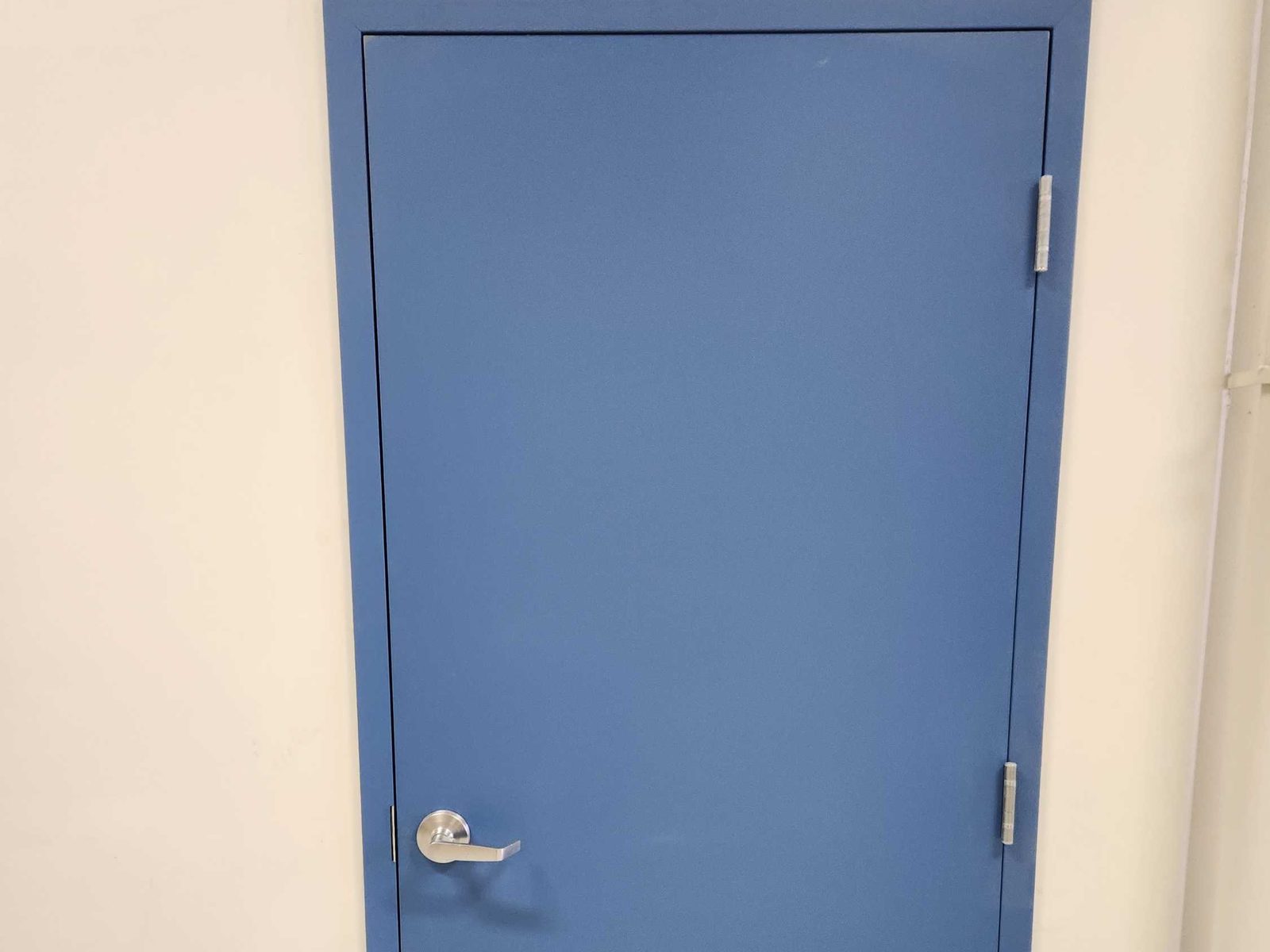
Steel is what an acoustic opening is made of when the room is loud rather than confidential. Mechanical and generator rooms, plant and production space, studios and test cells, back-of-house corridors: the problem is containing serious noise, and the assembly that does it is a layered hollow metal leaf in a frame designed around seals.
Canuck Door Systems supplies and installs those assemblies across the GTA. Because we also do the ordinary hollow metal work, we are usually the ones who can say whether a room needs a tested acoustic assembly or whether a proper seal set on the door already in the wall will get you most of the way.
Where steel acoustic doors go
Mechanical & plant rooms
Chillers, pumps and air handling — noise that has to stay in the room.
Generator & switch rooms
Equipment that runs at unpredictable hours next to occupied space.
Server & data rooms
Constant fan noise, and a rated separation on the same opening.
Studios & test cells
The top of the scale, usually as a pair of doors with an air lock between.
Production & process areas
Keeping plant noise out of offices on the same floor.
Loading & shipping
Back-of-house openings where sound and traffic both matter.
Stair & service corridors
Where a rated steel door is also the acoustic separation.
Waste & compactor rooms
Impact noise in residential and retail buildings, at all hours.
What the assembly is made of
| Part | On a standard steel door | On an acoustic assembly |
|---|---|---|
| Leaf | Honeycomb or polystyrene core | Layered, damped, heavier core; often thicker faces |
| Frame | Standard hollow metal profile | Acoustic profile with a stop the seals compress against |
| Perimeter | Nothing, or a smoke seal | Adjustable gasketing on head and both jambs |
| Sill | Undercut, sometimes a sweep | Automatic drop seal plus a sealed threshold |
| Hardware | Standard hinges and closer | Sized for a heavy leaf; latch pulls the door into the seals |
| Glazing | Standard vision lite | Acoustic glazing, and only where the rating can afford it |
Two doors beat one thick door
Past a certain point, the least expensive way to buy isolation is not a heavier leaf but a second opening. A vestibule — two doors with an air gap between them — outperforms almost any single assembly, because each leaf works on what the last one let through and the cavity between them absorbs more.
- Studios and music rooms — a standard arrangement, not an exotic one.
- Generator enclosures — where the noise level makes a single door impractical.
- Existing rooms that cannot be rebuilt — a second door in the corridor side of the opening is often the only intervention the structure allows.
An acoustic door is heavy — often twice a standard leaf. Standard hinges will sag, a standard closer will not pull it into the seals, and a frame that is not anchored for the weight will move. The hardware and the frame are part of the specification, not accessories to it.
When the opening also has to be rated
Most mechanical and service rooms are rated separations, so the acoustic door in them usually has to carry a fire label as well. Those assemblies are listed for both from the outset — the core and edges give the rating, the mass and seals give the sound. What is not allowed is adding gasketing or a drop seal to a labelled fire door after the fact: the listing does not survive it, and it will be written up at the next inspection. The rated line is on metal & steel fire-rated doors, and the finished-space version of this page is wood acoustic & soundproof doors.
Steel door work from our files
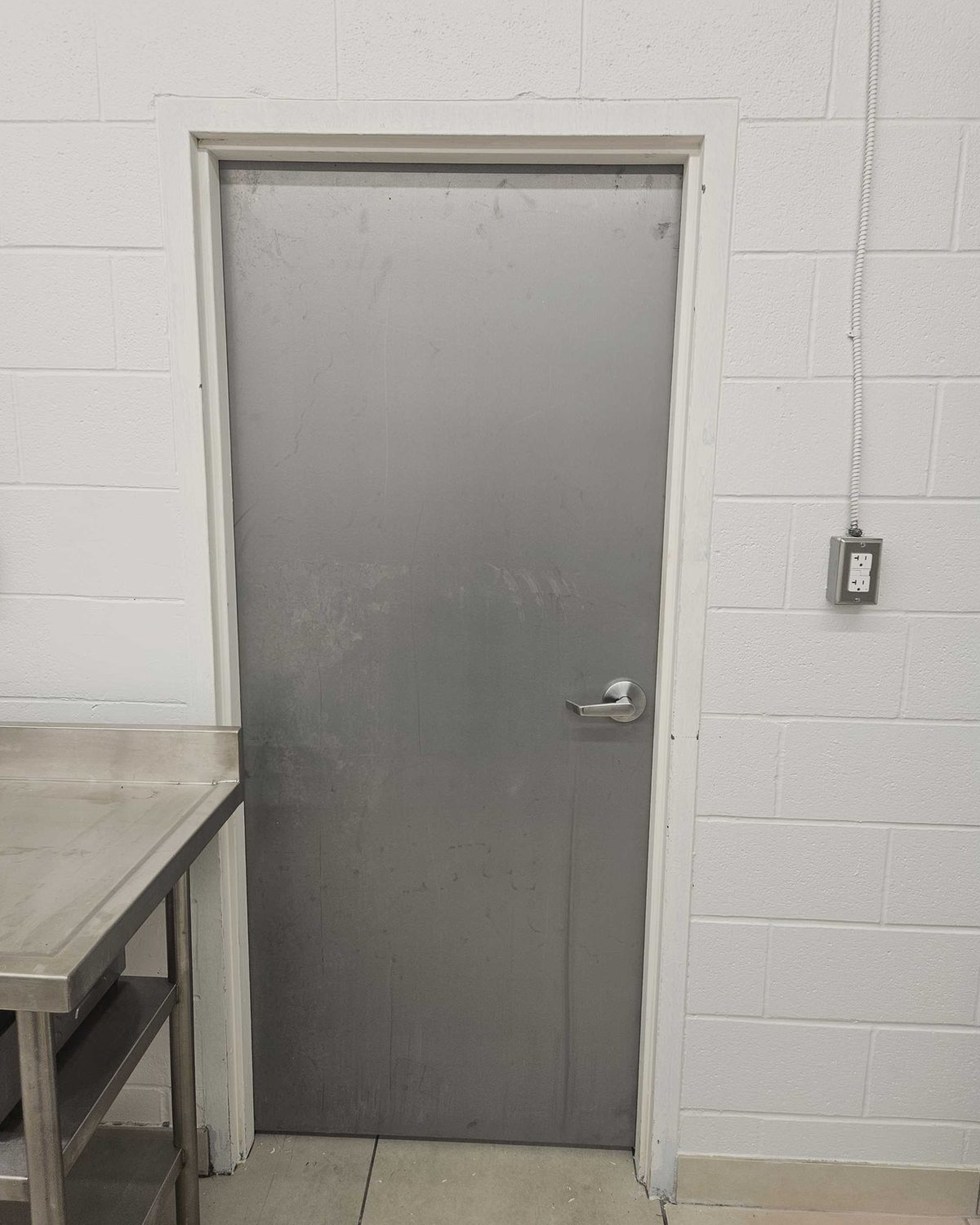
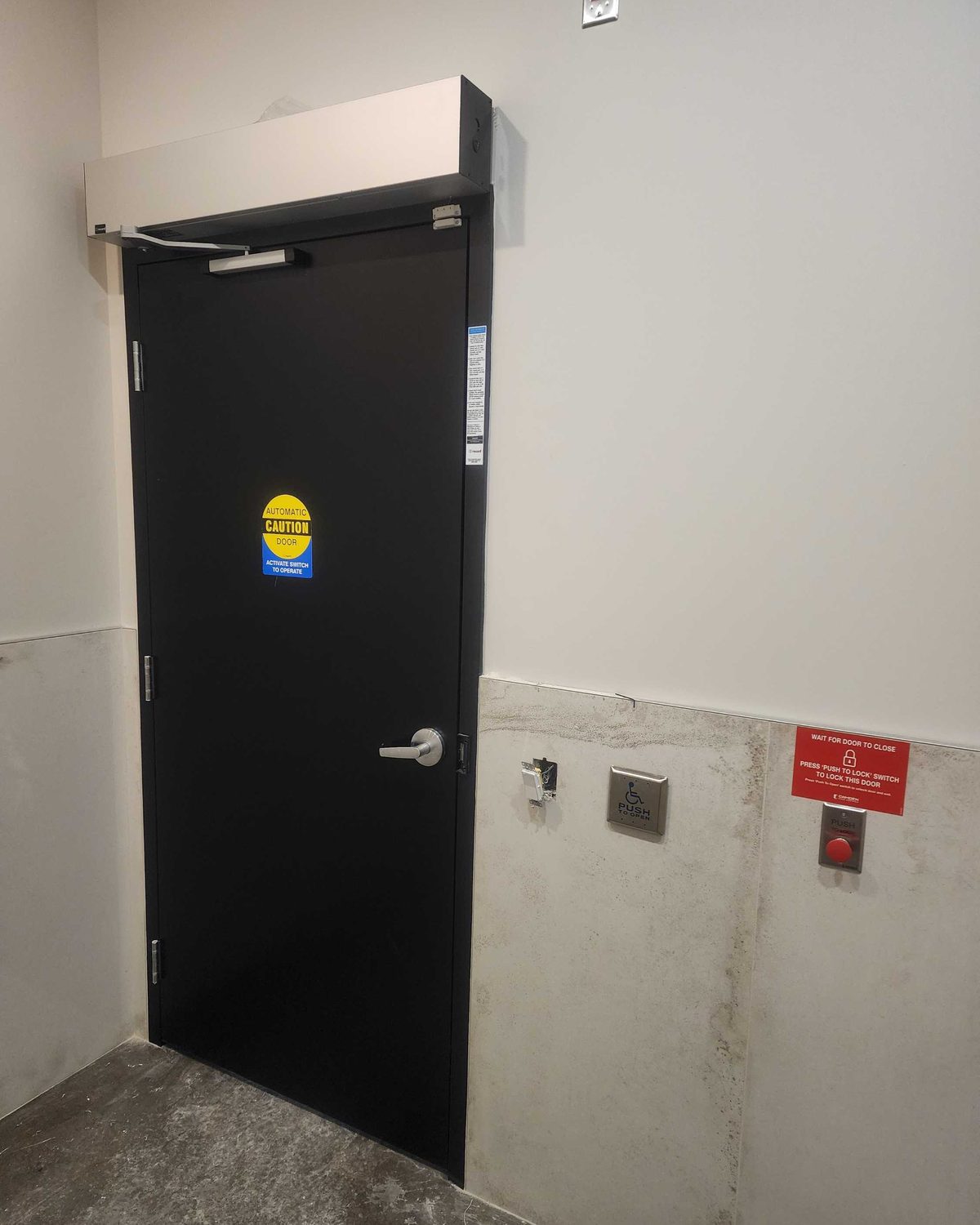
Recent steel-door jobs from our own records, listed as client and date — documented as dated job folders in the company photo library rather than as written project briefs.
- Seven Building Services Inc.March 2025
- HypertecNovember 2025
- Screenco Manufacturing Ltd.November 2025
- 4M Manufacturing Inc.October 2025
- TYCOS Tool & Die (Magna Exteriors)March 2025
- Eco SystemDecember 2025
Four decades of doors for names Ontario knows — Canada’s Wonderland, Tim Hortons, Canadian Tire, the LCBO, Metrolinx, Marriott & Hilton hotels, the University of Toronto — plus thousands of businesses across the GTA. Dependable people, quality products, since 1979.
What our customers say
We have a company. We had the garage door installed by Canuck. From beginning to end they did a great job. We love the doors, the functionality and how great it looks. The price was great as well. Thanks so much Tracey
Great company. They care about their customers. They fixed my door and offered great advice and insight on how the commercial door really works. Would not hesitate to call them again.
Called Canuk door systems to come repair a door within our commercial unit. They responded quickly and the turn around time was very quick. Very pleased with the services provided
Acoustic steel door work across Toronto & the GTA
We supply and install steel acoustic assemblies across the core GTA and the Southern Ontario belt from our Mississauga shop — usually in plant rooms and back-of-house space, where the work has to fit around equipment that cannot stop.
Core GTA
- Toronto
- Mississauga
- Brampton
- Vaughan
- Markham
- Scarborough
- North York
- Etobicoke
- Richmond Hill
- Oakville
- Burlington
- Milton
Southern Ontario belt
- Hamilton
- Oshawa
- Whitby
- Ajax
- Pickering
- Barrie
- Aurora
- Newmarket
- Bradford
- Guelph
- Kitchener
- Niagara Falls
Not on the list? Plant-room work travels — anywhere from Niagara to Barrie. Call and ask. See all service areas
What a steel acoustic door costs
Ratings are bought in steps, and each step costs more than the last. What moves the number:
- The STC rating required — the jump from the low 40s to 50 plus is the expensive one
- Leaf construction — layered core, mass, and the gauge of the face sheets
- The acoustic frame, which is not an ordinary hollow metal frame
- The seal set — perimeter gasketing, automatic drop seal, sealed threshold
- Whether the opening also needs a fire label, and the combined listing for it
- Vision panels, which need acoustic glazing and give a point or two back
- Hinges and closer sized for a heavy leaf, and a latch that pulls it into the seals
- Access and scheduling around live plant and equipment
Acoustic leaves are heavy. Standard hinges and closers on a heavy leaf are the fastest way to lose a rating — they are specified with the door, not after it.
Common questions
What makes a steel door acoustic?
Mass, layers and sealing. An acoustic steel door has a heavier, layered core than a standard hollow metal leaf — often with damping material between the faces — and it is tested as an assembly with its frame, perimeter gasketing and an automatic drop seal. A standard hollow metal door with a good seal set will do better than most people expect, but it is not the same product as a tested STC assembly.
What STC ratings can steel doors reach?
Single steel assemblies commonly reach the mid-40s to low 50s, and specialist assemblies go higher. Where a room needs more than a single leaf can give — studios, test cells, generator enclosures — the usual answer is two doors with an air gap between them, a vestibule arrangement that outperforms any single door.
Steel or wood for an acoustic door?
Steel where the space is back-of-house or the rating is high: plant rooms, generator and server rooms, studios, industrial areas. Wood where the door is part of a finished interior — meeting rooms, hotel suites, clinical and office space — which is most acoustic openings by count. Both reach the ratings those rooms need; the material follows the room, not the decibels.
Can a steel acoustic door also be fire-rated?
Yes, and in mechanical and service rooms it usually has to be, since those rooms are often rated separations. The assembly is listed for both from the start — fire performance from the core and edges, acoustic performance from mass and seals. Adding an acoustic seal set to a labelled fire door on site is not permitted and voids the listing.
Do we need a special frame?
Yes. An acoustic assembly needs a frame designed for it — a stop the seals compress against, provision for the drop seal at the sill, and a sealed junction to the wall. Hanging an acoustic leaf in an ordinary hollow metal frame is the single most common way a good door underperforms its rating.
What about the gap under the door?
It is the biggest single leak on most openings, and the fix is an automatic drop seal in the bottom of the leaf plus a sealed threshold. Sound behaves like air here: an undercut of half an inch will undo most of what a heavy leaf achieves. If a room has to breathe, ventilation belongs in the wall or the ceiling with an acoustic path, not under the door.
Can you improve an existing steel door?
Often, and it is worth trying first. Fitting proper perimeter gasketing, an automatic drop seal and a sealed threshold to a solid steel leaf typically gains several STC points for a fraction of the cost of a new assembly, and it fixes the leak path most rooms actually suffer from. Where the leaf itself is light or hollow, retrofitting has a ceiling and a tested assembly is the answer.
How long does a steel acoustic door take?
Typically 4–6 weeks to produce the assembly once the shop drawings are approved, then 1–2 weeks to schedule the job and install it, depending on the size of the project. These are engineered assemblies — leaf, frame and seal set ordered together — so the fabrication rather than the installation sets the schedule. Hanging one assembly is usually a day on site.
A plant room the whole floor can hear?
Tell us what the room contains and what is on the other side of the wall, and we'll specify and quote the assembly.