Hollow Metal & Steel Doors in Newmarket
Supply, installation and 24/7 emergency repair across Newmarket and the surrounding GTA — from our shop at 14-1645 Bonhill Road, Mississauga.
Hollow metal doors and frames we've installed and serviced in Newmarket — for Old Flame Brewing Co, Cambria Design Build Ltd, Bird Mechanical Ltd, CL Design, Mecsmart Systems Inc, Hillhurst Home Renovations Inc — among many more businesses here. Dependable people, quality products, since 1979.
Recent hollow metal & steel doors projects in Newmarket and surrounding areas
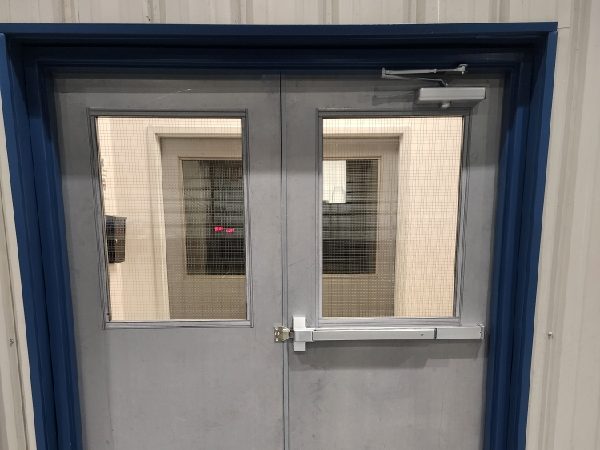
CL Design
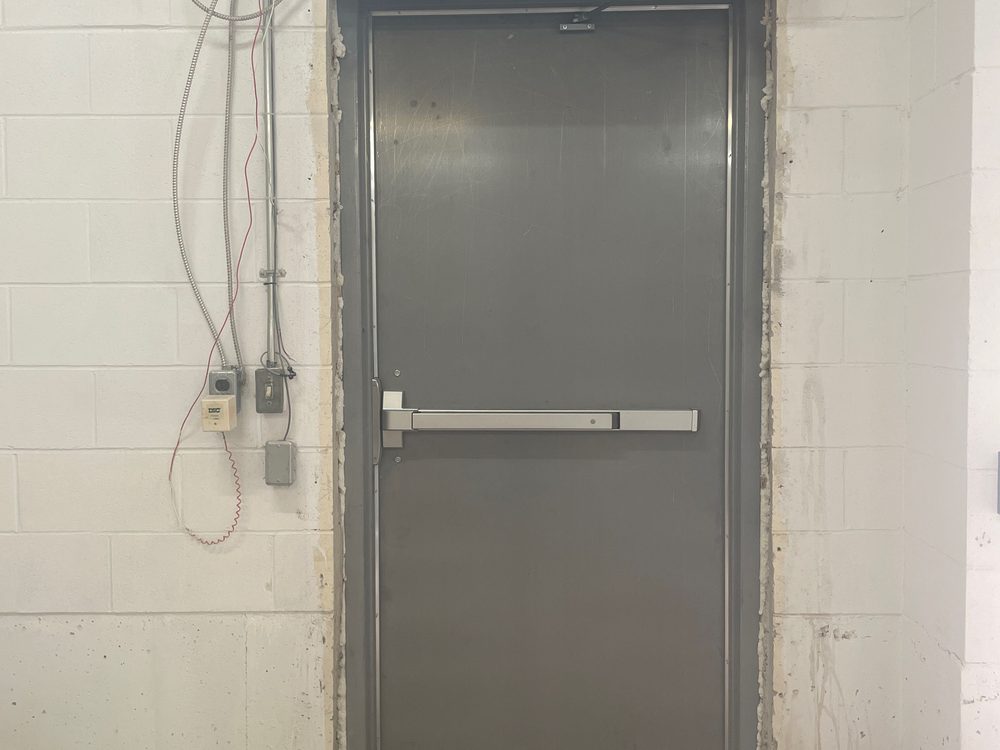
Artyan Group
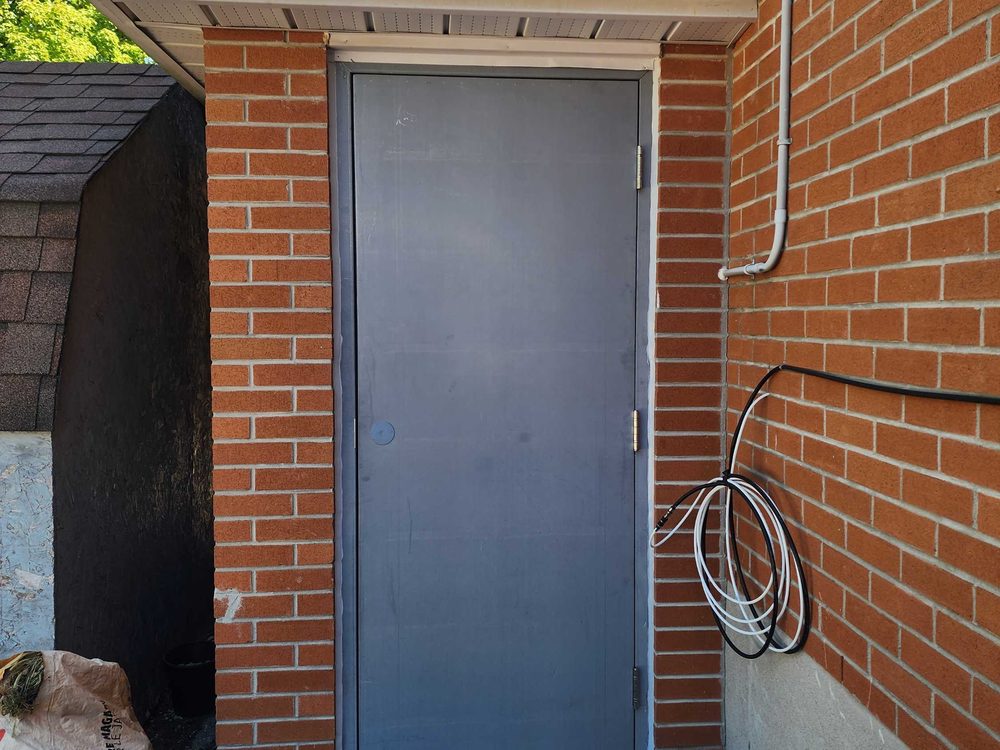
New Apostolic Church Canada
Hollow Metal & Steel Doors across Newmarket
We work throughout Newmarket — Newmarket Industrial Park, 404 Employment Area, Mulock Employment Area, Yonge Street Corridor and the blocks around them. The buildings here are mostly health sciences and healthcare, public sector administration and light manufacturing, and each puts different demands on a door: traffic volume, insurance and fire requirements, and how much downtime an opening can afford. Newmarket’s 87,942 residents keep those buildings busy.
We have completed 8 hollow metal and steel door jobs in Newmarket since 2020.
- Population
- 87,942
- Main industries
- health sciences and healthcare, public sector administration, light manufacturing and business and professional services
- Building stock
- warehouse and distribution facilities, light manufacturing plants, industrial flex units and regional shopping centres and retail plazas
- Business parks
- Newmarket Industrial Park, 404 Employment Area, Mulock Employment Area and Yonge Street Corridor
- Serving since
- 1979
- Newmarket Industrial Park
- 404 Employment Area
- Mulock Employment Area
- Yonge Street Corridor
- Davis Drive Corridor
Broken hollow metal & steel doors in Newmarket: we dispatch 24/7.
Newmarket is roughly a 55-minute run from our Mississauga shop — less if a technician is already in the area — so a truck is usually on site the same day.
Emergency board-up, security and make-safe first — permanent repair scheduled after.
What hollow metal doors are, and when to specify one
A hollow metal door is a steel skin over a core in a welded or knock-down steel frame. It is the default choice wherever an opening has to survive traffic, weather, forced entry or a fire code requirement — back-of-house, mechanical rooms, stairwells, loading areas and exterior service doors.
The core is chosen by the opening, not by the door
Every hollow metal door looks alike from six feet away. What separates a leaf that lasts twenty years in a plant in Newmarket from one replaced in five is what fills the cavity between the faces.
Finishes, and what winter in Newmarket does to the wrong one
Finish is the specification most often left to whoever places the order, and it decides how long the door lasts. Four answers, not interchangeable.
Frames — welded or knock-down, and the wall decides
The frame is half the assembly and most of the failures, and which one you buy is usually settled by when the wall gets built.
Supplying hollow metal doors in Newmarket — the price and the date
We install what we supply, and we supply on its own: contractors in Newmarket who hang their own doors buy leaves, frames and hardware from us as one package, prepped to the schedule.
Related hollow metal work in Newmarket
Hollow metal doors for the work Newmarket buildings do
The sectors that dominate Newmarket — health sciences and healthcare, public sector administration, light manufacturing — each wear a steel door out in a different place.
Health sciences and healthcare
Doors on a ward route are hit by beds and carts all day, so the leaf takes a heavier gauge, a full-height kick plate and a continuous hinge instead of three butts. Soiled utility and sterilising rooms are washed down, which puts stainless on the list for a handful of openings rather than for the whole floor.
Light manufacturing
A plant is where a steel door earns its gauge: 16-gauge or steel-stiffened leaves on the routes carts and forklifts take, and frames grouted solid into block so a knock moves the wall instead of the jamb. Dents in steel stay, so the specification is written to make them rarer, not to hide them.
Retail trade
The glass is at the front and the steel is at the back — the stock-room door, the door onto the service corridor, the rear exit to the lane. The rear one is the one that gets pried, so it wants a welded frame with no gap to lever against and a leaf that does not flex when someone leans on it.
General contractors & new builds
Steel doors are a schedule rather than a purchase: every opening listed with its size, hand, frame profile and hardware prep, because nothing can be cut into a leaf after it is made. Welded frames go in with the block and knock-downs into finished drywall later, so the order the site runs in decides which you buy.
Logistics & warehousing
The steel here is the man door beside the bay and the door onto the yard rather than the overhead itself: 16-gauge galvannealed leaves in welded frames, because both sides of them are outdoors. What ends them is the bottom twelve inches, where salt tracked off a loading pad sits all winter.
Food & pharma processing
Paint does not survive a sanitation schedule, so these openings go stainless — leaf, frame and hardware, seams welded and ground rather than lapped. The frame is the part that gets forgotten and the part standing in the water: a stainless door in a painted frame rusts at the floor inside a year.
Get hollow metal doors quoted in Newmarket
Give us the sizes, whether the frame is staying, and what the opening has to put up with — weather, washdown, forklifts. A door schedule or a photo of the existing frame is enough to quote from. If a door is off its hinges or will not lock, call 800-522-6825 — the line is answered 24 hours.
Common questions about hollow metal & steel doors
What is the difference between a hollow metal door and a steel door?
In commercial work, nothing — hollow metal is what the trade calls a commercial steel door, and the two terms are used interchangeably on drawings and in quotes. A "commercial-grade" door means exactly this assembly: a steel leaf built to an ANSI/SDI level, hung in a steel frame, prepped at the factory for commercial hardware. The distinction worth making is against residential steel entry doors: those are an insulated slab in a wood or composite frame, sold as a finished unit, and they are not built for continuous traffic, commercial hardware or a fire label. They are a different product with a different price, and we supply those too — ask for the residential line rather than this one.
What are the disadvantages of a steel door?
Weight, thermal bridging, and the fact that dents stay. A 16-gauge leaf is heavy enough to need a correctly sized closer and hinges that actually get maintained, steel conducts cold unless the assembly is thermally broken, and a door hit by a pallet truck keeps the dent until the section is cut out and re-welded. It is also plainer than wood or glass, which is why it is specified for back-of-house rather than for a lobby. Against that: it holds its shape, it can carry a fire label, and every part of it can be repaired in place — which is why it remains the default commercial opening in Ontario.
What is a standard exterior commercial door size?
A 3'0" by 7'0" single leaf is the commercial standard, and most rear, service and stairwell doors in Ontario are that size. Widths run from 2'0" to 4'0" in two-inch increments and heights are usually 6'8", 7'0" or 8'0", with 4'0" by 8'0" the largest standard single leaf before the door, its hinges and its frame all become custom. Standard pairs are built from two standard leaves — 6'0" by 7'0", from a pair of 3'0" doors, is the common double door. Staying on that grid is the difference between a door that ships in days and one that joins the four-to-six-week production queue.
Hollow Metal & Steel Doors nearby
Full product details: Hollow Metal & Steel Doors