
Loading Docks in Orangeville
Dock levelers, seals, shelters and bumpers for warehouses, plants and receiving bays across Orangeville — quoted as one position rather than four line items, and repaired 24/7 from our shop at 14-1645 Bonhill Road, Mississauga.
Dock levelers, seals and shelters we've installed and serviced in Orangeville — for Com-Pleat Filters — among many more businesses here. Dependable people, quality products, since 1979.
Recent loading dock projects near Orangeville
These jobs are in neighbouring cities — the same crew and the same trucks cover Orangeville.
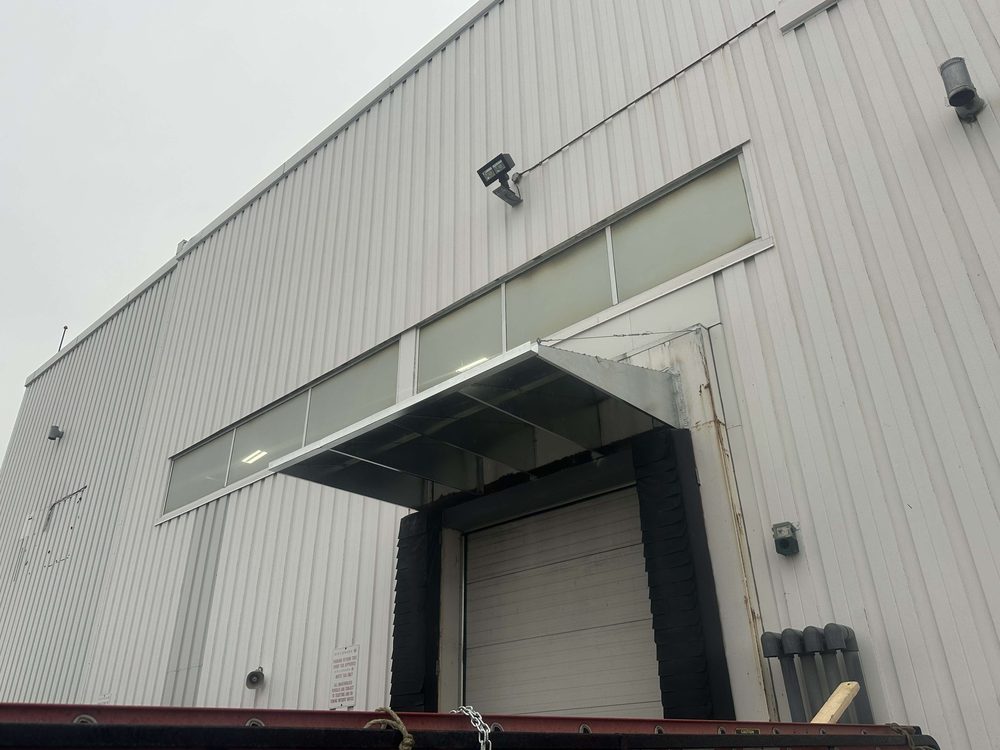
Black & McDonald Limited
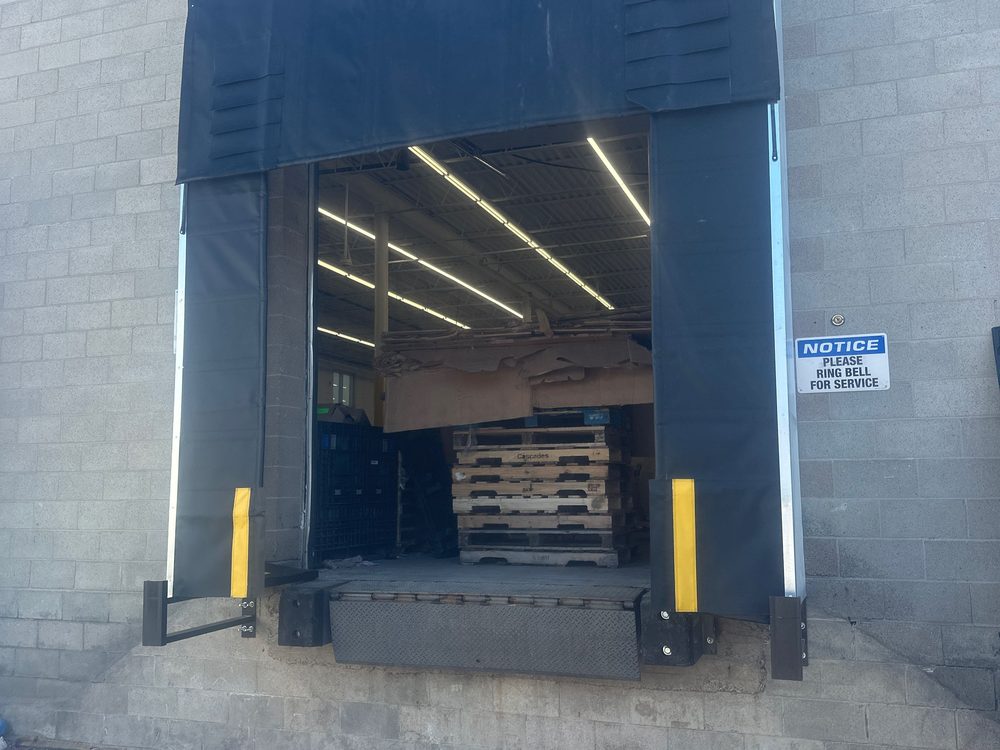
Synerex Construction Group Inc
Loading Docks across Orangeville
We work throughout Orangeville — Orangeville Industrial Park, Centennial Road Corridor, Broadway Corridor and First Street Corridor. The buildings here are mostly advanced manufacturing, retail and commercial trade and health care and social assistance, and each puts different demands on a door: traffic volume, insurance and fire requirements, and how much downtime an opening can afford. Orangeville’s 30,167 residents keep those buildings busy.
- Population
- 30,167
- Main industries
- advanced manufacturing, retail and commercial trade, health care and social assistance and construction
- Building stock
- manufacturing facilities, food processing facilities, warehousing and distribution centres and strip retail plazas
- Business parks
- Orangeville Industrial Park, Centennial Road Corridor, Broadway Corridor and First Street Corridor
- Serving since
- 1979
- Orangeville Industrial Park
- Centennial Road Corridor
- Broadway Corridor
- First Street Corridor
Broken dock leveler, seal or dock door in Orangeville: we dispatch 24/7.
Orangeville is roughly a 60-minute run from our Mississauga shop — less if a technician is already in the area — so a truck is usually on site the same day.
Emergency board-up, security and make-safe first — permanent repair scheduled after.
A dock position is four things, and they have to agree with each other
Almost nobody phones about a dock position. They phone about one part of it — a deck that will not lift, a curtain in ribbons, a door that has been hit again. But the leveler, the seal or shelter, the bumpers and the door above them are one system, and changing the trailer mix moves all four answers. Here is how we work through them on a site in Orangeville.
Seal or shelter, and it is the trailer mix that decides
Both close the gap between a trailer and the building so you stop heating the yard, and they do it in opposite ways. Picking the wrong one is the commonest reason a dock in Orangeville is back on our list within two winters.
Bumpers cost the least and prevent the most
A pair of bumpers is the smallest line on any dock quote and the one that decides what the next five years cost. Once a trailer can touch the building the damage runs in order, each step dearer than the last: the seal, the leveler lip, the door track, then the concrete.
Getting a dock in Orangeville repaired without closing the warehouse
Dock equipment declines quietly and then stops all at once, so most of what we are called to could have been a scheduled visit. Either way the work goes in around your shift pattern, one position at a time.
What dock equipment costs in Orangeville, and what moves the number
Type moves the price far more than size does: an edge-of-dock unit is the least expensive by a wide margin, a hydraulic pit leveler the dearest. And where a pit has to be formed or rebuilt, the concrete can come to more than the leveler standing in it, so we quote equipment and construction as separate lines.
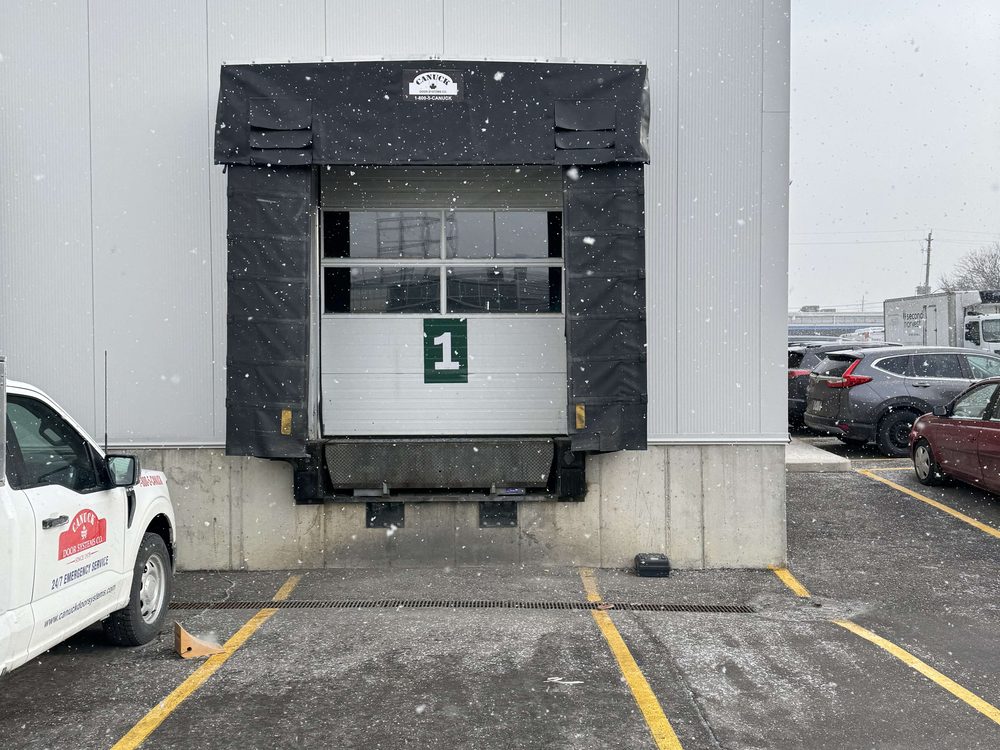
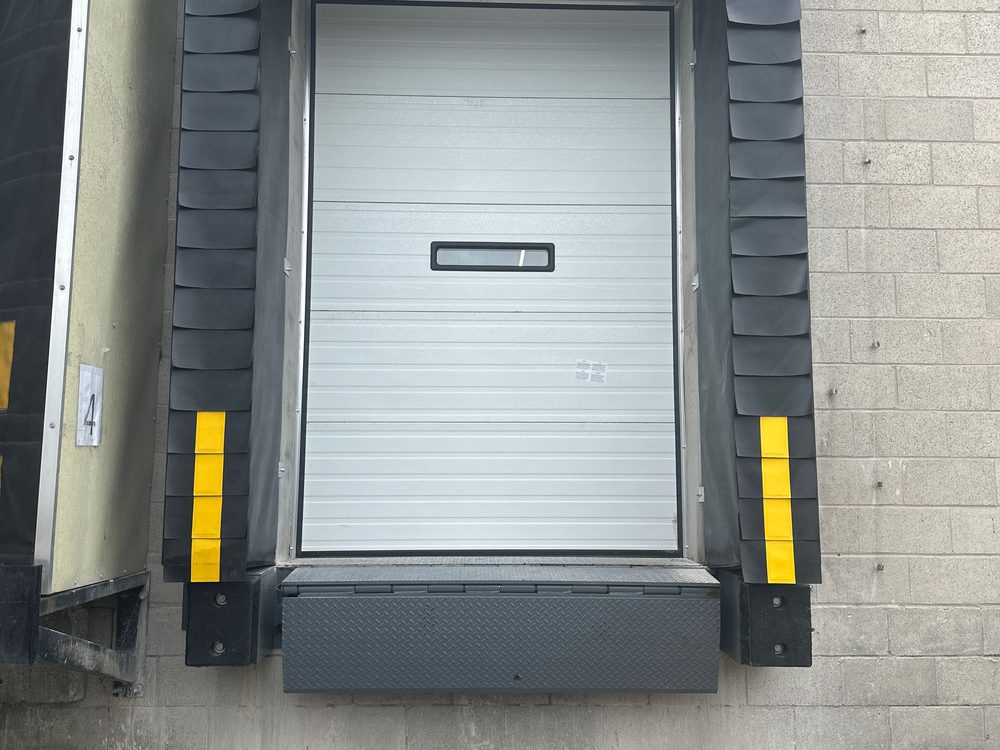
Loading docks for the work Orangeville buildings do
The sectors that dominate Orangeville — advanced manufacturing, retail and commercial trade, health care and social assistance — each back a different kind of trailer against the building.
Advanced manufacturing
A plant dock takes fewer trailers than a distribution one and treats each of them worse — steel, coil, machine parts, and a counterbalance truck heavier than anything a warehouse runs. That is a capacity question before it is a type question: rate the deck against the loaded forklift, not the pallet, and expect the lip to be what wears.
Retail and commercial trade
A plaza or big-box store has one receiving position, often shared, and it cannot be out on a delivery day. That argues for an edge-of-dock leveler and a spare set of bumpers rather than a pit rebuild in season — and for booking the real work overnight, which is how most of the retail docks we look after get done.
Health care and social assistance
A hospital dock runs to a timetable nothing can interrupt — food, linen, supply and waste, all through the same two or three positions. So the work is planned around it rather than into it: one position out at a time, at an agreed hour, and a maintenance visit that finds the failing spring before the department does.
Construction
On a new build the dock is decided at the concrete stage, and that is where it goes wrong — pit dimensions, embed angles and dock height are set months before the leveler is ordered. Send us the dock detail with the door schedule and we will quote the equipment and the opening above it together, which is how they get installed.
Offices & business parks
A tower or business park loads through a below-grade bay, so the constraint is height and turning room before it is trailer height: a shallow pit, a leveler that suits a cube van as readily as a five-tonne, and bumpers protecting a wall the building cannot easily repair. Moves and fit-outs are what actually stress it.
Schools & institutions
A school or campus usually has one dock behind the kitchen and a second at the shops or the theatre, and both are quiet for two months a year. Summer is when a pit gets rebuilt, because concrete has to cure and that is the one thing on a dock that cannot be fitted into a weekend.
Get a dock position quoted in Orangeville
Four measurements make this a firm number instead of a range: the dock height, the lowest and highest trailer bed you serve, the size of the opening and whether there is a pit already, and what crosses the deck. A photo of the position from the yard covers most of it. Deck stuck down or a bay you cannot close? Call 800-522-6825 — the line is answered 24 hours.
Common questions about loading docks
Who is responsible for dock safety — us or the carrier?
The building operator owns the fixed equipment and the condition it is kept in. In Ontario that sits under the Occupational Health and Safety Act and the Industrial Establishments regulation, which require equipment to be maintained and to be capable of doing the job it is used for. Trailer creep, unrestrained trailers and levelers left in an unsafe position cause the injuries that follow. Practically: keep bumpers within wear limits, keep the leveler serviced, and use a restraint or wheel chocks with a communication system so a driver cannot pull away under a forklift.
Do you service equipment you did not install?
Yes — most of our dock service work is on equipment somebody else supplied, including makes no longer manufactured. levelers, seals, shelters and bumpers are largely rebuildable: springs, lip assemblies, hydraulic packs, foam pads and curtain sections are all replaceable in place. We will tell you honestly when a unit is past economic repair, which on a leveler usually means the frame or the pit rather than the mechanism.
How often should dock bumpers be replaced?
When they are worn to roughly half their original thickness, or when any steel fixing is visible or the laminations have started to separate. Bumpers are the least expensive item on the dock and the one whose failure costs the most, because once a trailer reaches the wall it damages the seal, the leveler lip, the door track and eventually the concrete face. Bumper condition is the first thing our technicians look at on a maintenance visit — worn bumpers are the most common thing we find, and the easiest to put right.
Loading Docks nearby
Full product details: Loading Docks