
Troubleshooting
Garage Door Not Closing? What Stops It, and What to Check First
Most garage doors that won't close are being stopped on purpose: a safety photo eye is dirty or knocked out of line, something is in the path, or the opener's travel limit has drifted. Check those first. If you heard a bang or the door hangs crooked, stop — that is a spring or a cable.
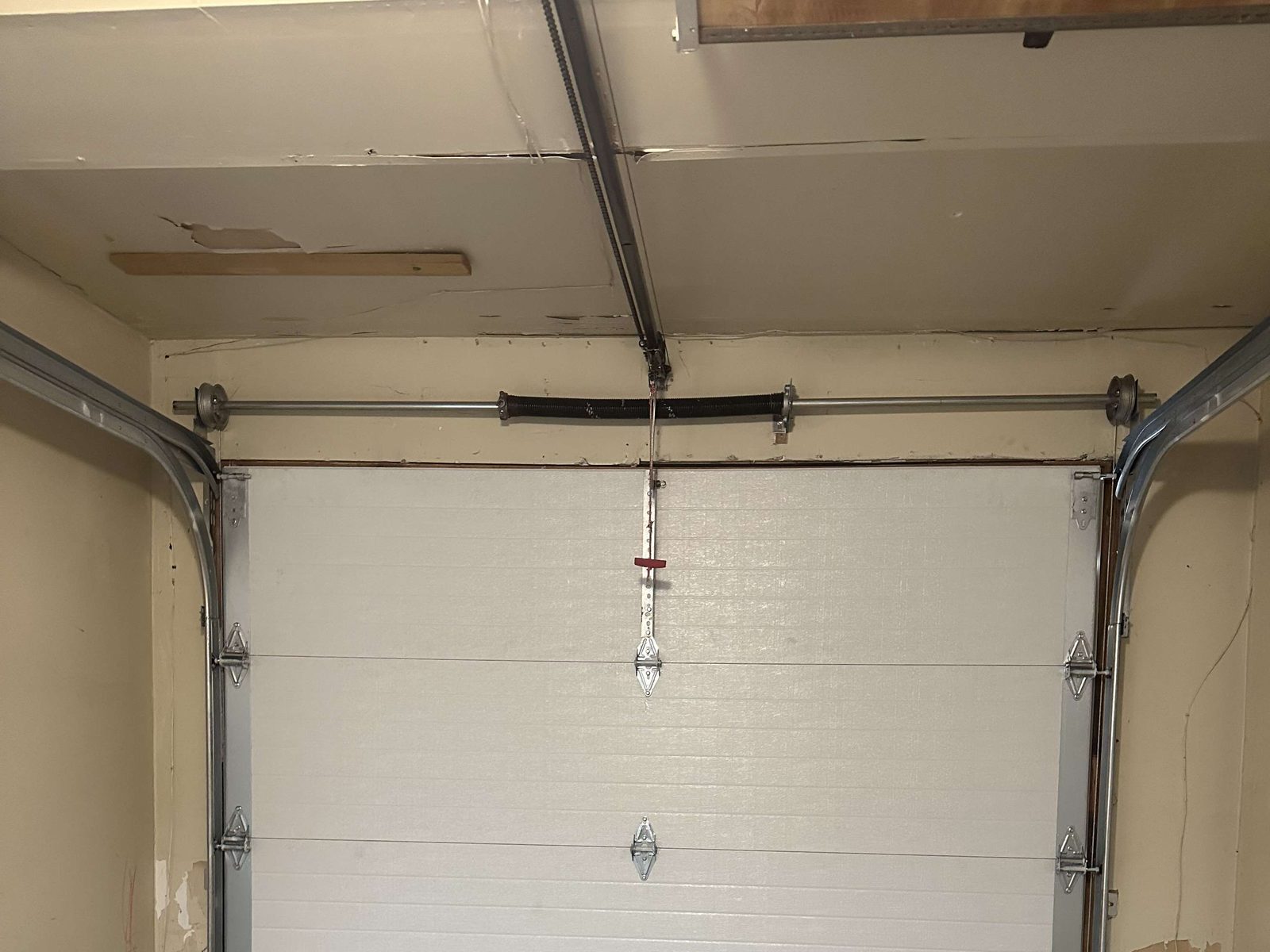
A garage door that will not close is almost always one of two things: the opener has been told something is in the way, or the door itself cannot physically travel. The first is usually free to fix. The second ranges from a dry roller to a broken spring, and telling them apart takes a couple of minutes.
This is the order we would check things in, what each symptom points to, and where the line sits between a five-minute fix and a job for a technician.
Four decades of garage doors and openers for names Ontario knows — Canada’s Wonderland, Tim Hortons, Canadian Tire, the LCBO, Metrolinx, Marriott & Hilton hotels, the University of Toronto — plus thousands of businesses across the GTA. Dependable people, quality products, since 1979.
Why won't my garage door close?
Most of the time, the door is being stopped by its own safety system: the photo eyes cannot see each other, or the opener feels more resistance than it expects and reverses. Less often, the door is physically stuck — a track, a cable or a spring has failed. What the door does when you press the button tells you which.
| What the door does | Most likely cause | Who fixes it |
|---|---|---|
| Starts down, then goes straight back up; opener lights flash | Photo eyes dirty, blocked or out of line | You — clean and realign them |
| Closes only while you hold the wall button down | Photo-eye fault — the hold is a manual override | You first; a technician if the lights will not go steady |
| Reverses at the same point every time | Travel limit drifted, or something in the track at that height | Adjustment on a healthy opener; a technician if the track is bent |
| Reverses just before the floor | Ice, debris or a torn bottom seal | You for debris; a seal is a quick repair |
| Stops part-way and hangs crooked | A lift cable off its drum, or a broken spring | A technician — stop using the opener |
| Loud bang, then the door will not move | A broken torsion spring | A technician — normally one visit |
| Nothing happens from the remote; the wall button works | Remote battery, or the remote has lost its pairing | You |
| Nothing happens from anything | Power, a tripped breaker or GFCI, or a failed opener | You for power; a failed opener is replaced |
| Motor runs, door does not move | Release cord pulled, or a stripped gear or snapped belt | You to re-engage; otherwise the opener is replaced |
Why does my garage door go back up when it tries to close?
A garage door that reverses on the way down is doing what it was built to do. The opener sends it back up when the photo-eye beam across the opening is broken, or when the door meets more resistance than the opener expects. Most often, the cause is the photo eyes.
The eyes are the two small sensors either side of the opening, about 150 mm off the floor. A dusty lens, a cobweb or a bracket nudged by a recycling bin is enough to break the beam. On Chamberlain and LiftMaster openers the main lights flash when the sensors are the problem —
Chamberlain's own support notesays ten flashes. Wipe both lenses, then turn each sensor until its indicator light glows steadily rather than flickering.
If the door reverses just before it reaches the floor, look down rather than across. In an Ontario winter the usual culprit is ice or packed snow under the bottom seal, or a seal that has frozen to the concrete and torn.
Why won't my garage door close when nothing is blocking it?
When nothing visible is in the way, the photo eyes are still the first suspect — a sensor can be out of line by a few degrees and look perfectly fine. The test is the wall button: on most Chamberlain and LiftMaster openers, pressing and holding it closes the door even when the sensors disagree.
If the door closes while you hold the button but not from the remote, the sensors are the fault, not the door or the motor. That hold is worth knowing as a way to lock the house tonight, but it is not a fix: it bypasses the system that stops the door on a child, a pet or a car bonnet.
Never leave a door permanently running on the hold-to-close override, and never tape or remove the photo eyes to make a door close. An opener that will not reverse on an obstruction is the one piece of equipment in the garage that can seriously hurt somebody.
What if the sensors are aligned and it still won't close?
A garage door with steady sensor lights that still stops short or reverses is usually running into its travel limit or its force setting. The limit tells the opener where "closed" is; if it has drifted, the opener meets the floor early, reads it as an obstruction and reverses. Sometimes the door is binding and the opener is right to give up.
The limit and force adjustments are in the owner's manual for your model, and on a door that runs smoothly they are a legitimate homeowner adjustment. The rule that matters is Chamberlain's own: never use the force setting to compensate for a binding or sticking door, and test the safety reversal afterwards with a 1½-inch object on the floor under the door. If the door does not reverse on it, the adjustment is not finished.
What makes a door bind:
- Dry or worn rollers and hinges — a garage-door lubricant fixes the first; worn rollers are replaced.
- A bent or loose track — often after a car has touched it. The door drags at one height every time.
- A door that is out of balance — the spring has lost some of its strength, so the opener is lifting weight the spring should be carrying.
Is it the door or the opener?
A garage door and its opener fail in different ways and cost very different amounts, so it is worth a minute to find out which one you have. With the door fully closed, pull the red release cord and lift the door by hand. A healthy door lifts with moderate effort and stays put at waist height.
- It lifts easily and holds: the door is fine and the opener is the fault. Check the outlet, the breaker and any GFCI, and the remote battery. If it is still dead, the opener has failed — and we replace a failed opener rather than repair it. The reasoning is on garage door opener repair or replacement.
- It is very heavy, will not lift, or drops: a spring has failed. Put it down, leave it closed and do not re-engage the opener. See spring and cable replacement.
- The motor runs and the door does not move: somebody may have pulled the release. Run the opener and the trolley re-latches onto the rail.
If the door is stuck open, do not pull the release. With a broken spring nothing is holding the door up except the opener, and it will come down under its own weight — well over 100 kg on a double.
Why does my garage door stop part-way or close crooked?
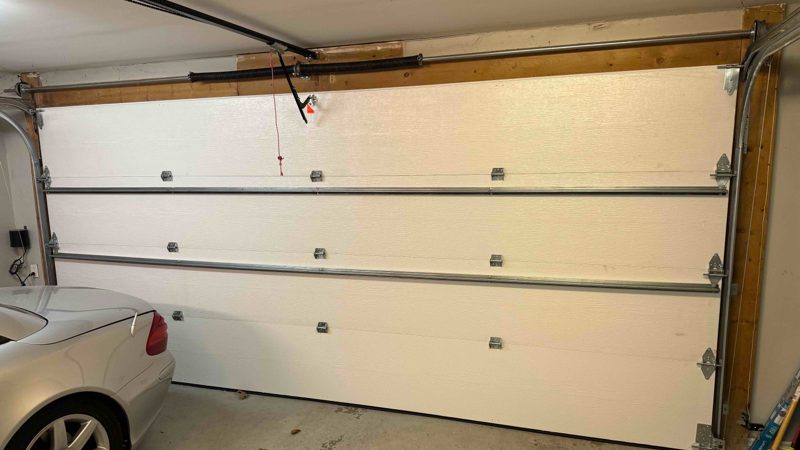
A garage door that stops part-way and sits lower on one side has almost always lost a lift cable or a spring. The cables carry the door's weight from the bottom brackets up to drums on the spring shaft; when one comes off its drum or snaps, that side drops. This is not a fault to work on yourself.
Stop using the opener. Every further cycle drags a crooked door through its tracks and turns a cable job into a cable, track and panel job. Leave the door where it is, keep people and cars out from under it, and call. Cables and drums are stocked, so on a house this is normally finished in one visit.
What can I safely fix myself, and what should I leave alone?
Everything that stops a door without being under tension is fair game for a homeowner. Everything that stores the energy to lift the door is not — a spring looks simpler than it is, and it is the one part of a garage door that can seriously injure someone working on it without the right tools.
- Fair game: cleaning and realigning photo eyes, remote batteries, re-pairing a remote, checking the outlet and breaker, clearing the tracks, lubricating rollers and hinges, replacing the bottom weatherseal, and limit adjustments on an opener that is otherwise healthy.
- Leave alone: torsion and extension springs, lift cables, cable drums and the bottom brackets the cables anchor to. All of them are under full spring tension.
- Leave alone, differently: a failed opener. It is not dangerous to look at, but a logic board or gear kit plus the visit to fit it approaches the price of a new opener, so it is quoted as a replacement. See garage door openers for the belt, chain and jackshaft options.
My garage door won't close at night — is it an emergency?
A garage door that will not close is an emergency when it leaves the house unlockable — an attached garage stuck open is an open door into your home. Our line is answered 24/7 on 800-522-6825, and the first job on a night call is always the same: get the door down and the house secure.
Whether the repair is finished that night depends on the part. Sensors, cables and rollers are on the truck, and those calls usually end with a working door. A spring is matched to your individual door, and the size yours takes may not be on the truck that reached you fastest — so a broken spring at 2 am is brought down and secured first, and re-sprung that night only if the right one is on board. On a house it is normally a single visit either way. The details are on 24/7 emergency garage door repair.
If the door still closes and locks, it can almost always wait until morning, and the daytime rate is materially less expensive. We will tell you on the phone which one you have. Everything else we do on a house is on garage door repair, and the doors themselves are on residential garage doors.
Common questions
How do I fix a garage door that won't close?
Start with the free checks. Wipe both photo-eye lenses and make sure their indicator lights are steady, clear anything from the path and the tracks, and try the wall button as well as the remote. If the door still stops or reverses, the opener's travel or force setting may have drifted, or the door itself is binding. A door that is heavy, crooked or made a loud bang has a spring or cable fault, which is a job for a technician.
Why won't my garage door close when nothing is blocking it?
Usually the photo eyes. They sit about 150 mm off the floor either side of the opening, and a dirty lens, a cobweb or a bracket knocked by a bin or a bike is enough to break the beam. On Chamberlain and LiftMaster openers the lights flash when the sensors are the problem. Clean the lenses and turn the sensors until both indicator lights glow steadily.
Why won't my garage door close even though the sensors are aligned?
Then the opener thinks the door has hit something. The down-travel limit may have drifted so the opener expects the floor before the door reaches it, or the door is binding on a dry roller, a bent track or ice at the bottom seal and the opener reverses on the extra effort. Do not turn the force setting up to compensate; find what the door is dragging on.
Why does my garage door go back up when it tries to close?
Because the safety reversal is doing its job. The opener reverses when the photo-eye beam is broken or when the door meets more resistance than it expects. If it reverses at the same point every time, suspect the travel limit or something in the track at that height. If it reverses just before the floor, look for ice, debris or a torn bottom seal.
Can I close my garage door if the sensors aren't working?
On most Chamberlain and LiftMaster openers, yes: press and hold the wall button until the door is fully down. It is a way to lock the house tonight, not a fix. A door that only closes while the button is held has a sensor fault that still needs sorting, because the system that stops the door on a child or a car is not working.
Pricing a job like this?
Door still won't close?
Tell us what it is doing, whether you heard a bang, and whether the garage connects to the house. That is enough to tell you whether it is a daytime booking or a call-out tonight.