
Guide
Is a Metal Garage Door the Right Choice? Steel, Gauge and Insulation Explained
For most Ontario houses, yes. A metal garage door is almost always a steel sectional door, and steel is the material that best balances cost, strength, low upkeep and insulation. What separates a good one from a poor one is the construction — layers, steel thickness and core — not the word "steel".
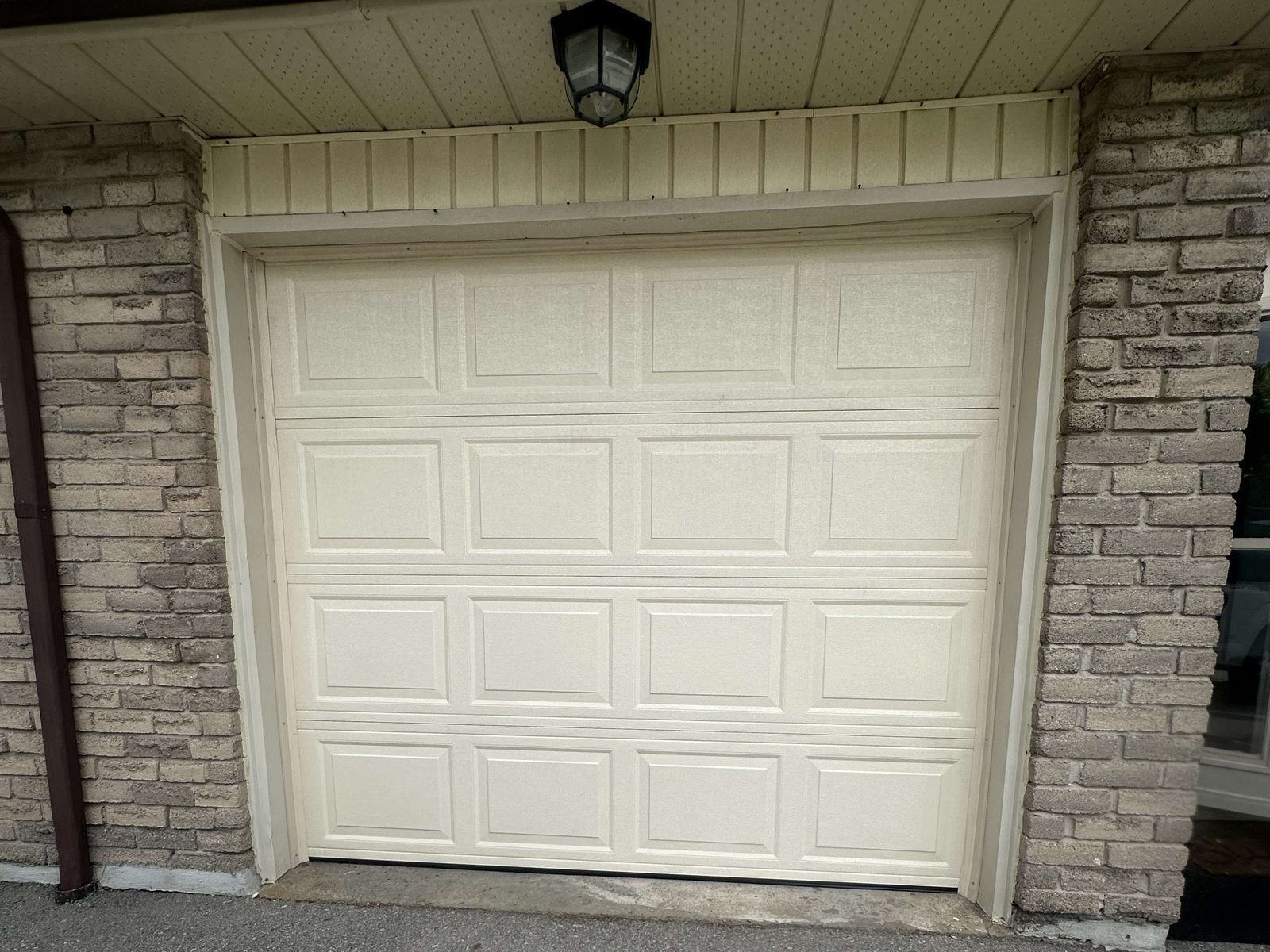
Ask for a metal garage door in Ontario and you will be shown steel sectional doors, because that is what nearly every residential metal door is. Aluminum is the other metal, and it lives mostly in full-view glazed doors. The real choices sit inside the steel: how many layers, how thick, what core, and what the door looks like from the street.
This guide covers those choices in the order that changes the door the most, and where steel beats the alternatives — and where it does not.
Four decades of garage doors for names Ontario knows — Canada’s Wonderland, Tim Hortons, Canadian Tire, the LCBO, Metrolinx, Marriott & Hilton hotels, the University of Toronto — plus thousands of businesses across the GTA. Dependable people, quality products, since 1979.
Why is steel the most common garage door material?
Steel is the most common garage door material because it does the most things well at the lowest cost. It does not rot, warp or swell in a wet spring, it takes a factory-baked finish that does not need repainting every few years, it holds a foam insulating core, and it can be pressed into almost any panel pattern — traditional raised panels, flat modern slabs or a wood grain.
That combination matters more in the GTA than in milder places. A garage door here sees freeze and thaw, wet snow against the bottom section, road salt tracked in on the car, and summer sun on a south-facing driveway. Steel handles all of it with less maintenance than wood, and costs less than wood, fiberglass or a full-view aluminum door of the same size.
What is the difference between 1-, 2- and 3-layer steel doors?
A steel garage door comes in one of three constructions, and the layer count changes the door more than any other single choice. Manufacturers such as
Clopaysell all three.
| Construction | What it is | Suits |
|---|---|---|
| 1-layer | A single steel skin, no insulation | Detached garages and storage; the most economical |
| 2-layer | Steel skin with an insulating backer on the inside face | Attached garages where some insulation is wanted at a lower price |
| 3-layer | Steel inside and out with an insulating core between them | Attached garages, rooms above, heated or workshop garages |
The 3-layer "sandwich" is the one to pay for when the garage shares a wall or a ceiling with the house. Besides keeping heat in, the second skin protects the foam from knocks, stiffens the section, and makes the door noticeably quieter as it runs.
What does steel gauge mean on a garage door?
Steel gauge is a thickness scale that runs backwards: the lower the number, the thicker the steel, so a 24-gauge skin is thicker than a 25- or 27-gauge one. Thicker skins dent less when a bike handlebar or a basketball meets them.
Gauge is a weaker guide than it looks, though. The door industry's own association, DASMA, notes that gauge designations are applied inconsistently, and that on an insulated door you cannot arrive at a gauge by adding the outer skin to the inside backer. Compare doors on construction first — layers, core, thickness — and treat gauge as a tie-breaker between two doors that are otherwise alike.
Polystyrene or polyurethane — which insulation is better?
Insulated steel doors use one of two cores. Polystyrene is rigid foam board fitted into the section; polyurethane is foamed into the section and bonds to both steel skins, which adds stiffness as well as insulation. Polyurethane generally gives a higher rating at the same thickness; polystyrene costs less.
Either is a large step up from an uninsulated door. The full comparison, and which one suits an attached garage, is on insulated steel garage doors.
Why do two doors with the same R-value perform differently?
Because a garage door R-value is usually a calculation for one section, not a measurement of the whole door. According to DASMA technical data sheet 163, the calculated R-value covers the door section only and ignores the joints between sections, the end stiles and the seals; a tested U-factor measures the complete installed door. The two methods are not comparable, and they are not simply reciprocals of each other.
In practice, a door's real performance in a Canadian winter depends as much on the joints between sections, the bottom seal and the perimeter weatherstripping as on the foam. A high R-value in a brochure, fitted with a worn perimeter seal, is a cold garage. Ask for the tested U-factor where a maker publishes one, and make sure the seals are replaced with the door.
How does steel compare with wood, aluminum and fiberglass?
Steel is the default because it is the best all-rounder, not the best at everything. Wood looks best and costs most to keep; aluminum wins on glass; fiberglass imitates wood without the maintenance. For most houses the practical choice is steel — in a panel pattern or a wood-grain finish that suits the house.
| Material | Strengths | Weaknesses | Best for |
|---|---|---|---|
| Steel | Strong, low upkeep, holds a foam core, widest choice of styles, lowest cost | Can dent; bare steel rusts if a chip is left | Most houses, especially attached garages |
| Wood | The real grain; the look of a heritage or custom house | Heavy; needs refinishing; can swell, crack or warp with moisture | Houses where the door is a design feature and upkeep is accepted |
| Aluminum and glass | Slim frames, large glazed panels, does not rust | Little insulation value; thin skins dent more readily | Modern houses wanting a full-view door |
| Fiberglass | Moulded wood grain without the refinishing | Can crack on a hard impact; finish can fade in strong sun | A wood look at lower maintenance |
If you want the look of wood on a steel door, that is its own category — see wood-look garage doors. For glazed full-view doors, see aluminum and glass garage doors.
Which style of steel garage door suits my house?
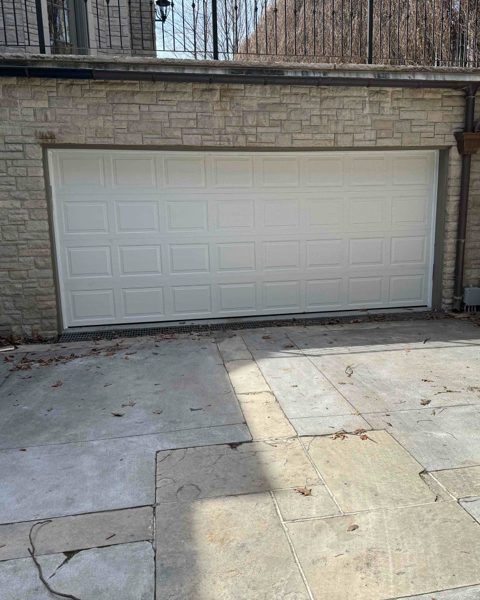
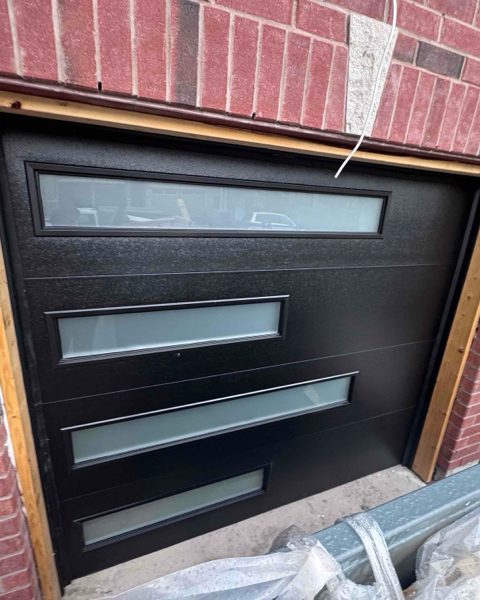
The style is a separate decision from the construction: any of the three layer options can usually be had in several panel patterns. The common ones are raised panel (short or long rectangles, the traditional look), carriage style (a face made to look like a pair of swing-out doors, often with decorative handles and hinges), flush or slab (flat, for modern houses) and glazed sections with a row of windows.
Two practical points. Windows let light into the garage but are the least insulated part of any door, so on an attached garage put them in the top section only. And dark colours on a south-facing door absorb a lot of summer heat; the finish should be one the maker rates for it.
What decides the price and the timeline?
A steel garage door is priced from the opening, not from a catalogue. The size — single or double, standard or taller height — the construction and core, the windows, the finish and the hardware all move the number, and so does whether the opener is replaced at the same visit. A heavier insulated double door may need a stronger opener than the one it replaces.
A door made to your opening typically takes 4–6 weeks to produce, then 1–2 weeks to schedule and install. A new door is balanced on springs matched to its own weight, which is why the springs are part of the door quote rather than something carried over from the old one. What we supply and install is on residential garage doors, and the matching opener choices are on garage door openers.
How do I keep a steel garage door in good shape?
A steel garage door needs very little. Wash it a couple of times a year, especially the bottom section after winter, when road salt and slush sit against it. Touch up any chip that reaches bare metal before it rusts. Lubricate the rollers and hinges with a garage-door lubricant, and replace the bottom seal when it cracks or stops meeting the floor.
The parts that fail are the moving ones — springs, cables, rollers — and those are covered on garage door repair. If yours has stopped closing properly, start with the free checks.
Common questions
Which is better, an aluminum or a steel garage door?
For a solid-panel door on an Ontario house, steel. It is stronger for its weight, holds a foam core well and costs less for the same size. Aluminum earns its place in the full-view door — slim aluminum frames around large glass panels — where the look is the point and insulation is not. Aluminum does not rust, but a thin aluminum skin dents more readily.
How much does a metal garage door cost?
It depends on the size of the opening, single or double, the construction (one, two or three layers), the insulation, windows, the finish and whether the opener is being replaced at the same time. A stock door off a store shelf and a door made to your opening are different products. We quote from a measure of the opening rather than from a price list.
What is the average lifespan of a metal garage door?
A well-installed steel door usually outlives its moving parts. The steel sections, kept painted and away from road salt at the bottom edge, last a long time; the springs, rollers, cables and weatherseals are what wear, and they are replaced as they go. A standard residential spring is commonly rated around 10,000 cycles, so how often the garage is used matters more than the calendar.
What gauge steel should a garage door be?
Gauge runs backwards: the lower the number, the thicker the steel, so 24 gauge is thicker than 25 or 27. Thicker skins dent less. But gauge labels are not applied consistently across manufacturers, so compare doors on the construction — how many layers, what core, how thick — rather than on the gauge number alone.
Is an insulated steel garage door worth it?
If the garage is attached to the house, has a room above it, or is used as a workshop, yes. An insulated door keeps the garage warmer in winter, is quieter, and is stiffer and more dent-resistant than a single-layer door of the same steel. For a detached garage used only for storage, a non-insulated door is a reasonable saving.
Pricing a job like this?
Replacing a garage door?
Send us the width and height of the opening, whether the garage is attached, and a photo of the front of the house. We will come and measure, and quote the door and the opener together.